REVIEW · CHICAGO
Chicago Riverwalk Self-Guided Walking Tour
Book on Viator →Operated by History with Action · Bookable on Viator
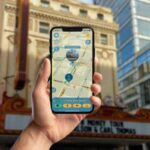
This walk talks back to you. The hands-free, location-based audio means your phone plays the next story as you reach each landmark along the Chicago Riverwalk. I also like the offline GPS maps, so you can keep moving even when cell service gets flaky.
The main catch is that this is truly self-guided. If you skip the headphone step or don’t download the tour on solid Wi-Fi first, you’ll feel the friction right away.
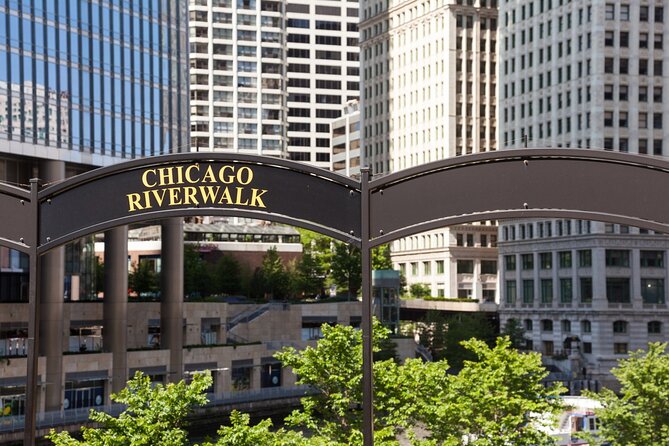
Still, with a simple start point at 99 Chicago Riverwalk and a route built for an easy 1 to 2 hours, you can see a lot of the city’s architecture and river stories without booking a timed entry or hunting for a tour meeting spot.
In This Review
- Key highlights you’ll actually feel on the walk
- A Riverwalk audio tour that tracks you, not your schedule
- Price and value: $14.99 for a tour you can reuse
- Where you start and how long it takes in real life
- How to get it working: download first, then walk with headphones
- Stop-by-stop: Wrigley Building and the DuSable Bridge stories
- 1) Wrigley Building clock tower + the gum fortune tie-in
- 2) Michigan Avenue Bridge (DuSable Bridge) and the flags with history
- Skyscrapers and skyline moments: 401 N Wabash and the Britannica HQ
- 3) 401 N Wabash Ave: 98 stories and a technique connection
- 7) 325 N La Salle Dr: a 1914 building that still matters
- Memorials and skyline architecture: Vietnam Veterans Memorial and Marina Towers
- 4) Vietnam Veterans Memorial: a sunken pool and fountain
- 5) Marina Towers: a city within the city
- Bridges and big Art Deco: Dearborn Street Bridge to Merchandise Mart
- 6) Dearborn Street Bridge: 1962 and the replacement story
- 8) Merchandise Mart: art deco scale so huge it has its own zip code
- Museum views and neo-Gothic competition: Bridgehouse to Tribune Tower
- 9) McCormick Bridgehouse & Chicago River Museum: river exhibits + top views
- 10) Tribune Tower: a 75th anniversary competition you can feel in the design
- Newer engineering to art deco TV fame: William P. Fahey Bridge and NBC Tower
- 11) William P. Fahey Bridge (the newer span): changing construction philosophy
- 12) NBC Tower: modeled after Rockefeller Center and linked to famous TV recordings
- Small tips that make the Riverwalk walk easier
- Should you book the Chicago Riverwalk self-guided audio tour?
- FAQ
- How much does the Chicago Riverwalk self-guided walking tour cost?
- How long does the tour take?
- Does it work offline?
- Where does the tour start and end?
- Do I need reservations or attraction tickets?
- What device do I need for navigation?
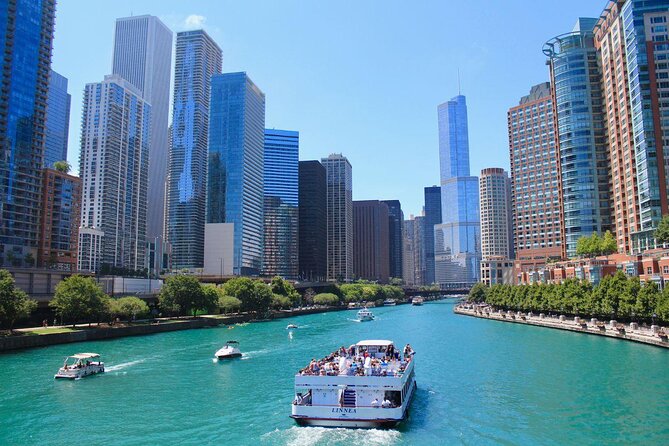
Key highlights you’ll actually feel on the walk
- Offline GPS route guidance: Download once, then rely on offline maps while you walk
- Hands-free auto-playing audio: Stories trigger based on where you are, not when you press play
- Lifetime access model: Use it again on future Chicago trips without re-buying
- 12 major stops in one straight shot: From Wrigley Building to NBC Tower, with bridges and memorials in between
- Admission ticket free stops: Each listed stop is marked as ticket free, so you’re paying for the audio experience
- Designed for your pace: Start anytime during operating hours and pause for photos, snacks, or side steps
A Riverwalk audio tour that tracks you, not your schedule
This isn’t a hop-on, hop-off style plan. It’s a story-driven walk that’s built around your location. Once you start the audio in the app at the first stop, the narration moves you forward. You don’t have to keep stopping to tap buttons, which matters on the Riverwalk where you’ll naturally slow down for views.
The other big reason this works: the tour is set up for offline navigation. You download the audio before you go, then the route guidance is meant to function without cellular or Wi-Fi. That’s a practical win in Chicago, where pockets of service can be weird depending on where you stand between buildings.
I also like that this gives you the freedom to do it your way. Want to linger at a bridge for skyline photos? Pause the tour and take your time. Want to power through because you’re tight on daylight? Start late, finish early. It’s built for small breaks, not one long slog.
You can also read our reviews of more walking tours in Chicago



Price and value: $14.99 for a tour you can reuse
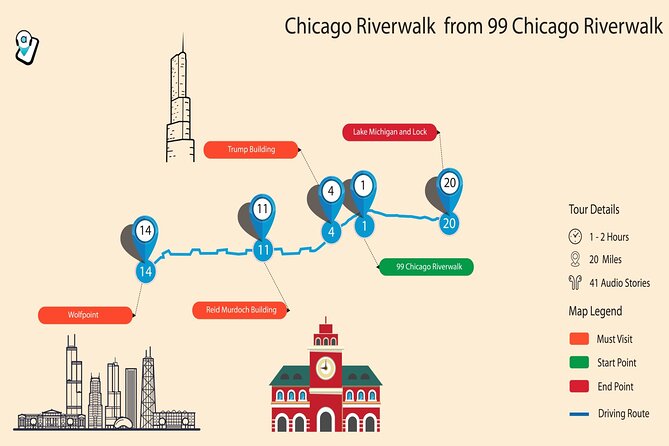
At $14.99 per person, you’re not paying for museum tickets or attraction entry. The stops are marked ticket free, and what you’re buying is the narration, the offline maps, and the convenience of not needing a guide.
That makes the price feel reasonable if you do two things:
1) you actually enjoy architecture and the “why” behind buildings, bridges, and memorial design
2) you plan to walk at least most of the route in one go
The biggest value twist is the access model. The offer is described as new, lifetime access with no expiry. So even if you only do the walk once now, you can treat it like a reusable city guide for later Chicago weekends or return trips.
Where you start and how long it takes in real life
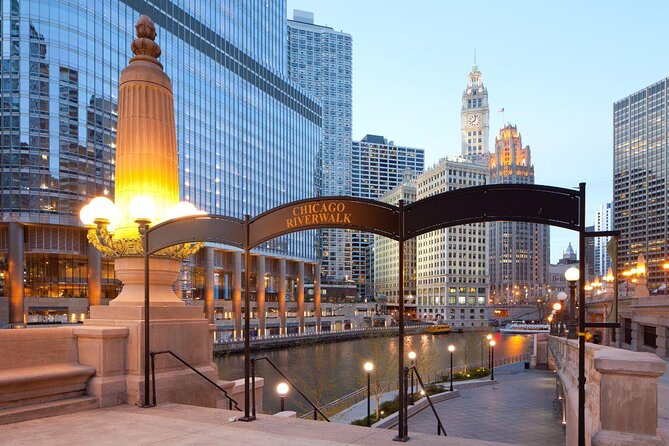
You’ll begin at 99 Chicago Riverwalk. The tour ends at River Esplanade. The route is designed for an easy 1 to 2 hours on foot, with each stop holding you for roughly a few minutes. In other words, it’s not trying to trap you in a long itinerary.
Operating hours listed for the location are 6:00 AM to 9:00 PM, Monday through Sunday. That gives you options: morning light for photos, or evening when the skyline looks dramatic and the river has more energy.
Practical note: this is a private experience for your group. There’s no set group size, no waiting for the slowest person, and no “everyone back at the clock” pressure. Just you, your phone, and the Riverwalk.
How to get it working: download first, then walk with headphones
After booking, you receive an email and text with setup instructions and a password (you’re told to look for audio tour in those messages). You then download Action’s Tour Guide App. The key detail is timing: you must download the tour while you’re on strong Wi-Fi/cellular. After that, it’s designed to work offline.
You’ll want to use headphones or earbuds for the best experience. The audio is meant to play automatically based on your location, so you’ll hear stories at the right moments while you focus on the architecture in front of you.
The app is also recommended for specific devices: an iPhone on iOS 15 or later, or an Android device on version 9 or later, or an iPad/tablet with GPS and cellular connectivity. If you’ve got an older phone or the GPS accuracy is poor, that can affect the “audio plays when you arrive” timing.
If audio acts up, the guidance is to contact support, and the main takeaway for you is to keep your phone charged and stick to the intended route.
Stop-by-stop: Wrigley Building and the DuSable Bridge stories
You can also read our reviews of more guided tours in Chicago



1) Wrigley Building clock tower + the gum fortune tie-in
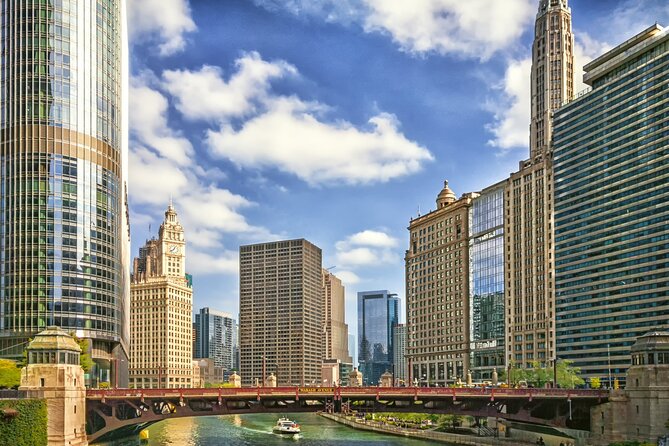
Your first stop is the Wrigley Building, an iconic terra cotta landmark with a huge clock tower. The story you’ll hear connects the building to William Wrigley, Jr., who made his fortune off chewing gum. That detail changes how you see the place: you’re not just looking at a pretty early-20th-century structure—you’re learning how big business shaped the skyline.
The tour also points out what’s nearby: the Hotel InterContinental and the fact that it hides an observatory. Even if you don’t go in, this is one of those stops that gives you a sense of Chicago’s habit of tucking cool surprises into plain-looking blocks.
If there’s a drawback, it’s simply timing. Since this is the first location, you’ll want to make sure you’ve got audio running before you reach the clock tower.
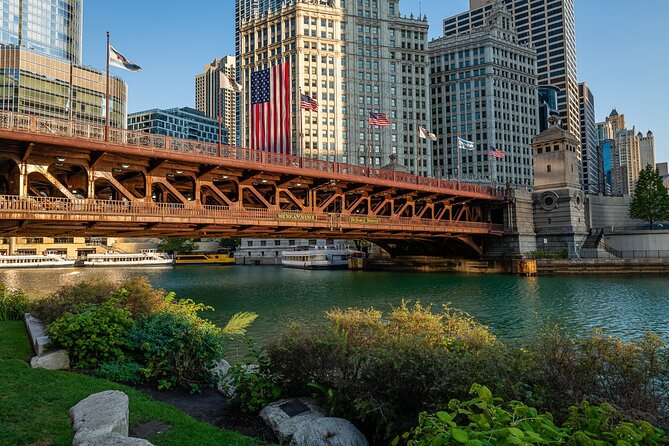
2) Michigan Avenue Bridge (DuSable Bridge) and the flags with history
Next comes the Michigan Avenue Bridge, also known as the DuSable Bridge. The architecture is the obvious draw—this is a photogenic span. But the audio’s focus goes deeper by highlighting flags and sharing their history.
This is where the tour does a good job turning a bridge from “crossing” into “destination.” You’ll pause longer than you planned, mostly because the story gives you a reason to look closely at details you might otherwise ignore.
Skyscrapers and skyline moments: 401 N Wabash and the Britannica HQ
3) 401 N Wabash Ave: 98 stories and a technique connection
At 401 N Wabash Ave, you’ll face the enormous glass tower rising to 1,399 feet and 98 stories. The narration makes a comparison that’s fun and useful: it references the same building technique used for the Burj Khalifa in Dubai, which you can use as a mental reference for why this Chicago tower’s design matters beyond local bragging rights.
This stop is quick but satisfying if you like structural context. Even a short pause helps because you can take in the scale and then zoom your attention to the details the audio emphasizes.
7) 325 N La Salle Dr: a 1914 building that still matters
Later in the route, you’ll reach 325 N La Salle Dr, constructed in 1914. Today it’s home to the Encyclopedia Britannica headquarters. From street level it may feel a bit less dramatic than the newer skyscrapers around it, but the audio frames it as a snapshot of Chicago’s earlier era—one that’s easy to miss when you’re only chasing tall buildings.
If you want one practical strategy: slow down here. Older buildings reward close reading more than you expect, especially when the narrator guides your eyes.
Memorials and skyline architecture: Vietnam Veterans Memorial and Marina Towers
4) Vietnam Veterans Memorial: a sunken pool and fountain
The Vietnam Veterans Memorial is built around a sunken rectangular pool and fountain. The story you’ll hear honors Illinois residents who died in the Vietnam War. This stop is somber, but the design turns grief into something quietly beautiful and reflective—more “presence” than monument.
It’s also a good contrast stop. After glass towers and bridges, the open stillness of the memorial area gives your brain a break.
5) Marina Towers: a city within the city
The Marina Towers Condominum Association stop takes you back up into skyline icon mode. The twin towers can look a bit like giant corn cobs, but the real lesson is how this complex functions as a city in a city.
The audio highlights on-site amenities like an in-house theatre, gym, pool, ice-rink, bowling alley, a 360-degree roof deck, and a marina. That’s a lot for one complex, and it’s the kind of detail that makes the Riverwalk feel less like a tourist ribbon and more like a living Chicago neighborhood.
One consideration: this stop can feel dense. If you’re trying to keep your pace fast, you may need to choose between photos and listening. Headphones help, but you still have to decide where you want your time.
Bridges and big Art Deco: Dearborn Street Bridge to Merchandise Mart
6) Dearborn Street Bridge: 1962 and the replacement story
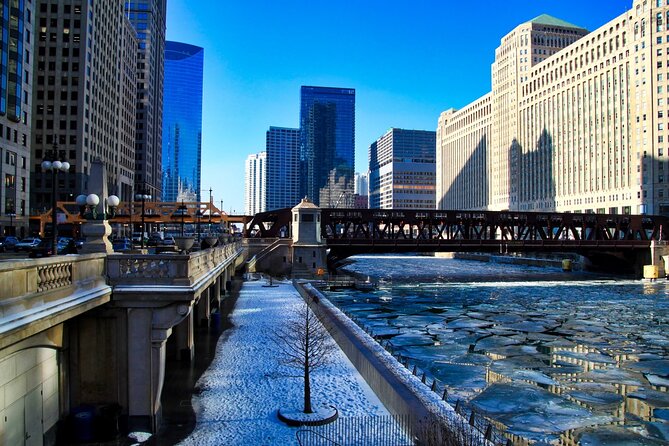
The Dearborn Street Bridge was built in 1962. The narration explains it was constructed to replace a bridge residents hated. You’ll hear what went wrong in the earlier plan and how Chicago responded.
This is exactly the kind of story that makes an “everyday crossing” feel like civic history. It also gives you a lens for the whole walk: Chicago bridge design is rarely only engineering. It’s politics, community debate, and long-term decisions.
8) Merchandise Mart: art deco scale so huge it has its own zip code
At Merchandise Mart, you’re dealing with a building so big it has its own zip code. The audio points out the Art Deco style and the scale: four million square feet.
The value of this stop is perspective. When you stand near something this large, your sense of distance changes. The narrator helps you see the building as a system—space for commerce, offices, and city energy—rather than just a blocky landmark.
Museum views and neo-Gothic competition: Bridgehouse to Tribune Tower
9) McCormick Bridgehouse & Chicago River Museum: river exhibits + top views
This museum stop focuses on both stories and sightlines. The audio explains it features exhibits about the river and its role in Chicago. You also get a key perk: birds-eye views of the river from the top floor.
Even if you don’t plan an extended museum detour, this stop is worth it for the idea. It nudges you to think about the river not just as scenery, but as infrastructure and identity.
10) Tribune Tower: a 75th anniversary competition you can feel in the design
The Tribune Tower is a standout neo-Gothic building. The audio makes it more interesting by tying it to a competition held by the Chicago Tribune for their 75th anniversary. They wanted their new HQ to be the most beautiful and distinctive office building in the world, and the final result matches that ambition.
If you care about architecture, this stop is one of the strongest because it gives you a cause-and-effect. A tower like this didn’t just happen; it came from an organized push for identity.
Newer engineering to art deco TV fame: William P. Fahey Bridge and NBC Tower
11) William P. Fahey Bridge (the newer span): changing construction philosophy
For the newest river-spanning bridge on the route, the narration shifts from old-city stories to modern engineering thinking. You’ll hear about how construction technology and philosophy changed across decades.
If you’re a “why does this look different” person, this is the stop where your eyes start comparing eras in the skyline.
12) NBC Tower: modeled after Rockefeller Center and linked to famous TV recordings
The final stop is the NBC Tower. The audio says it was modeled after 30 Rockefeller Center in New York City, which is a handy way to connect Chicago’s art deco language to a broader American pattern.
It also includes entertainment history: it was the former recording spot of the Jerry Springer Show and the Steve Harvey Show. That blend of design and pop culture works well as a closer. You finish with a building you’ve probably seen in photos, then learn it has another layer.
Small tips that make the Riverwalk walk easier
- Bring headphones/earbuds. The experience depends on audio timing while you’re outside.
- Use your recommended device. The GPS-driven auto-play expects solid GPS and support for the app’s navigation features.
- Download on strong Wi-Fi/cellular first. After that, you’re meant to go offline.
- Stick to the tour route and speed limit for the smoothest audio cues.
- Plan for photos at the bridges. Bridges and skyline angles are where you’ll want extra moments.
Should you book the Chicago Riverwalk self-guided audio tour?
Book it if you want a structured walk that still gives you freedom. I think it’s a great match for architecture fans, river lovers, and anyone who likes learning the why behind Chicago landmarks without committing to a guided group.
Skip it (or pair it with something else) if you’re mainly chasing one quick photo stop and you’re not interested in architecture, civic design, or memorial stories. It’s not designed as a short “see everything” sprint, and you’ll get more out of it by actually listening as you walk.
If you’ve got even a mild interest in how buildings, bridges, and public spaces reflect Chicago’s choices, this one is a solid use of your time at a fair price—and you can reuse it on future trips thanks to the no-expiry access model.
FAQ
How much does the Chicago Riverwalk self-guided walking tour cost?
It costs $14.99 per person.
How long does the tour take?
The tour takes about 1 to 2 hours on foot.
Does it work offline?
Yes. You can use the tour with offline GPS maps after downloading the tour. You’re told to download while you’re on strong Wi-Fi/cellular.
Where does the tour start and end?
It starts at 99 Chicago Riverwalk, Chicago, IL 60601 and ends at River Esplanade, Chicago, IL 60611.
Do I need reservations or attraction tickets?
No attraction passes, entry tickets, or reservations are included. The listed stops are marked admission ticket free, so you’re paying for the audio experience, not timed entry.
What device do I need for navigation?
The recommended devices are an iPhone with iOS 15 or later, an Android device version 9 or later, or an iPad/tablet with GPS and cellular connectivity.