REVIEW · CHICAGO
Self-Guided Chicago Loop Tour Explore the City at Your Own Pace
Book on Viator →Operated by Drives & Detours · Bookable on Viator
The Loop reads like a greatest-hits playlist. This self-guided walk lets you wander at your pace, with GPS-triggered audio that lines up with each landmark, and unlimited access so you can replay it later. The main catch: you’ll need a smartphone and plan ahead to download the tour so it works offline.
I like how the route stays focused on big-name Chicago icons without making you stick to a strict group schedule. You’re looking at about 2 to 2.5 hours for the main circuit, and the narration is in English, starting near the river and ending at one of the Loop’s best skyline lookouts.
One more thing to know: many stops are designed for a quick orientation moment, so if you want photos, closer looks inside buildings, or longer fountain-and-Bean time, you’ll naturally go over the estimate.
In This Review
- Key highlights you’ll feel right away
- A self-guided Loop route built around Chicago’s biggest icons
- Starting at DuSable Bridge and ending with Willis Tower views
- How the Drives & Detours app helps you walk without getting lost
- Stop-by-stop: from the river’s icons to Cloud Gate and beyond
- The museum with American Gothic and a Beaux-Arts interior
- Clarence F. Buckingham Fountain: 150 feet of choreography
- Chicago Board of Trade Building: Art Deco and Ceres
- Chicago Cultural Center: free domes and art
- DuSable Bridge: history plus a two-level crossing
- Cloud Gate (the Bean): your reflection becomes the exhibit
- Crown Fountain: interactive summer fun
- Jay Pritzker Pavilion in Millennium Park: steel ribbons and sound
- Millennium Monument: a modern nod to the founders
- Calder’s Flamingo: a bold red centerpiece
- An 1895 Chicago School high-rise with a luminous rotunda
- The Picasso: abstract steel made interactive
- The Rookery Building: Frank Lloyd Wright’s light court
- Willis Tower Skydeck: the view and the ledge
- The bridgehouse: gears of the Michigan Avenue Bridge
- Vietnam Veterans Memorial Plaza: polished granite and quiet focus
- The Chicago Theatre: French Baroque inside and out
- Harold Washington Library Center: Winter Garden as a breather
- Miro’s Chicago: color, surreal forms, and playful pauses
- Pacing matters: plan for 2 hours, expect extra time
- Price and value: why $9.99 can feel like a bargain
- What to bring (and what to not overthink)
- Who this self-guided Loop walk is best for
- Should you book this Chicago Loop tour?
- FAQ
- What does this tour include?
- How long does the Chicago Loop tour take?
- How much does it cost?
- What language is the audio in?
- Do I need cell service to use the audio?
- Do I need to bring my own phone?
- Where does the tour start and end?
- Is there an expiration date for the ticket?
- Can I use the tour more than once?
- What’s the cancellation window?
- Is this tour private?
Key highlights you’ll feel right away
- Offline, GPS-triggered audio plays automatically when you reach each spot
- Unlimited replay on your ticket, so you can revisit on another day
- A budget-friendly Loop sampler at $9.99 per person for a 2–2.5 hour route
- All free sights on the route (great for value) like Cloud Gate and the Cultural Center
- River crossings plus downtown icons, from DuSable Bridge to Willis Tower
- Private for your group, so the experience is set up around just you
A self-guided Loop route built around Chicago’s biggest icons
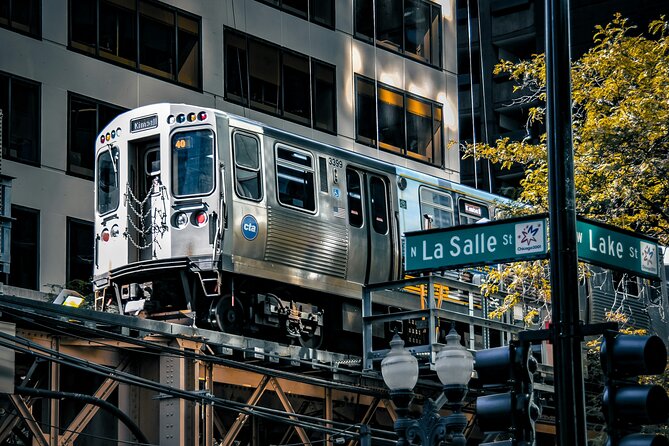
This is the kind of outing that works well when you want the Loop’s highlights but don’t want to spend your day waiting for a group. The walking route strings together famous landmarks, then uses audio to explain what you’re seeing as you move—so it feels more like a guided stroll than a scavenger hunt.
The price is surprisingly low for what you get: a mobile ticket, an audio guide, and a map-driven route that you can use on your own schedule. And because you’re not paying for admission at most stops, your money goes toward the experience itself instead of gate fees.
You can also read our reviews of more guided tours in Chicago


Starting at DuSable Bridge and ending with Willis Tower views
Your walk kicks off at DuSable Bridge, 333 Michigan Ave, Chicago, IL 60601 and finishes at Willis Tower, 233 S Wacker Dr, Chicago, IL 60606. That matters because it sets you up to move from the river crossing into the heart of downtown, then finish with the dramatic payoff: panoramic views from the Loop.
The tour’s final stop is tied to Willis Tower’s viewing area. You’ll want to check hours before you go—this listing shows 8:00 AM to 8:00 PM (Monday through Sunday) during the listed date range (08/12/2025–03/01/2027). If you plan to end near sunset, it’s a great way to turn the skyline into a final “wow” moment.
How the Drives & Detours app helps you walk without getting lost
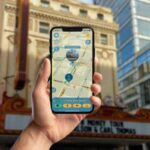
This experience is built for phone-first travel. You download the Drives & Detours app and use what you book to access the tour, then the route works offline once downloaded. That’s a big deal in the Loop where service can be inconsistent.
Then there’s the part that makes it feel easy: the audio is GPS-triggered. As you reach each landmark, the narration plays automatically based on your location. In practice, that means you don’t have to babysit your screen. You can keep moving, glance up at the building, and let the explanation catch up as you arrive.
You’ll want to charge your phone before you start. The only clear “gotcha” in the whole setup is that the tour depends on your device—so low battery is the one thing that can ruin the flow.
Stop-by-stop: from the river’s icons to Cloud Gate and beyond
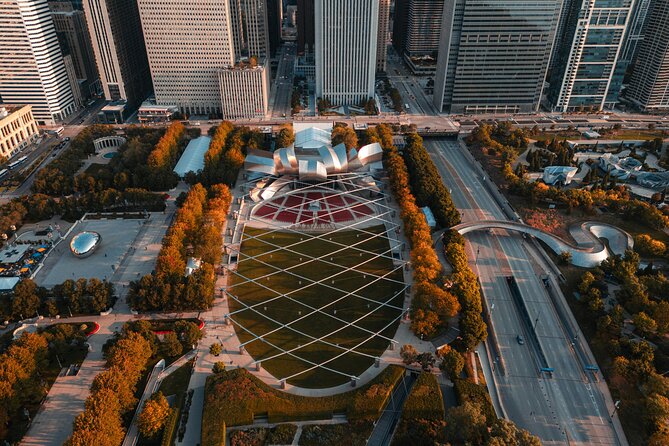
Below is the order you’ll encounter the highlights, with what each stop gives you and what to watch for.
The museum with American Gothic and a Beaux-Arts interior
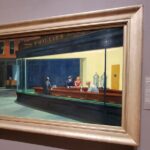
Early on, you hit a major art museum known for a world-famous collection that includes American Gothic. The description also points to the Beaux-Arts building, so even if you don’t plan a deep museum day, this stop is about seeing how the architecture frames the art. Consider this a quick “orientation moment”—you can always come back later if you love what you see.
If you’re the type who likes to linger: use this as a warm-up and decide then whether you want to extend your time inside on a separate visit.
You can also read our reviews of more city tours in Chicago




Clarence F. Buckingham Fountain: 150 feet of choreography
Next is Clarence F. Buckingham Fountain, inspired by Versailles. The standout detail here is that its central jet shoots about 150 feet into the air, with water displays set against the skyline. Even if you catch it when you’re not fully in the middle of a long display, the location makes it easy to frame classic Chicago photos.
Practical tip: give yourself a little extra time if you want both wide skyline shots and closer fountain texture.
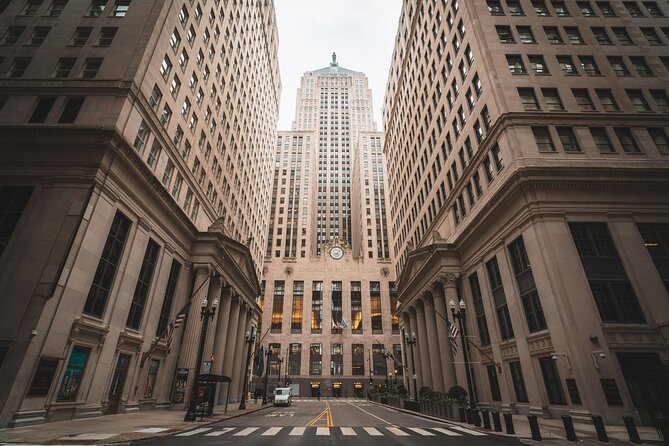
Chicago Board of Trade Building: Art Deco and Ceres
At the Chicago Board of Trade Building, you’re looking at an Art Deco tower with a historical role in the city’s finance story. The description calls out the crown featuring Ceres, goddess of agriculture, plus the lobby as a place to glimpse that trading legacy.
This stop is a good reminder that the Loop isn’t just about skyline views. It also has the old power centers—expressed in stone, metal, and ornament.
Chicago Cultural Center: free domes and art
The Chicago Cultural Center is now a free cultural hub, and the big lure is its stunning architecture—especially the stained-glass domes. Expect it to feel like a serious downtown “living room,” with art exhibits and performances sometimes taking over the space.
If you want a short indoor break without committing to paid admission, this is one of the best bets on the route.
DuSable Bridge: history plus a two-level crossing
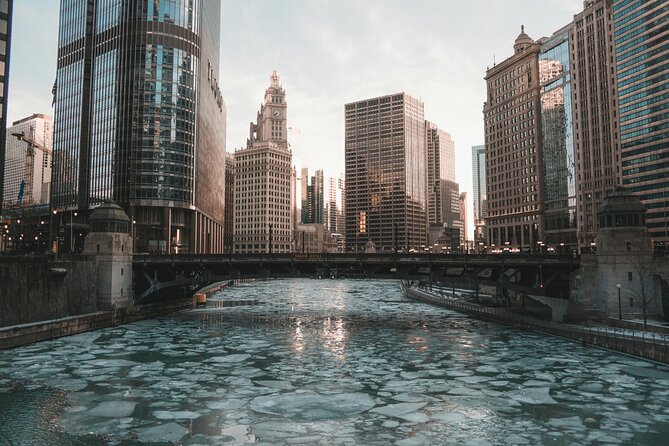
You’ll also pass DuSable Bridge, described as a double-deck, double-leaf bascule bridge linking the north and south sides over the river. It’s decorated with ornate towers honoring Chicago’s founder, and it’s the kind of structure that makes you notice how engineering shapes city life.
This is a good moment to pause and look at how the river corridor organizes the Loop—bridge, towers, and movement all in one view.
Cloud Gate (the Bean): your reflection becomes the exhibit
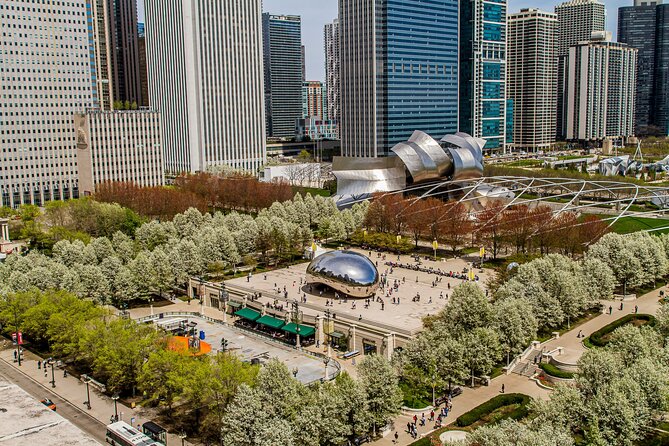
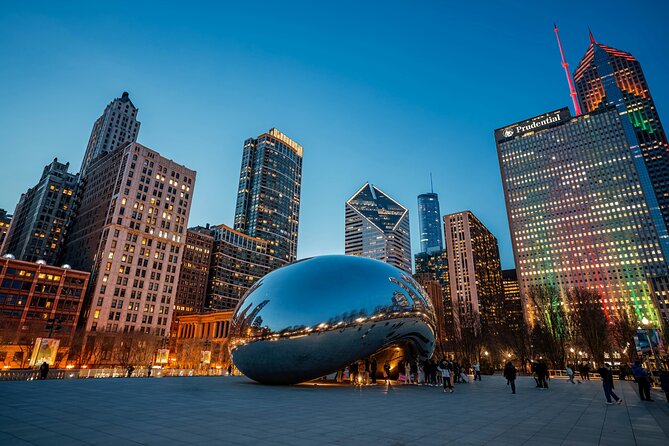
At Cloud Gate, you’re instantly in Chicago-icon territory. The description notes it as a reflective sculpture that turns the skyline—and you—into part of the art. Walking around it, and especially under it, gives you that signature warped perspective.
This is the stop where photos feel inevitable. If you hate crowds, go at a quieter time of day, but if you love the buzz, you’ll still get a great shot from almost any angle.
Crown Fountain: interactive summer fun
Crown Fountain is built for play. Two glass block towers project video portraits, and in summer you can expect water to spray. It’s described as an interactive, playful artwork—so it’s less about statues and more about reacting to the moment.
Even if the fountain isn’t actively spraying when you’re there, the presence of the towers and the video panels still make it visually memorable.
Jay Pritzker Pavilion in Millennium Park: steel ribbons and sound
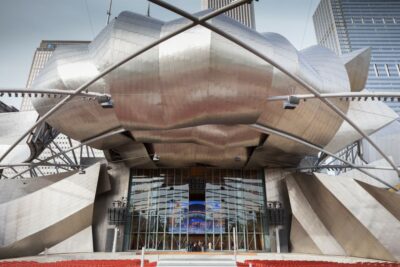
Then comes Jay Pritzker Pavilion, designed by Frank Gehry. This outdoor concert venue anchors Millennium Park, and the description highlights dramatic steel ribbons plus a state-of-the-art sound system. The point of stopping here isn’t that you’re going to see a show—it’s that the space shows how Chicago treats public life as a stage.
If you’re walking when there’s a performance happening, you’ll probably notice people orienting themselves toward the structure in a way that’s hard to explain until you see it.
Millennium Monument: a modern nod to the founders
Millennium Monument is described as a modern recreation of a 1917 colonnade, honoring the city’s founders. It’s a semicircular landmark, and the idea is that it links classical Chicago moments to a modern park setting.
This is a nice shift in tone—less “look at me” and more “notice the details.”
Calder’s Flamingo: a bold red centerpiece
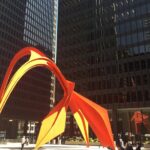
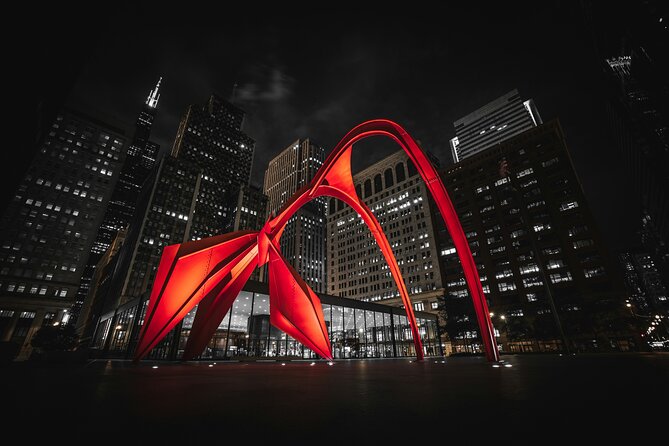
Calder’s Flamingo is one of those pieces you remember after you leave. The giant red sculpture by Alexander Calder adds a loud splash of color right in the Loop, and the description emphasizes its sweeping curves against steel and glass surroundings.
If the skyline can feel too similar, this stop gives you contrast—and it makes a perfect photo anchor.
An 1895 Chicago School high-rise with a luminous rotunda
You then get an unnamed stop described as a 1895 high-rise with Chicago School design. It features ornate terra cotta, a luminous interior rotunda, and mosaics that tell the story of the city’s early explorers.
This one is for architecture lovers. Even if you don’t spend long inside, it’s worth seeing the design thinking behind it—how Chicago made its buildings into storytelling machines.
The Picasso: abstract steel made interactive
Next is The Picasso, an abstract steel sculpture gifted by Pablo Picasso. The description says the meaning is left to imagination, and that’s part of the fun: you don’t have to “solve” it to enjoy it.
This stop works especially well if you like modern art that feels like a conversation rather than a lecture.
The Rookery Building: Frank Lloyd Wright’s light court
The Rookery Building is one of Chicago’s older high-rises and is known for a stunning light court redesigned by Frank Lloyd Wright. The mix of Romanesque elements with early skyscraper design makes it feel like Chicago built the future using pieces of the past.
This is another indoor-architecture stop where even a short glance can change how you see the rest of downtown.
Willis Tower Skydeck: the view and the ledge
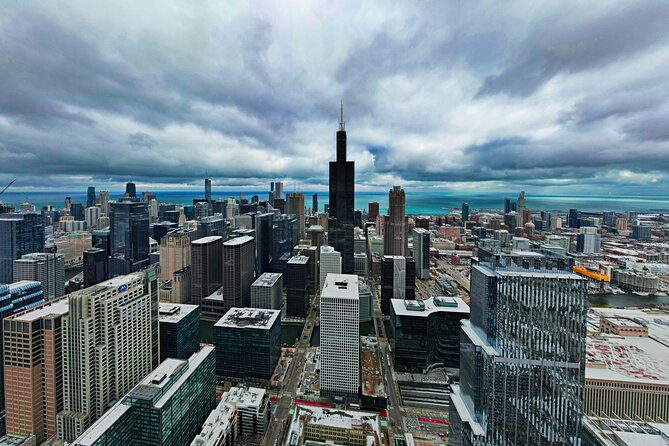
Then you’re back at the finish area: Willis Tower’s panoramic views from the 103rd-floor Skydeck, plus the option of stepping onto The Ledge—noted as a glass-floor thrill in the description.
This is your payoff stop. If you’ve been taking mostly landmark photos all day, the Skydeck gives you context: where the river bends, where the grid sits, and how huge the city looks from above.
The bridgehouse: gears of the Michigan Avenue Bridge
Before you wrap up the downtown walk, you’ll see a bridgehouse where you can climb inside to see the working gears that lift the Michigan Avenue Bridge. The description also notes exhibits exploring the river’s role in Chicago’s growth.
This is a smart stop because it turns the river from scenery into a system—how movement and machinery shaped the city.
Vietnam Veterans Memorial Plaza: polished granite and quiet focus
The Vietnam Veterans Memorial Plaza offers a quieter break. The description points to polished granite walls reflecting names and memories, making it a reflective riverside space.
This works well as a reset before the more showy, entertainment-oriented stops that follow.
The Chicago Theatre: French Baroque inside and out
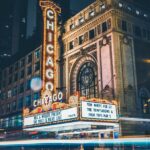
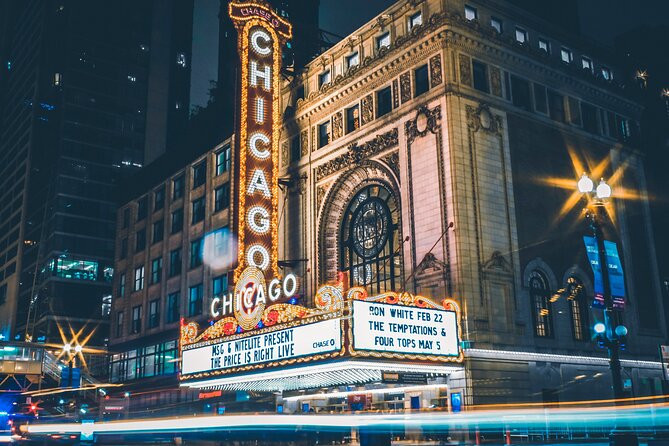
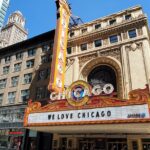
At the Chicago Theatre, the description calls it a 1921 venue with an iconic marquee and a lavish French Baroque interior. Even if you’re mostly passing by, it’s hard not to look twice because this is theater design at full volume—ornament, drama, and big-city presence.
Harold Washington Library Center: Winter Garden as a breather
Next is the Harold Washington Library Center, with a sunlit glass atrium and a Winter Garden that feels like a hidden oasis. This stop is designed for a slow-down: you get a break from pavement energy without leaving the Loop.
If you like your “tour” moments to include places where you can sit and think, this is one of your best chances on the walk.
Miro’s Chicago: color, surreal forms, and playful pauses
Finally, Miro’s Chicago by Joan Miró brings surrealism into the mix. The description frames it as whimsical and colorful, with an abstract form that invites interpretation.
It’s a fun closing note because it doesn’t feel like a corporate downtown trophy. It feels like city art meant to be enjoyed on a sidewalk.
Pacing matters: plan for 2 hours, expect extra time
The tour’s main timing is built around short stops—many are described at around five minutes. That’s enough for orientation, photos, and getting the audio points.
But if you want to linger at Cloud Gate, sit for a bit in the Cultural Center, or enjoy the park spaces around Millennium Park, you’ll naturally go longer. One of the best parts of being self-guided is that you aren’t forced to race to the next location; you just move when you’re ready.
A simple strategy: do the full route once at a steady pace, then return to the 2 or 3 places that truly grabbed you.
Price and value: why $9.99 can feel like a bargain
At $9.99 per person, this is a low-cost way to get a structured introduction to the Loop’s top sights. The value is in three parts:
- Audio guide built for location, so you learn what you’re looking at instead of guessing.
- Mobile ticket and offline access, so you’re not stuck searching for Wi-Fi.
- Unlimited usage with access that never expires, meaning you can revisit the route later.
Also, many stops on the route are described as free to enter. That keeps your day from turning into an expensive grab-bag of paid attractions.
What to bring (and what to not overthink)
Bring a smartphone, because everything is delivered through the app. Save a little storage and battery for the download. If you’re traveling with multiple people, it’s still a single purchase process, and the experience is described as private for your group.
If you’re coming from public transit, the route is marked as near public transportation, so you can make this work even if you don’t start exactly at the front door of the city.
Who this self-guided Loop walk is best for
This fits best when you:
- want a first-time Loop overview with context
- prefer independence over a fixed group schedule
- like architecture, public art, and the river corridor
- travel with a smartphone and don’t mind doing a quick app download beforehand
It’s also a good choice if you’re the kind of person who plans to come back for a deeper museum visit later—this gives you the map and the motivation.
Should you book this Chicago Loop tour?
If your goal is to cover a lot of Chicago icons without paying a pile of entrance fees, this is a strong buy. The offline audio and GPS timing make it feel guided, but the self-guided structure keeps it relaxed. At $9.99, you’re paying for organization and context more than ticketed access.
Book it if you’re okay depending on your phone and you want a route that ends with Willis Tower views. Skip it if you’d rather do a fully separate museum day, because this route is designed for movement and orientation—great for seeing, but not a replacement for deep indoor time.
FAQ
What does this tour include?
It includes the app and tour download, an audio guide, and a mobile ticket with flexible use. You get unlimited access with flexible usage so you can revisit.
How long does the Chicago Loop tour take?
The duration is listed as about 2 hours to 2 hours 30 minutes.
How much does it cost?
The price is listed as $9.99 per person.
What language is the audio in?
The tour is offered in English.
Do I need cell service to use the audio?
No. Once you download the tour, it works offline and does not require cell service.
Do I need to bring my own phone?
Yes. The tour notes that smartphone use is required, so bring your own.
Where does the tour start and end?
It starts at DuSable Bridge, 333 Michigan Ave, Chicago, IL 60601 and ends at Willis Tower, 233 S Wacker Dr, Chicago, IL 60606.
Is there an expiration date for the ticket?
No. Access never expires, and you can use it on any day/time.
Can I use the tour more than once?
Yes. It’s described as flexible with unlimited access, so you can re-use the tour.
What’s the cancellation window?
Free cancellation is allowed up to 24 hours in advance of the experience start time for a full refund.
Is this tour private?
Yes. It’s described as private, with only your group participating.