REVIEW · CHICAGO
Chicago: Icons Guided Architecture Walking Tour
Book on GetYourGuide →Operated by Chicago Architecture Center · Bookable on GetYourGuide
Chicago’s buildings talk to each other. This walking tour turns the skyline into a readable story, from the 1890s to today’s designs. I love the way the guide links past details to present ideas, and I also like that you get a Chicago Architecture Center gallery stop before you head outdoors. One drawback: there’s no place to stash luggage or strollers, so you’ll want to travel light.
Guides like Teresa and Ron are especially praised for pacing, for answering questions on the spot, and for sharing a handy notebook of architectural nuggets. If you’re short on time, the 90-minute format can feel fast, but it’s built for getting your bearings fast rather than lingering street-corner by street-corner.
In This Review
- Why this walk works as an architecture “primer”
- Starting at the Chicago Architecture Center: galleries before the streets
- The 90 minutes that cover 1890s to today (without feeling rushed)
- Seven downtown stops: what you’ll learn from each architectural style
- Stop focus 1: the 19th-century commercial look
- Stop focus 2: Beaux-Arts grandeur in a business district
- Stop focus 3: Mid-century Modern’s streamlined ideas
- Stop focus 4: Postmodern play and contrast
- Stop focus 5: where older fabric meets newer additions
- Stop focus 6: modern design moments tied to Gehry and Renzo Piano
- Stop focus 7: Adrian Smith’s skyline impact
- The guide is the secret ingredient: pacing, context, and Q&A
- Millennium Park finish: where architecture and public art meet
- Price and value: what $35 actually buys you
- Who should book this tour (and who might want something else)
- Practical things to know before you step outside
- Should you book Chicago: Icons Guided Architecture Walking Tour?
- FAQ
- How long is the Chicago Icons Guided Architecture Walking Tour?
- Where do I meet for the tour?
- What’s included with my ticket?
- Does the tour run in bad weather?
- Are pets allowed on the tour?
- Is there storage for luggage or strollers during the tour?
- Is the tour wheelchair accessible?
Why this walk works as an architecture “primer”
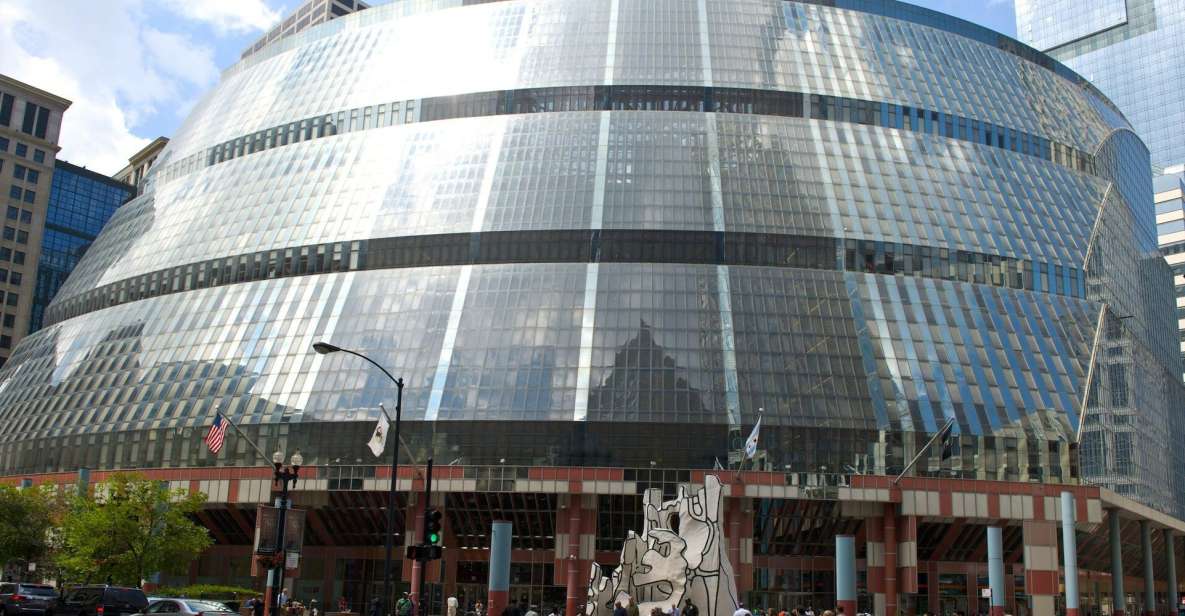
This isn’t a museum lecture. It’s a walk where you learn how Chicago designers think—then you test that knowledge by looking at faces of buildings at street level. You’ll cover multiple styles and show how they came from specific goals: business needs, prestige, new construction tech, and changing ideas about what a city should feel like.
You also get something practical: a framework you can use later on your own. Once you can tell the difference between commercial-era form and later twentieth-century experiments, the city becomes much easier to navigate—and much more fun to revisit.
Starting at the Chicago Architecture Center: galleries before the streets
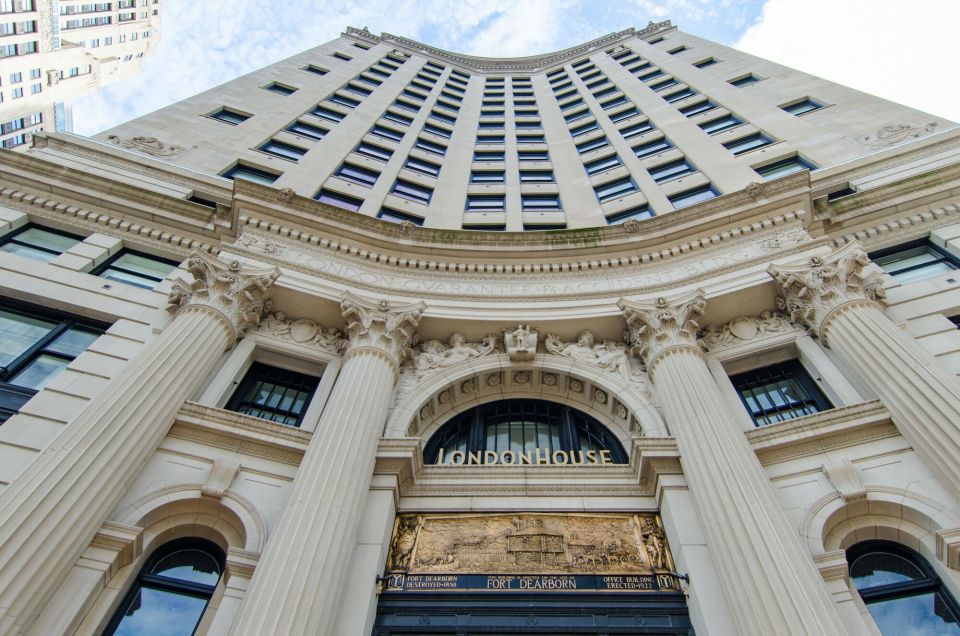
You’ll meet at the Chicago Architecture Center, 111 E Wacker Drive (right in downtown), with a mobile or printed ticket ready. The tour includes admission to the CAC galleries, which matters more than it sounds. Those indoor rooms give you a reference point before you start looking outward.
This helps if you’re not an architecture expert. You won’t spend the whole tour asking yourself what you’re supposed to notice. Instead, you’ll walk out with a sharper eye for materials, shapes, and why designers made certain choices.
You can also read our reviews of more walking tours in Chicago



The 90 minutes that cover 1890s to today (without feeling rushed)
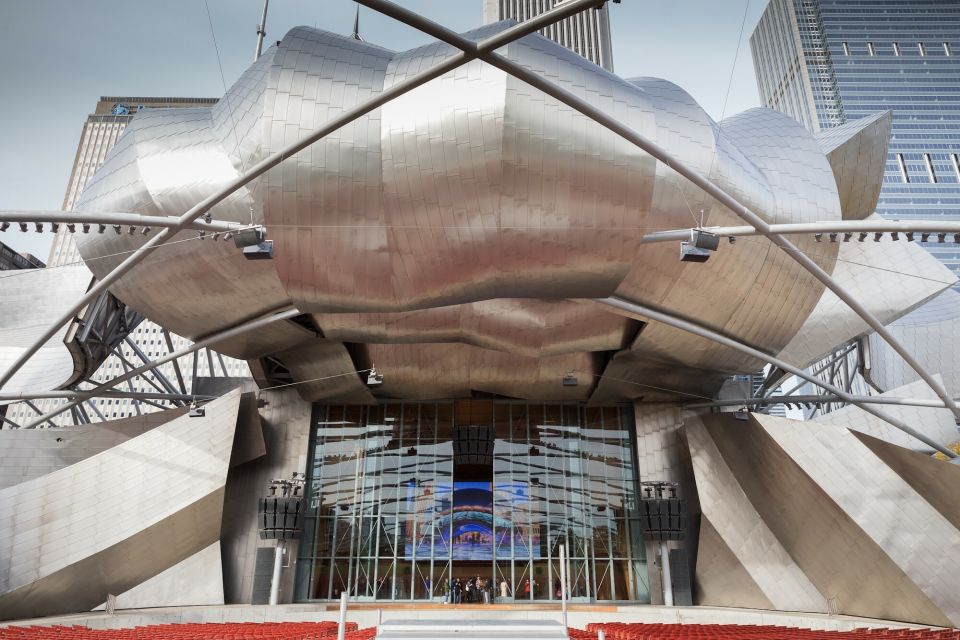
The tour runs for about 90 minutes and takes place rain or shine. That schedule is tight, so you should expect steady walking and tight stop times. The payoff is that you’ll see a wide arc of Chicago architecture in one go—rather than picking just one era and missing how the city layers over itself.
Over those seven downtown stops, you’ll compare architectural styles across different periods: 19th-Century Commercial, Beaux-Arts, Mid-Century Modern, and Postmodern buildings. Then you’ll connect those older forms to later skyline additions, including work associated with Frank Gehry, Renzo Piano, and Adrian Smith.
Think of the pace as a “high-level reading” of the city. If you want slower, deeper photo stops, pair this with a second activity afterward (or save the long photo work for when you’re walking at your own speed).
Seven downtown stops: what you’ll learn from each architectural style
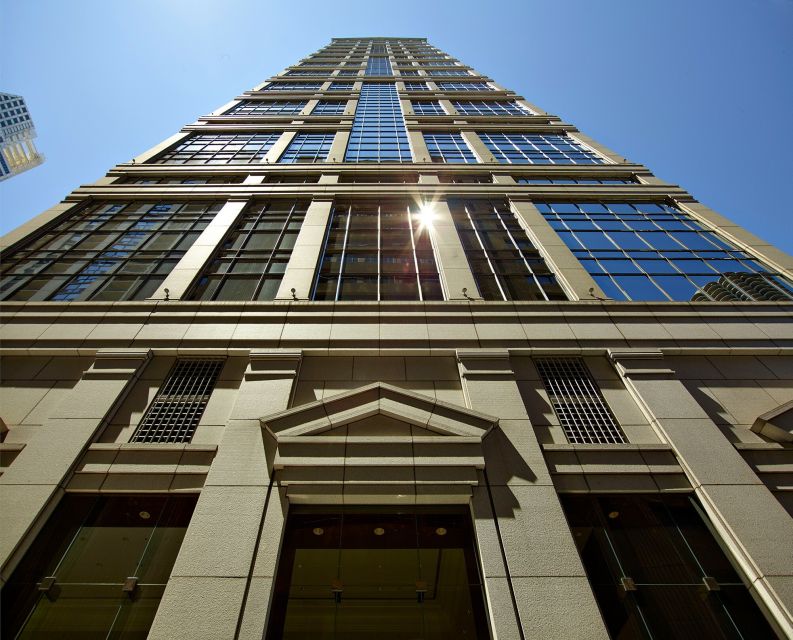
The tour’s core is comparison. Each stop highlights a different visual language, so you can see how Chicago changes while still staying Chicago.
Stop focus 1: the 19th-century commercial look
You’ll start by seeing the famous 19th-century commercial style that helped shape downtown’s early identity. Look for the fundamentals: strong street presence, clear emphasis on the building’s “skin,” and the way older structures communicate business importance.
Why this matters: those early forms show how Chicago’s growth forced architects to solve real problems—how to put people and commerce into tall buildings, and how to make them feel authoritative at street level.
Stop focus 2: Beaux-Arts grandeur in a business district
Next comes Beaux-Arts, a style known for order, symmetry, and decorative confidence. Here, you’ll practice reading details: how ornament supports the building’s message, not just how it looks.
The lesson I like most in this section is context. You’ll see how the same downtown block can feel both practical and ceremonial, depending on the architectural choices—and on what the city wanted from its landmarks at that moment.
You can also read our reviews of more guided tours in Chicago




Stop focus 3: Mid-century Modern’s streamlined ideas
Then you’ll hit Mid-Century Modern, where the focus often shifts toward simplicity, structure, and a different kind of confidence. Instead of heavy ornament driving the design, you’ll notice cleaner lines and a more modern relationship between form and function.
You’ll also learn what inspired designers during this period, which is usually about progress—materials, engineering, and a new belief that modern buildings should feel like they belong to their era.
Stop focus 4: Postmodern play and contrast
Postmodern is where the city gets more opinionated. Here, you’ll notice design choices that react to what came before—often with contrast, surprise, or references. It’s a useful section because it shows architecture responding to culture, not just building technology.
This stop helps you understand something important about Chicago: the skyline isn’t a straight line of “better and better.” It’s a conversation, sometimes even an argument, between generations of designers.
Stop focus 5: where older fabric meets newer additions
One of the most satisfying parts of the tour is watching how older buildings connect to new skyline additions. You’ll compare scale, materials, and how renovations or new constructions can either respect what’s already there or deliberately change the message.
This is the real-world architecture lesson: cities rarely demolish their past entirely. Chicago tends to layer. Once you see that, you’ll spot it everywhere on your own walks afterward.
Stop focus 6: modern design moments tied to Gehry and Renzo Piano
You’ll also discover the latest in architecture tied to names you’ve probably heard—Frank Gehry and Renzo Piano. This doesn’t mean the tour becomes a celeb showcase. The goal is to explain what inspires design today, using visible cues you can actually track on the street.
Expect to look for how modern architects shape massing, how they treat exterior surfaces, and how they turn individuality into something readable from across the street.
Stop focus 7: Adrian Smith’s skyline impact
Finally, you’ll cover another modern architectural influence connected to Adrian Smith. High-profile skyline designs can feel like they’re all about height, but the tour pushes you to see more than that—how the building’s form communicates identity, and how it fits (or doesn’t) with what surrounds it.
By the end, you’ve gone from “what am I looking at?” to “what problem did designers try to solve here?”
The guide is the secret ingredient: pacing, context, and Q&A
The walking tour lives or dies based on the guide. This one comes with a certified and professional guide, and the tour is designed around storytelling you can use.
Guides such as Teresa are noted for giving a strong glimpse of Chicago architecture’s meaning and context, even for people who’ve lived in the city for decades. Ron is praised for historical knowledge plus a great notebook of nuggets, which helps you remember what mattered rather than losing details after the tour ends.
What you’ll likely feel while walking: the explanations are built around direct questions—what you’re seeing, why it’s there, and how it connects forward in time. If you like learning by looking, this format fits your brain.
Millennium Park finish: where architecture and public art meet
The tour ends at Millennium Park, described as a place where world-class art and architecture come together, creating a unique urban fabric. This is the right finish because it changes the tempo. After street-level architectural reading, you get space to absorb the larger idea: how a city designs for people, not just buildings.
Even if you’ve visited the park before, you’ll likely see it differently after learning how Chicago’s designers think across eras. The park gives you a public-facing payoff: you can stand back, look around, and connect what you saw on downtown blocks to what Chicago chooses to show off in shared space.
Price and value: what $35 actually buys you
At $35 per group up to 1 (for a 90-minute guided walk), you’re paying for two things: expert interpretation and included access to the CAC galleries.
That matters because architecture is partly about eye training. The guide helps you see patterns you’d otherwise miss—especially in a city where buildings are close together and styles overlap. Without that framing, it’s easy to come away with a handful of pretty photos and no sense of what changed over time.
Also, ticket purchases support Chicago Architecture Center education initiatives and community engagement projects (as a certified nonprofit). So part of the value isn’t just your personal experience—it’s the fact that your ticket helps fund programs like Girls Build! and Teen Fellows, plus other community-facing architecture education efforts.
If you’re weighing this against doing the same area on your own, the difference is interpretation. If you like learning structure and can handle walking for 90 minutes, this is a solid use of a limited Chicago day.
Who should book this tour (and who might want something else)
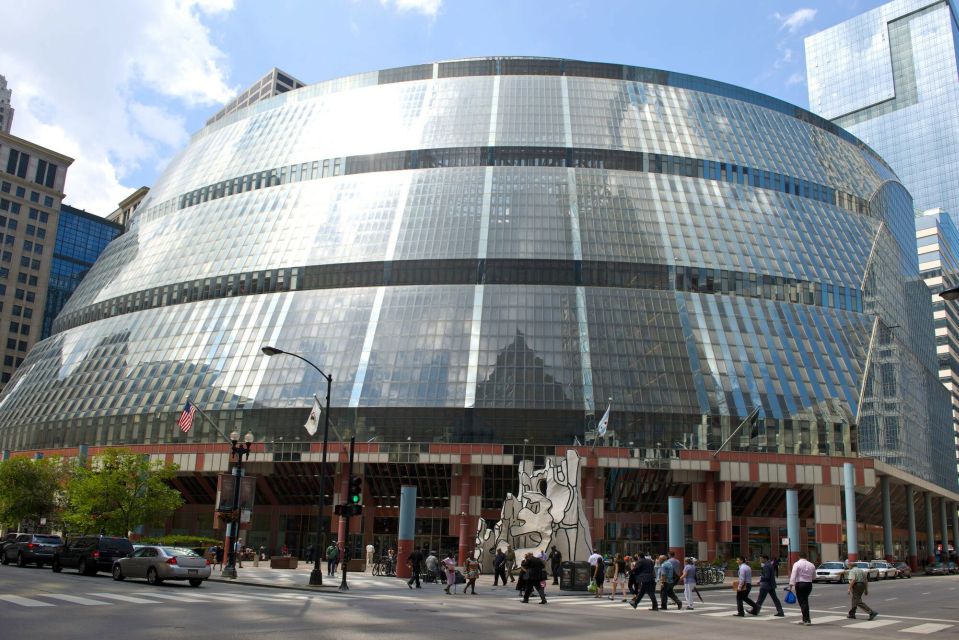
This tour fits well if you:
- want a fast architecture overview across major eras (not just one neighborhood)
- like guided stories more than self-guided signage
- enjoy comparing building styles and reading visual details
- want a tour that ends in a major public space like Millennium Park
You might reconsider if you:
- want a slow, photo-heavy day with long stops at each building
- need on-the-spot storage for luggage or strollers (there isn’t any)
- come with pets (assistance dogs are allowed, but pets aren’t)
If your travel style is “see the essentials, learn the logic, then explore more,” this one works.
Practical things to know before you step outside
This tour runs rain or shine, so wear shoes you trust for sidewalk walking and bring a light layer. Since storage for luggage or strollers isn’t available, plan to carry only what you can comfortably hold for the duration.
You’ll be walking outdoors, so dress for the weather and expect the schedule to stay moving. If you need to ask questions, do it while you’re at the stops—guides typically work best when your attention is on the building in front of you.
Should you book Chicago: Icons Guided Architecture Walking Tour?
Yes, if you want a smart, guided way to understand Chicago architecture in a short time. The best reason to book is the combination of seven downtown stops, the guide’s context-driven explanations, and the finish at Millennium Park, where you can connect the lessons to a real public setting.
If you’re the type who learns by looking—then looking again—this tour gives you a toolkit you’ll carry for future walks across the city.
FAQ
How long is the Chicago Icons Guided Architecture Walking Tour?
It lasts about 90 minutes.
Where do I meet for the tour?
You meet at the Chicago Architecture Center, 111 E Wacker Drive, Chicago, IL 60601.
What’s included with my ticket?
Your ticket includes a certified and professional guide and admission to the galleries of the Chicago Architecture Center.
Does the tour run in bad weather?
Yes. The tour takes place rain or shine.
Are pets allowed on the tour?
Pets are not allowed. Assistance dogs are allowed.
Is there storage for luggage or strollers during the tour?
No. Storage for luggage or strollers is not available.
Is the tour wheelchair accessible?
Yes, the tour is wheelchair accessible.