REVIEW · CHICAGO
Chicago’s Secret Interiors Architectural Walking Tour
Book on Viator →Operated by Chicago River Boat Architecture Tours · Bookable on Viator
Chicago hides architectural trophies in plain sight. This 2-hour walking tour pulls you into the Loop’s grand buildings and select, rarely seen interiors.
I love the focus on architectural details you normally walk past, like skylights, mosaic work, and domes. I also love the stories that connect the buildings to money, power, and engineering choices that shaped Chicago.
One key consideration: the Rookery Building is closed on Sundays, so the route won’t include it that day.
In This Review
- Why this walking tour feels like your shortcut through Chicago’s best interiors
- Key reasons this tour works so well
- Getting started at Union Station without wasting time
- Stop 1–3: The Loop’s money core, Financial Canyon, and Union Station
- The Rookery Building: Burnham & Root with a Wright rewrite (if it’s open)
- Art Deco and Chicago School details: the Field and Marquette buildings
- Field Building (Art Deco)
- Marquette Building (Chicago School)
- Palmer House and the Gilded Age hotel mood: frescoes, bronze peacock doors, and luxury
- Chicago Cultural Center or Monadnock Building: choosing between two classic interiors
- Marshall Field and Company: Tiffany-style glass and a classic department-store tea room
- Price and value: why $35 can make sense for a Loop architecture day
- How to plan your day around the weather and walking pace
- Should you book this Chicago Secret Interiors architectural walking tour?
- FAQ
- What’s the duration of Chicago’s Secret Interiors Architectural Walking Tour?
- How much does the tour cost?
- Where does the tour start and end?
- Do I need to bring anything for tickets?
- Is the tour limited in group size?
- Are service animals allowed?
- Is the Rookery Building always included?
- What happens if weather is poor?
- FAQ
- Can I cancel for a full refund?
Why this walking tour feels like your shortcut through Chicago’s best interiors
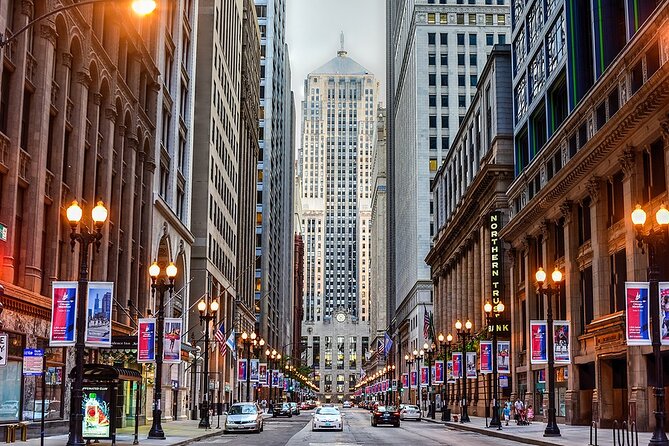
The Loop in Chicago is a “look up” city. This tour also makes you look in. You get short, guided bursts inside standout buildings, so you see how the exteriors you recognize relate to the craft inside—lobbies, light courts, frescoes, staircases, and stained-glass-style moments.
The route is also built for momentum. Each stop is tight (about 10 minutes each), which keeps the pace lively and makes the 2 hours feel productive rather than rushed.
And the guides matter. I’m seeing a pattern of strong, high-energy guiding from people like Grant (warm, organized), Ethan (animated and entertaining), Ty (accommodating and funny), and Matt/Matthew (clear, professional, and hands-on with group control). Even on cold or rainy days, the tour vibe stays practical: stay close, listen up, and enjoy the details before you move on.
Key reasons this tour works so well
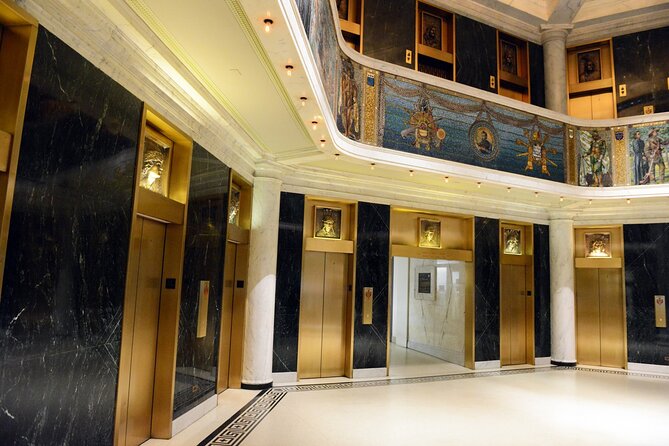
- Rare interior access to major Chicago landmarks, not just sidewalk photo ops
- Beaux-Arts, Chicago School, and Art Deco in one compact Loop route
- Architect-to-engineer stories that explain how big buildings survived real structural challenges
- Rookery highlight (when open), including the famous light court and oriel staircase
- Decor-forward moments like mosaic floors, peacock bronze doors, and a Tiffany-style dome
- Small group feel with a max of 15 people, with guides praised for keeping groups together
You can also read our reviews of more walking tours in Chicago



Getting started at Union Station without wasting time
You begin at Chicago Union Station (225 S Canal St). The station itself is a perfect warm-up: an early 20th-century masterpiece designed by Daniel Burnham and completed in 1925.
From a practical point of view, starting here helps you get oriented. You’re in a central transit hub, and you’re already surrounded by a lot of the design language you’ll see later in the Loop—ceremony at the entry, symmetry in the façade, and big sky-light moments inside.
What to expect: you’ll spend enough time to notice the Beaux-Arts style on the outside and appreciate the scale once you step into the Great Hall area with its dramatic skylight.
One watch-out: Union Station can be busy, so listen closely when the guide gives the plan for where your group is moving next.
Stop 1–3: The Loop’s money core, Financial Canyon, and Union Station
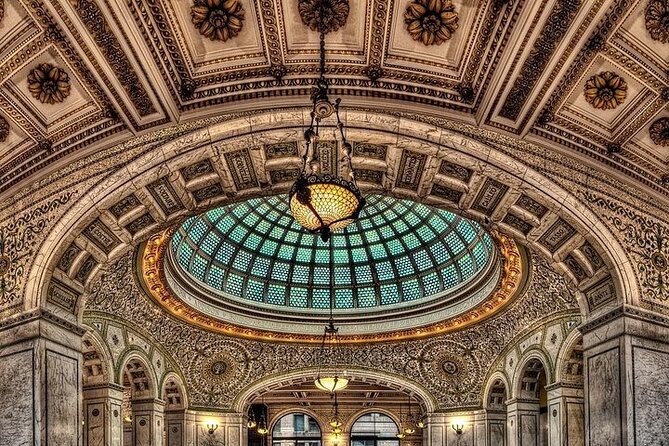
The early part of the walk is all about the Chicago you see in postcards—then you learn what’s behind it.
First you focus on the Loop’s core block: skyscrapers packed close together, a skyline that feels engineered for business momentum. You’ll hear about the visionaries who shaped the district, plus the Gilded Age and Roaring Twenties personalities tied to it.
Then you move through what’s often described as the Loop’s “Financial Canyon,” where the spacing between monumental buildings creates an urban street canyon effect. This is where the tour connects architecture to economics—why those towers rose where they did, and how the design reflects industries that thrived in the area.
You’ll also get a sense of how Chicago’s big names earned their reputations, with landmarks that include the Willis Tower and the Chicago Board of Trade.
Why this section matters for you: if you’ve ever looked at downtown Chicago and wondered why it feels so different from other U.S. cities, this is your answer. It’s not only style. It’s density, competition, and the engineering race to build higher and stronger.
Potential drawback: the outside walking in the Loop can be brisk, and you’ll want to dress for wind. The tour keeps moving, so slowing down too much for photos can throw off your spot in the group.
The Rookery Building: Burnham & Root with a Wright rewrite (if it’s open)
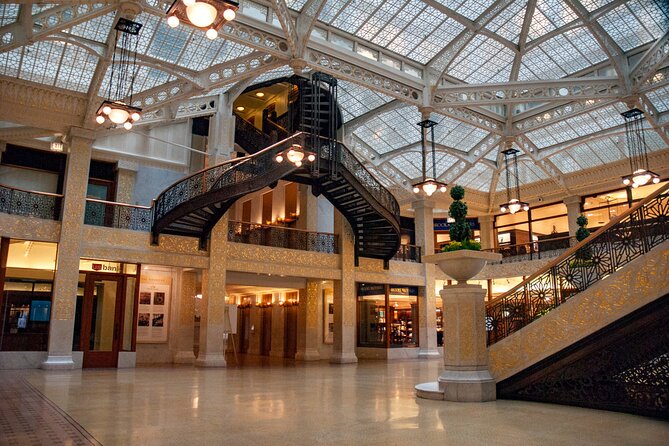
The Rookery is one of the stops that people talk about for a reason. It’s tied directly to a key Chicago architectural story: the building starts with Burnham and Root (1888), and then Frank Lloyd Wright later reimagines the interior lobby.
From the outside and into the lobby, you’re looking at a mix of styles—Romanesque and Moorish influences showing up in materials, shapes, and decorative rhythm. But the real wow-factor is the interior experience: the light court, intricate ironwork, and the iconic oriel staircase that visually breaks up space.
Why you’ll care: this stop changes how you understand “interior architecture.” You see how a building can be designed not just to hold people, but to manipulate daylight and movement. That’s the kind of detail that makes Chicago’s architecture feel personal rather than purely monumental.
Important scheduling note: the Rookery is closed on Sundays, so the route won’t include it those days. If you’re booking for a Sunday, plan for a different set of interiors instead of this specific highlight.
Art Deco and Chicago School details: the Field and Marquette buildings
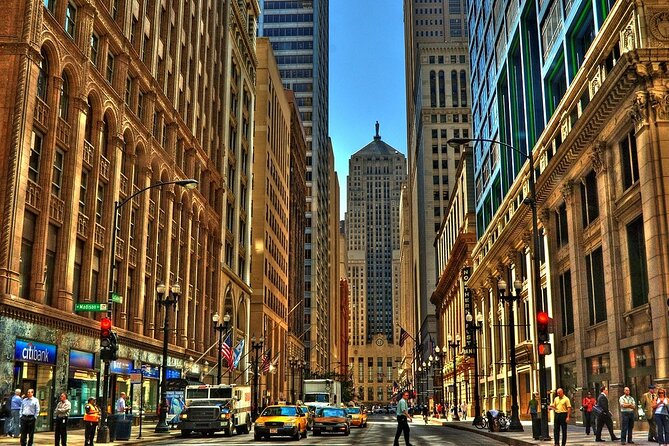
Next the tour shifts into two distinct architectural languages: Art Deco and the Chicago School.




Field Building (Art Deco)
The Field Building is highlighted for its Art Deco character. This is the part of the tour where you start noticing design as attitude—cleaner lines, confident ornament, and a skyline presence that feels built for the modern era.
Marquette Building (Chicago School)
Then you get to the Marquette Building, known for its pioneering Chicago window design and its terra cotta façade. Inside, the lobby work gets attention for its mosaics tied to Jacques Marquette and exploration history connected to Illinois.
What makes this pairing smart: it shows you how Chicago doesn’t just repeat one style. It adapts. The tour’s design choices let you compare how different eras tried to solve similar problems: airflow, light, durability, and creating a memorable first impression for people entering offices.
Practical tip: bring your phone camera, but also take 30 seconds to just look without aiming the lens. The mosaics and lobby details can vanish fast if you’re only shooting.
Palmer House and the Gilded Age hotel mood: frescoes, bronze peacock doors, and luxury
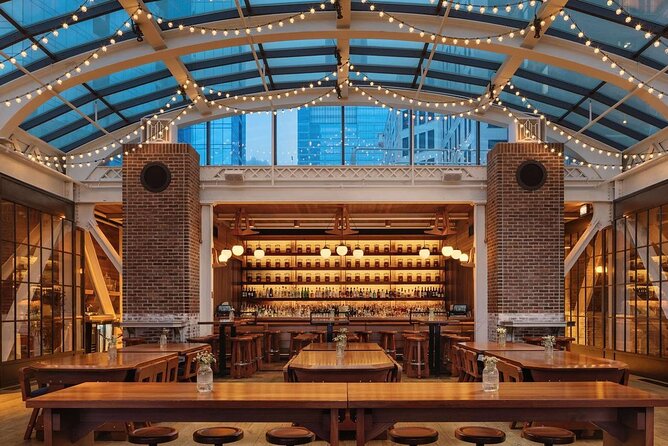
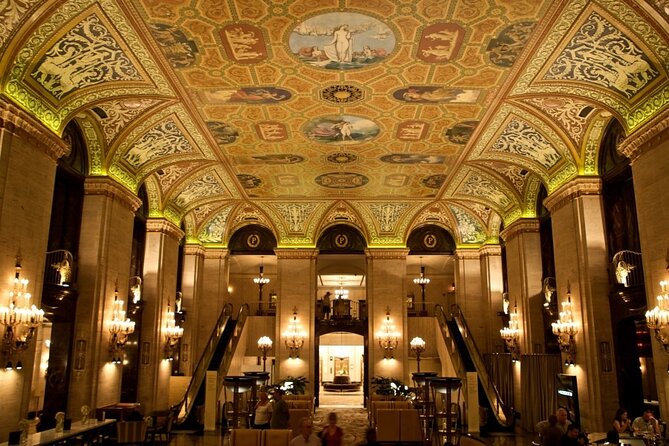
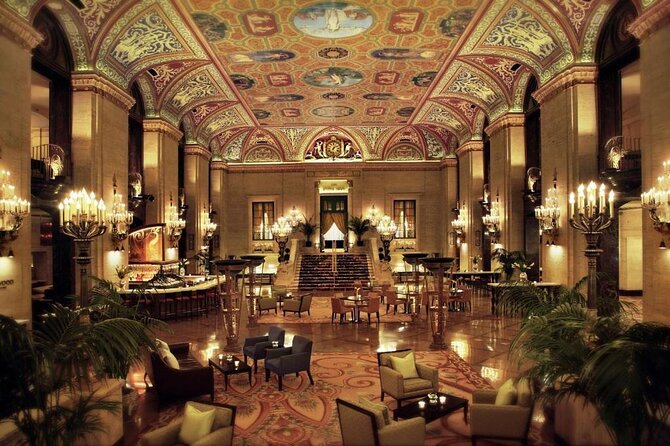
At the Palmer House (a Hilton hotel), the tour leans into the kind of opulence that made Chicago famous to high society. The building is tied to the post–Great Fire era, rebuilt in 1871.
Inside, the attention is on grand finishes: a lobby crowned with a frescoed ceiling, mosaic floors, and dramatic bronze peacock doors. You also get the human side of why hotels like this mattered—this place has hosted celebrities and dignitaries over the years, and the tour frames it as a living piece of Chicago’s story, not a museum relic.
Why this stop is valuable: you see how commerce and hospitality used architecture to perform status. The rich materials aren’t only decoration. They’re signals of what Chicago wanted to be.
Good-to-know: hotel interiors can involve security or staff flow. The guide keeps you moving, so follow directions when you’re asked to pause, enter, or exit.
Chicago Cultural Center or Monadnock Building: choosing between two classic interiors
Stop 8 gives you a fork in the road: you’ll visit either the Chicago Cultural Center or the Monadnock Building.
- Chicago Cultural Center: presented as an architectural-and-cultural stop that’s worth your time if you want design plus public programming energy in one place.
- Monadnock Building: described as a beacon of late 19th-century commercial style, the kind of building that helped define Chicago’s business-era identity.
Why I like this approach: it means the tour can adapt to what’s most practical on the day, while still keeping you on theme—major buildings, strong design details, and the Chicago story told through structure and interiors.
Marshall Field and Company: Tiffany-style glass and a classic department-store tea room
The last big stop is the Marshall Field and Company Building, now housing Macy’s. If you’re the type who loves craft work, this is a satisfying finish.
Inside, you’re pointed toward two standout features:
- the Tiffany glass mosaic dome
- the walnut-paneled Tea Room
This is also where the tour makes the point that department stores weren’t only retail. They were prestige spaces. The architecture treated shoppers like they were entering a destination.
Why it’s a strong ending: you wrap up with a “people architecture” moment. Not just offices and transit and hotels, but a public-facing design that people experienced daily.
Price and value: why $35 can make sense for a Loop architecture day
At $35 for about 2 hours with an expert guide and a maximum group size listed at 15, this is the kind of deal that works best when you value interpretation, not just walking.
You’re paying for three things:
- Time saved: a structured route through the Loop’s most meaningful buildings
- Interpretation: you get the “why” behind the details, not only the what
- Interior access: the biggest value is stepping into spaces you might not find on your own or might not know to notice
Also, many interiors are free to the public, but the difference is whether you know where to look and what to listen for. This tour is built to point your attention.
How to plan your day around the weather and walking pace
This experience requires good weather, which matters because you’ll be outside between interior stops. If conditions are poor, the tour can be canceled, and you’ll be offered a different date or a full refund.
So for a smooth day:
- dress in layers for Chicago wind changes
- wear shoes that handle short bursts of brisk walking
- accept that you’ll be outside long enough to feel it, even if much of the tour is indoor viewing
If you like a steady pace, this tour fits. If you prefer long, slow museum-style time in each building, you might feel the schedule is tight.
Should you book this Chicago Secret Interiors architectural walking tour?
Book it if you want a smart, efficient way to see the Loop without turning your day into a scavenger hunt. The route hits iconic names plus interiors with real design payoff—light courts, mosaics, frescoes, domes, and lobby craft you’d miss without a guide pointing it out.
Skip it only if your priority is purely outdoor skyline views or you’re planning a Sunday and especially want the Rookery, since it won’t be part of the route that day.
FAQ
What’s the duration of Chicago’s Secret Interiors Architectural Walking Tour?
It’s about 2 hours (approximately), with multiple stops along the way.
How much does the tour cost?
The price is $35.
Where does the tour start and end?
It starts at Chicago Union Station, 225 S Canal St, Chicago, IL 60606 and ends at the Marshall Field and Company Building, 111 N State St, Chicago, IL 60602.
Do I need to bring anything for tickets?
You’ll use a mobile ticket.
Is the tour limited in group size?
Yes. The tour lists a maximum of 15 travelers.
Are service animals allowed?
Yes, service animals are allowed.
Is the Rookery Building always included?
No. The Rookery is closed on Sundays, so it won’t be included on those days.
What happens if weather is poor?
This experience requires good weather. If it’s canceled due to poor weather, you’ll be offered a different date or a full refund.
FAQ
Can I cancel for a full refund?
You can cancel up to 24 hours in advance for a full refund. If you cancel less than 24 hours before the experience starts, the amount paid is not refunded.