REVIEW · CHICAGO
Chicago: Secret Interiors Architecture Walking Tour
Book on GetYourGuide →Operated by Empire Tours & Productions (Chicago River Boat Architecture Tours) · Bookable on GetYourGuide
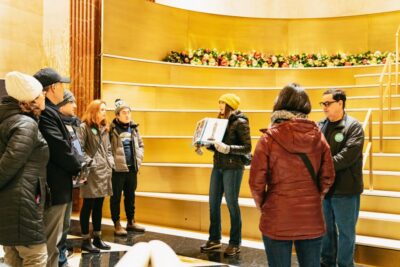
Chicago hides its best details in plain sight. This walking tour through the Chicago Loop focuses on what you usually miss: domes, mosaics, doorways, and the craftsmanship inside major landmarks, all tied to the ambition that built the city’s skyline. If you’re lucky enough to get a guide like Grant, Angel, Talia, or Annie, you’ll also get the stories and context stitched into every stop, not just a quick “look up at that” lecture.
I especially love how the tour connects design to real engineering problems—lighting, structure, and materials—so the interiors feel logical, not just pretty. Another highlight is the mix of classic “old Chicago” showpieces and later styles, so you see how the city kept evolving through the Gilded Age and Roaring Twenties. One drawback to plan for: a big chunk of the time is outside, and interior visits can mean stairs, so wear grippy shoes and dress for the weather.
In This Review
- Key Things You’ll Notice on This Secret Interiors Tour
- Why Chicago’s Loop Interiors Feel Like a Time Machine
- Union Station Meeting Point: Where Your Route Really Starts
- South LaSalle Street: The Facade Clues That Make Interiors Make Sense
- The Rookery Building: Why This Interior Stop Is Such a Big Deal
- Field Building and Marquette Building: Skyscraper-Era Confidence Up Close
- Palmer House (a Hilton Hotel): Gilded-Age Elegance in a Working Landmark
- Chicago Cultural Center: Where Civic Space Shows Off Design Choices
- Marshall Field and Company Building: The Finish Line That Feels Like a Finale
- The Guide Makes the Difference: What to Expect From Grant, Angel, Talia, Annie, and More
- Winter Reality Check: How the 2 Hours Actually Feels
- Is $35 Worth It for an Interior-Focused Architecture Tour?
- Pair It With Other Chicago Architecture Experiences (Or Don’t)
- Who Should Book This Tour
- Final Take: Should You Book the Chicago Secret Interiors Tour?
- FAQ
- Where does the tour start?
- How long is the walking tour?
- How much does it cost?
- What is included in the ticket price?
- What language is the tour offered in?
- What should I bring?
- Is the tour wheelchair accessible?
- What happens if the Rookery Building is closed?
- Is free cancellation available?
- Can I reserve without paying right away?
Key Things You’ll Notice on This Secret Interiors Tour
- Start inside Union Station’s Great Hall under the Clinton Street sign, then head into the Loop on foot
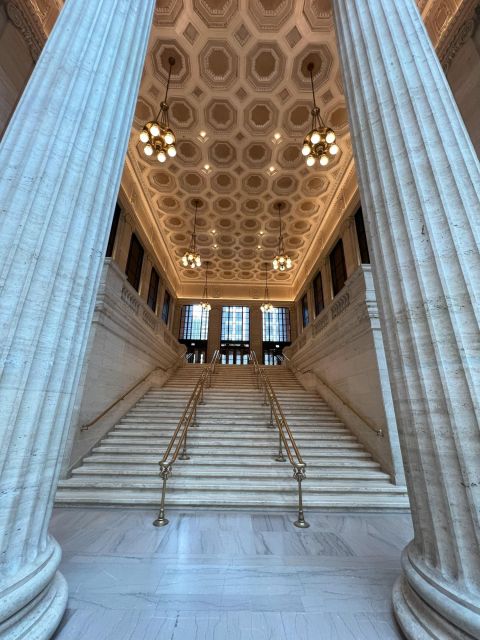
- Multiple interior visits at major landmarks, including the Rookery and Chicago Cultural Center
- Engineering meets ornament: you’ll hear how architects handled illumination and structural integrity
- Photo stops built into the route, especially along South La Salle Street and the next cluster of buildings
- Some dates shift the plan: the Rookery is closed on Sundays, so an alternative stop gets added
- Small group energy can happen, based on recent guest experiences—less rushing, more chances to ask questions
Why Chicago’s Loop Interiors Feel Like a Time Machine
Chicago’s architecture isn’t only about façades. It’s about what happens after you step through the door—how light hits stone, how ceilings curve, how floors guide you toward the next reveal. This tour is built around that idea, using “secret interiors” as the main thread so you experience the city from the inside out.
You’ll spend time learning what made Chicago an architectural icon in the first place: the ambition of industrial leaders, the theatrical confidence of downtown business life, and the way design choices answered practical challenges. Expect talk of domes, shimmering mosaics, and elaborate craftsmanship, but also the thinking behind it—especially the nuts and bolts of structural integrity and illumination.
You can also read our reviews of more walking tours in Chicago



Union Station Meeting Point: Where Your Route Really Starts
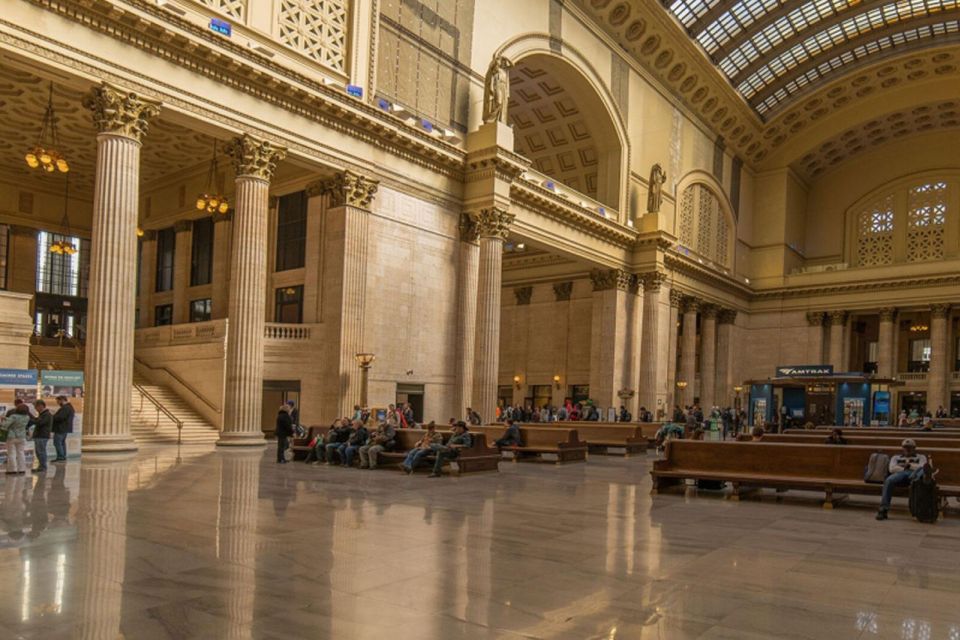
You meet your guide inside Union Station within the Great Hall, under the Clinton Street sign. It’s an easy anchor point if you’re arriving by train, and it helps you get your bearings fast before you’re caught up in the Loop’s nonstop skyline.
From there, the tour stays walk-friendly for a 2-hour experience, with short transitions and photo stops. Since the tour ends at the Marshall Field and Company Building, you’re effectively building a loop of downtown highlights without needing to figure out transit or directions on the fly.
Practical tip: bring comfortable shoes and plan for a brisk walking pace. If you’re doing this in cold weather, you’ll want more layers than you think you need—recent guides and guests have flagged that winter walking stays mostly outdoors.
South LaSalle Street: The Facade Clues That Make Interiors Make Sense
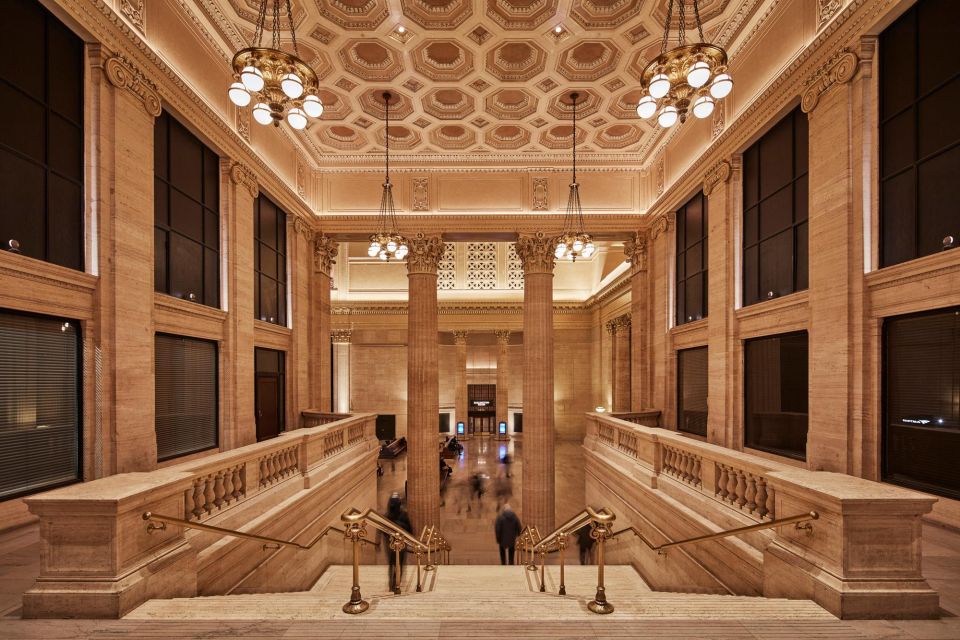
One of your early stops is South La Salle Street, which includes a photo stop and guided sightseeing. This part matters more than it looks, because it sets you up to notice what designers were trying to communicate before you ever enter a building.
Here’s the smart way to use this section: watch for the small cues the guide calls out—edges, patterns, symmetry, and how the building meets the street. When you later see ceilings, stairways, or decorative details inside, you’ll understand the outside as a promise of what’s waiting within.
If you’re into architecture as a detective game, this is where it starts. You’ll learn how Chicago buildings used style as branding, even before you get to the more dramatic interiors.
The Rookery Building: Why This Interior Stop Is Such a Big Deal
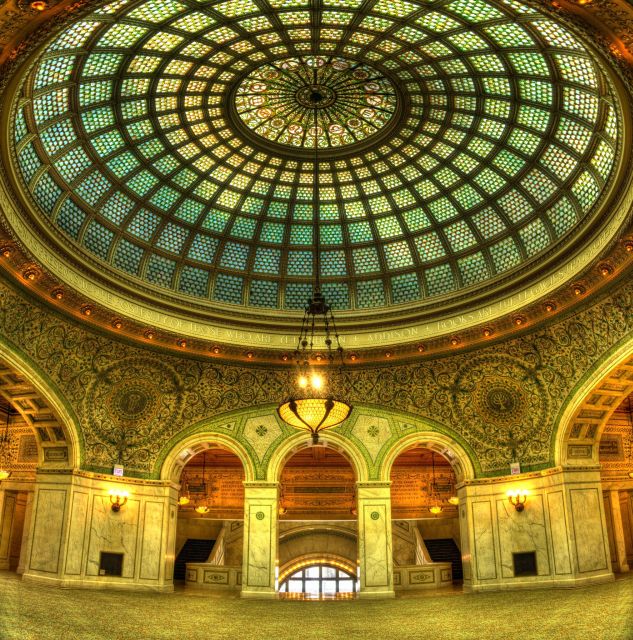
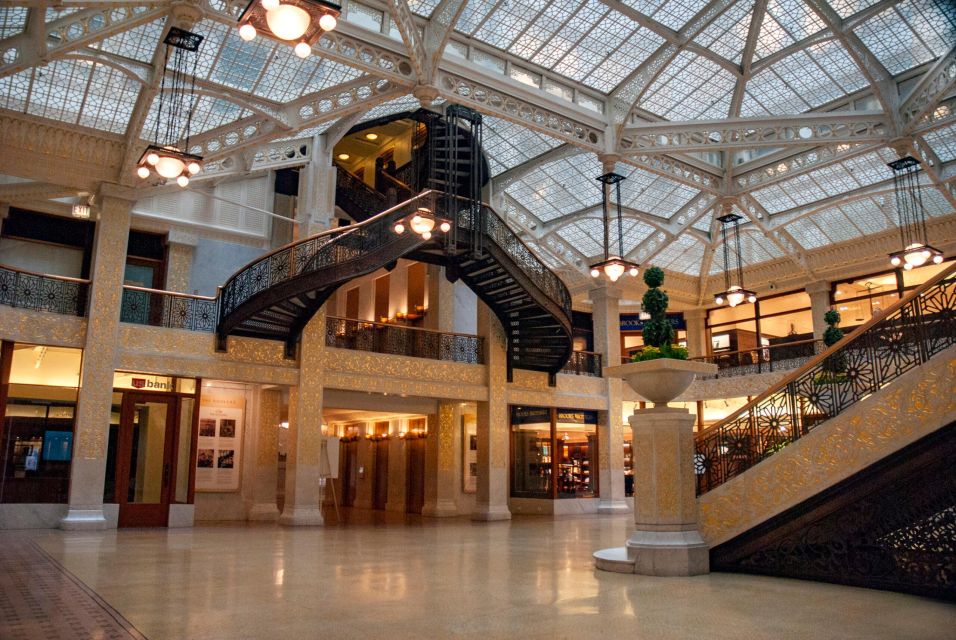
The Rookery Building is one of the most memorable stops on the route: photo stop, visit, guided tour, sightseeing, then a walk onward. This is where the tour leans hardest into its “secret interiors” promise, focusing on interior architecture like domes and refined decorative work.
What makes the Rookery special on a tour like this is the way the guide ties visuals to engineering decisions. You’ll hear about why certain spaces feel bright or dramatic—how architects and engineers tackled the lighting problem in a dense city and turned structure into a design feature rather than a hidden compromise.
Important planning note: the Rookery is closed on Sundays, so you’ll get an alternative stop if you book that day. When choosing your date, check the schedule so you know you’ll still get the interior experience you’re hoping for.
Field Building and Marquette Building: Skyscraper-Era Confidence Up Close
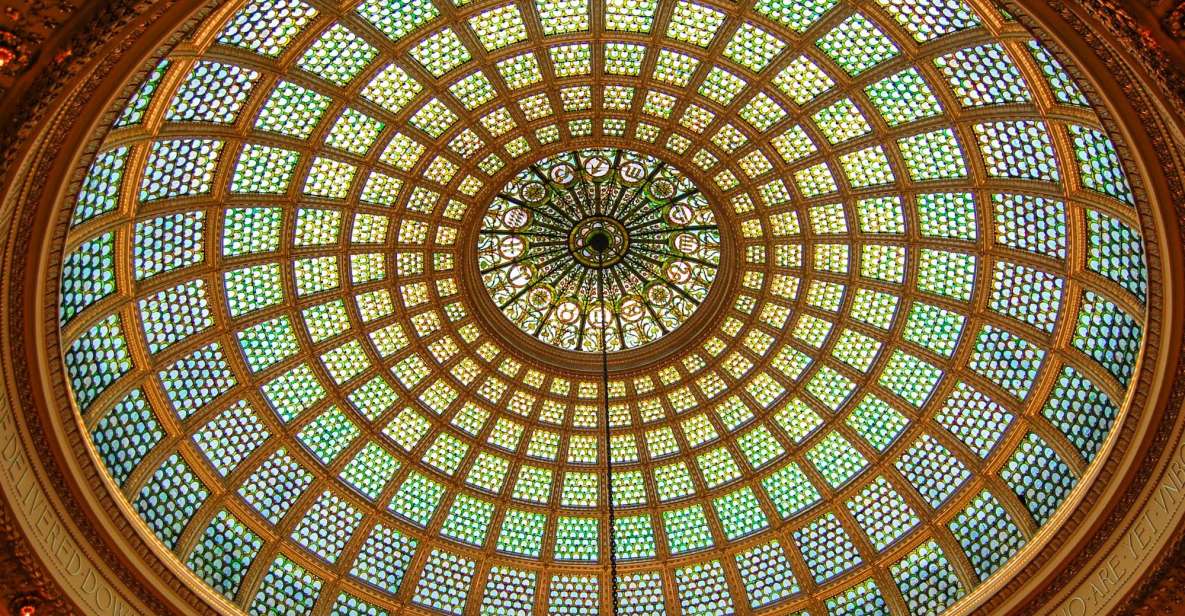
Next, you head to the Field Building and the Marquette Building for a similar pattern: photo stop, visit, guided tour, and sightseeing. These stops are where Chicago’s upward momentum starts to feel less like a slogan and more like a real built process.
Expect commentary on architectural styles and innovations tied to the skyscraper era. You’ll be shown how Chicago moved into a new phase of city design—learning to balance height and density with stable structure and usable, light-filled spaces.
Also pay attention to the guide’s emphasis on design elements. The tour isn’t only about “what looks impressive.” It’s about how different buildings solve similar problems in different ways, so you come away with a mental map of styles rather than a list of names.




Palmer House (a Hilton Hotel): Gilded-Age Elegance in a Working Landmark
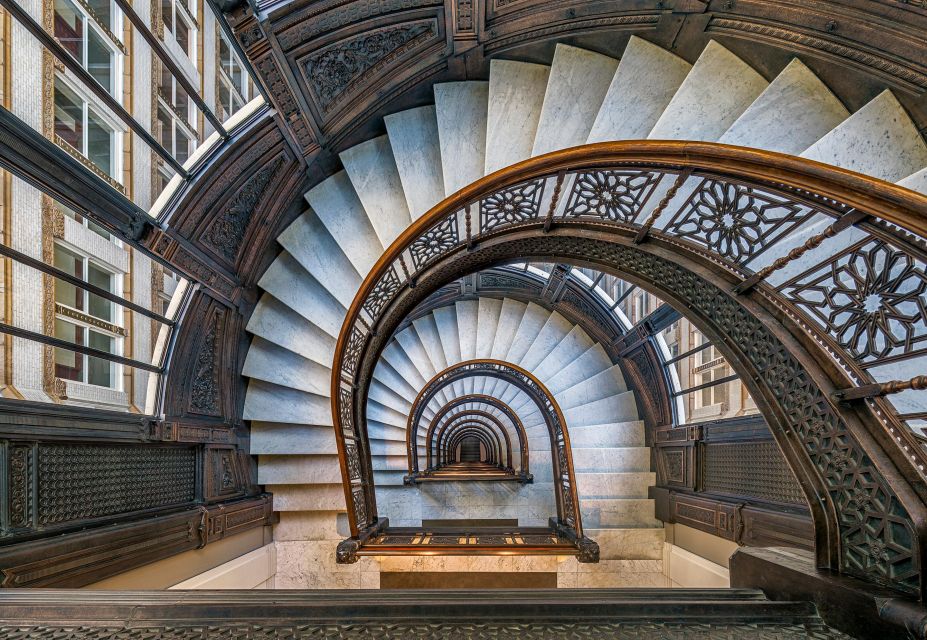
Your route includes the Palmer House (a Hilton Hotel) with a photo stop, visit, guided tour, and sightseeing. A major hotel can be a tricky place for tourists—sometimes it feels like you’re peeking into someone else’s world rather than learning.
Here, the tour approach helps. Your guide keeps the focus on architecture and design: craftsmanship, historical context, and the story of how powerful people built spaces that matched their status. Since the tour is centered on Chicago’s rise as an architectural icon, the Palmer House fits the larger theme of downtown culture during the Gilded Age and Roaring Twenties.
Pro tip: if you’re the type who likes to ask questions, this is a good moment. Guides have been praised for answering detail questions on decoration, doorways, and the tiny elements you’d otherwise walk past.
Chicago Cultural Center: Where Civic Space Shows Off Design Choices
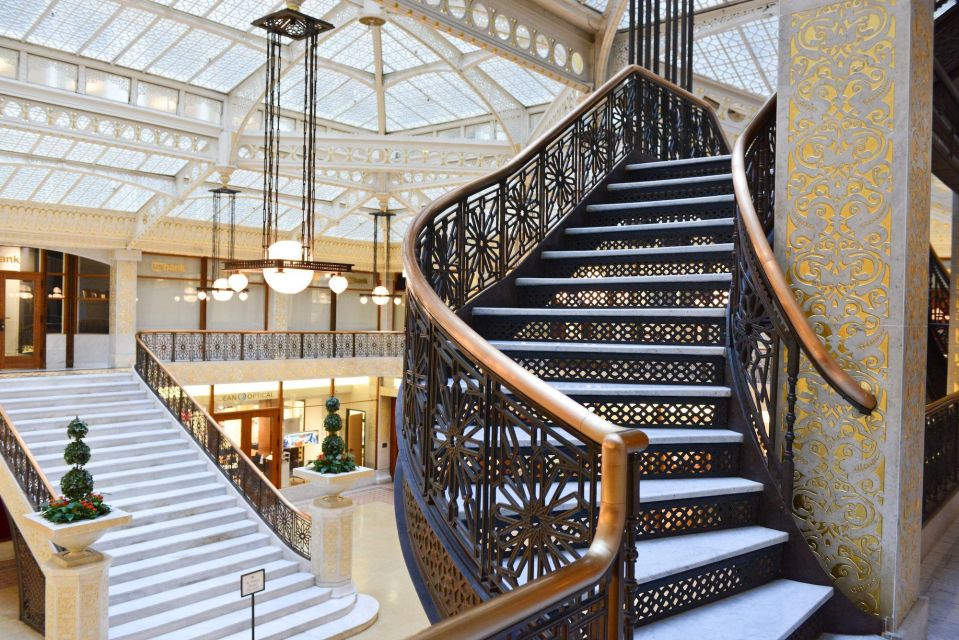
Then you’ll stop at the Chicago Cultural Center, again with a photo stop and guided visit. This is the kind of building that can feel “important” even if you don’t know the details—because it’s designed to impress, and it often does.
On this tour, the Cultural Center is valuable because it broadens your view. You’re not only seeing commercial or office grandeur. You’re seeing how design shows up in spaces that belong to the city and its public identity.
The guide’s commentary on architectural evolution helps here too. You’ll get a sense of how Chicago doesn’t freeze in one style. It keeps changing—picking up modernist ideas later while still echoing older design language.
Marshall Field and Company Building: The Finish Line That Feels Like a Finale
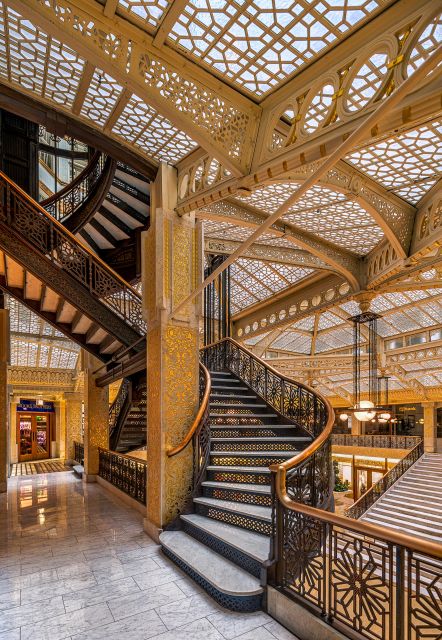
The tour wraps up at the Marshall Field and Company Building, after a photo stop and visit. This is a great final stop because it lets you end on a big “anchor” building—one that helps your brain store everything you’ve seen during the walk.
By the time you reach this finish point, you’ll likely be able to connect dots:
- How different eras shaped design choices
- How ornament and structure work together
- Why the Loop became a laboratory for architectural innovation
If you’ve been taking photos, this is also your last chance to frame Chicago’s scale. Look for the relationship between street-level details and what rises above you.
The Guide Makes the Difference: What to Expect From Grant, Angel, Talia, Annie, and More
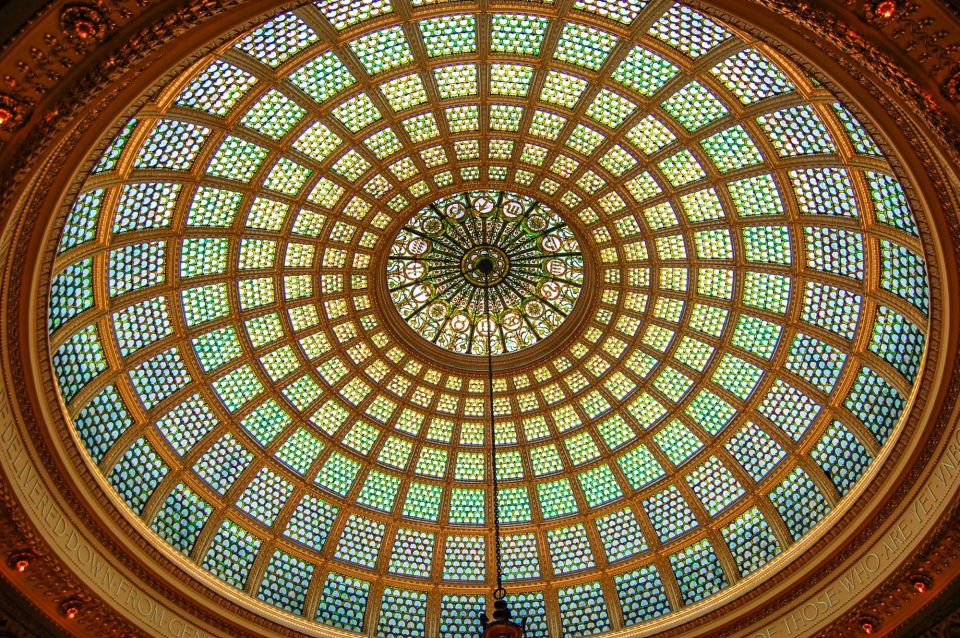
This tour lives and dies by storytelling skill. The guide factor is huge, and the recent guide names you may hear in the community include Grant, Angel, Talia, Annie, Matthew, and Avery. People have consistently highlighted guides who explain what you’re seeing in plain language, and who keep the pace comfortable without turning it into a rushed checklist.
You can also expect the tour to include interpretive commentary—why a ceiling feels a certain way, why specific lighting decisions mattered, and how engineers solved problems with the tools they had at the time. One of the best parts of architecture tours is when someone points out “why this exists,” not just “what it looks like.”
If you want to maximize value, come with a small question in mind. For example: Are you more interested in the engineering side or the decorative side? Either answer will help your guide tailor the kinds of details they emphasize as you move from building to building.
Winter Reality Check: How the 2 Hours Actually Feels
The experience is 2 hours long, and that’s just right for a focused downtown architecture session. But the weather can be a bigger deal than the schedule.
In cold months, expect that most of the time is spent outside. People have called out that winter walks can be around 90% outdoors, so plan for wind and slow warming after each interior stop.
Also consider that some interior access can involve stairs. One guest mentioned stairs during a special-access moment at another downtown interior, which is a good reminder that indoor buildings often require vertical movement even when the overall route is manageable.
So: wear footwear with traction, bring a warm hat, and don’t assume you can just wear “city layers” and be fine.
Is $35 Worth It for an Interior-Focused Architecture Tour?
At $35 per person for a 2-hour guided experience, the value is strongest if you care about interiors—not just exterior views. You’re paying for a guide plus access to multiple notable buildings with on-the-spot interpretation. That turns the Loop from “pretty skyline” into a walk where design meaning becomes part of the trip.
Here’s how I’d judge worth for your own style:
- If you love details like mosaics, domes, and craftsmanship, this will likely feel like a good use of time.
- If you mostly want far-reaching city views with minimal walking and stairs, you might prefer a different format such as a river cruise.
The tour’s pitch is clear: you get guided context while you’re standing inside the spaces. That’s hard to recreate on your own unless you already know what’s worth seeking.
Pair It With Other Chicago Architecture Experiences (Or Don’t)
This tour works especially well as a companion if you’ve done—or plan to do—another Chicago architecture outing. The big advantage is that this one focuses on interiors and design details up close, while some other options emphasize big-picture views from a moving vantage point.
If you’re choosing between formats, decide what you want most:
- Interior storytelling and “why this design works”
- Wide-angle skyline drama
When you pick the right match for your interests, you come away with a more complete picture of Chicago’s design thinking.
Who Should Book This Tour
You should book if you:
- Want a guided way to see inside major Loop landmarks
- Like architecture that mixes artistry with practical engineering decisions
- Enjoy history tied to built space—especially the city’s rise through early modern downtown life
It can also be a strong choice for art and architecture fans. One guest specifically noted it as a good match for art deco interest, and the tour’s style range supports that kind of focus.
One more note: the tour is listed as wheelchair accessible, which is a big plus. Still, since you’re dealing with real buildings and real interiors, it’s smart to consider whether you’ll need extra help with stairs or vertical transitions on the specific day’s stops.
Final Take: Should You Book the Chicago Secret Interiors Tour?
Yes, if your goal is to understand Chicago architecture through its interiors, not just its famous skyline. The price-to-time ratio is strong for a guided route that includes multiple landmark visits and commentary on lighting, structure, and style.
Book it when you can be present for the full walk—especially on a day when the weather won’t drain your energy. If you can handle cold air and a few stair moments, this is an excellent way to see the Loop’s “behind-the-scenes” beauty in a compact 2 hours.
FAQ
Where does the tour start?
Please meet your tour guide inside Union Station within the Great Hall, under the Clinton Street sign.
How long is the walking tour?
The tour lasts about 2 hours.
How much does it cost?
The price is $35 per person.
What is included in the ticket price?
Your ticket includes a guide and a walking tour with commentary on architectural styles and innovations.
What language is the tour offered in?
The tour is offered in English.
What should I bring?
Wear comfortable shoes.
Is the tour wheelchair accessible?
Yes, the tour is listed as wheelchair accessible.
What happens if the Rookery Building is closed?
Since the Rookery is closed on Sundays, an alternative stop will be included in the tour.
Is free cancellation available?
Yes. You can cancel up to 24 hours in advance for a full refund.
Can I reserve without paying right away?
Yes. You can reserve now and pay later.