REVIEW · CHICAGO
Chicago in a Day: Food, History & Architecture Walking Tour
Book on Viator →Operated by Intrepid Urban Adventures - USA · Bookable on Viator
Chicago never feels smaller than on this walk. You get a tight mix of icons—food, skyscrapers, the river—plus the stories that explain why downtown Chicago looks the way it does. The tour stays small (max 12), so you’re not yelling over a crowd just to hear your guide.
What I like most is the way the food adds up. You’ll get enough bites and samples to land around a real lunch, with Chicago classics like deep-dish pizza, a hot dog, and Italian beef rolled into the route. The second big win is the architecture-and-history flow through the Loop area, from underground commuter life in the Pedway to big-name landmarks like the Tribune Tower and the Wrigley Building.
One consideration: the first part is mostly street walking and sightseeing, and the main food tasting may come later than you expect. If you’re hungry early (and especially if you skipped breakfast), plan to snack before you start so the middle-of-the-tour food doesn’t feel like a delay.
In This Review
- Key tour takeaways before you go
- Starting Under the Chicago Theatre Marquee: quick orientation, big-city energy
- The Chicago Pedway: see downtown Chicago the way locals do
- Passing City Hall and County Building: the government heart of the Loop
- Chicago River walks, skyline views, and the daily commute feel
- Wrigley Building to Tribune Tower: two skylines, two eras
- Millennium Park and Cloud Gate: the Bean moment you can’t skip
- The food reality: enough bites to equal lunch, but not right away
- Architecture storytelling that makes the skyline make sense
- Pace, walking distance, and how to set yourself up for comfort
- Small group energy: why max 12 changes the whole day
- Price and value: what $100.95 buys you (and why it can be fair)
- Weather-proof planning and how to dress for a Chicago “walking day”
- Where it ends: you get a head start on your next Chicago move
- So, should you book Chicago in a Day?
- FAQ
- How long is the Chicago in a Day walking tour?
- How much walking should I expect?
- What food is included?
- Are vegetarian options available?
- Is this tour family-friendly?
- What if the weather is bad?
- What’s not included in the tour price?
- Where does the tour start and end?
Key tour takeaways before you go
- Max 12 people keeps the experience personal and questions actually get answered
- Big Chicago icons in one loop: Pedway, river views, Wrigley, Tribune Tower, Millennium Park
- Food is built to be a meal (deep-dish, hot dog, Italian beef, plus more bites)
- Weather-proof moments with the Pedway network when conditions are rough outside
- Guides like Dave, Dash, Rich, and John often get called out for clear stories and keeping the group together
Starting Under the Chicago Theatre Marquee: quick orientation, big-city energy
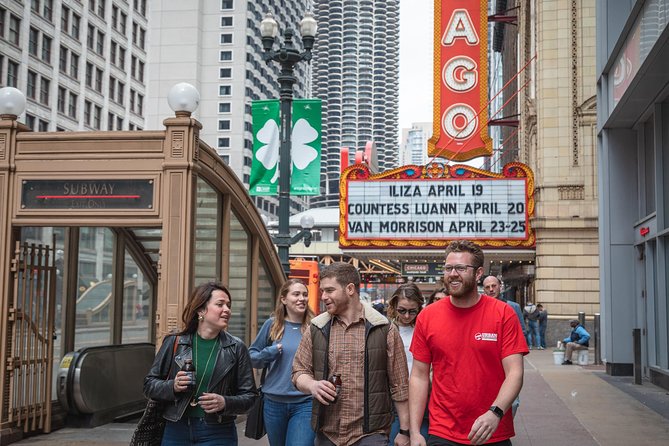
You’ll begin near the Chicago Theatre (175 N State St), where the marquee is the kind of landmark your brain instantly files as Chicago. It’s a smart start point because you’re already in the heart of downtown, close enough to major streets that the rest of the day moves efficiently.
From there, the tour doesn’t waste time on generic introductions. Your guide sets the tone fast—what you’re about to see, why it matters, and how Chicago became the city it is. If you like context, this is the part that pays off later when architecture details start making sense.
You can also read our reviews of more walking tours in Chicago



The Chicago Pedway: see downtown Chicago the way locals do
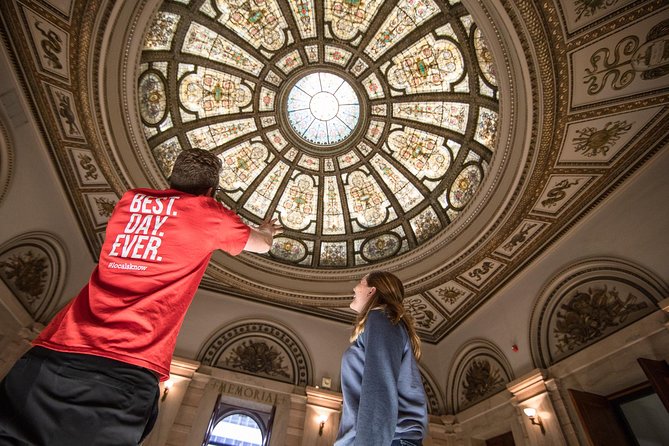
One of the most practical stops is the Chicago Pedway, a network of underground tunnels used daily by commuters. On a cold or windy day, this can feel like the tour’s secret weapon: you still get the city core without fighting weather for every step.
The Pedway also changes how you experience buildings. Instead of looking up at street level the whole time, you’re moving through the in-between spaces that keep people working, shopping, and getting from A to B. It’s not just a detour—it’s Chicago’s daily rhythm in a form you can actually walk through.
And because it’s underground, it tends to be easier to keep a small group together. If you’ve ever done a big walking tour where everyone gets separated, you’ll appreciate how this helps the flow.
Passing City Hall and County Building: the government heart of the Loop
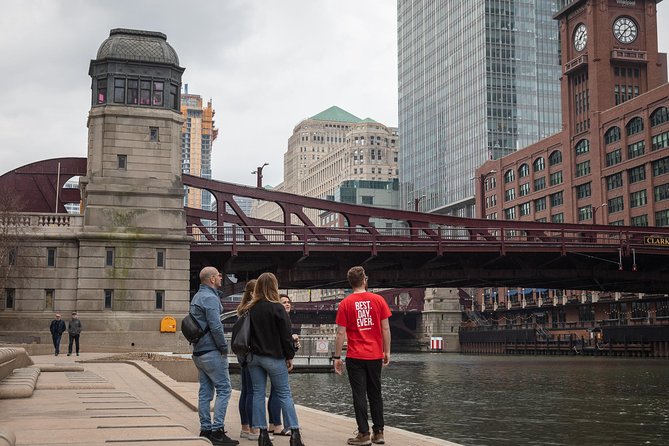
As you move through the Loop area, you’ll pass the City Hall–County Building, home to the Chicago city and Cook County government. This is one of those stops that’s easy to overlook if you’re not on foot with someone who points out what you’re seeing.
In Chicago, government buildings aren’t just administrative—they’re part of the urban story. Your guide’s narration here connects the dots between how the city ran, how neighborhoods changed, and why downtown became the stage for big events.
Even though you don’t stand here for long, it helps you understand the city as more than restaurants and skyline photos. It’s the place where civic power meets the streets you’re walking.
Chicago River walks, skyline views, and the daily commute feel
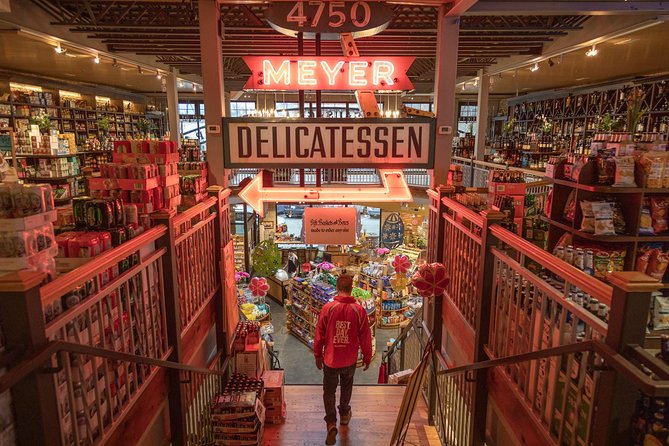
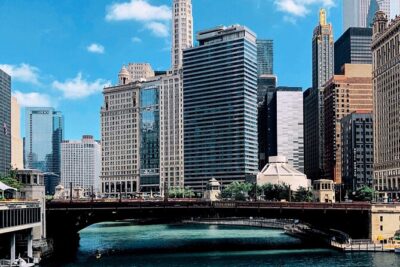
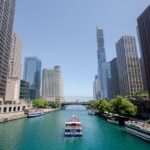
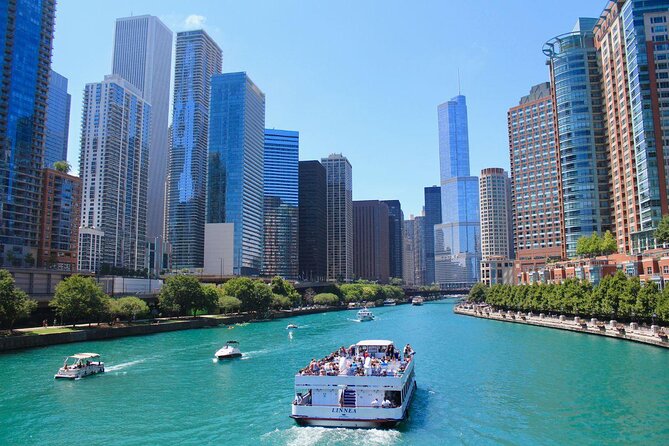
Next comes the Chicago River, and this is where the tour starts feeling like a proper city tour rather than a museum of buildings. You’ll walk past iconic structures, pause for skyline views, and follow the river corridor that has long been tied to Chicago’s growth.
What makes this section work is that it’s not just about the views. Your guide ties the river to daily patterns—how the city moves, how people work in the area, and how the skyline became part of everyday life, not a once-a-year postcard.
This is also a good moment to slow down. The river area gives you a natural break from constant narration, and it’s one of the better spots for photos without turning the whole tour into a stop-and-go bottleneck.
Wrigley Building to Tribune Tower: two skylines, two eras
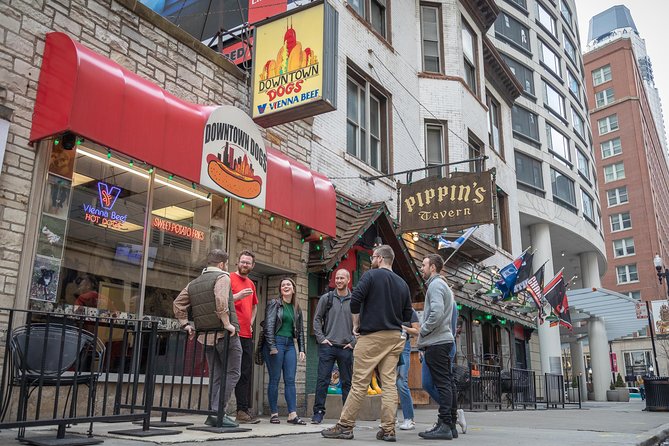
As you continue, you’ll pass the Wrigley Building on the Magnificent Mile. Built between 1920 and 1924 as the Wrigley Company headquarters, it’s one of those landmarks that helps you see downtown’s history in a single glance. Even if you don’t consider yourself an architecture person, it’s hard not to notice the ambition in buildings like this.
Then you’ll pass the Tribune Tower, the 463-foot, 36-story neo-Gothic skyscraper at 435 N Michigan Avenue. This one is especially useful because it shows how Chicago’s architectural language can shift styles without losing its identity.
If you enjoy details, your guide can make these stops click. It’s the difference between seeing a tall building and understanding what that building says about the city’s priorities—power, prestige, commerce, and public presence.
You can also read our reviews of more food & drink experiences in Chicago






Millennium Park and Cloud Gate: the Bean moment you can’t skip
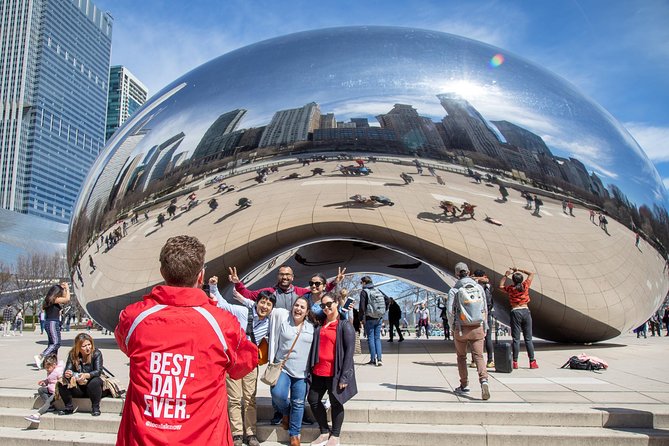
The tour takes you to Millennium Park, including the famous Cloud Gate sculpture, also known as The Bean. This is the part that feels instantly recognizable, even if you’ve never studied Chicago before.
The best value here is timing and placement. Instead of stumbling into Millennium Park randomly, you arrive as part of an organized route that has context behind it. Your guide also uses this stop to point you toward what to do next, which can save you time when you’re hungry and want a smart lunch or drink plan nearby.
For photos: The Bean is popular, so expect people moving around. Try to look for angles where you can catch the skyline reflection with fewer heads in the frame, and don’t be afraid to step a few paces to adjust—your guide will usually give you a minute to do it.
The food reality: enough bites to equal lunch, but not right away
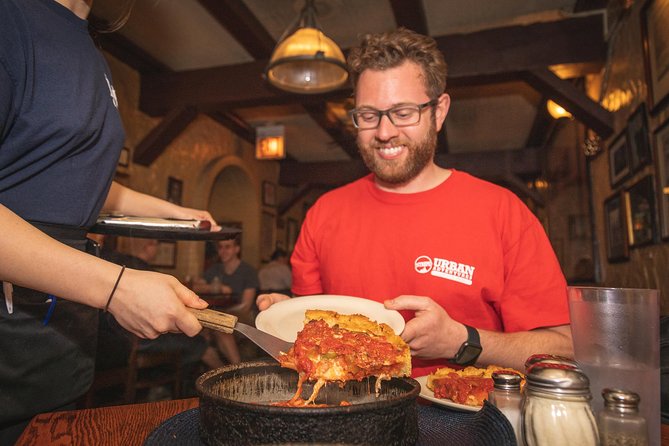
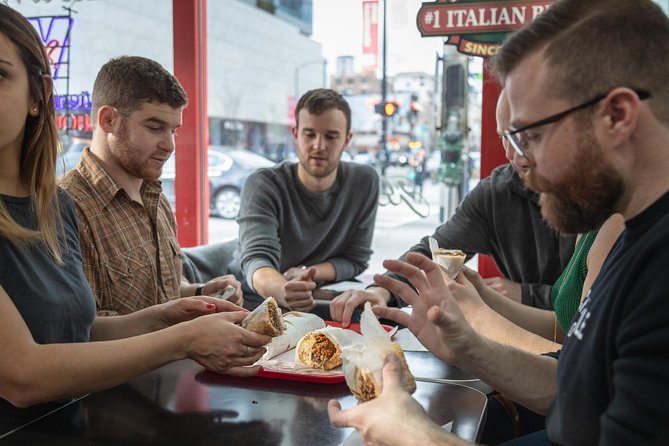
The food plan is built around Chicago classics: deep-dish pizza, Chicago hot dog, Italian beef, and additional bites like popcorn. The total amount is designed to equal a full meal, so you shouldn’t feel like you’re paying for a snack tour dressed up as history.
That said, there’s a consistent theme to pay attention to: the tour can start with sightseeing and tastings later than some people expect. Some guides may start earlier with a small bite such as popcorn around the first hour, but the bigger tasting may arrive well into the walk. If you’re the type who needs fuel fast, eat a light breakfast before you go.
Also, drinks and any extras aren’t included. You’ll likely get water with the meal stops, so if you’re sensitive to thirst on long city walks, bring a small bottle just in case. Downtown isn’t always quiet, either—when you’re moving and listening, it helps to stay hydrated.
Portion notes matter, too. The hot dog and Italian beef are not described as full restaurant servings; think sample-sized pieces that add up across the route. That’s normal for walking food tours, but it’s worth knowing if you’re expecting a full plate of each dish.
Architecture storytelling that makes the skyline make sense
The guide narration is a big reason this tour scores high. You’ll hear stories tied to Chicago’s past—things like Prohibition, the Great Fire, and immigrant history. Those topics might sound broad, but they connect directly to what you’re walking past.
Here’s what makes the storytelling effective for you: Chicago’s buildings and neighborhoods can feel random if you’re just looking at them. When someone links architecture choices to historical events and population shifts, the city becomes legible. Suddenly a style isn’t just a style; it’s a clue.
Different guides may emphasize different themes, but names like Dave, Dash, Rich, and John come up when people talk about the tour. The recurring praise pattern is the same: guides keep the group together, answer questions, and turn what could be a dry lecture into real street-level understanding.
Pace, walking distance, and how to set yourself up for comfort
You’ll cover about 3–4 miles (4.8 to 6.4 km) at a relaxed pace with regular stops. On paper, that sounds easy enough, but Chicago downtown walking adds up fast because you’re not just moving—you’re stopping for views, standing near buildings, and crossing busy streets.
Most people do fine because the pace is meant to be manageable. Still, plan for uneven sidewalks, winter traction issues, and the fact that downtown noise can make it hard to hear your guide unless you stay close.
If you have knee trouble or you know stairs and hills can slow you down, pick the most comfortable shoes you own and consider a slower start pace. Some guides take care to check in and help the group stay together, even when someone needs extra time between stops.
One practical tip: when your guide is talking outside on busy streets, the sound environment can get chaotic. If you want to hear clearly, position yourself where you’re not competing with traffic noise and construction sounds.
Small group energy: why max 12 changes the whole day
This tour is limited to 12 travelers, and that’s not marketing fluff. With a smaller group, you get more time for questions, and it’s easier for the guide to keep everyone together at street corners.
In the feedback, guides often get credited for group care—things like walking in ways that keep people close (including back-and-forth movement while talking), planning seating and restroom breaks, and adjusting when someone is struggling. That small-group structure makes those gestures possible instead of turning them into one-size-fits-all choreography.
The upside for you: you’re not trying to catch up while others wander a half-block ahead to take photos. You also get better recommendations at the end of the tour because you’re still part of the same conversation when you’re ready to choose lunch or a next stop.
Price and value: what $100.95 buys you (and why it can be fair)
At $100.95 per person for about 4 hours 30 minutes, this is not a bargain-basement “just walk with a person” tour. But you’re paying for a bundle: guided architecture and history plus enough food to equal a meal.
Here’s how I’d think about value before booking:
- Food included isn’t just one snack. It’s multiple Chicago icons, designed to add up to lunch.
- The route covers high-demand areas—Pedway, river corridor, Millennium Park—without you needing to figure out timing on your own.
- The cap of 12 people keeps your guide’s attention focused, which you feel most when your questions matter.
The main costs you should plan for are drinks beyond what’s offered with meals and gratuity. If you already planned a paid food stop plus a paid architectural overview, this starts to look like a solid shortcut.
Weather-proof planning and how to dress for a Chicago “walking day”
The tour runs in rain, shine, or snow. That means you should dress like you’re walking for several hours, not like you’re popping outside for one photo.
A good rule: bring a layer you can move in, shoes that handle slick pavement, and something to manage wind. Even with underground Pedway time, you’ll still spend time outside in this route.
If it’s bitterly cold, the Pedway becomes extra valuable. If it’s warm, you’ll want water and a sun-ready layer. The tour includes regular stops, but you shouldn’t rely on shade at every stop.
Where it ends: you get a head start on your next Chicago move
The tour finishes in River North, around the area near N Clark St & W Ontario St, with the Loop nearby. This is a helpful ending zone because you’re already positioned among restaurants, bars, museums, and more modern architecture.
Your guide typically uses this final stretch to recommend where to eat or what to do next, which can be a big deal if you only have a short time in Chicago. Instead of guessing and wasting an afternoon on the wrong place, you can pivot quickly while the city is still fresh in your mind.
So, should you book Chicago in a Day?
I’d book this if you want a guided “starter pack” for Chicago: architecture, skyline views, and Chicago food in one half-day plan. It’s especially good for first-timers who want to get their bearings fast without building an itinerary from scratch.
I’d hesitate if you hate long walking sessions or you get cranky when food comes later than you expect. In that case, eat a light breakfast, bring water, and be ready for a sightseeing-heavy first stretch.
If you match the pace and like learning while you walk, this tour offers strong value—because you don’t just see landmarks, you understand why they belong to Chicago.
FAQ
How long is the Chicago in a Day walking tour?
It lasts about 4 hours 30 minutes (approx.).
How much walking should I expect?
Expect approximately 4.8 to 6.4 km (3–4 miles) of walking at a relaxed pace with regular stops.
What food is included?
You’ll taste Chicago classics including deep-dish pizza, a hot dog, Italian beef, and more included bites designed to equal a full meal.
Are vegetarian options available?
Yes. Vegetarian options are available, but other food allergies or dietary preferences can’t be accommodated. Let the provider know in advance if you need a vegetarian option.
Is this tour family-friendly?
Yes. It’s suitable for families, and children under 4 can join free of charge. A reduced child price applies for ages 4 to 11.
What if the weather is bad?
The experience runs rain, shine, or snow. Dress appropriately for the conditions, and it may be adjusted by the provider if needed.
What’s not included in the tour price?
Gratuity is not included. Drinks and additional food are not included.
Where does the tour start and end?
It starts at the Chicago Theatre area (175 N State St). It ends in River North, near N Clark St & W Ontario St.