REVIEW · CHICAGO
Chicago Walking Tour: Historic Treasures of Chicago
Book on Viator →Operated by Chicago Architecture Center · Bookable on Viator
Chicago clicks on this walk. This small-group Loop tour mixes quick sights and expert narration as you move between Michigan Avenue and State Street, plus you get interior time at major public spaces like the Chicago Architecture Center and the Chicago Cultural Center. I also like that the guides lean into real stories, so landmarks stop being names and start feeling like part of the city’s personality.
The one real catch is entry rules at the Palmer House Hilton Historic Lobby: you need proof of COVID-19 vaccination to go inside. If you cannot provide that, you’ll still see the exterior, but you should expect the indoor moment to be off-limits.
In This Review
- Key highlights at a glance
- A Loop walking tour that stays human-sized
- Start strong: Chicago Architecture Center galleries and a docent intro
- Wrigley Building: a quick exterior breather that still teaches you how to look
- Palmer House Hilton Historic Lobby: the interior moment, with a vaccine requirement
- Carbide and Carbon and the Reliance Building: exterior viewpoints with personality
- Chicago Cultural Center: the finish where interiors feel like civic theater
- How $35 turns into real value in two hours
- Who this tour fits best (and who should skip it)
- Practical tips to make the 2-hour walk work for you
- Should you book Historic Treasures of Chicago?
- FAQ
- How long is the Chicago Walking Tour Historic Treasures of Chicago?
- Where do I meet, and where does the tour end?
- What is included in the $35 ticket price?
- Is admission to the Chicago Architecture Center included?
- Do I need anything special to enter the Palmer House Hilton Historic Lobby?
- How large is the group?
- Can I cancel for a full refund?
- Are pets allowed?
- FAQ
- How long is the Chicago Walking Tour Historic Treasures of Chicago?
- Where do I meet, and where does the tour end?
- What is included in the $35 ticket price?
- Is admission to the Chicago Architecture Center included?
- Do I need anything special to enter the Palmer House Hilton Historic Lobby?
- How large is the group?
- Can I cancel for a full refund?
Key highlights at a glance
- Docent-led Chicago Architecture Center galleries as your quick primer before you hit the streets
- Wrigley Building and other iconic exteriors worked into a tight 2-hour flow
- Palmer House Hilton Historic Lobby interior stop with a specific vaccination requirement
- Carbide and Carbon Building and Reliance Building viewpoints you can actually notice on foot
- Chicago Cultural Center exterior and interior capped with that classic downtown wow
A Loop walking tour that stays human-sized
If you’ve ever done an architecture tour where you feel like you’re speed-walking in a crowd, this one is built to feel different. The group max is 15 people, so you get more back-and-forth instead of a one-way lecture. The route is compact too, and it fits into about two hours, which matters because downtown Chicago can drain your energy fast if you spend too long commuting between stops.
I like that it’s not just “look up at tall buildings.” The tour is designed around the city’s famous downtown eras: the skyscraper heyday and art deco-era interiors. That framing helps you connect what you’re seeing right now with what Chicago was trying to prove back then: style, ambition, and civic identity all mixed together in stone, steel, and public spaces.
And because it starts at the Chicago Architecture Center and ends at the Chicago Cultural Center, you don’t feel trapped in the middle. You’ll finish in a major landmark area where it’s easy to keep exploring on your own if you want.
You can also read our reviews of more walking tours in Chicago



Start strong: Chicago Architecture Center galleries and a docent intro
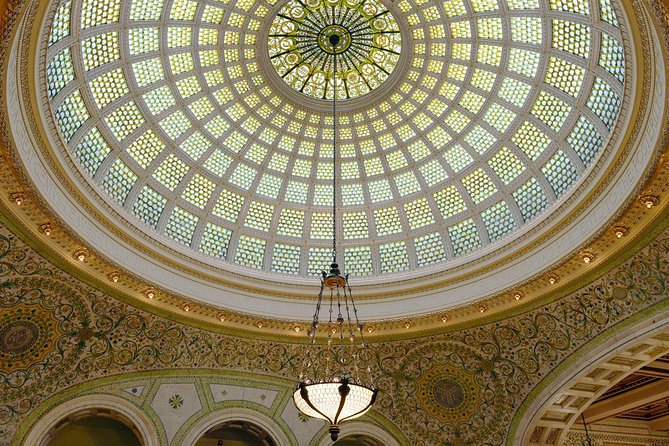
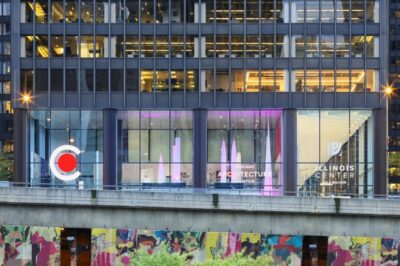
Your walk begins at the Chicago Architecture Center, 111 E Wacker Dr. Admission to the galleries is included, and you’ll get introductory remarks from the docent before you head out.
This matters more than it sounds. If you jump straight into street-level sightseeing without context, it’s easy to miss the “why.” The CAC stop gives you a scaffold for the rest of the tour—how to look at buildings as decisions made by people, not just dramatic backdrops for selfies.
It also sets the tone for the whole experience. You’ll hear what to pay attention to as you move along, which makes even the quick exterior views feel intentional. The group stays together, the pace is short-burst, and you’re not stuck standing still for long stretches at each stop.
Wrigley Building: a quick exterior breather that still teaches you how to look
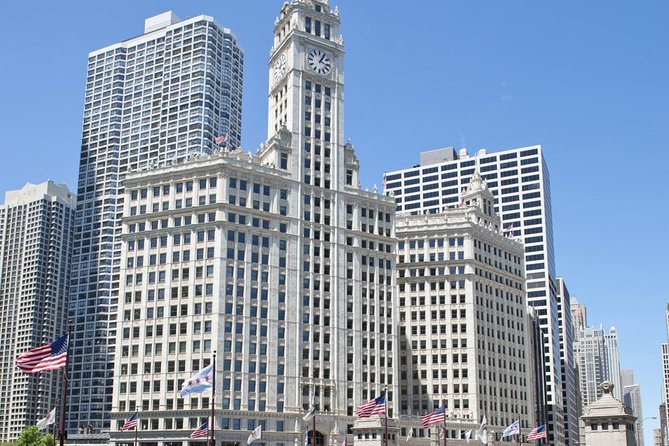
Next you’ll get a view of the Wrigley Building. This is a short stop—think a moment to check it out, not a long debate over architectural trivia.
What I like about this kind of stop is that it resets your eyes. In downtown, it’s tempting to treat buildings like wallpaper. A quick, guided exterior view helps you slow down for five minutes and spot the kinds of details your guide points out through the story they’re telling.
Even when you’re moving, the tour keeps the focus on architecture. So this stop is less about getting every angle and more about learning a method: look, listen, connect the design to the city’s bigger timeline.
Palmer House Hilton Historic Lobby: the interior moment, with a vaccine requirement
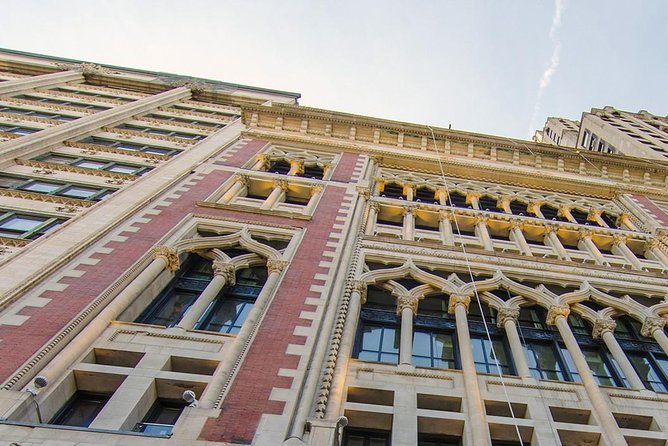
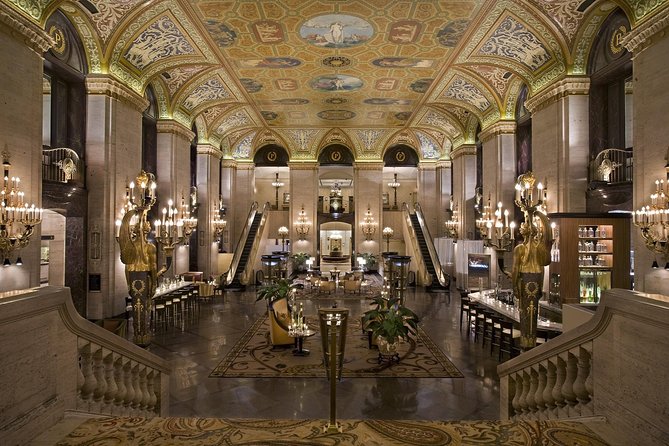
One of the most memorable parts of this tour is the Palmer House Hilton Historic Lobby stop. You get both exterior and interior time here, and the admission ticket is free—so in terms of cost, it’s a win.
But here’s the key consideration: proof of COVID-19 vaccination is required to enter the lobby interior. If you don’t have the documentation, you may have to stop at the exterior view only.
I think it’s still worth planning around because the interior access is exactly the sort of “tickets are included” value that makes a walking architecture tour feel more than just curbside sightseeing. It turns the tour from street viewing into a couple of real-room encounters, which is where architectural storytelling hits hardest.
Carbide and Carbon and the Reliance Building: exterior viewpoints with personality
After Palmer House, you’ll shift to two more quick exterior moments: the Carbide and Carbon Building and the Reliance Building. Each is brief, but the point isn’t to linger—it’s to keep momentum while still covering landmarks that many people overlook.
This is where the pacing strategy shines. You’re walking, you’re hearing the narrative, and you’re stopping just long enough to connect the dots. If you like architecture because of the details—how design signals confidence, identity, or progress—these shorter stops prevent the tour from turning into an endurance test.
Also, because the group is small, you’re not constantly waiting for someone to catch up. That makes it easier to keep your attention on what matters: the guide’s commentary and the design choices visible from street level.
You can also read our reviews of more historical tours in Chicago






Chicago Cultural Center: the finish where interiors feel like civic theater
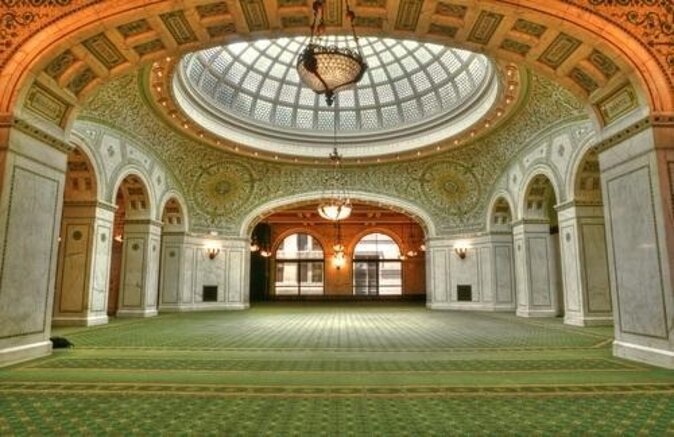
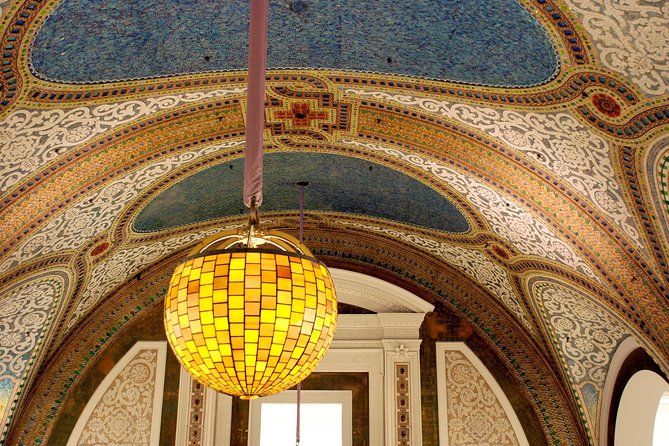
The tour ends at the Chicago Cultural Center, 78 E Washington St. You’ll see both the exterior and interior here, and this is another major value add because interior access is part of the experience.
I like ending at a place that already feels like a destination. The Chicago Cultural Center works well as a closing chapter: it gives you a final “architecture in public life” moment after the skyscraper-era framing you’ve heard on the walk. It’s the kind of stop that makes you understand how Chicago treats design as something meant for everyday people, not only for wealthy offices and luxury towers.
You’ll get about ten minutes here, which is short, but it’s a good balance for a two-hour tour. Then the docent returns to the Chicago Architecture Center, and you’re welcome to accompany them if you want to make a loop of it. Either way, you’re positioned in a central spot for more wandering.
How $35 turns into real value in two hours
At $35 per person for about two hours, this tour is priced like a guide-led experience, not like a museum day. And that’s exactly what you’re getting: narration by a professional and certified guide plus admission to the galleries at the Chicago Architecture Center.
What’s not included is also important context. You won’t get hotel pickup or drop-off, and there’s no luggage storage, stroller storage, or coat check. You’ll want to travel light and be ready to move on foot between downtown locations.
The way value stacks up looks like this:
- One included paid component: Chicago Architecture Center galleries
- Other landmark moments: mostly exterior views
- One included interior experience: the Palmer House lobby, but with the vaccination documentation requirement
- One more included interior experience: the Chicago Cultural Center
So you’re paying primarily for expert guidance and the included admissions that make the walk feel substantial. If you already plan to spend time in the Loop anyway, $35 is a fair way to make that time smarter, not longer.
Also, this tour is booked about 10 days in advance on average, so if you have fixed dates, it’s smart to reserve early rather than hoping for last-minute availability.
Who this tour fits best (and who should skip it)
This is a great fit if you like architecture but don’t want to treat it like a research project. You’ll get a tight set of stops tied to Chicago’s famous downtown eras, plus you’ll have time for questions. In past tours, guides such as Bob P and Russell have been praised for being open to questions and mixing facts with humor, which is a good sign for anyone who learns best through conversation.
You’ll also like it if you want interiors without building-by-building planning. Two included interior stops in a short walk is a strong tradeoff for people who don’t want to spend the day chasing tickets.
Skip it if you can’t or won’t handle the Palmer House lobby vaccination proof requirement. That’s the main place where the experience could be reduced for you. And if you need storage for bags or strollers, remember there’s no coat check or storage here, so you’ll want a lightweight setup.
Practical tips to make the 2-hour walk work for you
A few small things will help your day feel smooth:
- Wear walking shoes. It’s downtown, and the whole experience depends on moving at a steady pace.
- Travel with minimal baggage. Since there’s no storage or coat check, you’ll carry whatever you bring.
- Have your documentation ready if you’re entering Palmer House. Proof of COVID-19 vaccination is required for the interior there.
- Bring your questions. The best part of a guided architecture walk is the chance to ask how the stories connect. Guides in this program are often described as welcoming questions.
- Plan to meet at the CAC on time. With no hotel pickup, you’re responsible for getting to 111 E Wacker Dr and starting with the group.
One more note: downtown plans can shift with parades and crowds. In some departures, guides have had to adjust on the fly when street activity affected the route. That’s another reason to keep an open mind and focus on the overall learning arc of the walk.
Should you book Historic Treasures of Chicago?
I’d book this tour if you want a compact, guided way to understand Chicago’s downtown architecture without committing to a half-day or more. The combination of small group size, CAC gallery admission, and interior time at the Chicago Cultural Center makes the $35 feel like a focused investment, not a gamble.
You should also book it if you like guides who talk like real humans—friendly, humorous, and willing to answer questions. Names that have come up in past departures include Bob P, Russell, John, Jim, Maureen, Laurel, Margaret, Jean, and Beth, and the consistent theme is that the tour doesn’t feel cold or purely academic.
Just be honest about the biggest decision point: if you can’t meet the Palmer House vaccination requirement for interior entry, you may not get the full payoff from that stop. If that’s fine for you, the rest of the tour still gives you a strong architecture overview and a great ending at the Chicago Cultural Center.
FAQ
How long is the Chicago Walking Tour Historic Treasures of Chicago?
It lasts about 2 hours.
Where do I meet, and where does the tour end?
You meet at the Chicago Architecture Center, 111 E Wacker Dr, Chicago, IL 60601. The tour ends at the Chicago Cultural Center, 78 E Washington St, Chicago, IL 60602.
What is included in the $35 ticket price?
You get a walking tour with narration by a professional and certified guide, plus admission to the galleries of the Chicago Architecture Center.
Is admission to the Chicago Architecture Center included?
Yes. Admission to the galleries of the Chicago Architecture Center is included.
Do I need anything special to enter the Palmer House Hilton Historic Lobby?
Yes. Proof of COVID-19 vaccination is required to enter that interior location.
How large is the group?
The tour has a maximum of 15 travelers.
Can I cancel for a full refund?
Yes, free cancellation is available. You can cancel up to 24 hours in advance of the experience start time for a full refund.
Are pets allowed?
No, pets are not allowed. Service animals are allowed.
FAQ
How long is the Chicago Walking Tour Historic Treasures of Chicago?
It lasts about 2 hours.
Where do I meet, and where does the tour end?
You meet at the Chicago Architecture Center, 111 E Wacker Dr, Chicago, IL 60601. The tour ends at the Chicago Cultural Center, 78 E Washington St, Chicago, IL 60602.
What is included in the $35 ticket price?
You get a walking tour with narration by a professional and certified guide, plus admission to the galleries of the Chicago Architecture Center.
Is admission to the Chicago Architecture Center included?
Yes. Admission to the galleries of the Chicago Architecture Center is included.
Do I need anything special to enter the Palmer House Hilton Historic Lobby?
Yes. Proof of COVID-19 vaccination is required to enter that interior location.
How large is the group?
The tour has a maximum of 15 travelers.
Can I cancel for a full refund?
Yes, free cancellation is available. You can cancel up to 24 hours in advance of the experience start time for a full refund.