Chicago’s Gold Coast has stories you can hear.
This self-guided audio walk is an easy way to explore by offline GPS while a local historian guides you past landmarks and lesser-known facts. I like the budget-friendly price (just $7.99) for a full, story-led walk, and I also like that you get lifetime access, so you can repeat it later at your own speed. One thing to consider: the experience depends on the VoiceMap app, and the GPS or autoplay can be a little fussy on some phones, so it helps to be comfortable with quick map checks.
The route is built around three standout stops in the Gold Coast area, starting at the Chicago History Museum and finishing at the Zebra Lounge. It’s designed for an independent pace, which I think is perfect when you want to pause for photos, then get moving again without waiting on anyone. If you want a strict, tightly timed itinerary, this might feel too flexible and too dependent on your phone. Still, for a casual afternoon walk, it’s a smart use of your time.
In This Review
- Key points before you hit play
- Gold Coast storytelling, without the group hassle
- Starting at the Chicago History Museum on N Clark
- Stop 1: Dioramas, Lincoln’s deathbed, and the South Side Elevated
- Stop 2: The International Museum of Surgical Science in a 1917 mansion
- Stop 3: Zebra Lounge on Canterbury Court Apartments
- VoiceMap app, offline maps, and the GPS reality check
- Timing: why 50 minutes can turn into 90
- Price and value: what $7.99 really covers
- Who this Gold Coast audio walk fits best
- The hidden history angle: what you’ll learn while walking
- Should you book Chicago’s Gold Coast Hidden History?
- FAQ
- How much does the Chicago Gold Coast Hidden History audio walk cost?
- How long is the self-guided audio walk?
- Do I need a smartphone?
- Is the tour available in English?
- Does it work with offline maps and audio?
- What are the start and end points?
- Does the tour include museum or attraction tickets?
- How many people are in a group for this experience?
- Is this experience refundable?
Key points before you hit play

- Offline GPS and offline audio mean you can keep walking without worrying about spotty cell service.
- Local historian narration turns familiar buildings into something you’ll remember.
- Lifetime access lets you redo the walk later, not just once.
- Three major stops make it feel like a mini tour without committing all day.
- End at Zebra Lounge so your walk has a built-in night-out option.
- The app can need troubleshooting (like reloading the tour or fixing autoplay) if it doesn’t start smoothly.
Gold Coast storytelling, without the group hassle
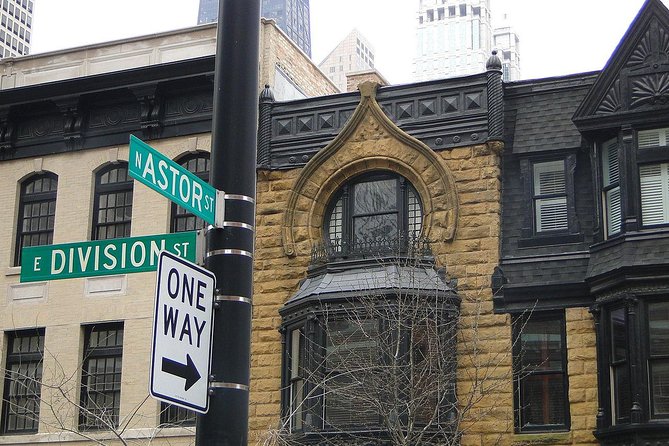
The Gold Coast is the kind of neighborhood where you can walk blocks and feel like you’re flipping through a history book. The difference here is that you’re not just looking at buildings. You’re listening to a local historian connect the dots between Chicago’s past and what you see today.
I like that the tour is framed as hidden history, not an endless list of dates. You get stories tied to specific places, which makes the neighborhood feel smaller and more navigable. And because it’s smartphone-based, you’re not stuck reading signs or scanning QR codes at every corner.
If you’re the type who hates group schedules but still wants more context than a generic walking app, this hits a nice middle ground: you control the pace, but you’re guided.
You can also read our reviews of more guided tours in Chicago



Starting at the Chicago History Museum on N Clark

The walk begins at the Chicago History Museum, 1601 N Clark St (Lincoln Park end of downtown-adjacent Chicago). It’s a convenient start because it’s a major landmark area with plenty to do around it, so you’re not committing to a route in total isolation.
From a practical standpoint, this matters. You can arrive, get your headphones on, and confirm the app is working before you step too far away. The tour runs about 50 minutes on the directions, but in real life you’ll likely spend extra time orienting yourself, checking the map, or lingering when something grabs your attention.
Also note: the tour does not include a smartphone. You’ll need your own device to run the VoiceMap app, plus headphones or speaker audio.
Stop 1: Dioramas, Lincoln’s deathbed, and the South Side Elevated
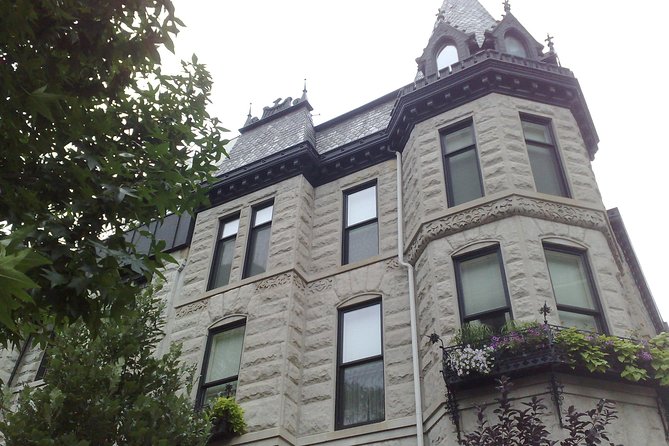
The first stretch layers big museum context with very Chicago specifics. At the Chicago History Museum, you’ll want to look for the newly restored dioramas that show Chicago’s rise from a frontier outpost to the city you know now. Dioramas can sound gimmicky, but when you’re walking in the Gold Coast afterward, they help you understand why the neighborhood developed the way it did.
This stop also pulls in transit history. You’ll hear about the South Side Elevated Railroad, which is described as the first-ever elevated rapid transit line in Chicago. The story includes how it was used to shuttle fair goers to the World’s Columbian Exposition. Even if you’re not a transit nerd, this is a useful reminder that “where people could go” shaped Chicago’s growth.
Then there’s one of the most dramatic museum moments in the region: Abraham Lincoln’s deathbed. It’s the kind of artifact that makes your brain switch gears from neighborhood walking to national history in one step. It also sets a tone for the rest of the tour: this isn’t only about pretty streets. It’s about turning points.
If you’re short on time, you can treat this as a “watch and listen” stop, not a full museum day. But if you have extra energy, the museum area makes it easy to add time without ruining your day.
Stop 2: The International Museum of Surgical Science in a 1917 mansion
Next up is the International Museum of Surgical Science, and it’s not just what’s inside—it’s where it’s housed. The museum sits in a 1917 mansion with a Chicago-style interpretation of the Petit Trianon of Versailles. That blend matters, because it mirrors Chicago itself: old-world ambition mixed with local building culture.
The exhibits focus on different aspects of Eastern and Western medicine. If you’ve ever wondered why medical history is such a complicated mix of science, culture, and innovation, this is the kind of place that can make you pause mid-walk. You’re not being asked to memorize details. You’re getting guided context that gives the building and neighborhood meaning.
One practical note: this is an attraction stop, but your audio walk does not include tickets. So plan on paying museum admission if you choose to go inside and spend time there. If you only have time for a quick look, you can still enjoy the exterior-to-context connection the audio guide sets up.
Stop 3: Zebra Lounge on Canterbury Court Apartments
The walk finishes at the Zebra Lounge in the Canterbury Court Apartments, 1220 N State Pkwy. This is one of those Chicago locations where the setting is part of the story. The lounge is tucked into the lobby of a vintage apartment building in the glam Gold Coast, and it has featured live piano players seven nights a week since 1929.
The audio guide paints it as a classic end-of-the-night stop—piano-side, sipping lemon drops, and singing along with the piano man into late hours. Even if you don’t plan to stay, the location makes a strong finish. It gives you a “destination” feeling instead of just walking back to where you started.
It’s also useful that the venue is listed as open 12:00 AM to 11:59 PM in the provided info. Real-world hours can still vary by season or special events, so I’d still treat it as a best-available listing and double-check if you’re arriving very late.
If you want to turn your walk into an evening plan, this ending is a gift. If you don’t, you still end in an area with plenty of options.
You can also read our reviews of more historical tours in Chicago




VoiceMap app, offline maps, and the GPS reality check
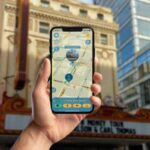
The tour’s big promise is simple: use the VoiceMap application, follow the GPS route, and listen to audio tied to each stop. The key feature is offline access to audio, maps, and geodata. In Chicago, that’s not just a nice-to-have. Downtown signal can be good, but it’s not guaranteed.
I also like that the tour comes with lifetime access, meaning you can revisit the route later without paying again. If you’re a planner, you can save it for future trips, seasonal walks, or when you return to museums like the Chicago History Museum.
That said, the app is the middleman. In practice, phones differ. Some devices may need a moment to load the tour, and GPS sometimes needs extra attention.
Here’s how I’d protect your day:
- Start with the app open and audio ready before you walk away from the start point.
- If autoplay or tracking seems stuck, pause and force a quick reset inside the app (not hours later—right away).
- If GPS drops you or jumps, zoom in on the map, find your position, and re-orient to the next direction before continuing.
You don’t need to be techy. You just need to be willing to do a 30-second sanity check instead of assuming the app is always perfect.
Timing: why 50 minutes can turn into 90
The directions suggest about 50 minutes. That’s a helpful baseline, but you’ll likely add time in one of three ways: you’ll stop to read something, you’ll take photos, or you’ll want a short break between stops.
A smart rule: if you only do the audio and keep moving, 50 minutes can work. If you want to actually look around at the major points and maybe step into one attraction, I’d budget 1.5 hours.
This matters because the walk is designed around specific locations and stories, not a “straight shot” route. The neighborhood is walkable, but you’ll still want time for the human stuff—street views, quick museum moments, and deciding whether Zebra Lounge is a now-or-later choice.
Price and value: what $7.99 really covers
At $7.99 per person, this is priced like a bargain relative to guided tours. The value comes from what’s included:
- Lifetime access to the Gold Coast Hidden History tour
- VoiceMap application access
- Offline access to audio, maps, and geodata
What you should not expect it to cover:
- A smartphone
- Transportation
- Food and drink
- Tickets or entrance fees for any museums or attractions en route
So the math is simple. If you’re already planning to walk the Gold Coast and you’ll visit at least one attraction stop, the audio portion can feel like a low-cost upgrade to your day. If you’re the type who only wants to look from the sidewalk, you might still enjoy the audio, but the museum admission cost won’t be part of the package.
Also, because it’s lifetime access, you’re not paying just for today. If you return to Chicago later, or you want a second pass with fresh attention, the $7.99 becomes even easier to justify.
Who this Gold Coast audio walk fits best
This kind of tour fits best when you want structure but not a group dynamic. I like that it’s described as feeling like having a guide without the coordination headache. You can pause, replay, and slow down when something stops you cold—architecture, transit history, or a specific story connected to a place.
It also helps that the tour is designed for English narration and is open to most travelers. There’s a maximum of 10 travelers, which suggests it stays controlled if you’re adding it to other plans.
Two more practical fit notes:
- It’s near public transportation, so you can slot it into an itinerary without committing to a car.
- Service animals are allowed, which is helpful for many travelers.
If you strongly prefer a fully hosted experience—someone setting the pace, handling timing, and answering spontaneous questions—then a live guide might feel more satisfying. But if you’re a self-guided walker who values context and flexibility, this is a very solid match.
The hidden history angle: what you’ll learn while walking
The Gold Coast can look like it’s all mansions and money at first glance. The audio guide pushes back on that idea by tying stories to specific moments in Chicago’s growth.
At the Chicago History Museum, you’re set up to understand the city’s climb. Then the route swings into medicine and scientific development via the International Museum of Surgical Science, housed in that 1917 mansion with its Versailles-inspired design language.
Finally, it lands on nightlife and local character at Zebra Lounge. That arc—city growth, human invention and care, then the cultural scene—makes the walk feel like a proper slice of Chicago instead of random points on a map.
You’ll also hear about other historical threads along the way, including details like the Couch Mausoleum and surviving elements related to the Great Chicago Fire, plus Chicago street and public-history stories tied to the neighborhood.
You don’t need to be a history major. You just need to be curious.
Should you book Chicago’s Gold Coast Hidden History?
Book it if you want:
- A low-cost way to get meaningful context in a walkable neighborhood
- Offline audio and maps so you can wander without stressing over signal
- A repeatable experience thanks to lifetime access
- A finish at Zebra Lounge that can turn your walk into a real plan
Skip it or think twice if:
- You expect a fully friction-free app experience every time
- You need someone to manage time tightly (no pausing, no map checks)
- You don’t want to use your own phone or headphones
My take: at $7.99, this is the kind of add-on that can make a Gold Coast afternoon feel way more personal. Just go in knowing it’s self-guided, phone-powered, and best enjoyed when you’re willing to occasionally check the map instead of letting your GPS do all the thinking.
FAQ
How much does the Chicago Gold Coast Hidden History audio walk cost?
It costs $7.99 per person.
How long is the self-guided audio walk?
The duration is listed as about 50 minutes.
Do I need a smartphone?
Yes. The tour includes the VoiceMap app and offline access, but it does not include a smartphone.
Is the tour available in English?
Yes, it is offered in English.
Does it work with offline maps and audio?
Yes. It includes offline access to audio, maps, and geodata, and it uses GPS maps.
What are the start and end points?
It starts at the Chicago History Museum, 1601 N Clark St, Chicago, IL 60614, and ends at Zebra Lounge, Canterbury Court Apartments, 1220 N State Pkwy, Chicago, IL 60610.
Does the tour include museum or attraction tickets?
No. Tickets or entrance fees for museums or attractions en route are not included.
How many people are in a group for this experience?
The maximum is listed as 10 travelers.
Is this experience refundable?
No. It is non-refundable and cannot be changed for any reason.