REVIEW · CHICAGO
Chicago: Tiffany Art Glass Works Walking Tour
Book on GetYourGuide →Operated by Chicago Architecture Center · Bookable on GetYourGuide
Tiffany glass turns city corners into stories. This 90-minute, small-group walk through Chicago’s best art-glass stops connects Louis Comfort Tiffany’s life to the mosaics and decorative glass you’ll spot in major landmarks, starting at the Chicago Cultural Center.
I like the scale of what you get to see, including some of the biggest Tiffany art-glass examples in Chicago. I also like the built-in comparison angle, where the guide helps you notice how Tiffany’s style relates to newer art-glass installations.
One possible drawback: it runs rain or shine, and there’s no secure storage for luggage or strollers, so plan to travel light.
In This Review
- Quick hits before you go
- Starting inside the Chicago Cultural Center, and why that matters
- Your guide’s job: connect glass details to the man behind them
- The Tiffany domes at the Cultural Center: where to look first
- Walking between landmark buildings: art-glass isn’t just for museums
- Macy’s (Field’s) Tiffany ceiling: the lesson in scale and surprise
- Former public library: civic art-glass that feels human
- Marquette Building: when office architecture carries decorative ambition
- Comparing Tiffany with contemporary art-glass installations
- Chicago Architecture Center galleries: the short indoor boost
- Value and pacing: $35 for a high-impact, 90-minute hit
- Who should book this tour
- Plan smart for comfort on a rain-or-shine walk
- Should you book the Chicago Tiffany Art Glass Works Walking Tour?
- FAQ
- Where does the tour meet?
- How long is the tour?
- What’s the price?
- Is the tour guided?
- Does the tour run in bad weather?
- Is it wheelchair accessible?
- Are pets allowed?
- Is there storage for luggage or strollers?
- What is included in the ticket price?
Quick hits before you go
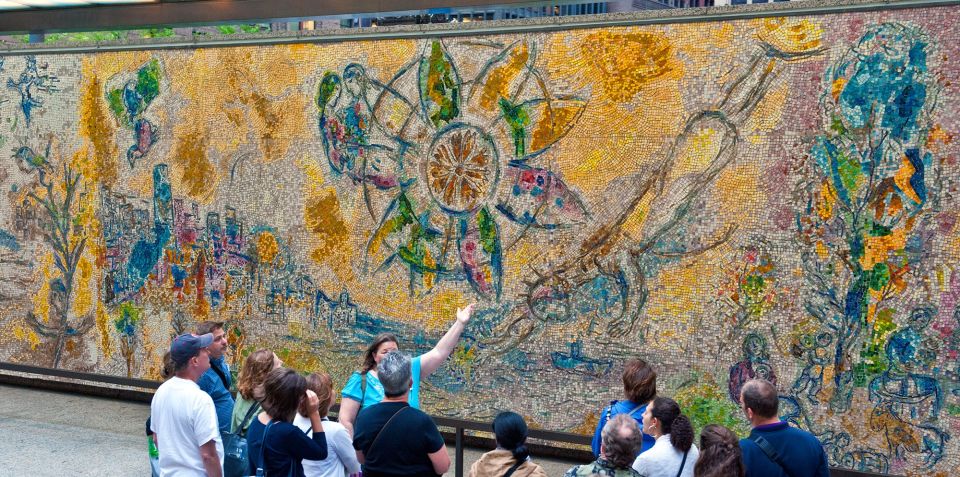
- Chicago Cultural Center Tiffany domes: start with breathtaking, room-filling glass.
- Louis Comfort Tiffany, explained clearly: you’ll learn how his work became part of Chicago’s public look.
- Macy’s/Field’s Tiffany ceiling: retail architecture becomes a showcase for decorative glass.
- Former public library stop: civic space uses art-glass and mosaics to feel more human.
- Marquette Building presentation: office-tower details that many people miss.
- Small group pace (up to 10): enough time for questions without turning into a lecture line.
Starting inside the Chicago Cultural Center, and why that matters
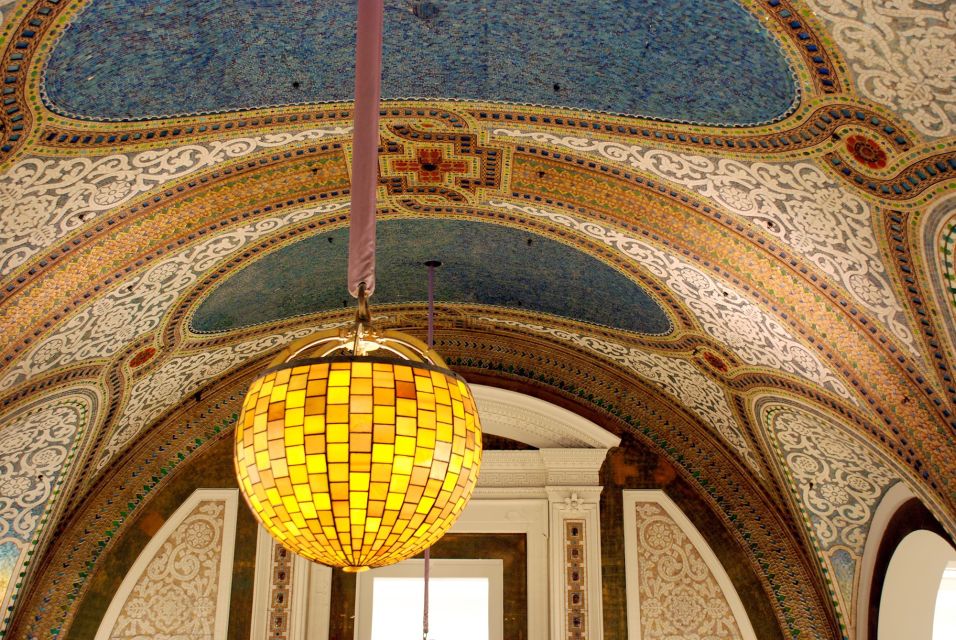
Your tour meets in the north lobby of the Chicago Cultural Center (77 E Randolph Street). Right away, you’re in the right mood: this building sets the tone for the whole experience with its own sense of decorative ambition.
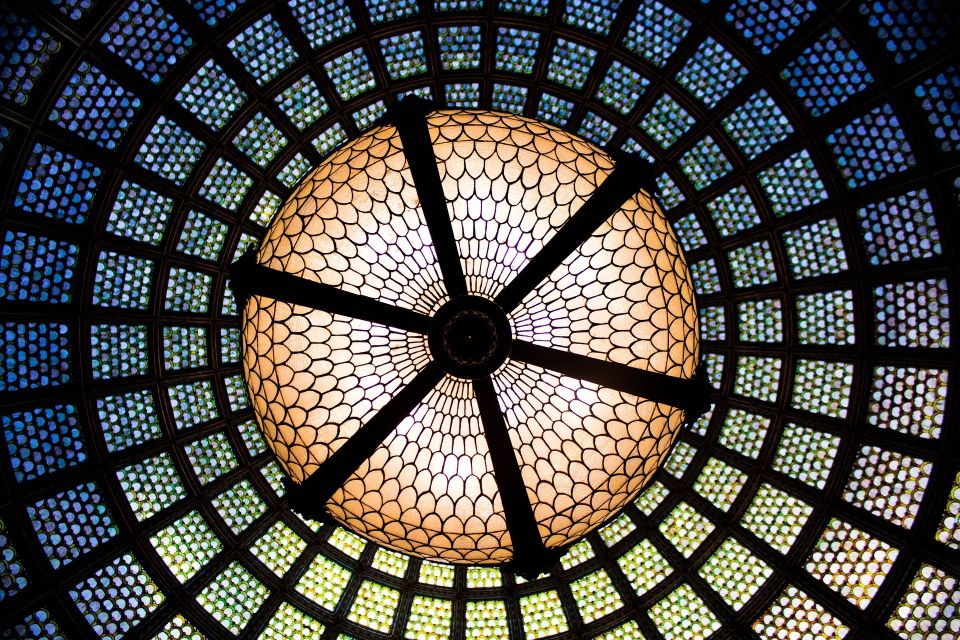
A big reason to start here is that the Tiffany glass you’ll see in this space isn’t treated like a side quest. It’s the main event, with the two Tiffany glass domes described as breathtaking in the real-world experience people share after the tour. That first visual hit makes every later stop make more sense.
And because you’re with a professional and certified guide, you don’t just stare. You learn what you’re looking at—materials, design choices, and why Tiffany’s approach caught on.
You can also read our reviews of more walking tours in Chicago



Your guide’s job: connect glass details to the man behind them
This walk is narrated start-to-finish, and that’s crucial with art-glass. Glass can look “pretty” at first glance, but the meaning comes from design logic and context—how Tiffany thought, how the Tiffany Glass and Decorating Company worked, and why these installations show up in both public and private buildings.
You’ll also get a guided explanation of Louis Comfort Tiffany’s life and work. That background helps you see Tiffany less like a brand and more like a maker with a specific visual language. It also helps you understand why the installations weren’t just decoration—they were identity.
One helpful thing from the tour style: the guide ties the stop you’re at to the next one you’ll see. So when you move from a dome-like space to ceiling or mosaic work, you’re not starting over with a blank slate.
The Tiffany domes at the Cultural Center: where to look first
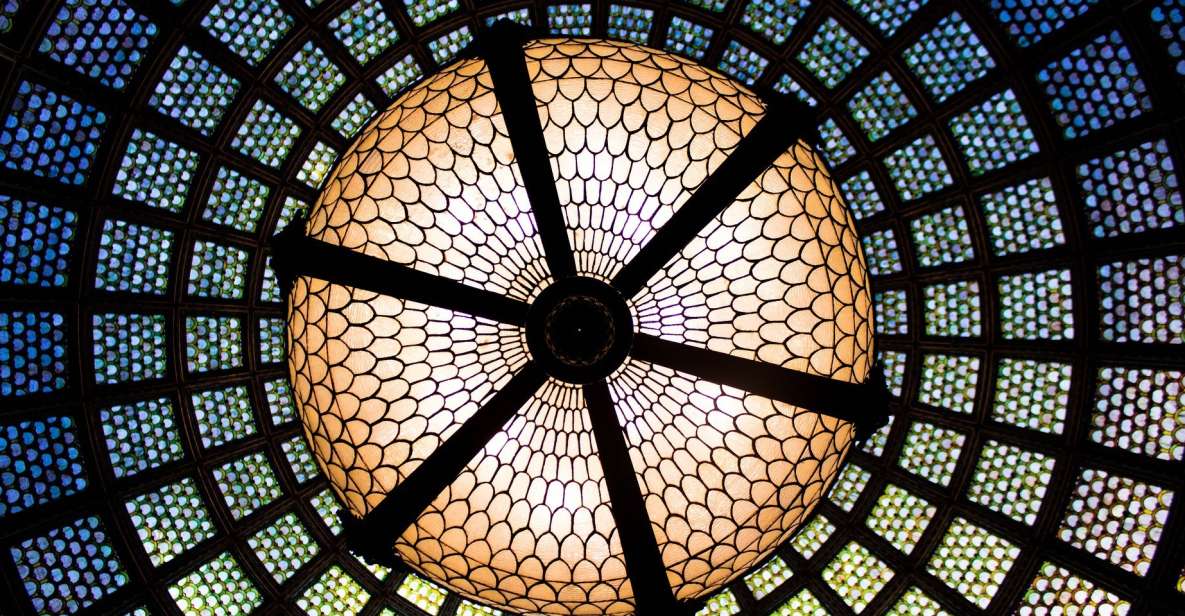
Once you’re inside, give yourself permission to look slowly. With domes, your instinct is to find the brightest area and move on. Your guide encourages you to notice the pattern logic instead: how the design flows, how light changes the look, and how different glass elements create depth.
This is also where the tour’s “biggest Tiffany works” promise starts feeling real. When people call the domes breathtaking, they usually mean more than color. They mean scale, craftsmanship, and the way the glass turns the space into a kind of atmosphere.
If you want to get the most out of this stop, stand where you can see how the dome reads from multiple angles. Even a small shift can change how the glass catches the light, and that’s exactly the kind of detail a good guide points out.
Walking between landmark buildings: art-glass isn’t just for museums
After the Cultural Center, the tour shifts into street-level Chicago, where Tiffany art-glass shows up in places you might not expect. The point isn’t only to list famous buildings; it’s to show you how decorative glass and mosaics became part of the city’s everyday architecture.
The tour includes a look at public-facing spaces and commercial ones. That mix matters because it answers a practical question: why did Tiffany-style glass work for both civic pride and business branding?
Here’s where the small group size (limited to 10) helps. You can pause for a close look at exterior details without getting rushed by the next stop in a giant crowd.
Macy’s (Field’s) Tiffany ceiling: the lesson in scale and surprise
One of the most fun parts of this walking tour is the stop where people discover a Tiffany glass ceiling at Macy’s (Field’s). Retail buildings are designed for flow—crowds, movement, distraction. So when you find a ceiling like this, it feels like you’ve been given a private secret.
Your guide frames what you’re seeing in a way that connects back to Tiffany’s design approach. That makes it easier to notice patterns that you might otherwise skim past. Instead of thinking, That’s pretty, you start thinking, Here’s how the ceiling uses shape and color to affect the whole room.
If you’re the kind of person who likes architecture details that most people miss, this stop is a highlight. It’s also a good “comparison moment” because retail design tends to evolve fast, while Tiffany’s work has a distinct, recognizable feel.





Former public library: civic art-glass that feels human
The tour also includes a stop at a former public library building. Civic architecture has a different job than commercial space: it’s meant to represent ideas, learning, community, and public trust.
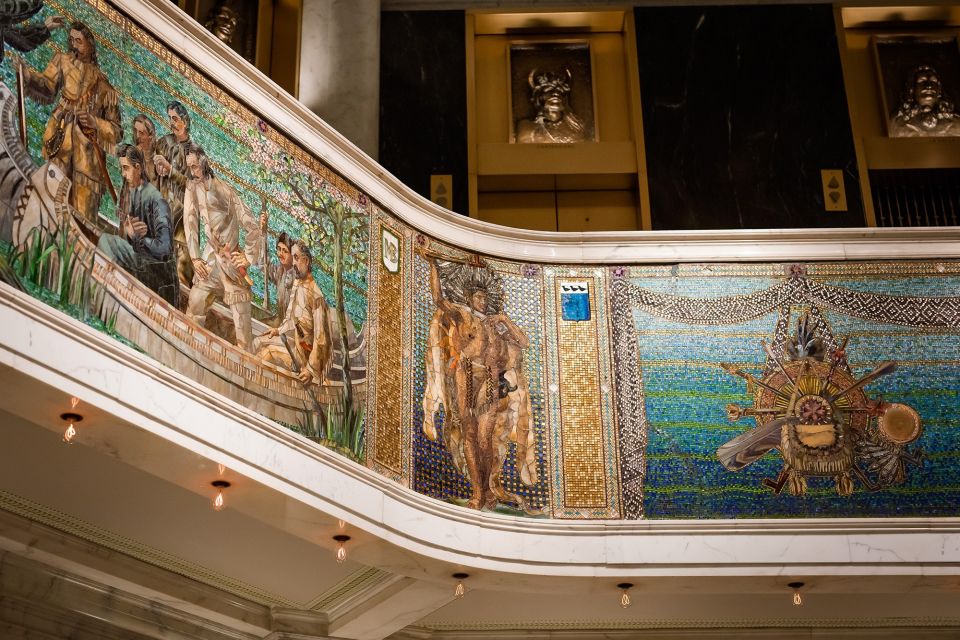
So when art-glass and mosaics show up here, it changes the atmosphere. You can see how decorative glass could soften a big institutional space and add visual dignity. And because your guide is narrating, you’re not left to guess why the design choices were made.
This stop is especially valuable if you’re interested in how art shows up outside galleries. You’ll get a stronger sense of Tiffany-style installations as part of city identity, not just a museum experience.
Marquette Building: when office architecture carries decorative ambition
Another key stop is the Marquette Building, where the presentation is described as impressive. Office buildings often get treated like background during sightseeing. This tour flips that expectation by guiding you to the kinds of details that make those towers feel more than functional.
This is also where Tiffany’s influence becomes easier to spot as a design language. The guide helps you connect what you’re seeing back to Tiffany’s life and to how decorative glass and mosaics were used to add character to large-scale structures.
Even if you don’t consider yourself an “architecture person,” you’ll likely appreciate this stop. It’s a reminder that art-glass doesn’t belong only to churches and museums. It can live in boardrooms and hallways, too.
Comparing Tiffany with contemporary art-glass installations
A big promise of the tour is that you’ll compare Tiffany’s work with more contemporary art-glass installations you can see around the city. This isn’t just a timeline exercise. It teaches your eye.
Once you’ve seen Tiffany’s style up close—materials, color blending, and how designs hold together in three-dimensional settings—you start recognizing what later artists keep, remix, or reject. The guide helps you make those comparisons without turning the walk into a class on art movements.
You’ll probably walk away with a sharper sense of what “Tiffany glass” means visually, and what changes when the medium and the designers evolve. That makes the experience feel less like sightseeing and more like learning how to see.
Chicago Architecture Center galleries: the short indoor boost
The tour includes admission to the galleries at the Chicago Architecture Center. Those indoor spaces give you a brief, focused moment to absorb context before (or alongside) the outdoor stops.
This can be especially helpful on a day when Chicago weather is doing its thing. The tour runs rain or shine, so having that indoor component matters. It breaks up the walking and gives your brain a chance to connect stories to images you’re about to see.
Value and pacing: $35 for a high-impact, 90-minute hit
At $35, this is priced like a short specialist tour, not a full-day museum marathon. The value comes from two things: you’re getting professional narration, and you’re seeing multiple Tiffany-linked locations in a single timeframe.
You’re also getting a small-group format (up to 10). That matters because art-glass details reward attention, not speed. In a bigger crowd, you often lose the chance to really look.
At 90 minutes, the tour stays focused. You’ll leave with enough information to place Tiffany in Chicago’s architectural story, but not so much that you feel overloaded. It’s the kind of outing that fits neatly between other plans in the city.
Who should book this tour
This walking tour is ideal if you want:
- A clear introduction to Louis Comfort Tiffany’s work without needing to research beforehand.
- Architecture sightseeing that’s detail-heavy, not just skyline-heavy.
- A mix of classic Tiffany stops and a chance to compare to more modern art-glass ideas.
If you’re traveling with someone who loves art details (or someone who thinks they do), this is a great “we’ll both enjoy this” option. It also works well for first-time visitors who want a meaningful Chicago theme beyond obvious landmarks.
If you’re only interested in one famous building, this might feel like too much walking for too many stops. But if you like connected stories across multiple locations, it’s a strong fit.
Plan smart for comfort on a rain-or-shine walk
The tour operates rain or shine, so wear shoes you trust on wet sidewalks. Chicago can be windy too, and glass sightseeing rewards steady viewing—if you’re fighting your coat or your footing, you won’t enjoy the details as much.
Also remember: no storage is provided for luggage or strollers. If you’re traveling with bags, keep it light and easy to carry, or plan to leave bulky items elsewhere.
Finally, the tour is in English and uses live narration throughout. It’s set up as a guided experience, not a self-paced wander.
Should you book the Chicago Tiffany Art Glass Works Walking Tour?
I think you should book it if you want Tiffany glass with real context and a guided eye. The highlights that show up again and again—those Tiffany domes at the Cultural Center, the Tiffany ceiling at Macy’s (Field’s), and the Marquette Building presentation—are exactly the kind of “I didn’t know that was there” moments that make a tour worthwhile.
It’s also a good choice if you like learning how design changes when you go from public spaces to retail and office settings. In a compact 90 minutes with a small group, you get multiple stops, expert narration, and enough comparison to help you see Tiffany more clearly.
If you hate walking, or you need lots of storage for gear, then you may find it less comfortable. But for most people who enjoy architecture details, this is a sharp, focused use of time in Chicago.
FAQ
Where does the tour meet?
The docent meets tour participants inside at the north lobby of the Chicago Cultural Center, 77 E Randolph Street.
How long is the tour?
The tour lasts 90 minutes.
What’s the price?
The price is listed as $35 per group up to 1.
Is the tour guided?
Yes. It includes narration by a professional, certified guide, in English.
Does the tour run in bad weather?
Yes. The tour operates rain or shine.
Is it wheelchair accessible?
Yes, the tour is wheelchair accessible.
Are pets allowed?
Pets are not allowed, but assistance dogs are welcome.
Is there storage for luggage or strollers?
No. The tour is unable to provide secure storage for luggage or strollers.
What is included in the ticket price?
The tour includes a tour of Tiffany art glass installations, narration by the guide, and admission to the galleries at the Chicago Architecture Center. Food and drink are not included.