REVIEW · CHICAGO
Chicago: Ghost Bus Tour of Haunted Locations
Book on GetYourGuide →Operated by American Ghost Walks · Bookable on GetYourGuide
Haunted Chicago gets surprisingly organized. This 3-hour Ghost Bus Tour lines up major tragedy sites and famous legends into one guided route, with a paranormal guide and lots of short photo-and-walk stops. I especially like the way the tour mixes big names (Resurrection Mary) with lesser-known local lore like the Devil Baby stories tied to Jane Addams’ Hull House.
You also get a practical rhythm: you’re on a luxury bus with a bathroom for the travel breaks, then you step out for focused, narrated stops. One thing to consider is timing: if the day runs behind (traffic and events can happen), you may feel the squeeze at the later stops, and audio isn’t always perfect.
In This Review
- What makes this tour worth your attention
- Key highlights you’ll actually notice
- Entering the Congress Plaza Hotel bar and the first ghost stories
- The luxury coach with a bathroom, plus why the schedule feels tight
- Lincoln Park and the Great Chicago Fire afterglow
- The Jane Addams Hull-House stop: the Devil Baby legend at ground level
- John Hancock Center: architecture with a supernatural twist
- Couch Tomb: the cemetery clue that keeps the story grounded
- Nederlander Theatre and Death Alley: one of America’s worst theatre fires
- Biograph Theater: where the story turns to John Dillinger
- Resurrection Mary and the Chicago legend you’ll hear about all day
- Mob history: St. Valentine’s Day Massacre and how the route adds context
- Eastland Disaster Historical Society: the 844-life tragedy that anchors the dark part
- The other stop at 2122 N Clark St: what you can do with it
- Price and logistics for this 3-hour haunted loop
- Who should book this ghost bus tour
- Should you book? My practical take
- FAQ
- Where does the tour start?
- How long is the Ghost Bus Tour of Haunted Locations?
- How much does the tour cost?
- What is included in the ticket?
- Do I need to buy tickets on site for attractions?
- Is the tour only for adults?
- What’s the cancellation policy?
What makes this tour worth your attention
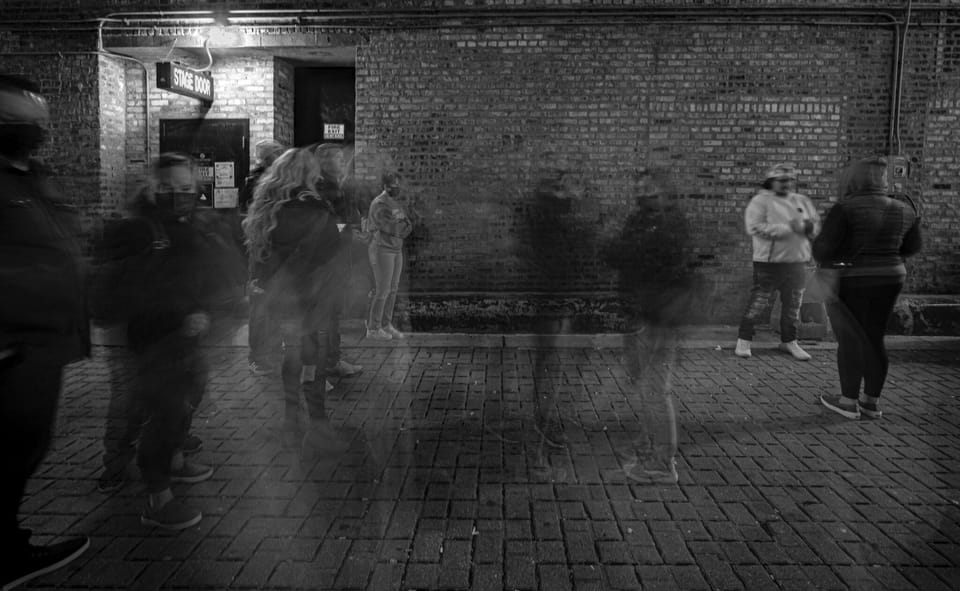
The best part is that the hauntings have receipts. You’ll hear stories tied to specific places: the Eastland Disaster that claimed 844 lives, and the Iroquois Theater Fire site often referred to as Death Alley. The route also leans into Chicago’s cultural myths, from mob history to old cemetery legends.
The one potential drawback I’d plan around is that some departures may have spotty speaker coverage, so come prepared to listen closely when you’re near the guide and not rely on every word being amplified.
Key highlights you’ll actually notice
- Resurrection Mary: the tour’s main Chicago ghost, kept in view as you travel between stops
- Eastland Disaster: a major river tragedy anchors the darker parts of the route
- Death Alley: the Nederlander Theatre area ties into the Iroquois Theater Fire story
- Hull House folklore: you’ll hear the Devil Baby legend connected to Jane Addams’ settlement
- Mob-era landmarks: stops include sites tied to famous gangster history
You can also read our reviews of more tours and experiences in Chicago.



Entering the Congress Plaza Hotel bar and the first ghost stories
The tour begins inside the Congress Plaza Hotel & Convention Center, and the meeting point is the hotel bar. That matters more than it sounds. You’ll start from a place already associated with hauntings, then ease into the bigger tragedy and legend stops with the guide’s narration setting the tone early.
Expect the first stretch to feel like orientation. The bus gets you out quickly, but you’ll also get that sense that the city itself is the “haunted house,” just with streets instead of hallways. The Congress Plaza name is not just for show either, because it’s repeatedly framed as one of Chicago’s most haunted locations.
The luxury coach with a bathroom, plus why the schedule feels tight
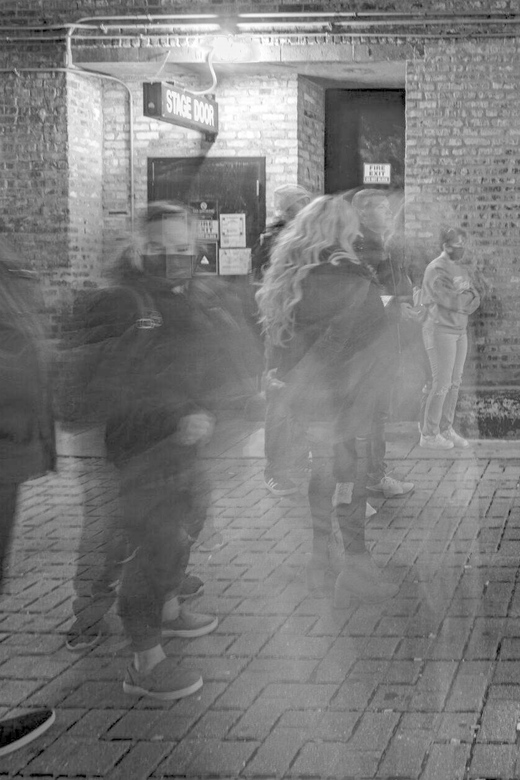
This tour is 3 hours long, and the structure is designed for constant movement. You’ll spend time rolling between stops, but the itinerary stays built around short guided windows: photo stops, brief guided walks, and quick visits. A luxury bus with a bathroom on board helps a lot if you’re sensitive to timing or you don’t want to rush through city blocks just to stay comfortable.
There’s also a reality check for your day: the bus is expected to leave promptly, and late arrivals can miss stops. If you’re thinking about joining with a group, treat arrival time like a key part of the experience, not a boring logistics detail. This is the kind of tour where the order of stops matters because you’re racing the clock across multiple sites.
Lincoln Park and the Great Chicago Fire afterglow
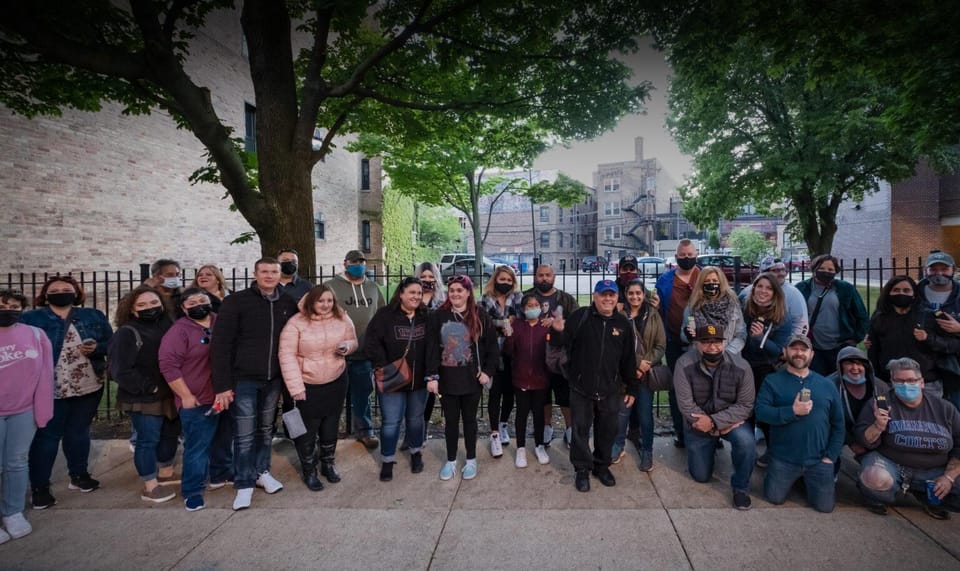
One of the first stops is in the Lincoln Park area for a photo stop and a guided bit. This is a good early anchor because the narration isn’t only about ghosts. It connects places to major historical events, and Chicago’s trauma shows up again and again as you move around the city.
Then you head to the Lincoln Park Zoo area, which the tour frames as being built on ashes from the Great Chicago Fire. Even if you’re not a hardcore history buff, that connection clicks. You’re not just looking at a pretty part of town. You’re standing on a layer of Chicago that literally came from the aftermath—fire, rebuilding, and new stories layered over old ones.
The Jane Addams Hull-House stop: the Devil Baby legend at ground level
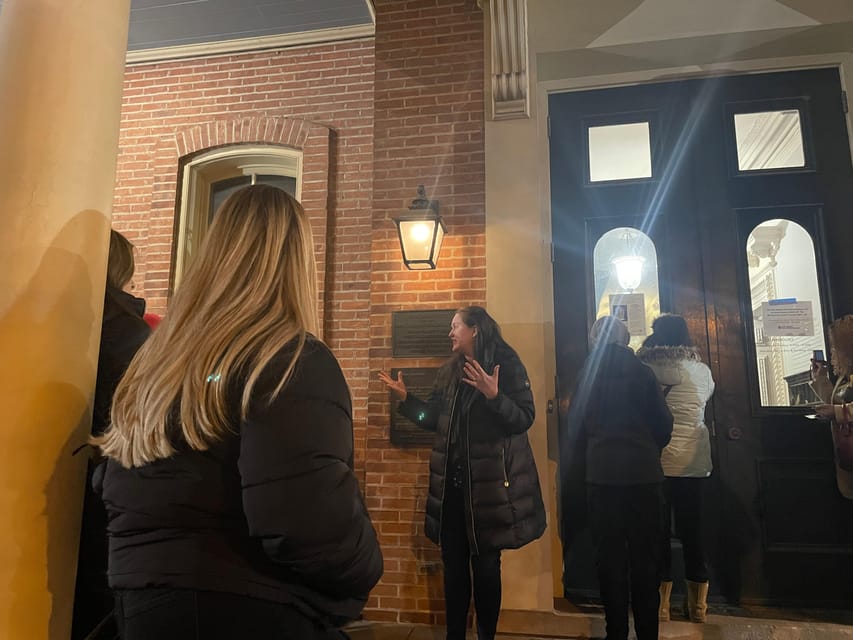
The Jane Addams Hull-House Museum stop is one of the most distinctive parts of the route because it focuses on folklore in a real place tied to immigration history and social work.
The tour specifically calls out a “Devil baby” storyline associated with Hull House, including that it has been featured in The Atlantic. Even if you don’t buy every supernatural detail, you’ll likely find the cultural angle interesting: legends like this often grow where people feel tension, fear, or moral uncertainty, and Hull House is remembered as a place where many lives collided and stories formed.
This stop also tends to work well for cameras. You’ll get a photo stop plus sightseeing time, so it’s not all about listening while standing still. You can get your bearings and capture a few solid shots before moving on.




John Hancock Center: architecture with a supernatural twist
Next up is a pass by the John Hancock Center. The tour’s framing here is fun: the trapezoidal shape is presented as something that’s believed to harness otherworldly forces.
This is one of those moments where the tour leans into the playful side of Chicago superstition—less tragedy, more myth-making. It’s also a reminder that the city’s ghost stories don’t only come from one disaster. They get attached to landmarks, and people keep retelling them because it’s easier to imagine a ghost in a recognizable skyline icon.
If you like architecture, you’ll probably enjoy this one. You get an excuse to look longer at the building and how it changes the look of the neighborhood around it.
Couch Tomb: the cemetery clue that keeps the story grounded
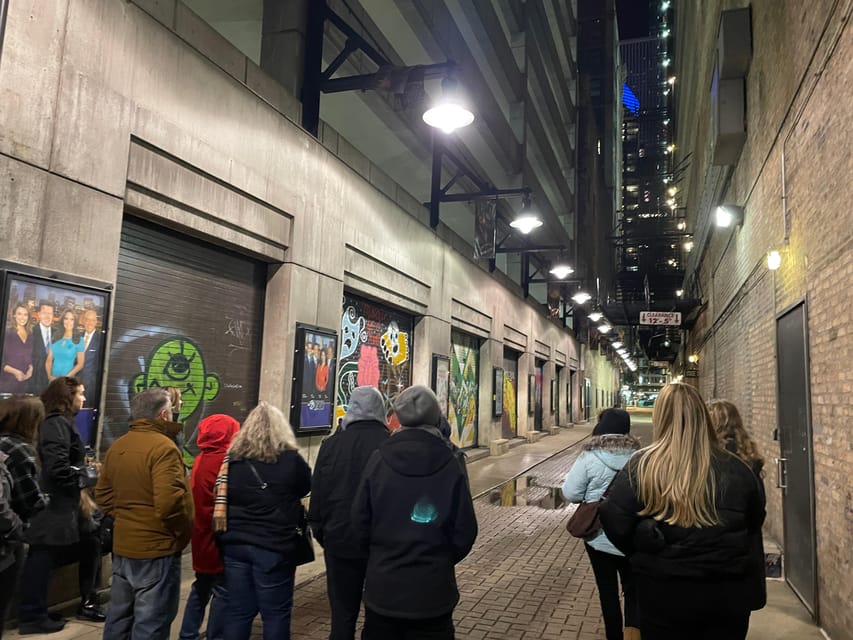
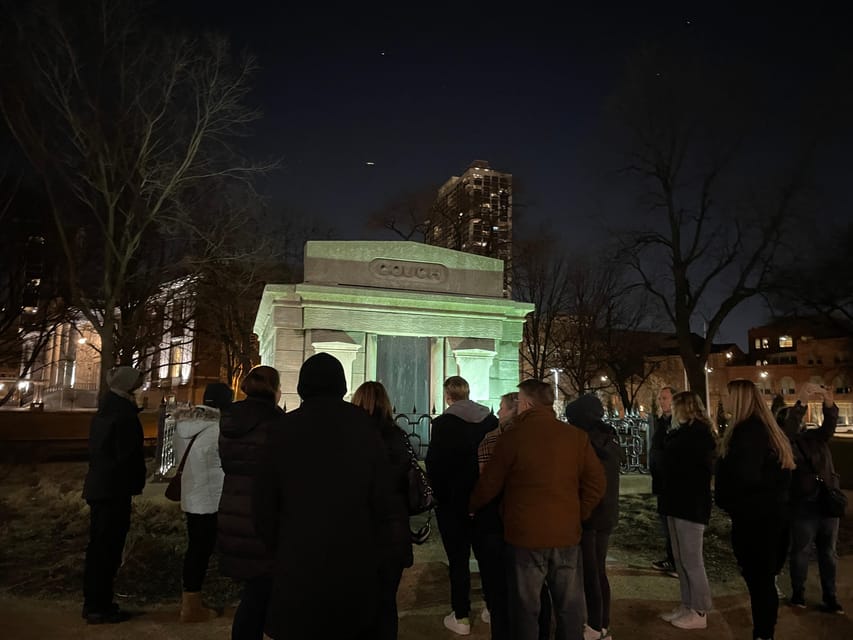
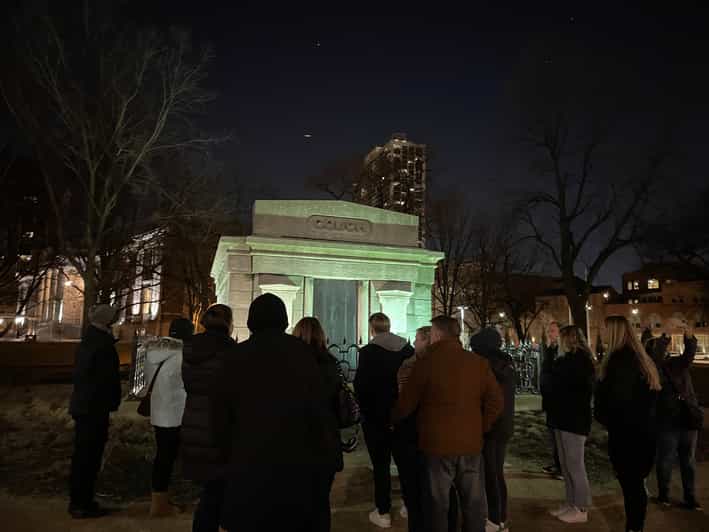
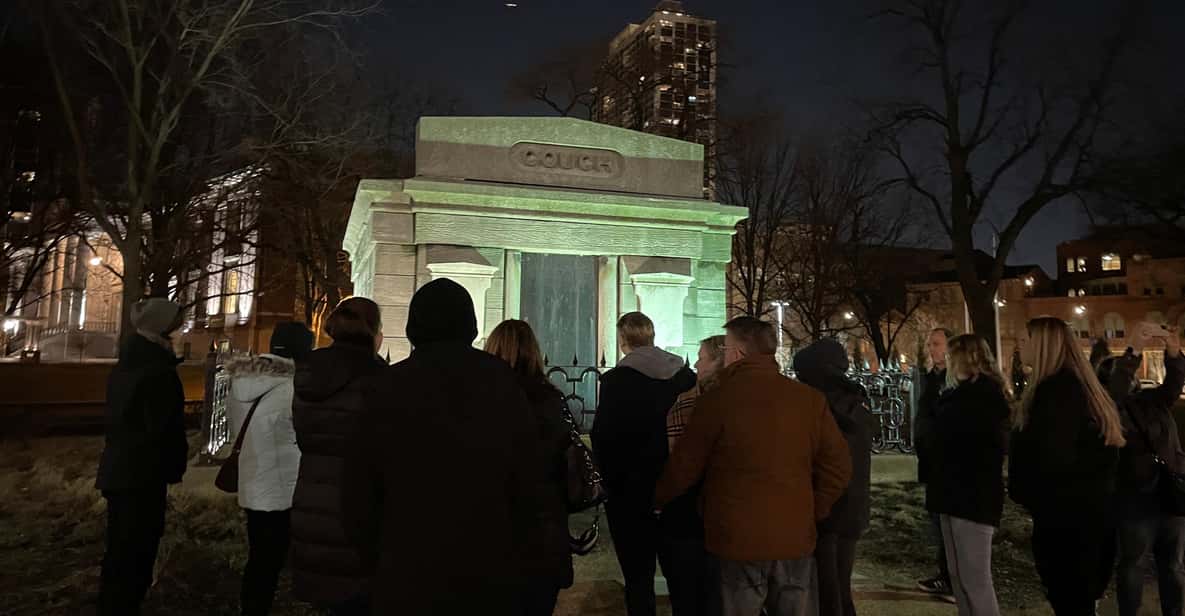
The Couch Tomb stop is a photo stop plus guided tour and sightseeing time. The tour presents it as the last remaining marked grave from a Chicago cemetery destroyed during the Great Chicago Fire.
This is where the tour’s tone can shift from legend to physical memory. When you’re standing near a marked grave that survived an enormous catastrophe, it’s harder to treat the haunting themes as pure entertainment. The guide’s narration is likely to make the site feel like a reference point—something the story can cling to when the rest is rumor.
If your goal is more than thrills, this kind of stop often delivers the “oh, I get why this legend matters” moment.
Nederlander Theatre and Death Alley: one of America’s worst theatre fires
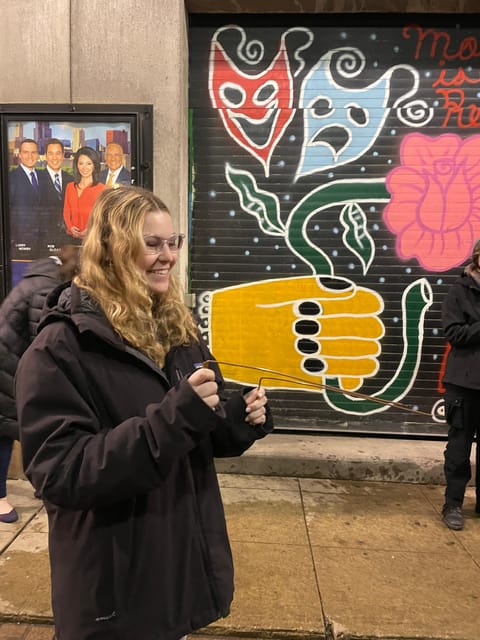
One of the biggest dramatic stops comes at the Nederlander Theatre, where the tour connects the location to the Iroquois Theater Fire and the area called Death Alley.
The tour specifically positions this as one of America’s worst theatre fires, and that framing does something important for your understanding. People often think ghost tours are only about recent paranormal claims. Here, the haunting energy is tied to a mass-casualty event that left a scar in public memory. That’s why these stops can feel darker than you expect even when the guide is enthusiastic.
This is also a place where the route makes sense. You’re not randomly hopping between spooky addresses. You’re following a line of tragedies that the guide can place in context as you move across the city.
Biograph Theater: where the story turns to John Dillinger
The tour visits the Biograph Theater, again with a photo stop plus guided tour and sightseeing time. It ties this location to gangster John Dillinger, specifically noting that he met his end there.
This stop is valuable for a different reason than the tragedy sites. It connects the supernatural theme to a citywide fascination with crime and mythology. It’s not just “a ghost story.” It’s a reminder that Chicago has always been a place where people turned events into legends—especially events involving public danger and famous names.
If you like true-crime history, this is one of the stops that can feel like a payoff, because the story has a built-in hook: a specific person, a specific place, and a specific ending.
Resurrection Mary and the Chicago legend you’ll hear about all day
You can’t miss the emphasis on Resurrection Mary, framed as Chicago’s most famous ghost. The tour builds toward her as part of the narration from the start, and it’s presented as a key encounter during the Congress Plaza and overall route.
One practical note: the tour data doesn’t promise an actual sighting. So if you’re coming hoping for a dramatic on-cue moment, keep your expectations realistic and focus on the story and the atmosphere instead. You’re there for the guided account and the cultural memory tied to her legend.
Still, her role is central enough that the route feels designed around her myth. That makes the whole tour feel less like a random collection of haunted stops and more like a single storyline moving across Chicago.
Mob history: St. Valentine’s Day Massacre and how the route adds context
The tour includes the St. Valentine’s Day Massacre site. This is another place where the ghost theme works because it’s already soaked in public fear. The idea isn’t that violence automatically becomes paranormal. It’s that trauma creates stories, and stories can last long after the event itself.
You also pass through areas tied to other grim episodes. The tour overview mentions blood-soaked grounds tied to Fort Dearborn and the St. Valentine’s Day Massacres, which sets the expectation that the narration goes beyond one era.
If you like learning how legends evolve, this part of the tour tends to feel like a bridge: from tragedy to folklore, from history to myth.
Eastland Disaster Historical Society: the 844-life tragedy that anchors the dark part
The stop at the Eastland Disaster Historical Society is one of the tour’s main gravity points. The tour connects it to the overloaded vessel that capsized in 1915, killing 844 people.
That number isn’t just a fact to drop. It changes how you hear the rest of the ghost stories. Once you’ve listened to a mass-death event explained with location-specific narration, it becomes easier to understand why later legends grow around place. People remember pain by attaching it to landmarks.
Expect this stop to be heavy. It’s still a guided tour, but the overall vibe is the darkest part of the experience for most people—not because the guide is trying to be scary, but because the subject is.
The other stop at 2122 N Clark St: what you can do with it
The itinerary includes a photo stop and a short visit at 2122 N Clark St. The tour data doesn’t add more detail about what you’re seeing there, so keep an open mind and use it as an opportunity to listen to whatever the guide explains in that moment.
In a route like this, those smaller stops are often where you might catch the most practical clues—like connecting a legend to a specific address or street corner—because the guide can point out what makes that particular location story-worthy.
Price and logistics for this 3-hour haunted loop
At $54 per person for a 3-hour tour, you’re paying for more than a bus ride. You’re buying a guided experience that bundles together several major sites, including high-recognition names like Resurrection Mary and major tragedy-linked landmarks like the Eastland Disaster and the Iroquois Theater Fire area.
Here’s how I’d think about value: if you tried to do this yourself, you’d spend time figuring out locations, coordinating public transportation or parking, and stitching together the storyline across a bunch of neighborhoods. Paying for the guided route makes it simpler, especially because the tour keeps the experience in one narrative arc instead of turning it into a scavenger hunt.
The trade-off is the format: it’s fast-paced. You’ll get short windows at each stop, not hours. So if you want deep, slow, museum-style coverage, you might find yourself wishing for more time. If you want a tight, guided overview with enough stops to keep you engaged, the price looks more reasonable.
Who should book this ghost bus tour
This tour fits best if you:
- Love Chicago-specific legends tied to real addresses and recognizable landmarks
- Want a guided blend of haunting stories and tragedy locations in one afternoon window
- Prefer short, moving stops over long, sit-down museum time
- Like taking photos and using cameras or recorders, since the tour encourages you to try for evidence
It may not be the best fit if you:
- Need lots of quiet time or long visits at each site
- Are very sensitive to sound quality, since speaker coverage can be inconsistent on some departures
- Are planning to arrive late or assume the bus can wait
Age limits are strict, with the tour not suitable for children under 5 years old (and it specifically lists children under 2, 3, 4, and 5 as not suitable).
Should you book? My practical take
If you want a haunted Chicago outing that actually connects the dots—Resurrection Mary, Hull House folklore, and two major tragedy zones—you should seriously consider booking this one. The route is built around locations you can recognize, but it also includes smaller, story-relevant stops like the Couch Tomb that make the experience feel grounded.
I’d only hesitate if you’re the type who needs flawless audio and a perfectly on-time schedule, because the tour is tightly paced and the sound system may not always be consistent. Still, for most people, that’s a small price to pay for a guided, city-spanning haunted story with clear, specific places behind the legends.
FAQ
Where does the tour start?
You meet inside the bar at the Congress Plaza Hotel & Convention Center. The tour asks you to arrive 15 minutes early so the bus can leave on time.
How long is the Ghost Bus Tour of Haunted Locations?
The tour lasts about 3 hours.
How much does the tour cost?
The price is $54 per person.
What is included in the ticket?
Included items are a paranormal guide, a luxury bus with a bathroom on board, and stops at several haunted locations.
Do I need to buy tickets on site for attractions?
The tour includes skip-the-ticket-line access.
Is the tour only for adults?
Children under 5 years old are not suitable, according to the tour rules.
What’s the cancellation policy?
You can cancel up to 24 hours in advance for a full refund.