REVIEW · CHICAGO
Architecture & History Guided Tour along the Chicago Riverwalk
Book on Viator →Operated by Tours By Foot - Chicago · Bookable on Viator
Chicago’s river tells architecture stories in two hours. This walking tour strings together Chicago’s signature buildings along the riverfront, with clear context on what each place meant for trade, war, media, and everyday city life.
I love the focus on real landmarks you can see at street level, not just from a distance. I also love that the stops are admission ticket free, so your money goes mainly to the guide’s explanations and your time on the riverwalk.
One thing to keep in mind: the schedule moves fast. Most stops are only 5 to 20 minutes, so it’s not a tour for people who want to linger at every photo spot.
In This Review
- Key Highlights You’ll Feel Right Away
- Start at Wacker Drive: A 2-Hour Riverwalk That Moves, But Doesn’t Rush
- Riverwalk Stop 1: Chicago River, Still Doing What It Did Since the 1700s
- Battle of Fort Dearborn: The River’s Military Past in 20 Minutes
- Marina City Stop 3: The Corn Cobs From the Right Angle
- Tribune Tower Stop 4: Neo-Gothic Glory With a Newspaper Story
- Centennial Fountain and Water Arc: Stop 5 as a Chicago Milestone Moment
- The St. Regis Chicago: Stop 6 and the New Luxury Layer on Old Ground
- 455 Cityfront Plaza Dr: Art Deco-Inspired Modern Media Energy
- Chicago River Stop 8: The View With the Big Explanation
- Marina City Stop 9 Again: A Closer Look at the Corn Cobs
- Jewelers Building Stop 10: Architectural Grandeur for the Diamond District Era
- AMA Plaza Stop 11: Minimalist Modern Architecture That Reads Like Design Notes
- Value for Money: Free Admissions and What You’re Actually Paying For
- Who Should Book This Riverwalk Architecture Tour?
- Should You Book This Tour?
- FAQ
- How long is the Chicago Riverwalk architecture and history guided tour?
- Where does the tour start and end?
- What time does the tour begin?
- Is the tour in English?
- Do I need to pay admission fees at the stops?
- What is the group size limit?
- What is the cancellation policy?
Key Highlights You’ll Feel Right Away
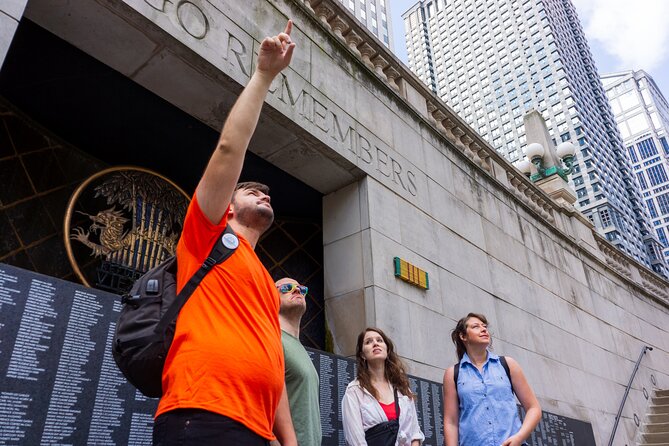
- Up to 18 people means you get a guide with time to answer questions without a chaotic shuffle
- Mobile ticket keeps things simple once you’re at the starting point
- Fort Dearborn to Tribune Tower gives you military history and newspaper-era architecture in the same loop
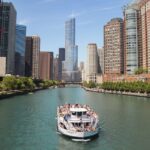
- Marina City from the river helps you understand why the cylindrical towers earned the corn cob nickname
- Small, outdoor stops make it easy to take photos without needing museum entry tickets
Start at Wacker Drive: A 2-Hour Riverwalk That Moves, But Doesn’t Rush
This is a tight, satisfying walking route on the Chicago Riverwalk. It runs about 2 hours, and the pacing is designed for seeing a lot without turning into a marathon. You’re out and about the whole time, so it helps to wear comfortable shoes and be ready for changing riverfront weather.
The tour starts at 1 W Wacker Dr, Chicago, IL 60601, with a start time of 10:00 am. It ends at Nicholas J. Melas Centennial Fountain, 400 N McClurg Ct, Chicago, IL 60611. That end point is handy because it drops you near more waterfront action, so you can keep exploring after the tour.
For many visitors, the smartest part is the format: the guide is your filter. Chicago has plenty of cool buildings, but this tour helps you “read” them—why they were built, what they were for, and how they fit into the river’s long story of commerce and change.
You can also read our reviews of more guided tours in Chicago


Riverwalk Stop 1: Chicago River, Still Doing What It Did Since the 1700s
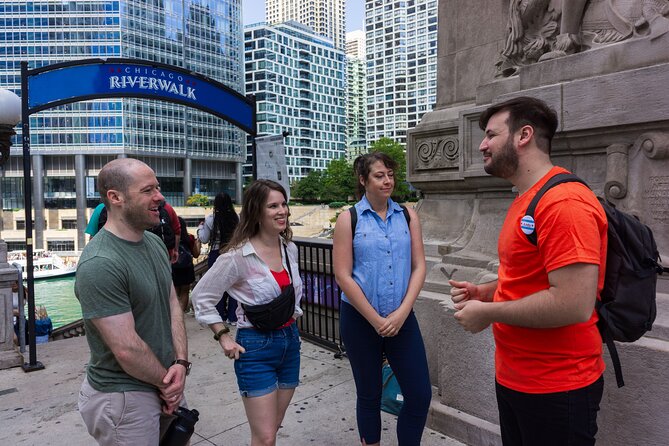
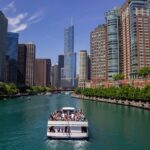
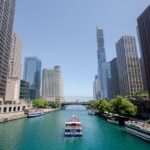
Your first stop is the Chicago Riverwalk, and the big idea here is simple: the river is not just scenery. It’s been a trade and commerce hub since the late 1700s, and the area you’re standing in reflects that long-running role.
I like this opener because it sets the baseline for everything else. Once you understand the river as the city’s working spine, the architecture later on feels less random. Instead, it starts making sense as a chain of choices made around water, movement, and money.
What to watch for: notice how buildings and public spaces face the water, and how the riverfront is arranged for people to gather. Even if you’ve visited Chicago before, this is a useful reset.
Possible drawback: because this is the start of the tour, you’ll spend part of the time getting your bearings. If you’re the type who hates any waiting at all, keep your expectations realistic and treat this as your orientation moment.
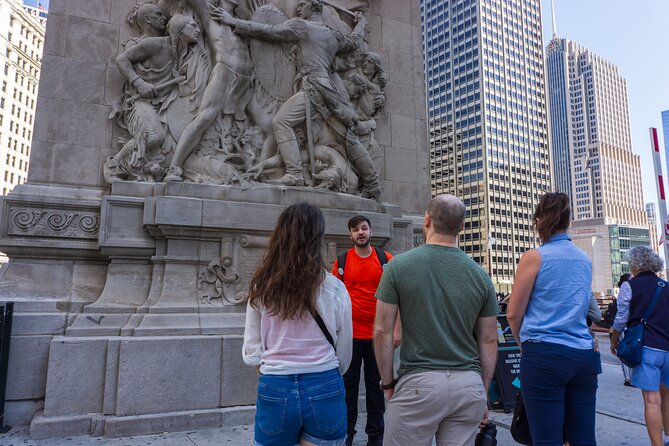
Battle of Fort Dearborn: The River’s Military Past in 20 Minutes
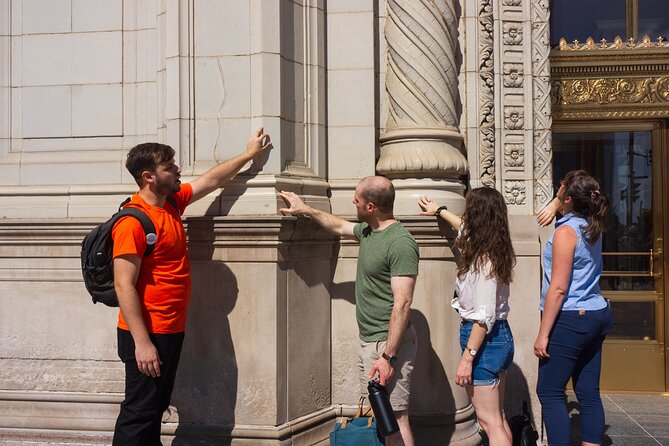
Next up is the Battle of Fort Dearborn stop. This is where the story turns from trade to conflict. You’re stepping into the grounds tied to Chicago’s military past, and the river becomes more than a business route—it becomes a strategic corridor.
This stop is valuable because it prevents the tour from becoming only about aesthetics. The buildings you’ll see later were shaped by what happened before them, including the struggle to establish and defend the area.
What I’d do here: stand where the guide directs you, then look beyond the immediate view. The point is to connect the history to the river’s role in movement and control.
Time note: it’s about 20 minutes, so you’ll get enough grounding to understand why the military story matters, without needing hours of study.
Marina City Stop 3: The Corn Cobs From the Right Angle
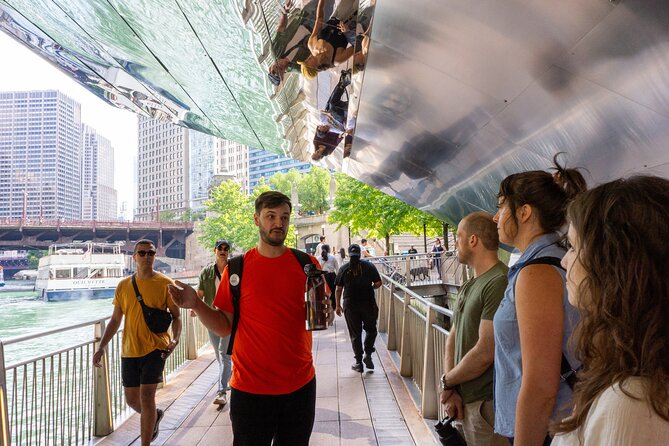
Then you hit Marina City, with a closer look at the unique structures along the river. These are the famous cylindrical residential towers often nicknamed the corn cobs.
I love this part of the route because it shows how architecture can be both functional and instantly memorable. The guide’s context helps you see the towers not just as a photo backdrop, but as a design statement in the city’s riverfront evolution.
This is also a good moment to practice your “riverfront reading” skills. Compare what you notice now—shape, height, and placement—with earlier ideas about the river as a trade route. You’ll start to feel how the city shifted from movement and commerce to living and leisure along the same corridor.
Possible drawback: if you’re hoping for a long, detailed conversation about one building, the timing may feel short. This tour uses quick bursts, so the benefit is breadth over deep immersion.
Tribune Tower Stop 4: Neo-Gothic Glory With a Newspaper Story
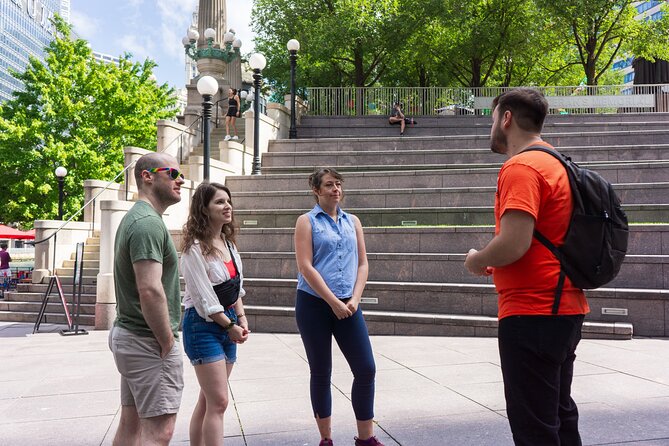
The tour moves to the Tribune Tower, described as a neo-Gothic masterpiece that served as a home for the Chicago Tribune newspaper. This is one of those stops where the architecture does the explaining for you.
Even in a short 5-minute window, you can grasp the idea: this tower was built for an institution with power, prestige, and a public voice. Chicago’s media and civic identity were tied to tall, visible landmarks, and Tribune Tower is a clear example.
What to watch for: focus on the style cues the guide points out. Gothic-inspired forms can look like decoration until you connect them to the message the building was meant to carry.
Time note: only about 5 minutes here, so keep your phone ready and your questions focused. It’s more of a “get the key idea fast” stop than a slow perusal.
You can also read our reviews of more historical tours in Chicago


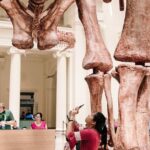

Centennial Fountain and Water Arc: Stop 5 as a Chicago Milestone Moment
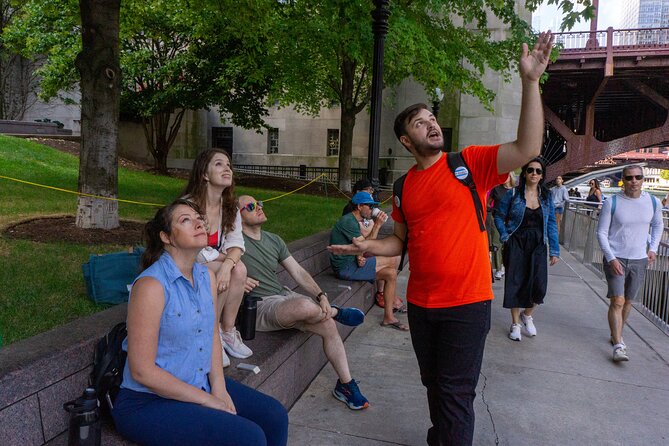
Next is the Centennial Fountain And Water Arc. This stop is short, around 5 minutes, but it’s placed well in the loop. By the time you reach it, you’ve already seen trade, military history, and major buildings—so the fountain brings you back to public space and city celebration.
The fountain is designed to commemorate significant milestones in Chicago’s history. The water feature also helps you connect the river’s themes to the way Chicago uses water as an identity symbol, not just a utilitarian feature.
What you can do quickly: look for how the water arcs and cascades are arranged for viewing from the walkway. It’s a simple stop, but it teaches you that public design in Chicago often aims for impact and memory.
The St. Regis Chicago: Stop 6 and the New Luxury Layer on Old Ground
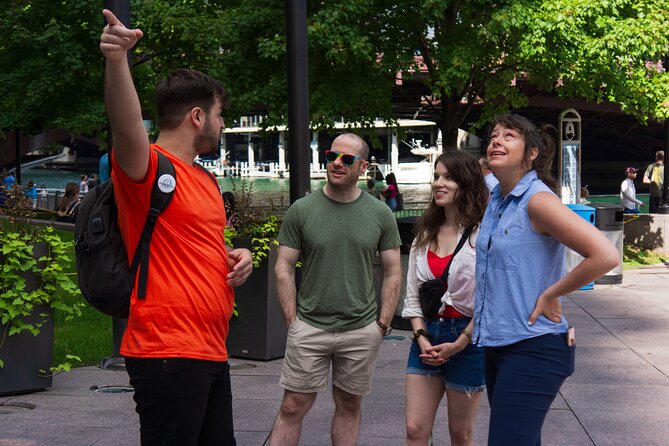
At The St. Regis Chicago, you’re seeing one of the city’s newest luxury additions along the river’s architectural timeline. This is a useful contrast stop: you’ve just come from a commemorative fountain and historic-style architecture, and now you’re looking at contemporary branding and high-end urban living.
I like this stop because it reminds you that the riverfront isn’t frozen in time. New construction adds another chapter, and the guide’s framing helps you notice what changes—and what stays—when a riverfront area keeps evolving.
Time note: also about 5 minutes, so this is best if you enjoy quick “spot the difference” moments.
455 Cityfront Plaza Dr: Art Deco-Inspired Modern Media Energy
Stop 7 is 455 Cityfront Plaza Dr, with an art deco-inspired design tied to modern media center use. The idea here is about Chicago’s media energy shifting through time—from the newspaper era you just saw at Tribune Tower to a later media-focused built environment.
This kind of stop works well for first-time architecture visitors because it creates a timeline connection without making you sit through lectures. You see the visuals, then the guide ties them to the city’s communications evolution.
What to focus on: the design language. Even without getting every detail, you’ll notice the building is trying to look authoritative and recognizable from the street level.
Chicago River Stop 8: The View With the Big Explanation
Now you get a dedicated pause at the Chicago River, again with the tour’s explanation of the river’s role in the city’s development. This works like a “re-threading” moment. You’ve already toured buildings; now you connect them back to the river’s logic.
It’s also helpful if you’re tired. A short visual break with clear narrative keeps you from zoning out during outdoor walking time.
What I’d do: let the guide’s story settle, then look at the water and nearby edges like you’re scanning a map. That simple change of mindset makes the river feel like a system, not just a pretty spot.
Marina City Stop 9 Again: A Closer Look at the Corn Cobs
You revisit Marina City for a closer look at the cylindrical residential towers. This second pass is smart. It’s one thing to see a building; it’s another to see it twice with different prompts. The guide can point out details you missed on the first look, and you also get a clearer sense of how the buildings relate to the surrounding riverwalk.
This is the kind of repetition that turns into real understanding. After two quick stops, you’re more likely to remember the architecture instead of just snapping a few photos.
Possible drawback: if you dislike repeats, this might feel like duplication. But the real benefit is better sightlines and more context the second time around.
Jewelers Building Stop 10: Architectural Grandeur for the Diamond District Era
Stop 10 is the Jewelers Building, tied to the area’s diamond district past. This is where the tour shows how commercial identity leaves architectural fingerprints.
It’s only around 5 minutes, but it’s enough time to understand the building’s intention: draw attention, signal value, and give a business district a signature face. Even if you don’t know the history in advance, the guide helps you connect the building’s grandeur to the kind of trade it supported.
What to watch for: look at how the building presents itself to the street. The point is not just beauty, it’s how architecture communicates trust and prestige in commercial zones.
AMA Plaza Stop 11: Minimalist Modern Architecture That Reads Like Design Notes
The final stop is AMA Plaza, described as minimalist beauty designed by one of the pioneering masters of modern architecture. Without needing every technical term, you’ll get the feel of modern design thinking: cleaner lines, more emphasis on proportion, and less on decorative storytelling.
This ending choice works well. After traditional and historic styles (and the big civic/media identities), you finish with modern minimalism. It gives you a clean final contrast and a better mental map of Chicago’s architectural range along one corridor.
Time note: about 5 minutes, which means you’ll want to focus on the “what you’re seeing” rather than trying to memorize names or details on your own.
Value for Money: Free Admissions and What You’re Actually Paying For
One of the strongest value signals on this route is that the listed stops are admission ticket free. That means you’re not juggling ticket lines or paying separate entry fees for each viewpoint. In practice, your cost is mainly paying for the professional local guide and the time saved by having the context delivered in the right order.
I also like the small-group ceiling of 18 travelers. With a group this size, the guide can keep explanations clear and adjust pacing if people are lagging behind at river-level photo spots.
The tour is offered in English, and you use a mobile ticket, which helps if you prefer low-friction logistics. It’s an easy option when you want architecture and history in a single walk rather than patching together a bunch of stops on your own.
Who Should Book This Riverwalk Architecture Tour?
This tour is a great fit if you:
- want a fast, structured way to understand Chicago Riverfront architecture
- like history that’s tied to places you can actually see from the sidewalk
- have limited time and still want a meaningful overview across eras
It’s less ideal if you:
- want long museum-style visits or extended time inside buildings
- dislike tours with short stops and a “move along” pace
- prefer very deep technical architecture study without quick prompts
Should You Book This Tour?
I’d book this if you’re doing Chicago for the first time or you want a guided way to connect architecture to the city’s development story. The route is compact, the stops are meaningful, and the fact that admissions are ticket free keeps it practical.
I’d skip it if you’ve already built your own detailed plan for these exact landmarks and you want uninterrupted time at fewer sites. In that case, a self-guided walk might fit better. But if you want clarity and momentum—plus a guide who can turn street-level buildings into coherent stories—this is an efficient choice.
FAQ
How long is the Chicago Riverwalk architecture and history guided tour?
It lasts about 2 hours.
Where does the tour start and end?
It starts at 1 W Wacker Dr, Chicago, IL 60601, and ends at Nicholas J. Melas Centennial Fountain, 400 N McClurg Ct, Chicago, IL 60611.
What time does the tour begin?
The start time is 10:00 am.
Is the tour in English?
Yes, the tour is offered in English.
Do I need to pay admission fees at the stops?
The stops on this tour are listed as admission ticket free.
What is the group size limit?
The tour has a maximum of 18 travelers.
What is the cancellation policy?
You can cancel for a full refund up to 24 hours before the experience starts. If you cancel less than 24 hours before, the amount paid is not refunded.