REVIEW · CHICAGO
Small Group History And Architecture Walking Tour of Chicago
Book on Viator →Operated by See Sight Tours USA · Bookable on Viator
Chicago’s best city stories start with a walk. This 2.5-hour, small-group tour links Millennium Park to the waterfront, then uses the Pedway to keep things moving in any weather. I especially like how the route mixes big-name landmarks with practical city infrastructure, and how the guide can turn architecture and neighborhood history into something you actually remember; my only caution is that one past review raised serious concerns about a guide’s conduct, so trust your instincts and speak up if anything feels off.
I love tours that don’t just point at photos. Here, you’ll get a guided pass through key downtown sights, plus time at places like the Chicago Pedway and the Chicago Architecture Center, where you can look closely and ask questions without feeling rushed. One more thing to consider: this is a moderate-walking experience and it’s timed, so comfortable shoes matter.
In This Review
- Key Highlights You’ll Feel Right Away
- Millennium Park and Cloud Gate: the start that sets the tone fast
- The Pedway: Chicago’s secret shortcut when the weather gets annoying
- Chicago River views and architecture framing at the Architecture Center
- DuSable Bridge and the river-crossing moment
- Tribune Tower on Michigan Avenue: the ornate side of Chicago
- Wrigley Building and the Magnificent Mile: white terra cotta, big-city swagger
- Chicago Fire context and a classic savory option
- Starbucks Reserve Roastery: a modern stop that still fits the route
- Navy Pier finish: end with options instead of an abrupt stop
- Group size, guide quality, and the one caution worth taking seriously
- What you’ll realistically get from this tour (and how to get the most)
- Price and value: what $64.99 buys you in practice
- Who this tour suits best
- Should you book this Chicago walking tour?
- FAQ
- How long is the Small Group History and Architecture Walking Tour?
- Where does the tour start and end?
- What is the price per person?
- How big are the groups?
- Do I need to buy a ticket for stops?
- Is coffee or tea included?
- Is there an opportunity to try food during the tour?
- Is the tour suitable for people with mobility concerns?
- Is cancellation allowed, and what’s the cutoff?
Key Highlights You’ll Feel Right Away
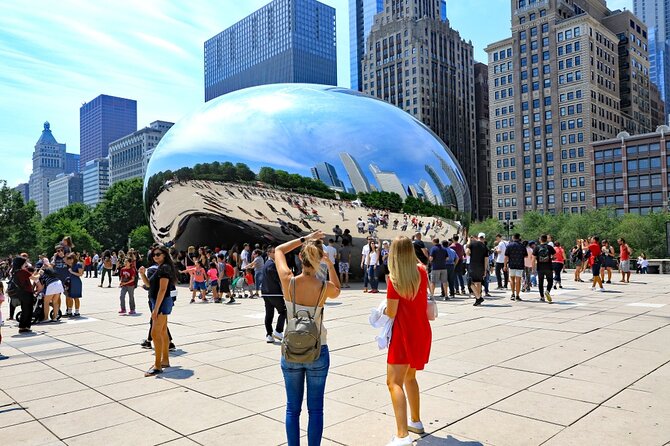
- Cloud Gate at Millennium Park with skyline reflections and easy photo time
- Chicago Pedway routing to dodge weather and connect downtown buildings faster
- Chicago Architecture Center stop for context on how the city built its reputation
- Magnificent Mile icons like the Tribune Tower and Wrigley Building in one arc
- Starbucks Reserve Roastery as a unique modern stop with coffee, food, and on-site roasting
- Navy Pier finish with options to keep going with an architecture cruise
Millennium Park and Cloud Gate: the start that sets the tone fast
You begin at McCormick Tribune Plaza, right along 1 N Michigan Ave, and the first “wow” moment comes quickly: Cloud Gate, aka The Bean, in Millennium Park. This sculpture is polished stainless steel, so it does two things at once. It shows Chicago back to you—skyline, people, and park details—and it turns the act of walking into a kind of moving photo booth.
Millennium Park itself is a well-designed public space, opened in 2004 and packed with art and events. If you’re the type who likes to see what a city chooses to put in its public spaces, you’ll appreciate the mix: the park is part landmark, part hangout, part stage.
Time check: you get about 15 minutes at Cloud Gate. That’s enough to circle, find a good angle, and move on without standing forever. If you’re traveling with someone who wants a very specific shot, you might want to arrive a bit early so you’re not thinking about time the whole way.
You can also read our reviews of more walking tours in Chicago



The Pedway: Chicago’s secret shortcut when the weather gets annoying
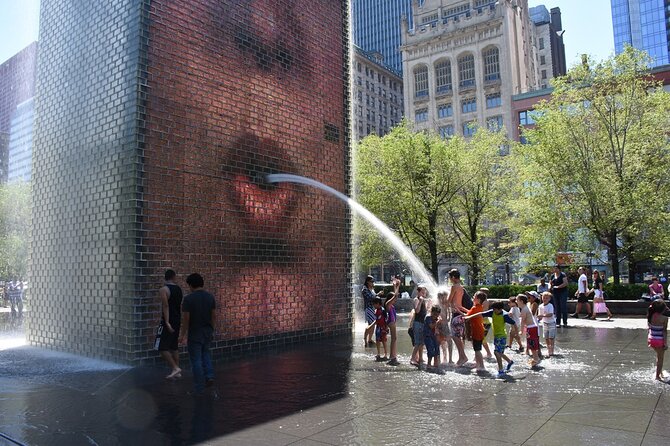
After Millennium Park, you’ll head into one of Chicago’s smartest ideas: the Pedway. It’s an underground network of tunnels and concourses, plus sky bridges that link many downtown buildings—spanning over 40 blocks.
Here’s why I like this stop for first-time visitors: the Pedway isn’t just a novelty. It’s an actual working system that shows you how Chicago thinks about pedestrian movement. You’re seeing the city in function, not just in architecture. And because it’s protected from the elements, it helps the tour stay pleasant even if the air has plans of its own.
You’ll spend about 20 minutes in this section, which is a sweet spot. Long enough to notice how it connects destinations, not long enough to feel like you’re trapped indoors.
Chicago River views and architecture framing at the Architecture Center

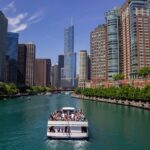
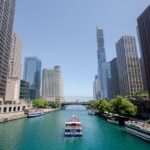
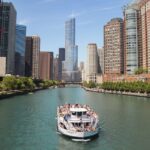
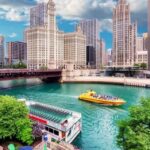
Next, you reach the Chicago waterfront and Riverwalk area. This is where the city really opens up: wide walking paths, outdoor seating, and architecture that changes depending on your angle. Even if you’ve seen river photos online, the Riverwalk perspective makes those buildings feel real. You also get the sense that this is a living place—people stroll, eat, and watch the water, not just pose for pictures.
Then you stop at the Chicago Architecture Center, located along the river. This place matters because it helps you connect what you’re seeing to why Chicago became so famous for building design. You’ll have about 30 minutes here, and with that time you can read, look, and get your own bearings before you continue through the rest of downtown landmarks.
Practical note: the tour is paced, so if you’re the kind of person who loves to “read every sign,” you may want to prioritize the areas that fit your interests first.
DuSable Bridge and the river-crossing moment
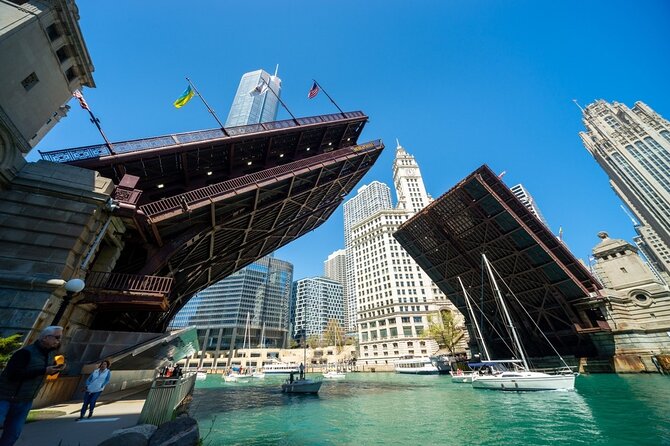
You’ll also pass by the DuSable Bridge, a moving bridge that carries Michigan Avenue across the main stem of the Chicago River downtown. That’s a detail you might skip on your own, but with a guide pointing it out, it becomes part of the story: Chicago’s built environment isn’t frozen. It moves, literally, and it’s designed around tradeoffs between water traffic and city life.
You’ll also cross the historic Michigan Avenue Bridge as part of the route. That kind of crossing gives you a quick change of viewpoint, which is perfect on a walking tour. It breaks up the “same street, same angle” feeling and helps you see the city as a 3D system.
Tribune Tower on Michigan Avenue: the ornate side of Chicago
One of the iconic stops is the Tribune Tower, a neo-Gothic skyscraper completed in 1925 on Michigan Avenue. The exterior is known for its ornate look, and for something very Chicago: its facade incorporates stones from famous landmarks around the world. Even if you don’t know every detail, you’ll recognize the building as a confident statement—newspaper history on a grand scale.
You get about 10 minutes here. That’s not enough time to linger forever, but it’s right for a focused look: view the details, take a couple pictures, and move on. If you like dramatic architecture, this is one of the best “quick stops” on the whole walk.
You can also read our reviews of more historical tours in Chicago




Wrigley Building and the Magnificent Mile: white terra cotta, big-city swagger
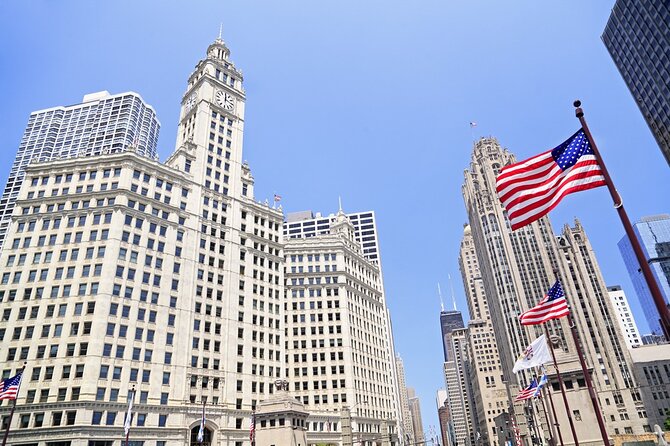
The Magnificent Mile section includes the Wrigley Building, a two-tower landmark completed in the 1920s. Its distinctive white terra cotta facade and Spanish Colonial Revival styling make it instantly recognizable. Originally built as the headquarters for the Wrigley Company, it remains one of those buildings that makes Chicago feel like Chicago—even if you’ve just arrived and you’re still learning the map.
You’ll also pass the InterContinental Chicago Hotel, which started life as the Medinah Athletic Club in 1929. This is a neat stop for architecture-minded folks because it blends old Chicago club-era grandeur with later hotel life. The data you’ll find highlights details like its opulent Grand Ballroom and a junior Olympic size swimming pool—big-city scale, even in the recreational parts of the building.
This portion of the route works well if you like your sightseeing to connect. You’re moving from Tribune Tower’s newspaper-era confidence to Wrigley’s corporate identity and then to a grand hotel that reflects another chapter of downtown life.
Chicago Fire context and a classic savory option
Along the way, you’ll learn about the Chicago Fire. You won’t get a book-length lesson in 2.5 hours, but you will get the kind of framing that helps the city make sense: why the rebuilding mattered, and why Chicago’s architecture and planning feel the way they do today.
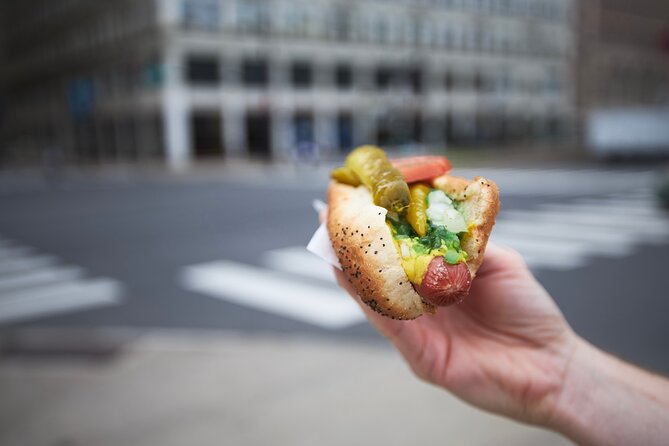
You’ll also have the option to enjoy a classic Chicago savory treat, with the reminder that it’s additional cost. The key for you is simple: budget a little extra if you want to sample. And since coffee and/or tea are not included, plan on buying what you want rather than assuming it’s part of the tour price.
Starbucks Reserve Roastery: a modern stop that still fits the route
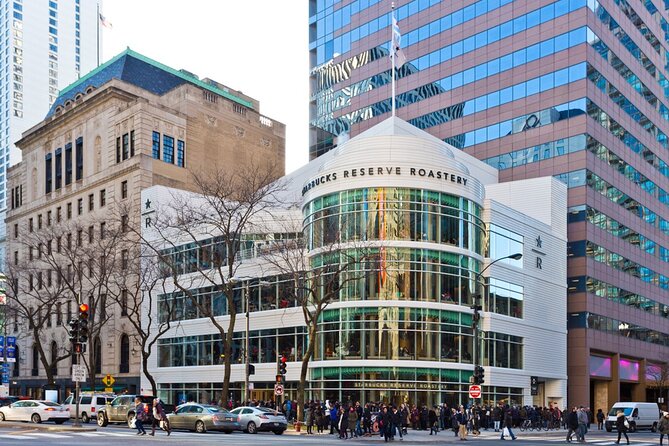
One of the most interesting later stops is the Starbucks Reserve Roastery on the Magnificent Mile. It’s the largest Starbucks in the world, spread across five stories, and it opened in 2019. The big idea here isn’t just coffee; it’s the experience style—on-site roasting, exclusive Reserve blends, and artisanal food offerings.
You’ll get about 30 minutes. That’s enough time to watch, smell, and decide if you want something. If you’re trying to keep costs down, you can treat this as a “look-only” stop and grab a drink elsewhere after. But if you’re a coffee person, this is one of the more memorable places to break the walking rhythm.
Because coffee and snacks on tour are not included, this is where the extra spending can sneak in. I recommend setting a quick personal cap before you walk in.
Navy Pier finish: end with options instead of an abrupt stop
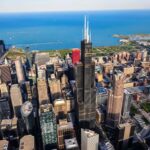
The tour ends at Navy Pier, 600 E Grand Ave, about 2 hours 30 minutes after starting. Navy Pier is one of Chicago’s most popular lakefront attractions, stretching along Lake Michigan with entertainment, dining, and cultural experiences. It opened in 1916, and it stays active year-round, with features like a Ferris wheel and seasonal events.
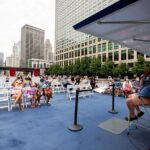
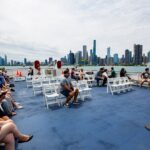
This ending works because Navy Pier is a place where you can keep moving at your own pace after the tour. If you want more Chicago architecture, you’ll have the option to take an architecture cruise, or you can simply keep exploring the pier and surrounding lakefront.
For many people, finishing at the water is the best kind of “tour landing.” It’s a natural exhale after the downtown focus, and it gives your legs a chance to catch up while you still get city views.
Group size, guide quality, and the one caution worth taking seriously
This is a maximum of 10 travelers, which is a big deal for a walking tour. Smaller groups generally mean easier question time and less shuffling around photo stops. It also makes timing feel more humane—your guide isn’t herding a crowd.
The guides are also a big part of what people remember. In the strongest feedback, the guide is described as passionate, kind, and great at explaining Chicago’s past and present, with extra care shown for seniors and their comfort. People also call out feeling supported and having fun, not just absorbing facts.
Now the important caution: one negative review described a guide behaving in a way that involved texting and personal information, and the issue escalated to a police officer. That’s not something you can ignore. If you’re on this tour and anything feels unsafe or inappropriate, trust your instincts, ask for help immediately, and contact the tour operator right away.
This shouldn’t scare you away from Chicago—but it should remind you to treat any tour like a service: you deserve professional behavior.
What you’ll realistically get from this tour (and how to get the most)
This tour is best viewed as a curated walking framework. You’re not trying to do everything in Chicago in one afternoon. You’re getting a guided route that links the city’s signature public spaces, pedestrian infrastructure, and landmark architecture into a single storyline.
To get the most value for your time and money:
- Wear comfortable walking shoes. You’ll be on your feet for about 2.5 hours.
- Bring layers. Even when you use the Pedway, you’ll still spend time outdoors.
- If you care about photos, plan your priorities at Cloud Gate and the Tribune Tower, where the time is tight.
- Decide ahead of time whether you want the extra-pay savory treat and any drink at Starbucks Reserve Roastery.
Price and value: what $64.99 buys you in practice
At $64.99 per person, this isn’t the cheapest way to see downtown, but it’s also not priced like a private tour. The value comes from the mix of guided context plus multiple real stops: Millennium Park, the Pedway, the Chicago Architecture Center, major Magnificent Mile landmarks, a modern roastery, and Navy Pier.
The “included” part is also meaningful: all fees and taxes are included, and you’re using a mobile ticket. You’re not trying to figure out separate entries at each stop based on the day.
The cost can rise only if you choose the extra purchases, like the classic savory treat or drinks/snacks. If you budget those lightly, the overall day stays predictable.
Who this tour suits best
This works especially well if you:
- Want a high-impact introduction to downtown Chicago without bouncing around on your own
- Like architecture, but also want the history and context explained in plain language
- Prefer a smaller group experience (it caps at 10)
- Enjoy a mix of iconic landmarks and real city infrastructure, like the Pedway
It may be less ideal if you:
- Have limited stamina for a 2.5-hour walk
- Need lots of time at each landmark for slow browsing and deep reading
Should you book this Chicago walking tour?
If you want a smart, efficient way to connect Millennium Park, the Pedway, Chicago’s architecture storytelling, and Magnificent Mile icons to a fun end at Navy Pier, I think this is a strong choice. The pricing makes sense when you consider the guided route plus the number of major stops you’ll cover in a single afternoon.
My one deciding question is simple: how sensitive are you to guide quality and safety? If you’re comfortable speaking up and staying alert if anything feels off, this tour can be a very enjoyable way to get your bearings fast in Chicago. If you want, tell me your travel dates and your walking comfort level, and I can suggest the best way to time the rest of your day around the Navy Pier finish.
FAQ
How long is the Small Group History and Architecture Walking Tour?
It lasts about 2 hours 30 minutes.
Where does the tour start and end?
It starts at McCormick Tribune Plaza, 1 N Michigan Ave, Chicago, IL 60602, and ends at Navy Pier, 600 E Grand Ave, Chicago, IL 60611.
What is the price per person?
The price is $64.99 per person.
How big are the groups?
The tour has a maximum of 10 travelers.
Do I need to buy a ticket for stops?
A mobile ticket is provided, and the tour lists admission as free for the stops mentioned.
Is coffee or tea included?
No. Coffee and/or tea are not included in the price, and coffee and snacks on tour are not included.
Is there an opportunity to try food during the tour?
Yes, there’s an opportunity to enjoy a classic Chicago savory treat, but it’s an additional cost.
Is the tour suitable for people with mobility concerns?
It says travelers should have a moderate physical fitness level, so expect walking throughout the route.
Is cancellation allowed, and what’s the cutoff?
Free cancellation is available up to 24 hours in advance for a full refund.