
REVIEW · CHICAGO
Chicago’s Storied Neighborhood: An Audio Tour
Book on Viator →Operated by VoiceMap Audio Tours · Bookable on Viator
Hyde Park gets a second voice. This self-guided audio tour uses Bill Ayers’ narration to connect University of Chicago landmarks with the wider Hyde Park and Washington Park story as you walk at your own pace. You’ll follow a built-in route that starts near the University of Chicago Laboratory Schools and finishes by the Hyde Park Boulevard Apartments.
Two things I really like: the VoiceMap app matches your location so the audio starts at the right spot, and Ayers’ personal stories add meaning to what you’re seeing, not just dates and descriptions. The other win is offline access—audio, maps, and geodata—so you can stay on track even if your signal is shaky.
One consideration: the route isn’t constant talk. If you want guide chatter the whole time or expect to enter university buildings, plan for stretches of quieter walking and mostly outside views.
In This Review
- Key things to know before you go
- Hyde Park on foot, with Bill Ayers as your guide
- Start line at the University of Chicago Laboratory Schools
- Rockefeller Memorial Chapel: a stop that makes you slow down
- Frederick C. Robie House: architecture with context
- Moving through the University of Chicago area without getting lost
- The Nuclear Energy Sculpture: an odd detail with purpose
- Washington Park segments: a neighborhood, not just a backdrop
- DuSable Museum area: history you can’t shortcut
- Route length and pace: plan for about three miles of walking
- What’s included, and why that matters for value
- App experience: easy on the move, but not a replacement for attention
- Who this tour suits best
- Should you book this Hyde Park audio tour?
Key things to know before you go
- Bill Ayers narration brings a local professor and activist perspective to Hyde Park landmarks.
- VoiceMap location accuracy helps you start listening at the correct points along the route.
- Offline audio and maps let you navigate without relying on cell service.
- A campus-to-neighborhood route ties together the University of Chicago area and Washington Park.
- Expect a walk-focused experience with landmark passing rather than indoor touring.
Hyde Park on foot, with Bill Ayers as your guide
Hyde Park is one of those Chicago neighborhoods where the map looks straightforward, but the meaning changes as you move a few blocks. This audio tour is built for that exact effect. You’re not sitting in a van. You’re walking through a real neighborhood, picking up context as you go—campus buildings to community institutions, architecture to civic life.
The big draw is the narrator: Bill Ayers. He isn’t giving you a generic script. His voice (and the stories behind it) make the landmarks feel tied to bigger themes like power, education, and activism. That’s the kind of commentary that helps you notice details you’d normally miss when you’re just trying to get a photo and move on.
You also control the pacing. If you want extra time near a chapel or the Robie House area, you can pause and listen longer. If you’d rather keep moving, you can skip ahead. That flexibility matters in a neighborhood like Hyde Park, where there’s plenty to look at even when the audio is quiet.
You can also read our reviews of more tours and experiences in Chicago



Start line at the University of Chicago Laboratory Schools
The walk begins outside the University of Chicago Laboratory Schools at 1362 E 59th St. This is a smart starting choice because it puts you right near the University’s orbit. You start with an immediate sense of place, and the narration can set a frame before you reach the landmark cluster.
Practical tip: plan to arrive a few minutes early, especially if you need time to get the VoiceMap app loaded. Since headphones and a smartphone aren’t included, this is also where you’ll want to make sure you’re ready to go—battery topped up, audio downloaded for offline use.
From the beginning, the format is simple: you follow the route while the app cues the next audio segment at the right location. That’s one of the aspects that works well for people who don’t want to play map games with a phone while walking.
Rockefeller Memorial Chapel: a stop that makes you slow down
One of the first major landmarks you pass is the Rockefeller Memorial Chapel. Even if you never step inside, it’s the kind of structure that invites a closer look: its presence changes the feel of the street. The audio here helps you interpret why such places matter in an academic neighborhood—how institutions shape both the physical space and the culture around it.
This is also where the tour’s style starts to show. It’s less about a checklist of facts and more about turning observation into understanding. If you like commentary that connects architecture to ideas, you’ll probably enjoy these segments.
If you dislike waiting for the next audio cue, keep this in mind: some stretches are more about the walk than nonstop narration. That’s not necessarily wrong here. For a chapel, letting the setting breathe can actually work.
Frederick C. Robie House: architecture with context
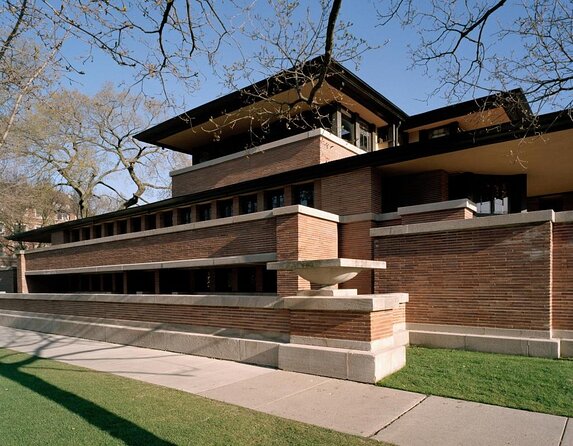
You’ll pass the Frederick C. Robie House, one of Chicago’s best-known architectural landmarks. On foot, it’s easy to approach it like a quick photo stop. The tour nudges you to look again—how the building fits in with the University environment and the story the route is building as it goes.
This is where a lot of people’s expectations come into play. Some tours are designed around inside access. This one is built around passing landmark points. So if you hoped for guided entry into major university buildings, you may feel the experience is mostly exterior viewing. The route still gives you meaning as you look, but it doesn’t function like a campus tour with indoor stops.
For value, that’s not automatically a dealbreaker. If you’re in Hyde Park to experience the street-level view and hear a thoughtful commentary timed to your location, you’re set.
Moving through the University of Chicago area without getting lost
After the iconic sites, the tour continues through parts of the University of Chicago area, passing faculty and buildings associated with the campus. This part can feel like the connective tissue of the whole experience: it’s not always the most visually dramatic moment, but it’s important for the narrative arc.
I like this segment because it gives you a guided way to move through a large, complex area. Instead of asking yourself, What am I looking at, and why does it matter?, the audio gives you a reason to pay attention to what’s around you.
Still, here’s the reality check: you’re walking in a university zone where the scale can be intimidating. The built-in route and location-triggered audio help reduce mental effort. And if you’re someone who likes clear “you are here” guidance, that’s a strong selling point.
You can also read our reviews of more tours and experiences in Chicago

The Nuclear Energy Sculpture: an odd detail with purpose
You’ll also pass the Nuclear Energy Sculpture. It’s the kind of landmark that can go unnoticed if you’re only looking for the obvious names. The tour treats it as more than a quirky object. It connects the idea of scientific ambition and public meaning—especially in a city where science and politics often share the same headlines.
This is a nice example of what this audio tour does well: it turns a random sight into part of a larger conversation. If you enjoy walking with a guide who points out the “in-between” features, you’ll likely get more out of this route than you would from simply sightseeing with a map app.
Washington Park segments: a neighborhood, not just a backdrop
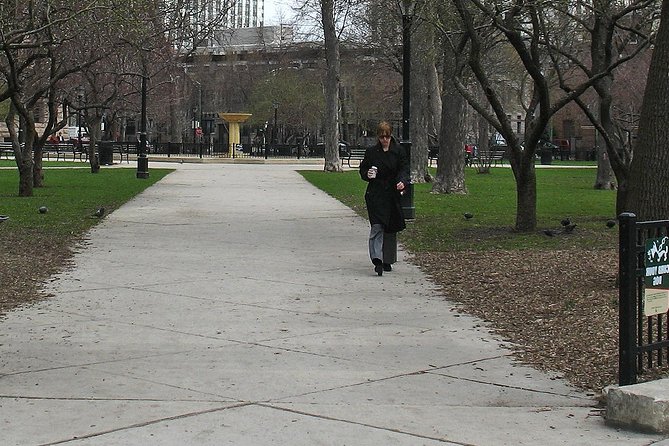
At some point the route moves from the University side into parts of Washington Park. This is one of the most interesting transitions on the walk. Hyde Park and Washington Park share geography, but they don’t always feel like they tell the same story. The narration helps connect the dots so the shift doesn’t feel like you’re walking into a different trip.
Practically, I recommend treating this part as your cue to slow down and actually look. Street scenes change quickly, and the tour’s quieter walking stretches can be a good time to absorb the neighborhood vibe and landmarks as they appear.
Also, wear comfortable shoes. Washington Park segments are part of the reason people remember this tour as more of a walk through real places than a lineup of monuments. Even though the total duration is listed as about 40 minutes to 1 hour, the walking time adds up, especially if you stop often to listen.
DuSable Museum area: history you can’t shortcut
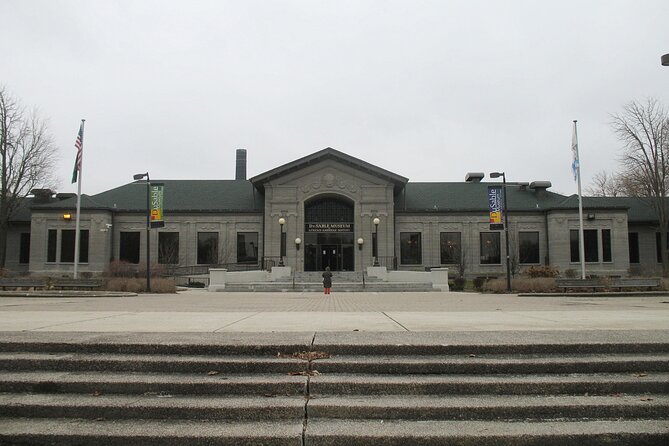
Near the later part of the route, you pass the DuSable Museum of African American History. That makes sense thematically. The tour’s focus isn’t only on architecture and institutions—it’s also on the people and stories that give a neighborhood its core identity.
If you’re the type who likes to stand near a landmark and really absorb what it represents, you’ll probably enjoy this segment. And if you’re curious, you may want to plan extra time beyond the audio so you can visit the museum on your own schedule afterward.
One thing to know: this tour is built for listening and moving along the street. It’s not described as an indoor museum visit. So treat the museum stop as a meaningful passing point, then decide separately if you want to go inside.
Route length and pace: plan for about three miles of walking
The duration is listed as approximately 40 minutes to 1 hour, and a separate note from an older visitor suggests the route can feel like around three miles at a steady pace. That range is helpful, because it sets expectations for mobility and time.
If you’re comfortable walking for an hour and you’re happy stopping briefly for audio segments, you’ll probably find the timing reasonable. If you prefer frequent narration or short walking bursts, the slightly longer, intermittent talking feel might feel slow.
Here’s how I’d plan it: download audio first, start promptly, and decide ahead of time whether you’ll pause for extra listening. If you do pause a lot, the total time can stretch beyond the hour. That’s not a problem—just be honest about your stamina.
What’s included, and why that matters for value
This tour includes lifetime access to the audio in English, plus the VoiceMap app on Android and iOS. It also includes offline access to audio, maps, and geodata. For me, that last part is a big deal. Hyde Park and the surrounding areas aren’t always reliable for data, and offline navigation means you can focus on the walk instead of troubleshooting your phone.
What you’ll need to bring:
- Your own smartphone
- Headphones
- Transportation to get to the start
- Any food or drink you want
- Admission fees, if you decide to enter buildings or attractions on your own
So the real value isn’t just the content. It’s the convenience of being able to replay it later and still have it work offline. Lifetime access also means you can return with a fresh set of eyes.
App experience: easy on the move, but not a replacement for attention
VoiceMap’s biggest advantage here is that it starts the audio at the right spots. That matters because a self-guided tour can fall apart if you’re constantly guessing where you are. When the audio triggers correctly, you get the flow of a guided walk without a group pace.
The tradeoff is that the experience still depends on you. You’ll need to keep your attention on the street and on where you’re going. When the audio goes quiet, you’re effectively in sightseeing mode. If that works for you, it’s fine. If you want an unbroken stream of explanation, you might find those quieter stretches frustrating.
Who this tour suits best
This is best for:
- People who enjoy neighborhood walking and want a story tied to real landmarks
- Anyone who likes hearing from a local voice with an activist-professor angle
- Travelers who prefer self-guided pacing over a fixed group schedule
- Architecture and campus fans who like commentary as you pass major sites
This may not be the best match if:
- You want constant narration without any gaps
- You’re expecting a formal guided campus visit with indoor stops
- You need very short walking segments or minimal route length
Should you book this Hyde Park audio tour?
Book it if you want a thoughtful walk through University of Chicago landmarks, Rockefeller Memorial Chapel, the Robie House area, and the DuSable Museum zone, with Bill Ayers’ narration tying it together. I also think the offline support and lifetime access make it a practical buy if you like repeating routes or sharing them with someone later.
Skip it if you’re paying expecting nonstop commentary and frequent indoor access. This one is about moving through the neighborhood while the audio guides your attention. If you’re okay with that rhythm—and you’re comfortable walking roughly an hour—this can be a rewarding way to understand Hyde Park beyond postcards.