REVIEW · CHICAGO
Chicago’s Midway, Movies, and the 1893 World’s Fair Walking Tour
Book on Viator →Operated by Chicago Movie Tours · Bookable on Viator
Early film starts before Hollywood. This 1.5-hour Chicago walk connects Midway landmarks from the 1893 World’s Fair to the people and inventions that helped shape movies. It’s a focused route on the south side, with stops that feel like real-world movie props when your guide explains what you’re looking at.
What I love most is the way the host turns the story into something you can see: you get clips and photos during the walk, plus a short look at 19th-century moving-picture devices. I also like the intimate size—up to four people—so questions don’t get swallowed by a big crowd. One possible drawback: the tour needs good weather, so if conditions are bad you may have to swap dates.
In This Review
- Key highlights worth knowing before you go
- Why the Midway is a movie set with a real address
- Stop 1: Lorado Taft’s Midway Studios and the power of Recording Angel
- Stop 2: Midway Plaisance and the fair’s amusements turning into moviegoing
- Stop 3: Fountain of Time and why filmmakers kept coming back
- The tour style: visuals, a small group, and device demonstrations
- Price and value: what $49.99 buys you (and why it can be worth it)
- Who will enjoy this most (and who might not)
- Timing, meeting point, and how to plan your morning
- Should you book it or skip it?
- FAQ
- How long is Chicago’s Midway, Movies, and the 1893 World’s Fair Walking Tour?
- What does the tour cost?
- Where do I meet, and where does the tour end?
- What language is the tour offered in?
- How many people are in the group?
- What happens if the weather is poor or if I cancel?
Key highlights worth knowing before you go
- Lorado Taft’s Midway Studios: meet the sculptor and teacher behind moving-picture excitement, and see a stop tied to Recording Angel.
- Midway Plaisance green space: learn how the World’s Fair’s amusements helped launch moviegoing culture, including ideas about the first commercial movie theater.
- Fountain of Time: a long sculpture that filmmakers have used as inspiration, tied to both old and newer productions.
- Real device demonstrations: hands-on-style explanations of 19th-century moving-picture tech.
- Small group feel: a maximum of four travelers keeps the pace human and the Q&A practical.
- Photo-friendly setup: you’ll have planned moments for Instagram-style shots along the way.
Why the Midway is a movie set with a real address
Chicago’s Midway doesn’t just count as a cool neighborhood stop. On this tour, you’ll treat it like a timeline. The 1893 World’s Fair helped crank up public curiosity—about spectacle, crowds, and new ways to experience entertainment—and film quickly became part of that same momentum.
I like that the tour doesn’t ask you to guess. Your guide points out what matters at each location and connects it to movie history. That matters because the Midway can feel like an outdoor blur if you’re sightseeing on your own. With a guide, you get a line from the fairground era to the early screens that came after.
Even better: the tour is short. About 1 hour 30 minutes means you’re not stuck on the street all day, and you can still pair it with other Hyde Park or South Side plans afterward.
You can also read our reviews of more walking tours in Chicago


Stop 1: Lorado Taft’s Midway Studios and the power of Recording Angel
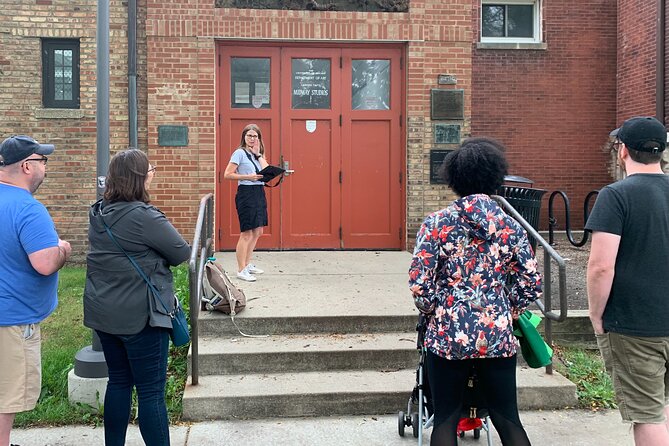
Your walk begins at Midway Studio, 6016 S Ingleside Ave (near the Taft House area). This is where the tour sets its theme: Lorado Taft. You’ll hear about Taft as a sculptor, teacher, and writer—and also as an early adopter of moving pictures. That blend is a big part of why this stop works: it connects art, education, and technology rather than treating them as separate worlds.
One of the most compelling moments is standing with the sculpture tied to Recording Angel. The tour frames it as Hollywood’s first female action star in motion. Even if you’re not a silent-film or early-animation expert, the guide’s framing gives you a handle: you’re not just looking at a statue. You’re looking at a cultural idea—movement, performance, and how media starts finding its legs.
Practical notes for this stop:
- Plan on about 30 minutes here.
- Admission is listed as ticket-free as part of the experience, so you’re paying for the guide and story, not extra entry fees.
- Take your time at viewing points. The guide’s explanations are paced for photos, but you’ll also want a quiet minute to just look.
Possible drawback: this stop is where you’ll likely get the most “names and meaning” content. If you’re the type who likes action and pacing over context, stick with it—you’ll start noticing how the story of movies is being built before you move on.
Stop 2: Midway Plaisance and the fair’s amusements turning into moviegoing
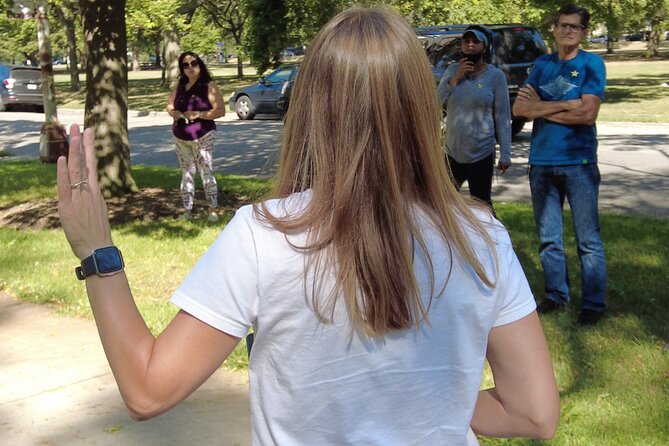
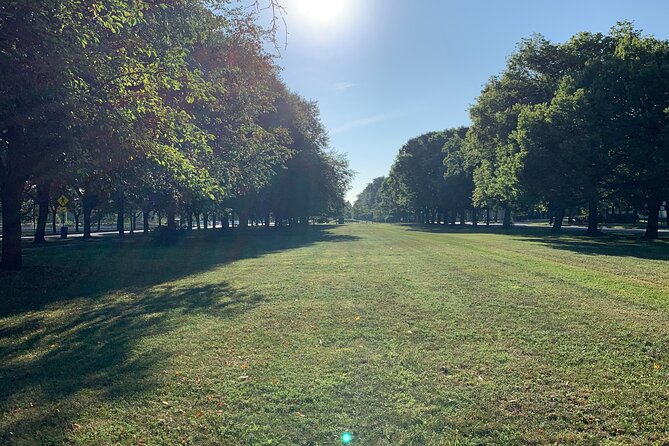
Next you head to Midway Plaisance, the green space that served as the amusements arm of the 1893 World Columbian Exposition. This is the change-of-mood stop. If Stop 1 is where you learn about people and art, this is where you learn about public appetite—how the fair shaped what audiences wanted to see.
The tour explains that this area connects to movie history, including the mention of the first commercial movie theater. Even with no technical background, you’ll come away with the bigger point: early movies didn’t appear in a vacuum. They grew from the same environment that built excitement for the fair—crowds, entertainment, and a public ready to try something new.
Why this stop is valuable for you:
- It helps you understand movie history as a place-based story, not just a timeline of famous titles.
- It gives you a “between-the-ceremony” feeling—more outdoors, more open, and a little less museum-like.
Time-wise, it’s around 15 minutes. That’s just long enough to get the idea without dragging. If the group is moving quickly, you may want to take a couple of calm photos first, then fully listen to the explanation.
Stop 3: Fountain of Time and why filmmakers kept coming back
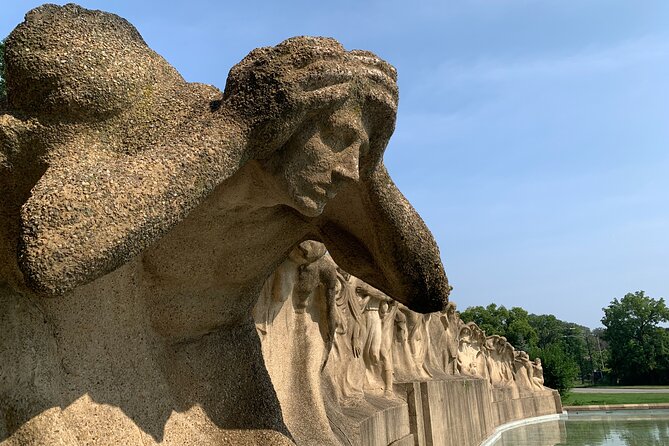
The walk ends at Fountain of Time in George Washington Park (6000 S Cottage Grove Ave). This is the stop that feels cinematic even when you’re standing still.
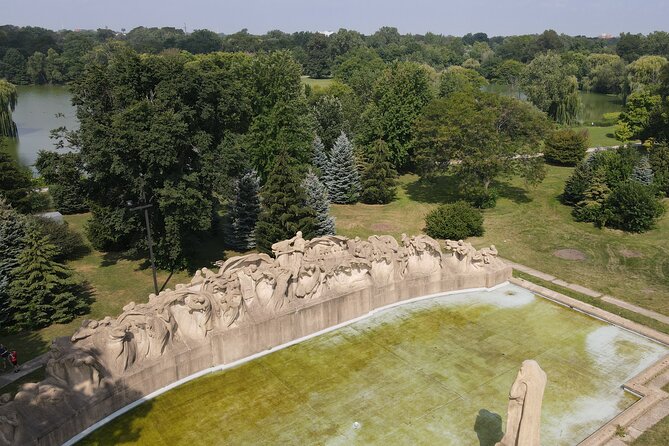
You’ll see Fountain of Time, described as a 126-foot-long sculpture. On the tour, it’s presented as an inspiration for both classic and modern filmmakers. That’s one of those lines that can sound vague until you hear it explained: long, memorable public art becomes a natural visual reference point. Directors and editors don’t just look for buildings. They look for shapes, lines, scale, and mood—and sculptures like this can do that work instantly.
It’s also a good “wrap up” stop because it brings the theme full circle. You start with early movement and a moving-picture connection, pass through entertainment culture, and end with a public artwork that keeps showing up in film language.
Time for Stop 3 is about 15 minutes. It’s enough for the story and some photos, but it won’t eat your whole afternoon. Also, it gives you a clean endpoint so you can leave the tour and keep exploring without backtracking.
The tour style: visuals, a small group, and device demonstrations
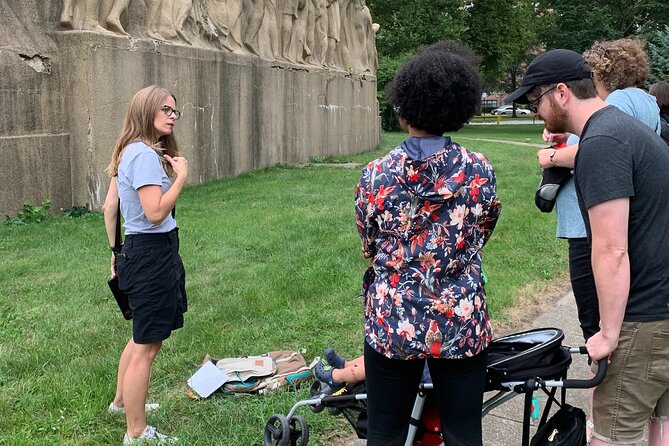
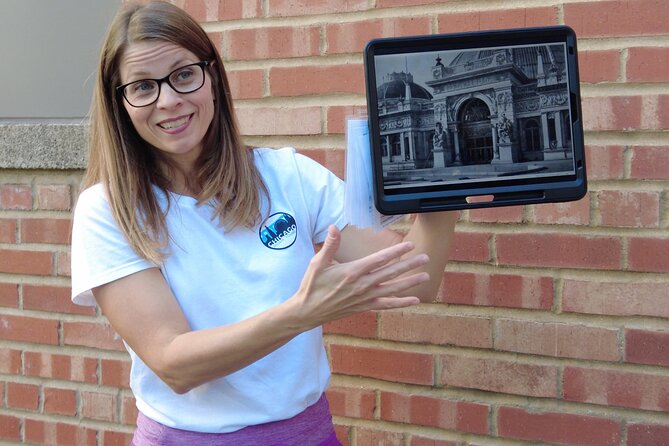
This is where the experience earns its price tag. A film-history topic can get dry if it’s all lectures. Here, you get support: clips and photos during the walk, plus plenty of built-in photo moments. You’re not just wandering past landmarks—you’re getting prompted to look for specific details.
Your guide also includes a demonstration of 19th-century moving picture devices. That’s a rare add-on for a short walking tour. The point isn’t to turn you into an expert collector—it’s to help you understand the leap from early tech to what you’re watching today.
Two other practical strengths stand out from the way the tour is described:
- Communication is part of the experience. If you’re running late, the guide’s approach is meant to help you catch up.
- The guide seems to have a plan for staying comfortable when conditions are rough. One account notes being kept warm and dry in February by knowing how to use underground walkways, which is exactly the kind of local knowledge that makes a short tour feel smooth instead of stressful.
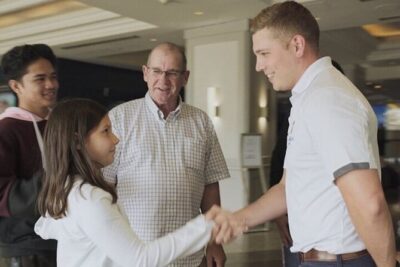
Since the max group size is four travelers, you’re more likely to get direct answers instead of a one-size-fits-all lecture.


Price and value: what $49.99 buys you (and why it can be worth it)
At $49.99 per person for about 1 hour 30 minutes, this isn’t a “cheap and forget it” city walk. But it also isn’t trying to sell you a whole day of generic sightseeing.
Here’s the value logic I’d use when deciding:
- You’re paying primarily for expert commentary and film-history framing, not for transportation or endless stops.
- Multiple stops list admission ticket free, so you’re not stacking extra entry costs on top.
- The format includes extras that usually cost extra elsewhere: clips/photos, a mini goodie bag, and a demonstration of 19th-century moving-picture devices.
For film fans, it can feel like you’re buying a focused lesson. For casual visitors, it can feel like you’re getting a guided route that turns “interesting buildings” into “oh, that connects to movies.”
One thing to consider: because the tour is capped at four people, departure availability may be limited compared with larger tours. If you’re traveling during peak season or have a tight schedule, it’s worth booking early.
Who will enjoy this most (and who might not)
This tour fits best if you’re even slightly curious about how movies became a mass medium. If you like:
- Chicago’s early cultural storylines,
- World’s Fair era details,
- and the practical “how did we get from there to here” angle,
…you’ll likely enjoy the way the Midway locations connect to film evolution.
I also think it’s a strong option for people who want a smaller-group experience. It’s much easier to ask questions and keep pace when the group stays tiny.
Who might want to adjust expectations:
- If you’re expecting a long, stop-everywhere walking marathon, the short duration means you’ll get sharp highlights rather than lots of detours.
- If you hate getting outside in less-than-ideal weather, remember the tour requires good weather.
Timing, meeting point, and how to plan your morning
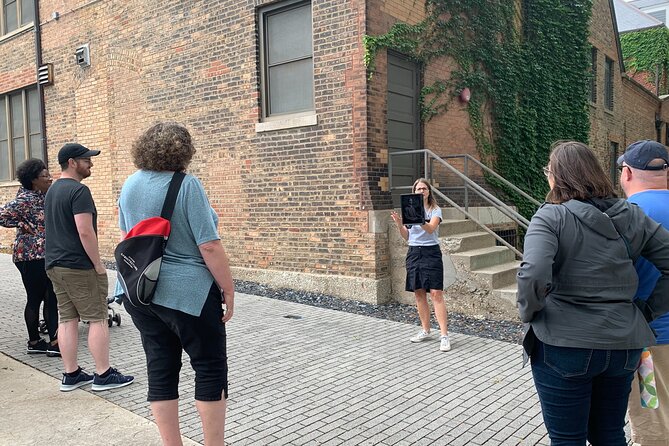
The tour starts at 10:30 am at Midway Studio, 6016 S Ingleside Ave. It ends at Fountain of Time in George Washington Park. That start-and-end layout is convenient because you don’t have to plan a whole return route to your initial point.
Also keep in mind:
- It’s near public transportation, so you may not need a car.
- There’s a short walk between stops, but it’s still an on-your-feet outing for about 90 minutes total.
- The group size is small, which can help with timing, but it also means you should aim to arrive a bit early so you don’t feel rushed at the first stop.
The tour is in English, uses a mobile ticket, and is listed for service animals.
Should you book it or skip it?
Book this if you want a guided walk where the Midwest-to-movie connection is the main plot. For a relatively short outing, you get a compact storyline across three meaningful Midway sites, plus visuals and a moving-picture device demonstration. If you like small groups, this format is especially satisfying.
Skip it if your goal is only general sightseeing or you’re trying to cover the maximum number of Chicago landmarks in one day. This tour is intentionally focused. The reward is that focus—you’ll leave with a clearer sense of how the 1893 World’s Fair era connects to early film culture and the famous shapes that kept showing up on screen.
If you’re on the fence, choose the simplest test: ask yourself if you’d enjoy seeing how people, public art, and early entertainment tech line up. If yes, this is a smart use of time on the south side.
FAQ
How long is Chicago’s Midway, Movies, and the 1893 World’s Fair Walking Tour?
It runs for about 1 hour 30 minutes.
What does the tour cost?
The price is $49.99 per person.
Where do I meet, and where does the tour end?
You start at Midway Studio, 6016 S Ingleside Ave, Chicago, IL 60637. The tour ends at Fountain of Time – George Washington Park, 6000 S Cottage Grove Ave, Chicago, IL 60637.
What language is the tour offered in?
The tour is offered in English.
How many people are in the group?
This experience has a maximum of 4 travelers.
What happens if the weather is poor or if I cancel?
The tour requires good weather. If it’s canceled due to poor weather, you’ll be offered a different date or a full refund. If you cancel, the experience is non-refundable and cannot be changed for any reason.