REVIEW · CHICAGO
Chicago Ghosts & Haunted History Walking Tour
Book on Viator →Operated by Tours By Foot - Chicago · Bookable on Viator
Night streets can turn Chicago into a crime scene.
This Chicago Ghosts & Haunted History Walking Tour threads together grisly true stories and the places they happened, starting at the famed Congress Hotel as the day cools off. You’ll walk downtown while a paranormal-focused guide brings the city’s darker chapters to life through legends, disasters, and serial-crime history.
I like that the route stays tight and walkable, with short stops that keep moving you from one major site to the next. I also like the storytelling energy that puts the focus on real locations and creepy context, and guides such as Kelly have been singled out for bringing both skill and fun to the group.
One possible drawback: if you prefer gentle, spooky vibes over grim true-crime details, this tour’s subject matter may feel a bit intense.
In This Review
- Key things I’d clock before you go
- Walking tour at sunset: the vibe and pacing you’ll feel
- Starting at the Congress Plaza Hotel: why this stop sets the tone
- The Iroquois Theatre Fire at James M. Nederlander Theatre
- West Couch Place, the name Death Alley, and the Iroquois fallout
- The Chicago River and the S.S. Eastland Disaster
- 2131 S Dearborn St: the Everleigh Club and the 1900s Red Light district
- Two serial-killer stories and downtown prison breaks: the thread you’ll notice
- Price and logistics: is $49 a good deal for a 2-hour night walk?
- Getting there and what the route means for your night
- Who this tour fits best (and who should skip it)
- Should you book this Chicago Ghosts & Haunted History Walking Tour?
- FAQ
- FAQ
- How long is the Chicago Ghosts & Haunted History walking tour?
- How much does the tour cost?
- Where does the tour start?
- Where does the tour end?
- What ticket type do I use?
- Is there a group size limit?
- Are admission tickets needed for the stops?
- Is public transportation nearby?
- Are service animals allowed?
- What is the cancellation policy?
Key things I’d clock before you go
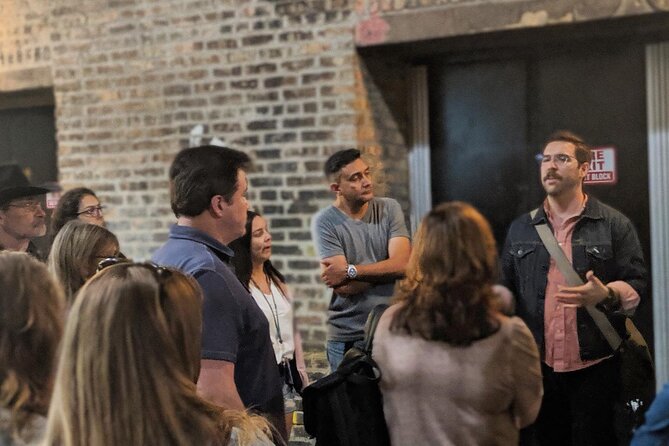
- Congress Hotel first: the tour kicks off where Chicago ghost legends start, then uses that mood to set the tone for the whole walk.
- True tragedies, not vague hauntings: you’ll hit major events like the Iroquois Theatre Fire and the S.S. Eastland Disaster.
- Death Alley context: West Couch Place gets treated as more than a spooky name, with details tied to the Iroquois tragedy.
- Red-light era stop on Dearborn: you’ll hear how the Everleigh Club fit into the 1900s downtown underworld.
- Small group pace: with a maximum of 18 people, it’s easier to follow along and actually hear what matters.
Walking tour at sunset: the vibe and pacing you’ll feel
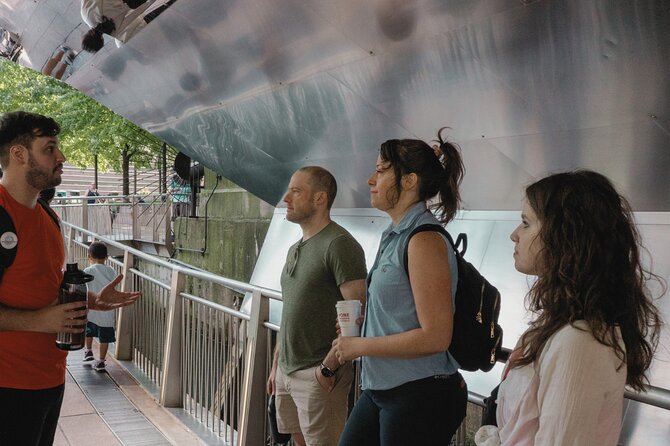
This is a night haunted history walk that runs about 2 hours. The pacing is built around brief, meaningful stops, so you’re not stuck in one place listening for a long time. Instead, you get a string of “this is the site, here’s what happened, and here’s why it still lingers” moments.
You’ll also notice the structure favors momentum. Each location is only a few minutes, which means you’re always moving through downtown streets rather than waiting around. That works well if you want a fun night out and you like learning while you walk.
The tour also starts on Michigan Ave and ends up on N Clark St near the Clark Street Bridge, so it naturally takes you across parts of central Chicago. If you’re choosing this for your first night, it helps you get your bearings fast. If you’re already sightseeing that day, plan for this as a focused add-on rather than a replacement for dinner plans.
You can also read our reviews of more walking tours in Chicago



Starting at the Congress Plaza Hotel: why this stop sets the tone
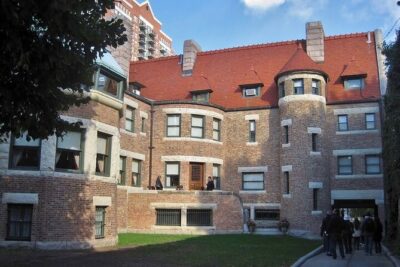
The adventure begins at the Congress Plaza Hotel & Convention Center on South Michigan Avenue. In the tour’s story world, this is the doorway into Chicago’s most haunted-hotel legends, and the guide uses the building’s reputation to frame everything that follows.
The Congress Hotel stop matters because it’s not just about ghosts as a vibe. You’re also introduced to the idea that Chicago’s “haunted history” isn’t floating in the supernatural—it’s rooted in real people, real institutions, and real crimes that made headlines. That shift is what makes the walk click: you’re learning about place, not just rumors.
This is also where the tour’s “creepy but grounded” tone starts. You’ll hear references to H. H. Holmes, described as Chicago’s first serial killer, and the sense is that these stories aren’t random. They connect to streets and buildings you can actually see, which makes the whole walk feel more immediate.
The Iroquois Theatre Fire at James M. Nederlander Theatre
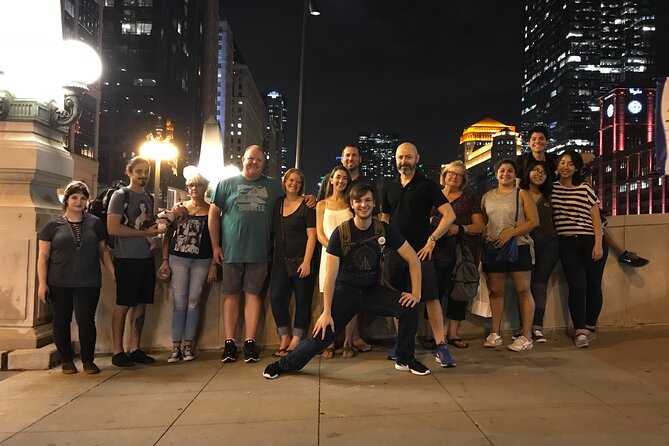
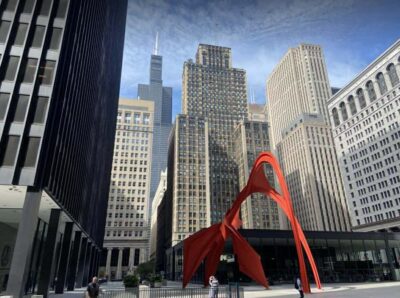
From there, you head to the James M. Nederlander Theatre, where the tour points out the site of the tragic 1903 Iroquois Theatre Fire. The numbers are staggering: 602 patrons lost their lives.
What I like about this stop is how it’s treated as more than a headline. The tour uses the theater as a landmark for understanding how quickly a disaster can become part of local memory. When you stand near a working performance venue and learn what used to be there, it gives the story extra edge.
Also, this stop is short, about 5 minutes, which is handy if you’re not trying to pack your night with long lectures. You get the essential context and then move on, so the emotional punch lands without exhausting you.
West Couch Place, the name Death Alley, and the Iroquois fallout
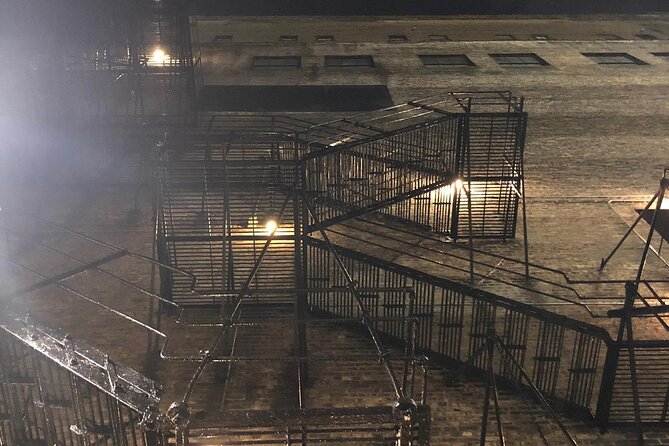
Next comes West Couch Place, also known as Death Alley. This is one of those locations where the nickname alone makes you stop walking and pay attention.
Here, the tour connects the area to the Iroquois Theatre Fire, including the grim detail that bodies were stacked six high. The point of mentioning that isn’t shock for shock’s sake. It helps explain why this part of the city carries a reputation, and why people still remember it as a darker corridor of the disaster.
A practical note: because this is a very specific detail-heavy stop, it’s the kind of moment where you’ll want to listen closely. If you tend to zone out when you’re walking, this is a good place to slow your pace for a minute and really take in what the guide is saying.
The Chicago River and the S.S. Eastland Disaster
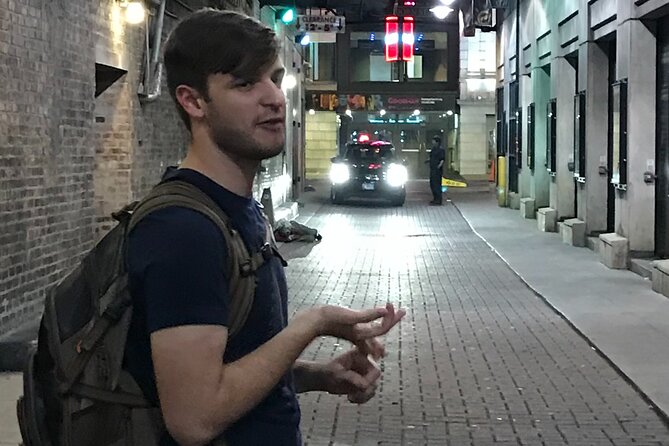
Then you move to the Chicago River and the story of the S.S. Eastland Disaster. The tour’s focus here is the tragedy in 1915, when the passenger tour ship rolled over while docked, killing over 800 people.
This stop works because water is a built-in storytelling contrast. The river is a visual anchor in Chicago, and when you connect it to a major disaster, it stops being just scenery. You start looking at the shoreline and imagining how chaos would unfold in a place that now looks like everyday downtown.
Again, the time on this stop is brief—around 5 minutes—so you’re getting the core facts and the location-based meaning rather than a full historical lecture. It’s a good rhythm: landmark, story, then walk on.
You can also read our reviews of more historical tours in Chicago





2131 S Dearborn St: the Everleigh Club and the 1900s Red Light district
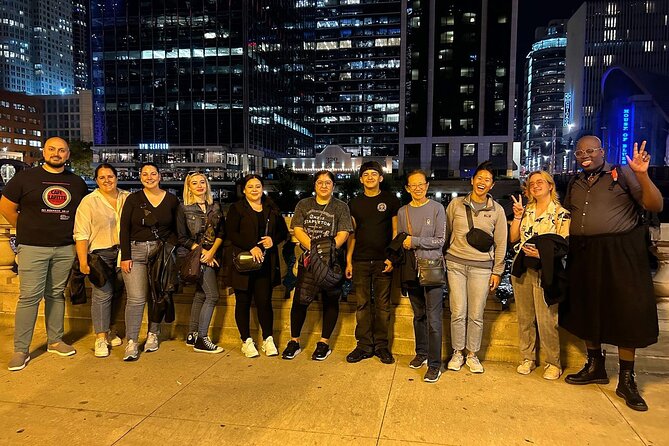
At 2131 S Dearborn St, the tour shifts into a different kind of downtown darkness: the Everleigh Club. The guide frames it as a high-class brothel from the early 1900s, tied to what’s described as the 1900s Red Light district.
This stop gives your brain a new lens. It’s not just disasters and violence. It shows how Chicago’s reputation for vice and secrecy existed alongside prestige and performance. That blend is part of what makes the stories feel “gruesome” in a uniquely Chicago way—because it wasn’t always obvious where the respectable facade ended and the underworld began.
The Everleigh Club stop is short (about 5 minutes), but it’s a meaningful one if you enjoy cultural history. It adds variety to the tour so it doesn’t feel like a nonstop parade of tragedies. Instead, it becomes a pattern: different types of wrongdoing, all connected to where people lived and moved through the city.
Two serial-killer stories and downtown prison breaks: the thread you’ll notice
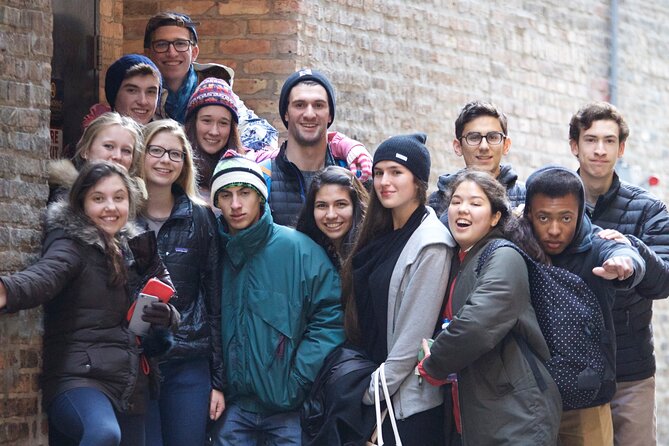
As the walk continues, you’ll hear the tour’s bigger narrative thread: chilling stories that include H. H. Holmes and references to two of America’s most infamous serial killers, plus downtown prison breaks. Even though these topics are heavy, the guide’s job is to connect them to physical places you pass along the way.
Here’s the value of that structure: it’s a history lesson with a spine. You’re not just collecting spooky facts—you’re seeing how a city’s dark reputation forms through repeated events and overlapping networks. Holmes is a key anchor, and the prison-break stories add another layer of how law, punishment, and escape played out in the downtown area.
If you love true crime history, this is the part you’ll remember because it reframes the walking route as something like a real-world map of a story. The places don’t feel random after that. They start feeling like evidence.
Price and logistics: is $49 a good deal for a 2-hour night walk?
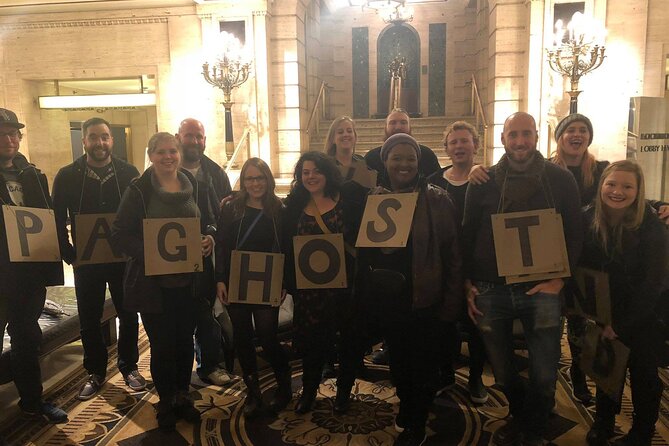
At $49 per person, you’re paying for a guided experience that lasts about 2 hours, includes a mobile ticket, and is led by a paranormal expert tour guide. With a maximum of 18 travelers, you’re not packed into a giant crowd, which matters for both comfort and audio.
Is it expensive? It’s not cheap, but it’s not outrageous for a specialized theme like Chicago ghost lore plus true-crime and disaster history. The price feels more justified because you’re getting more than one kind of content: hotel legends, major tragedies tied to specific sites, and underworld stories tied to a specific address.
Also, with a booking average of about 32 days in advance, it’s clear this is a popular slot. If you care about a particular evening, booking ahead is smart. This kind of tour sells out in peak seasons simply because people want a structured night plan that doesn’t require museum tickets or reservations.
Getting there and what the route means for your night
The tour starts at 520 S Michigan Ave, at the Congress Plaza Hotel & Convention Center, and ends at the Clark Street Bridge on N Clark St. It’s also listed as near public transportation, which is a big practical win if you don’t want to fight parking downtown.
Because it ends away from where it starts, plan your next step. If you’re hungry, you’ll want to think about dinner and transit with that in mind. The upside is you’re finishing near another busy part of downtown, which can make it easier to keep your night going without going back across town.
The walking time is manageable, and the stop rhythm is designed for a group that’s moving on foot. If you bring a good pair of comfortable shoes, you’ll enjoy this much more. And since it’s a night tour tied to sunset hours, dressing for cooler temperatures is a safe move—Chicago likes to change moods fast.
Who this tour fits best (and who should skip it)
This Chicago ghosts and haunted history walk is ideal if you want:
- A structured night activity that combines scary stories with real-world history
- A guided route through downtown that hits major named locations
- True crime and disaster history presented in an engaging way
It may not be your best choice if:
- You prefer light, playful ghost stories with no grim details
- You want long stops for deep research or museum-style learning
- You dislike being on your feet for around two hours at night
One more thing: since it includes paranormal framing alongside true incidents, the tone can be intense for some people. If that sounds like a good match for your interests, you’ll likely love the ride.
Should you book this Chicago Ghosts & Haunted History Walking Tour?
If you’re choosing between a generic ghost tour and one that anchors its scares to famous Chicago sites and major tragedies, I think this one makes a strong case. It’s value-priced for a guided, specialized night walk, it stays under a small-group size, and it’s designed to keep you moving while you learn.
Book it if you want a night plan that feels like Chicago itself: architecture, history, and the uncomfortable parts of the past all in one walk. Skip it if you want cozy supernatural fun over true-crime darkness.
FAQ
FAQ
How long is the Chicago Ghosts & Haunted History walking tour?
It runs for about 2 hours.
How much does the tour cost?
The price is $49.00 per person.
Where does the tour start?
It starts at the Congress Plaza Hotel & Convention Center, 520 S Michigan Ave, Chicago, IL 60605.
Where does the tour end?
The tour ends at the Clark Street Bridge on N Clark St, Chicago, IL 60654.
What ticket type do I use?
You’ll use a mobile ticket.
Is there a group size limit?
Yes. The tour has a maximum of 18 travelers.
Are admission tickets needed for the stops?
The listed stops include admission ticket free.
Is public transportation nearby?
Yes, the tour is near public transportation.
Are service animals allowed?
Yes, service animals are allowed.
What is the cancellation policy?
Free cancellation is available. You must cancel at least 24 hours in advance for a full refund. If you cancel less than 24 hours before the start time, the amount paid is not refunded.