REVIEW · CHICAGO
Walking Tour: Pilsen Chicago – Creativity & Community
Book on Viator →Operated by L Stop Tours · Bookable on Viator
Pilsen is an ideas-on-every-corner neighborhood, and this tour is the easiest way I know to see why. You start downtown with major public art, then take the L into the heart of a Mexican-American community known for murals, mosaics, and community pride.
What I like most is the two-part art journey: you get a quick hit of famous works (starting with Chagall’s Four Seasons) and then trade “name recognition” for street-level meaning on 18th Street and at the National Museum of Mexican Art. I also appreciate that the guide, Tom Schaffner (Tom), brings the Chicago context with practical, street-by-street explanations that help you read what you’re seeing instead of just snapping photos.
One thing to plan around: you’re using public transit and walking with some stairs, and not every station has an elevator. If you need step-free stations, this may take extra planning on your part.
In This Review
- Key points before you go
- Where you start: Marquette Building to Chagall’s Four Seasons
- The L train ride to Quincy: why this part counts
- Pilsen walk on 18th Street: murals, architecture, and community stories
- Where to eat: Taqueria Los Comales Pilsen (optional, on your schedule)
- National Museum of Mexican Art: 30 minutes that feels focused
- Paleteria time at Sabores De Michoacán: the sweet reset
- Riding back to the Loop and finishing at Daley Plaza
- Tour logistics and fitness: the real-world stuff that matters
- Value check: what you pay for (and what you don’t)
- Who this tour suits best
- Should you book Pilsen: Creativity & Community?
- FAQ
- FAQ
- How long is the Pilsen Chicago walking tour?
- What time does the tour start, and where do I meet?
- Where does the tour end?
- Is the tour offered in English?
- Is food included in the tour price?
- What’s included with the tour?
- How big is the group?
- Will I need to climb stairs?
- What’s the cancellation policy if plans change?
Key points before you go

- Small group size (max 10): you’ll get more attention and quicker photo stops.
- Transit included: you don’t have to figure out ticketing or routes on the fly.
- Public art chain: Chagall downtown, then Pilsen murals, then the Picasso at Daley Plaza.
- Museum time that’s actually enough: a focused visit to the National Museum of Mexican Art.
- Food is optional, not included: you can pick what fits your cravings and budget.
Where you start: Marquette Building to Chagall’s Four Seasons

Your tour meets at the Marquette Building, 140 S Dearborn St (right downtown) and begins at 10:30 am. This matters because it sets the tone: you start in the Loop, where Chicago public art and architecture are easy to spot even before you take a single train.
From there, you head to 10 S Dearborn for one of the most striking “warm-up” pieces on the whole route: Chagall’s Four Seasons mosaic. It’s fast (about 20 minutes), but that’s the point. You’re not doing a museum marathon first. You’re getting your visual “decoder ring” on public art—how it’s placed, why it’s there, and what it’s communicating—before you move into Pilsen, where art is practically part of the neighborhood’s daily language.
Practical note: this first segment is also a good moment to ask questions. Since you’re still in the downtown core, your guide can help you set expectations for what you’ll see next in Pilsen.
You can also read our reviews of more walking tours in Chicago



The L train ride to Quincy: why this part counts
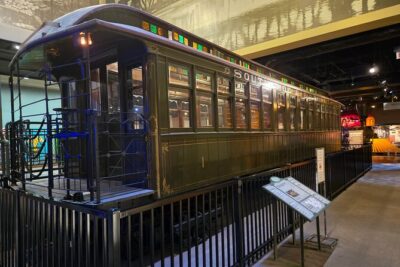
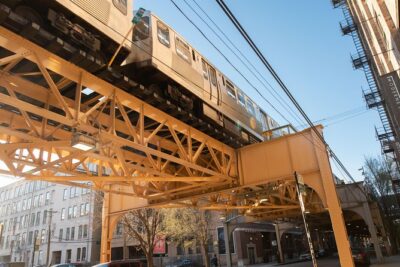
After a brief walk, you board the L train from the restored Quincy stop. The timing is tight but workable (about 20 minutes), and you’re not just “getting there.” This is where the tour starts acting like a local commute—one of the best ways to feel a city rather than merely visit it.
The Quincy stop is part of the experience because it’s a real, functioning piece of Chicago transit history. You get to see how public infrastructure and public art overlap, and your guide can point out buildings and neighborhood cues you’ll miss if you’re just staring at your phone.
Also, if you’ve never used the L before: don’t worry. The tour includes transit tickets, and the guide gives a quick lesson on how the ticketing works at the kiosk when needed. In other words, you’re not left stranded at the first machine you see.
From a value standpoint, this is smart. Many walking tours skip transit entirely or treat it like a chore. Here, the ride helps you understand how Chicago neighborhoods connect.
Pilsen walk on 18th Street: murals, architecture, and community stories
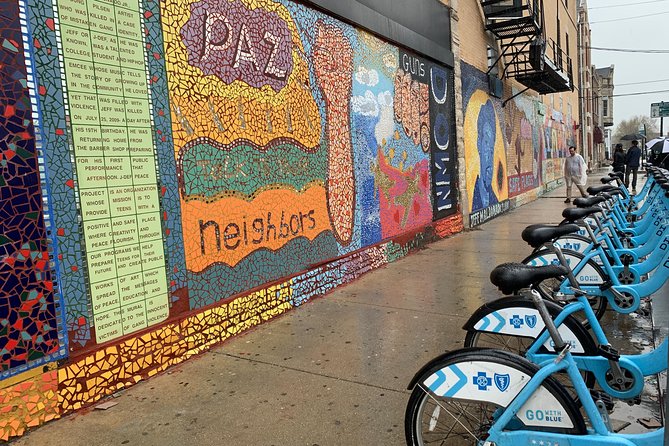
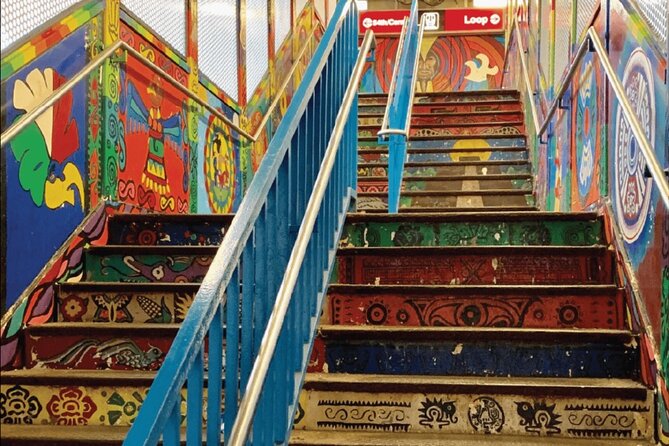
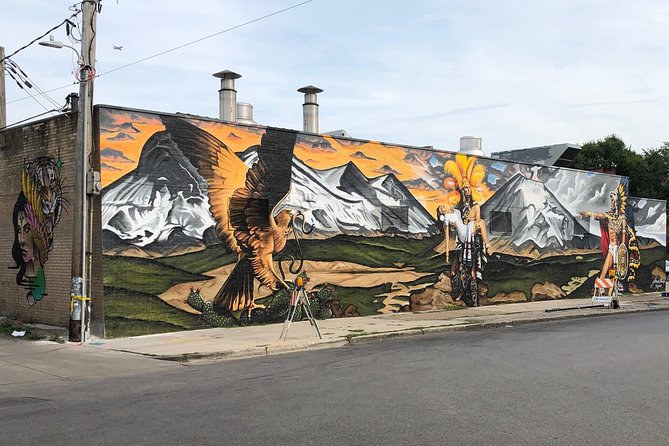
Once you reach Pilsen, the pace shifts from transit-viewing to slow, purposeful wandering. You spend about an hour (1 hour) on a culture walk through the neighborhood, with time to take photos and absorb the built environment: murals, unique architecture, and the overall visual identity of the community.
This is the heart of the tour, and it’s why I’d call it more than an “art stroll.” You’re learning how the art ties to place—how murals can reflect history, identity, and everyday pride. Tom’s style shows in how he explains what you’re seeing in plain terms, so you can look at a wall and understand what story it’s trying to tell.
Where to eat: Taqueria Los Comales Pilsen (optional, on your schedule)
During this hour, you’ll have a chance to treat yourself at Taqueria Los Comales Pilsen before the culture walk continues. The big practical detail: food and beverages aren’t included in the tour price. That’s not a bad thing—it lets you choose what you want—but it does mean you should bring spending money or plan your lunch timing.
The good part is that you’re going to a place that fits the tour’s goal: authentic Mexican fare in the middle of the neighborhood you’re exploring, not a generic tourist stop.
If you want one planning tip: decide ahead of time if you’ll do a full meal or a lighter snack. The tour also includes dessert later, so going heavy early can mean you’re too full for the paletas stage.
National Museum of Mexican Art: 30 minutes that feels focused
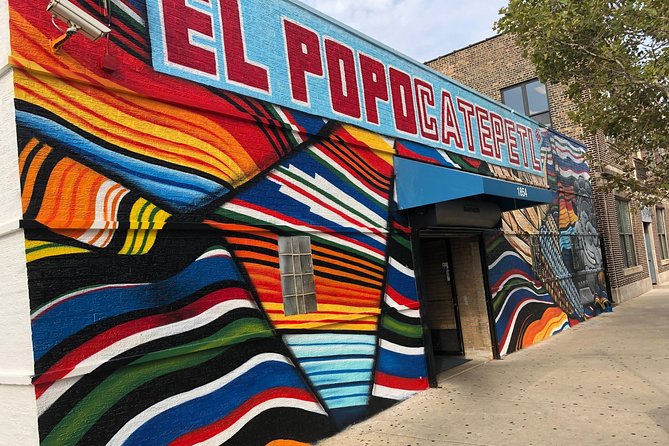
Next comes the National Museum of Mexican Art, right in the heart of Pilsen. Admission is free for you on this experience, and you get about 30 minutes inside. That timing is a sweet spot: enough time to see the permanent collection and changing exhibitions without feeling like you need an entire afternoon.
This is one of those stops that elevates the murals outside. On the street, art can feel immediate and overwhelming—in a good way, but still a lot. Inside, you get a more structured view, and the museum experience helps you connect the dots between what you saw on 18th Street and what you’re now seeing curated.
If you’re traveling with art-minded folks, this is also a solid “shared interest” stop. You can talk about style, themes, and symbolism without needing advanced museum knowledge.
One more useful point: the tour’s included museum donation means you don’t have to think about extra payment logistics at the door. You just walk in, enjoy the time you have, and then continue on.





Paleteria time at Sabores De Michoacán: the sweet reset
After the museum, you move to dessert: Paleteria Y Neveria Sabores De Michoacán. You’ll have about 15 minutes here, and it’s centered on traditional Mexican sweet treats—specifically paletas (Mexican popsicles).
Refreshments aren’t included, so you’ll pay for what you choose. But this stop is still great value because it gives you a local food moment at the right time in the day. After walking, transit, murals, and museum viewing, a cold, fruity treat is a quick reset. It also helps you keep energy up for the return train ride.
If you have dietary needs, this is a moment to check flavors carefully before ordering. The tour doesn’t mention pre-selection, so you’re choosing on the spot.
Riding back to the Loop and finishing at Daley Plaza
You’ll head back via the L train (about 20 minutes) and wrap up downtown at Daley Plaza. The end point is marked as the Untitled by Pablo Picasso at 50 W Washington St, and your final viewing time is about 15 minutes.
This ending is satisfying. You started with Chagall’s Four Seasons mosaic downtown, and you finish with a major Picasso public artwork. It’s a neat loop that ties together the theme of public art—how it shapes city identity, and how it changes meaning depending on the neighborhood context around it.
If you want a small strategy: use the last 15 minutes to slow down and look at the sculpture details rather than only getting a quick photo. That’s where the tour theme comes into focus—public art isn’t just decoration. It’s a way cities tell stories to everyone.
Tour logistics and fitness: the real-world stuff that matters

This walking tour is about 3 hours total (approx.) and is offered in English. It’s designed for a small group (maximum 10 travelers), which keeps the experience from feeling rushed and makes the guide’s explanations easier to follow.
You should have moderate physical fitness and be able to climb stairs. This matters because not all L stations have elevators, so you may encounter steps during boarding or transfers. If you’re unsure, it’s worth thinking about your comfort level with short stair segments in transit settings.
The tour also uses a mobile ticket, and it’s near public transportation—good if you’re combining it with other Loop sightseeing.
Value check: what you pay for (and what you don’t)
Even without a price tag in front of you, you can judge the value by what’s included:
- Transit tickets (so you’re not adding extra costs or getting stuck figuring out the system)
- Museum donation (so you don’t hunt for entry logistics)
- Local expert guide (this is the real difference-maker; the art and neighborhood make more sense with context)
What’s not included is also clear: food and beverages. The tour gives you chances to buy meals and dessert at neighborhood spots, but it keeps your spending flexible. In practice, this often works better than “one fixed meal” because you can choose what you’ll actually enjoy.
For me, the biggest value signal is that you’re not just walking around and “hoping” to see meaningful art. You’re riding Chicago’s transit system and pairing street-level murals with a focused museum stop—all within a timeframe that doesn’t eat your whole day.
Who this tour suits best
I’d recommend this experience if you want:
- A neighborhood-first art tour, not just a checklist of landmarks
- A guided way to understand Pilsen’s murals and community identity
- A Chicago transit experience that feels practical and supported
It may be less ideal if:
- You need step-free transit routes end-to-end
- You hate walking and would prefer a slower, sit-down format
If you’re traveling with kids, note that the tour includes transit rides, walking, and museum time, plus station stairs. If that’s manageable for your family, it can be a fun arts day. If not, you might want a more accessible option.
Should you book Pilsen: Creativity & Community?
If you’re excited by murals, mosaics, and public art with meaning, I think this is an easy yes. The combination of downtown public art, a guided L train ride, a focused walk through Pilsen’s visual identity, and a museum stop makes the day feel cohesive instead of random.
Book it if you want context. Tom Schaffner (Tom) clearly shines in turning what you see into something you understand, and the small group size helps keep that connection strong.
Skip it only if stairs and transit logistics are a dealbreaker for you, or if you prefer tours where all food is included and you don’t want to make choices at multiple stops.
FAQ
FAQ
How long is the Pilsen Chicago walking tour?
It’s about 3 hours.
What time does the tour start, and where do I meet?
The tour starts at 10:30 am at the Marquette Building, 140 S Dearborn St, Chicago, IL 60603.
Where does the tour end?
It ends at Daley Plaza, at Untitled by Pablo Picasso, 50 W Washington St, Chicago, IL 60602.
Is the tour offered in English?
Yes, the tour is offered in English.
Is food included in the tour price?
No. Food and beverages are not included. You’ll have chances to buy meals and treats at local spots during the tour.
What’s included with the tour?
Transit tickets, a museum donation, and a local expert guide are included.
How big is the group?
The tour has a maximum of 10 travelers.
Will I need to climb stairs?
Yes. The tour notes that you should be able to climb stairs because not all train stations have elevators.
What’s the cancellation policy if plans change?
Free cancellation is available up to 24 hours in advance for a full refund. If you cancel less than 24 hours before the experience start time, you don’t get a refund.