REVIEW · CHICAGO
Workers Cottages of Oldtown Triangle Walking Tour
Book on Viator →Operated by Tours by Doorways Of Chicago · Bookable on Viator
Old Town Triangle can feel like Chicago paused. This walking tour slows you down and shows why that matters. You’ll walk past mid-1800s workers cottages and other landmarks that survived major city change, including the Great Chicago Fire of 1871. The pace is easy to follow, and the small group size helps you actually ask questions.
Two things I really like: first, the sheer focus on the workers cottages. You’re not doing a generic “pretty buildings” stroll. You’ll see dozens of houses and learn how their styles and construction reflect everyday city life. Second, I like how the stops connect history to real places you can still stand on—church, tavern, rowhouses, and famous-name residences.
One consideration: this is a good-weather experience and it’s a moderate-walk tour (about 1 hour 45 minutes). If you hate walking on sidewalks for that long, you’ll feel it.
In This Review
- Key highlights worth planning for
- Old Town Triangle’s Workers Cottages: Why This Walk Feels Different
- Start on Eugenie Street: Easy Meetup, Clear Route, Real Neighborhood Vibe
- The Main Event: 40 to 50 Workers Cottages and How They Changed Over Time
- West Eugenie Street Rowhouses: Harald Hansen’s 1886 Cluster
- North Crilly Court: Famous Residents and a National Landmark
- St. Michael House of Prayer: When a Church Controlled the Skyline
- Twin Anchors Tavern: A Food Stop Without the Forced Detour
- Wacker Drive and Ann Halsted Rowhouses: Charles and Frederick Wacker Meet Louis Sullivan
- The Last Farmland Farmhouse: Where Old Town Wasn’t a City Yet
- Price and Value: What $45 Buys You in Real Time
- Who Should Book This Tour (and Who Might Skip It)
- Should You Book Workers Cottages of Oldtown Triangle Walking Tour?
- FAQ
- How long is the Workers Cottages of Oldtown Triangle Walking Tour?
- What does the tour cost?
- How big is the group?
- Where do you meet and where does it end?
- When does the tour start?
- What ticket format do you get?
- Is there a fitness level requirement?
- Are service animals allowed?
- What happens if the weather is bad?
- What is the cancellation policy?
Key highlights worth planning for
- Small group of max 8 for a more personal, question-friendly walk
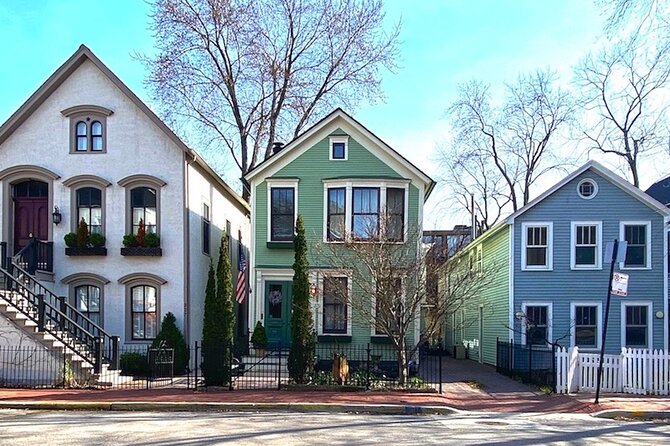
- 40 to 50 workers cottages plus rare clusters, including a whole block situation
- Architect details you can spot, like Harald Hansen’s 1886 rowhouses on Eugenie Street
- A church with a former skyline claim: St. Michael House of Prayer (built 1866–1869)
- Louis Sullivan early work on the Ann Halsted Rowhouses (done before fame)
Old Town Triangle’s Workers Cottages: Why This Walk Feels Different
If you only know Chicago for skyscrapers, this tour is a great reset. Old Town Triangle is one of those neighborhoods where you can see the city’s growth story in plain sight: working homes, neighborhood institutions, and big names all stacked close together. And because you’re outside for the whole walk, you’re not waiting around for an indoor exhibit.
The real draw is how specific the tour gets about housing. You’re looking at workers cottages from the mid-1800s, designed for people building the city. That’s not a small detail. It changes what you pay attention to. You start noticing rooflines, setbacks, building materials, and patterns that tell you how Chicago handled density long before “big city” meant high-rises.
I also like that the guide’s approach leans practical. You’ll get quick context, then you’ll be shown what to look for. That makes the time feel efficient, even though you’re stopping a lot.
You can also read our reviews of more walking tours in Chicago

Start on Eugenie Street: Easy Meetup, Clear Route, Real Neighborhood Vibe
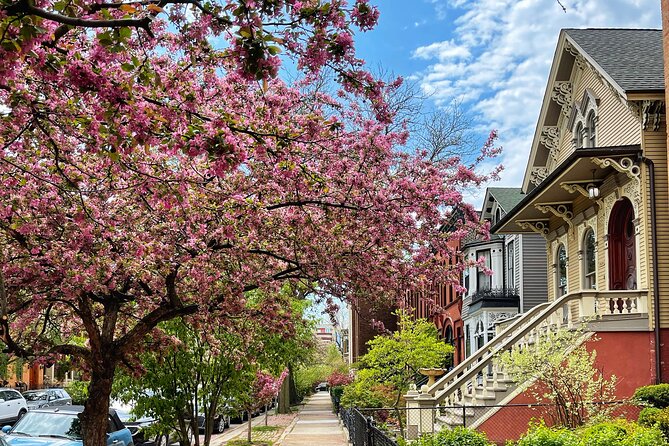
You’ll meet at 164 W Eugenie St in the Old Town area, and you’ll end at 216 W Menomonee St, just a few short blocks away. Start time is 11:00 am, and the tour runs about 1 hour 45 minutes total.
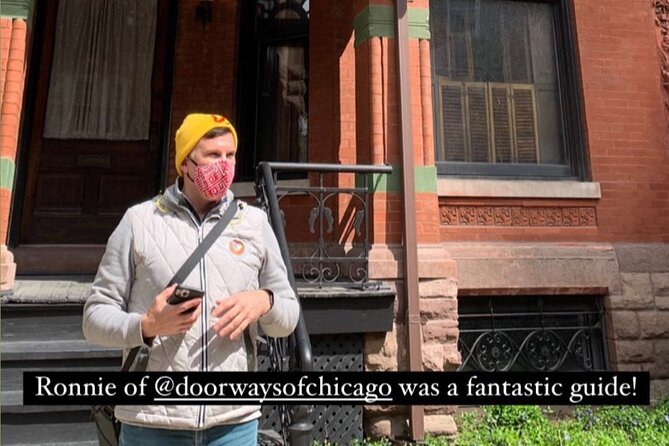
Because the group is capped at 8 travelers, the logistics feel simple. You’re not fighting for position in photos or trying to keep track of a big herd. The guide can point out details without rushing you.
One small but important factor: this is an outdoor walking tour with a moderate physical fitness level. The route sounds manageable, but you’re still going to be on your feet, moving from street to street and stopping for photo moments. If you’re the type who likes to linger, bring that energy—you’ll get enough chances.
Tip: wear shoes you trust. The best part of this tour is looking down at architectural details, then looking up to match them. Good footing helps you do both.
The Main Event: 40 to 50 Workers Cottages and How They Changed Over Time
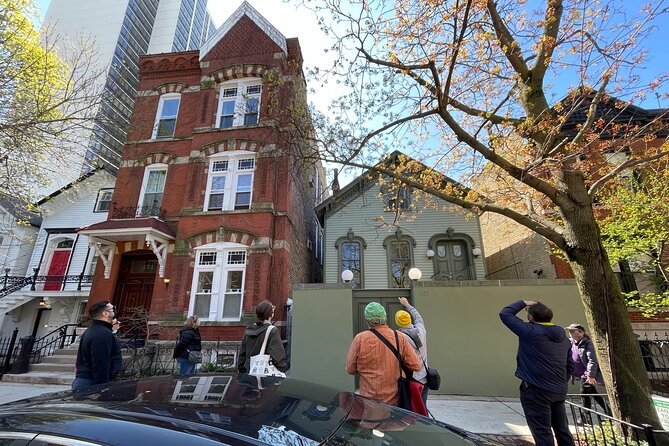
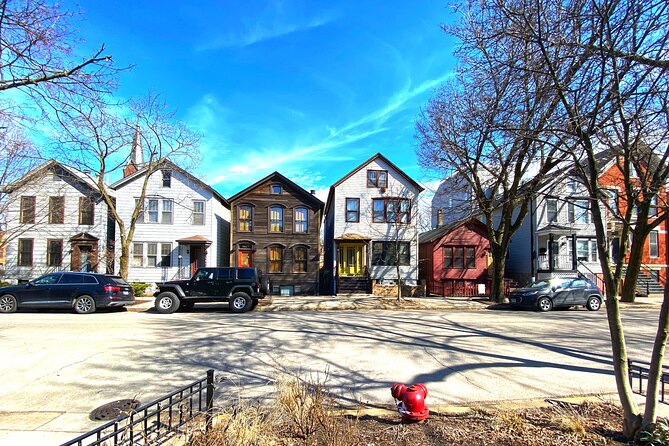
The core of the walk is the Old Town Triangle stretch focused on workers cottages—typically 40 to 50 homes in view during the stop. This is where you’ll start seeing the neighborhood as a living timeline.
Here’s what makes this section worth your time:
- You’ll learn how different cottage styles and construction choices show changing tastes and needs.
- You’ll spot how the same “working home” idea can still look very different from one block to the next.
- You’ll get an eye for what’s common versus what’s rare.
The tour highlights especially unusual layouts, including rare situations where cottages appear in a row and even an entire block where cottages line both sides of the street. That kind of spatial “concentration” is what makes Old Town Triangle feel like Chicago’s past is still packed into the present.
And yes, the neighborhood matters historically. Old Town Triangle survived the Great Chicago Fire of 1871, which means you’re not only seeing architecture—you’re seeing continuity. That’s rare in a city that rebuilt so aggressively.
Potential drawback: if you’re expecting grand mansions or a purely celebratory “Chicago glow” theme, this section can feel more about homes and design than big attractions. But if you like architecture that tells you how people lived, you’ll be in your element.
West Eugenie Street Rowhouses: Harald Hansen’s 1886 Cluster
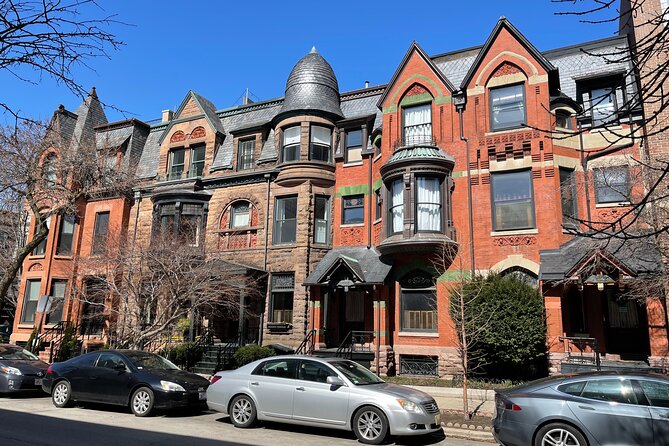
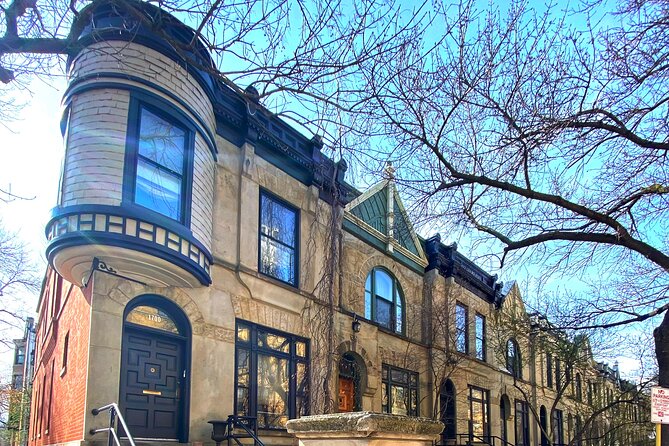
Next up is West Eugenie Street, where you’ll see a standout feature: a rare, variegated row of five opulent rowhouses. The architect listed here is Harald Hansen, and they were built in 1886.
What’s special is not just the style, but the lineup. Queen Anne and Second Empire elements are both present, and the tour specifically points out how uncommon a tightly grouped set like this is. It’s a nice contrast to the workers cottage focus earlier in the walk. Same neighborhood, but the housing story shifts clearly with wealth and design ambition.
Why this matters to you: it helps you understand Chicago’s housing spectrum. You can’t properly read a city’s character if you only look at one class of buildings. This stop gives you a shortcut.
North Crilly Court: Famous Residents and a National Landmark
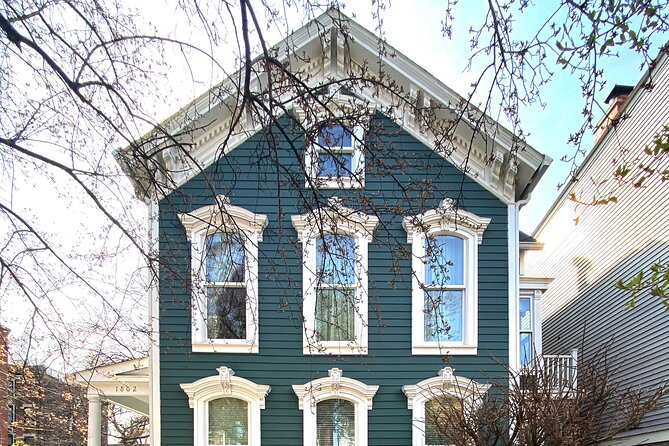
At North Crilly Court, the tour turns from architectural style to people—who lived there and what kind of status the properties represented. You’ll also see one property that’s identified as a National Landmark.
This is the kind of stop where you benefit from listening closely. The building itself may be easy to miss if you’re just scrolling photos, but the guide’s explanation helps you notice what to look for afterward. It’s also a good mental palette cleanser between larger “named” sites.
One practical note: this section is shorter. If you like asking lots of questions, keep an eye on your time and be ready to act quickly when your guide pauses.


St. Michael House of Prayer: When a Church Controlled the Skyline
Then you’ll head to St. Michael House of Prayer, which is the Roman Catholic church in Old Town. It was built between 1866 and 1869, and the tour shares a striking fact: it was the tallest building in the United States for 16 years.
That’s the kind of detail that changes how you look at a building. A church like this isn’t just a place of worship; it’s a snapshot of ambition and technology in a specific era of Chicago’s growth.
What I like about this stop for planning: it gives you a high-impact landmark without dragging you into a long detour. You get significance and scale, and then you move on before the tour loses momentum.
Twin Anchors Tavern: A Food Stop Without the Forced Detour
Not every great walking tour needs an indoor museum stop. Here, you get a neighborhood anchor instead: Twin Anchors Restaurant & Tavern.
The tour notes that Twin Anchors is among the oldest restaurants in Chicago, founded in 1932. It’s especially known for tender barbequed baby-back ribs. It also has a celebrity connection—Frank Sinatra was listed as a favorite for many years.
Even if you don’t eat, this stop works because it gives the walk a human feel. Architecture is the headline, sure. But taverns and restaurants are where neighborhoods actually breathe. Twin Anchors is a bridge between “then” and “today,” and it’s an easy place to imagine the kind of casual, repeat visits that build local culture.
Wacker Drive and Ann Halsted Rowhouses: Charles and Frederick Wacker Meet Louis Sullivan
As the walk continues, you’ll hit a pair of related stops on the Old Town Triangle side that connect early Chicago power to early Chicago genius.
First are the homes of Charles and Frederick Wacker on Wacker Drive. The tour explains who they were and why they mattered to early city design.
Right after that, you’ll see the Ann Halsted Rowhouses, created by Louis Sullivan when he was in his early 20s, before his name became widely recognized. This is one of those “you can spot the origin story” moments. Sullivan’s early work is historically important because it shows the start of a style that later became influential.
Why this pair is valuable: you get two ways to read Chicago’s development. One route is through people who shaped planning and growth. The other is through design minds whose ideas changed how the city could look.
If you’re an architecture fan, try to slow down here. These are quick stops, but the contrast between the two is memorable.
The Last Farmland Farmhouse: Where Old Town Wasn’t a City Yet
The final stop takes you to something you can’t fake with photos: a remaining farmhouse from when Old Town was still farmland outside city limits. The tour calls it the only remaining farmhouse standing from that era.
This is a helpful endpoint because it reframes everything you saw earlier. You’re not just looking at one neighborhood’s architecture. You’re watching the edge of the city get pulled outward over time—farmland becoming streets, homes, and institutions.
It also makes the Great Chicago Fire connection feel sharper. When a city rebuilds, it doesn’t rebuild from scratch emotionally. It rebuilds on top of what survived, what people wanted to keep, and what was possible next. A surviving farmhouse is a strong way to understand that continuity.
Price and Value: What $45 Buys You in Real Time
The tour costs $45 per person, lasts about 1 hour 45 minutes, and uses a mobile ticket. It’s also limited to max 8 travelers, which matters a lot more than people expect.
Here’s why the price can feel fair:
- You’re paying for a guided walk that connects many small exterior sights into a single story.
- You get specialist attention on details—especially with the cottage-focused main stop.
- Small group size means better interaction and less time waiting for the group to regroup.
- Most stops are viewed from the outside, so you’re getting the “see it live” experience without extra paid admissions.
The fact that it’s often booked about 20 days in advance on average is a hint. If you want a weekend slot, don’t wait until the last minute.
Who Should Book This Tour (and Who Might Skip It)
This tour is a great fit if you:
- Like architecture that focuses on everyday buildings, not only famous landmarks
- Want Chicago history tied to specific streets, not just broad timelines
- Enjoy small-group experiences with space for questions
- Prefer walking tours where you stop often and get explanations at each spot
You might skip or choose a different style of tour if:
- You mainly want big-ticket attractions and don’t care much about housing styles
- You’re uncomfortable with moderate walking for roughly 1 hour 45 minutes
- You dislike outdoor tours that depend on the weather
Should You Book Workers Cottages of Oldtown Triangle Walking Tour?
I’d book it if you want a different Chicago than the usual museum-and-skyline routine. The cottages are the headline, but the real win is how the tour connects housing, design, and neighborhood landmarks into one clear story you can walk through. With small group size, a focused guide style, and stops that range from cottages to a church with real skyline impact, it’s strong value for $45.
If you care about how cities actually grow—from farmland to streets, from ordinary homes to famous architects—this tour will click fast.
FAQ
How long is the Workers Cottages of Oldtown Triangle Walking Tour?
It’s approximately 1 hour 45 minutes.
What does the tour cost?
The price is $45.00 per person.
How big is the group?
The tour has a maximum of 8 travelers.
Where do you meet and where does it end?
You start at 164 W Eugenie St, Chicago, IL 60614, and you end at 216 W Menomonee St, Chicago, IL 60614.
When does the tour start?
The listed start time is 11:00 am.
What ticket format do you get?
You receive a mobile ticket.
Is there a fitness level requirement?
The tour calls for moderate physical fitness.
Are service animals allowed?
Yes, service animals are allowed.
What happens if the weather is bad?
This experience requires good weather. If it’s canceled due to poor weather, you’ll be offered a different date or a full refund.
What is the cancellation policy?
This experience is non-refundable and cannot be changed for any reason. If you cancel or ask for an amendment, the amount you paid will not be refunded.