REVIEW · CHICAGO
Chicago-Rosemont Indoor Skydiving with Two Flights
Book on Viator →Operated by iFLY Indoor Skydiving · Bookable on Viator
Wind tunnel flying beats the usual thrill rides. At iFLY Chicago-Rosemont, you trade a plane door for an enclosed chamber of controlled, wall-to-wall airflow, so first-timers can actually learn how to fly. It’s built around two one-on-one solo sessions—short, intense, and instructor-guided—plus a training block so you’re not guessing when the fans kick on.
I love the hands-on coaching from a certified flight instructor, starting before you ever put on your flight gear. You’ll do two 60-second solo flights for your money, and you’re never left alone in the chamber. The main drawback to weigh is that it’s not suitable for everyone—there are medical and weight restrictions (including extra evaluation for some weight ranges), and pregnant flyers can’t participate.
In This Review
- Key things to know before you go
- Getting to iFLY Chicago-Rosemont and checking in fast
- Price and value: what $131.25 buys you
- How the wind tunnel works (and why you don’t fall)
- The training session: where safety and fun get built
- Your two 60-second solo flights: what actually happens
- Watching the action: for friends and family
- Comfort tips: what to wear so you can focus on flying
- Who can fly (and who should skip it)
- Group logistics: small numbers, one-at-a-time flying
- A note on timing and the real-world start
- Is it scary? Here’s the honest expectation
- The tiny add-ons you might hear about
- Should you book this indoor wind-tunnel flight?
- FAQ
- How does the iFLY Chicago-Rosemont indoor skydiving experience work?
- How safe is the experience?
- Do I need any prior experience?
- How long does the whole experience take?
- What is the minimum age to participate?
- Are there weight restrictions?
- What should I wear and bring?
- Can friends or family watch without flying?
- How early should I arrive?
Key things to know before you go
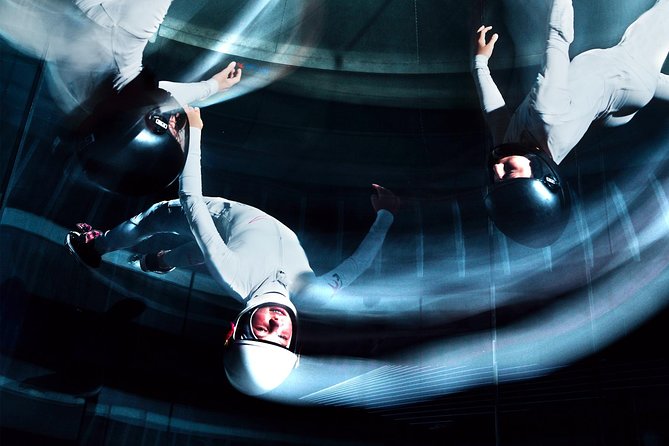
- Two one-on-one flights (60 seconds each) so you’re not stuck with a single quick taste
- Training first, then flight using instructor cues for safe body position
- A stable wall-to-wall air column that keeps you floating without falling
- Small sessions (up to six in the chamber group), flying one at a time
- A certificate of flight achievement to mark the moment
- Fast arrival timing matters: show up 10–15 minutes early so your slot starts on time
Getting to iFLY Chicago-Rosemont and checking in fast
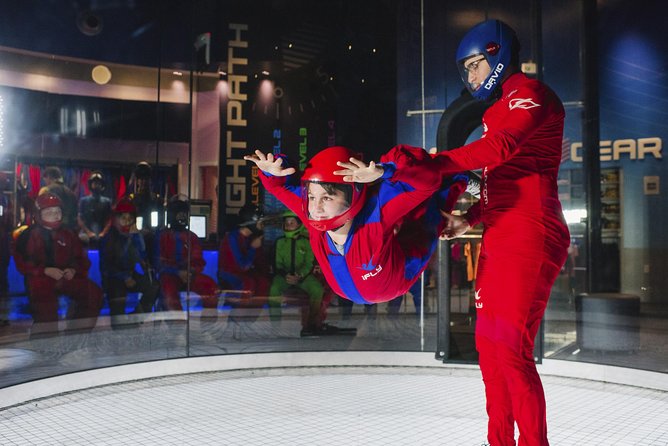
Your experience starts at 5520 Park Pl, Rosemont, IL 60018. Plan to arrive 10–15 minutes early, even if you’re hoping to be fashionably on time. This place runs on a tight schedule because the tunnel is a timed, capacity-driven setup.
Check in and you’ll move into the pre-flight flow: waiver review, gear fitting, and the training session. You’ll also receive or use a mobile ticket, so have it handy on your phone. For watching family or friends, there’s an observation area where they can follow along without being in your way.
One small practical tip: if you’re coming with kids (minimum age is 3), consider how you’ll keep them calm during gear fitting and training. The flight time itself is short, so energy management in the waiting phase can make the whole experience feel smoother.
You can also read our reviews of more tours and experiences in Chicago.



Price and value: what $131.25 buys you
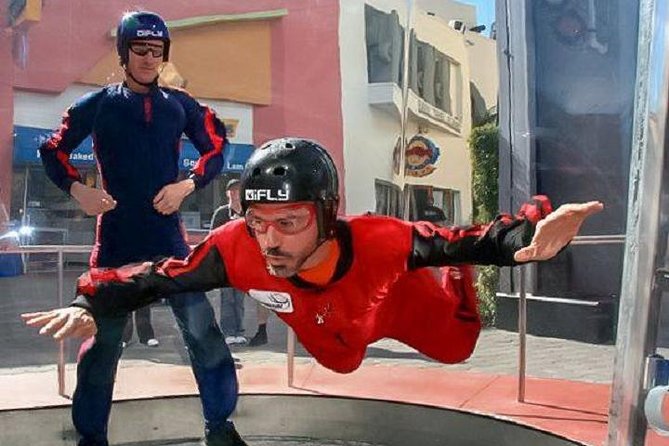
At $131.25 per person, this isn’t a bargain activity—but it’s priced like a real training-and-equipment experience. Here’s what you get that makes the math feel fair:
- Two flights for one person, each lasting 60 seconds
- Training plus all gear (you don’t bring or assemble anything specialized)
- One-on-one guidance from a certified flight instructor during your flight moments
- A certificate of flight achievement
- Taxes and fees are included
What you don’t get is also clear: no hotel pickup/drop-off and no food or drinks. So value comes from not needing transportation logistics and not having to buy gear.
If you’re comparing it to doing something outdoors later, this indoor format has a strong advantage: no weather roulette. You’re buying a controlled session with predictable training and timing, not guessing whether conditions will cooperate.
How the wind tunnel works (and why you don’t fall)
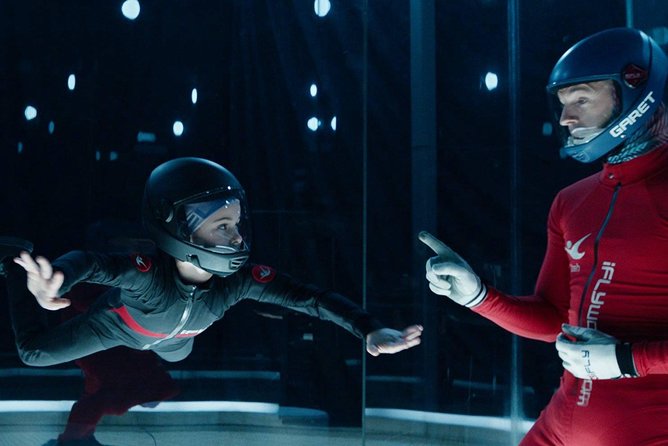
This is the big mental shift. You’re not doing a jump. You’re learning to fly inside a vertical wind tunnel designed to create a smooth column of air. The facility uses 800-horsepower fans to drive airflow, producing the kind of wall-to-wall cushion professional skydivers rely on.
The basic idea is simple and worth picturing:
- Air is pulled through the chamber and then pushed back in from the sides.
- Tunnel operators ramp up wind speed gradually until you’re airborne.
- The stable airflow helps you float, rather than drop away.
That matters because the fear most people have about skydiving-style experiences is usually the falling part. Here, you’re mostly managing wind resistance and body position, with an instructor right there with you the entire time.
You may feel adrenaline fast. The stated wind speeds range from 130 to 175 mph (209 to 282 kph), but since it’s a controlled airflow column, the experience is less about sudden freefall and more about learning a balance.
The training session: where safety and fun get built
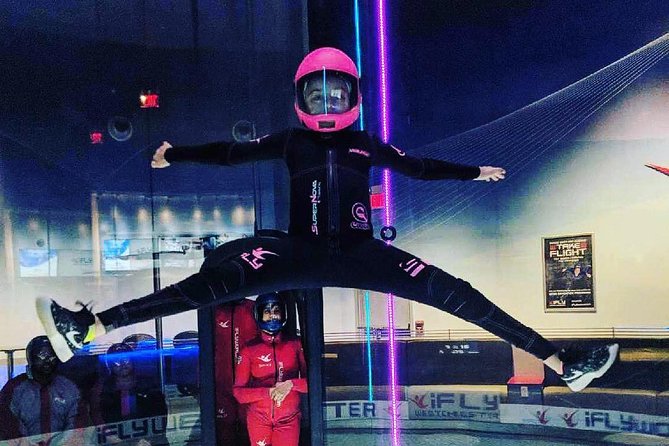
Before your flights, you go through specialized training with an expert flight instructor. Everyone does it, even if you’ve never tried anything like this. That’s not filler—it’s the difference between feeling like you’re flailing and feeling like you understand what to do with your body.
During training, you’ll learn safety fundamentals and practice your flying position. You’ll also get cues for how to steer and maintain stability. Think of it as learning the controls before you get the really exciting part.
Instructors are known for keeping things approachable. People often mention instructors like Adam for making the tunnel feel intuitive and fun, including an instructor demo at the end that leaves everyone curious about what they just watched. Another instructor name you might hear in stories is Maddison, especially for upbeat, kid-friendly guidance.
You don’t need to memorize a lot of technical terms. What you need is a short list of body-position cues that you can use instantly while the wind is roaring.
Your two 60-second solo flights: what actually happens
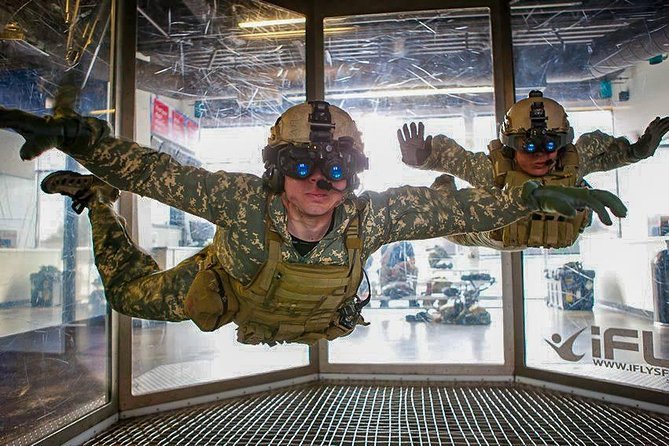
Here’s the rhythm of the experience: you’ll fly one-on-one with your instructor for 60 seconds, twice. Even though each chamber session may include groups (up to six people), you’re not flying with everyone stacked together. You’re taking turns so the instructor can focus on you.
During your flight, the tunnel operator increases wind speed slowly. You’ll feel the airflow grow stronger until you’re airborne. Then it’s about staying balanced and following your instructor’s guidance. The goal isn’t perfection. The goal is learning to control your floating body position.
And yes, 60 seconds sounds short. But it feels long enough for your brain to register: the wind is real, your body can respond, and you can actually influence your movement. That is a big reason this works so well for beginners.
Between the two flights, expect coaching adjustments. You’ll likely get feedback that helps your second run feel more confident than your first.




Watching the action: for friends and family
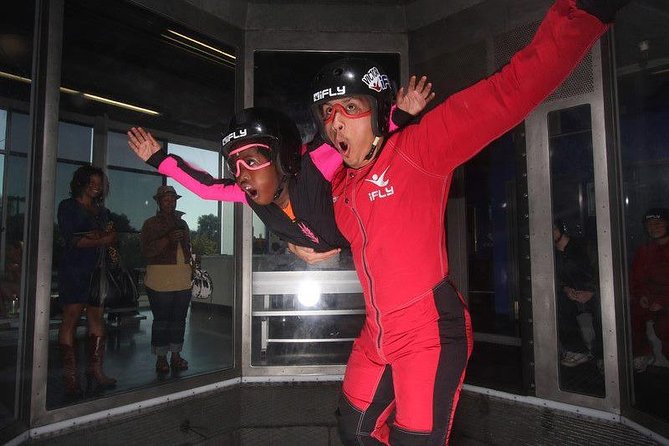
If you’re traveling with people who want to cheer but not participate, that’s easy. Your group can accompany you through the facility and watch from the observation area.
This is a good setup for families and birthdays. Kids, in particular, get a lot out of seeing someone else fly first, then stepping into the same chamber plan for their turn. If your group includes older teens, they can often handle the wait phase better if they see how the instructor cues work in real time.
Comfort tips: what to wear so you can focus on flying
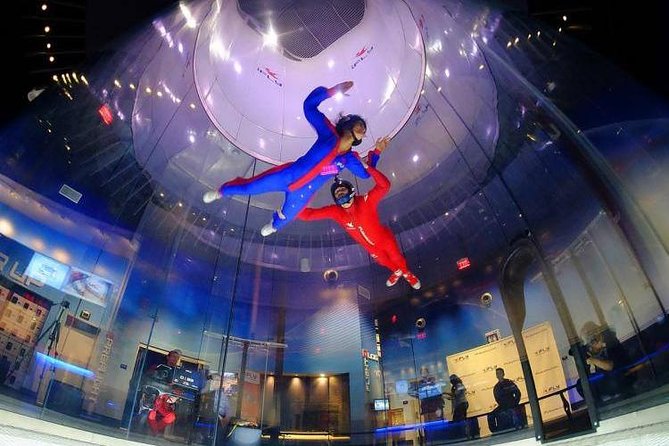
Comfort is a quiet hero here. You’ll wear a flight suit on top of your clothes, so choose basics that work well with a tighter gear fit.
Recommended:
- Well-fitting, lace-up sneakers or running shoes
- Comfortable clothes (casual is best)
- Prefer pants and a shirt without a collar
- If you have long hair, plan to wear it braided or in a low bun
Also remove anything that can get loose or flap: jewelry (necklaces, earrings, bracelets), watches, rings, and hair accessories. Empty your pockets too. Lockers are available, but it’s still smart to leave valuables at home.
If you wear glasses, you can—larger goggles fit over eyeglasses.
For long sessions, hydration matters, but food and drinks aren’t included, so you’ll want to eat beforehand. This is especially important for kids, because training and waiting time can feel longer than the flight itself.
Who can fly (and who should skip it)
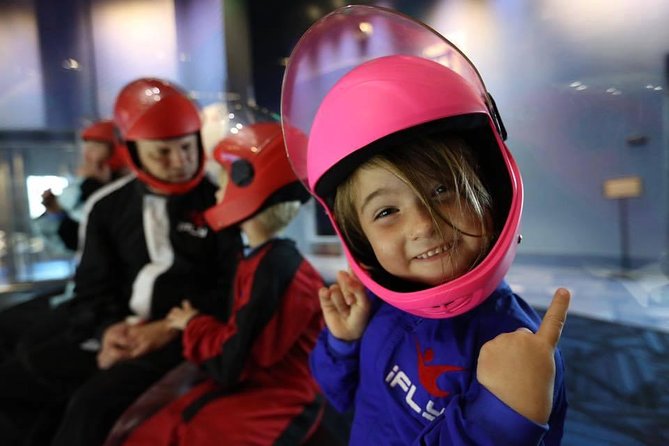
Most people can participate, but the restrictions are serious for safety. Here are the key rules from the program:
You cannot fly if you have:
- Previous neck or back injuries
- Heart conditions
- Shoulder dislocations
- Pregnancy
- A hard cast
There are also weight limitations:
- You must weigh under 300 lbs
- If you weigh between 260–300 lbs, additional evaluation is required at check-in, and some restrictions may apply
Other basics:
- Minimum age is 3 years
- Children under 18 need a parent or guardian to sign their waiver
- There’s no height restriction listed
If you’re unsure whether your situation counts as a disqualifying medical condition, ask the staff during check-in. Indoor flight is fun, but it’s not the place for guesswork.
Group logistics: small numbers, one-at-a-time flying
This is a max 12 travelers activity. Each session can include up to six people, but your flying is one-on-one with the instructor.
That structure hits a sweet spot for families and friend groups. You get the social energy of being together, but not the chaos of multiple people trying to fly simultaneously.
It also helps for first-timers: the instructor can focus on your body position and the way you respond to cues, without having to split attention across multiple flyers.
A note on timing and the real-world start
The most important practical consideration is simple: the experience begins promptly when you arrive. That means you should treat your arrival like you’re heading to a show with doors that open on time.
One downside that pops up in people’s stories is rushing at the start of a slot if you’re late or if plans change last minute. You can avoid most of that stress by:
- arriving early,
- keeping your schedule buffer,
- and confirming any time changes directly with the facility rather than assuming third-party messaging will update everything.
If your plans change, rescheduling needs to be handled by calling the location directly. Date and time modifications can’t be done other ways.
Is it scary? Here’s the honest expectation
For most first-timers, the experience feels thrilling more than terrifying. There’s no jumping, no falling, and you don’t need prior skill. You float because the airflow holds you up.
Breathing usually isn’t a problem. The wind is intense, but it’s described like the sensation of sticking your head out a car window while driving—you breathe normally through your nose or mouth.
You’ll still feel adrenaline. That’s the point. But because the tunnel is stable, you’re not fighting gravity in the same way outdoor skydiving does.
The tiny add-ons you might hear about
One review note mentions something called High Fly. That tells me there’s sometimes a higher-intensity option or a different flight style at the facility. Since the details of that option aren’t included here, the smart move is to ask staff on site what add-ons (if any) are available for your session and whether it changes your flight time or structure.
Should you book this indoor wind-tunnel flight?
Book it if you want:
- a first-time-friendly way to experience controlled “sky” flying
- two coached solo flights, not just a single quick try
- an activity that works for mixed groups, including kids (with the right waiver setup)
Skip it (or ask lots of questions first) if:
- you fall under the listed medical restrictions (especially back/neck/heart issues or pregnancy)
- you’re near the weight threshold where extra evaluation is required
- you hate scenarios where you must follow strict timing and gear rules
If you’re deciding between this and waiting for an outdoor option, indoor usually wins for convenience and predictability. And if your schedule is tight, the ability to choose a start time can be a big deal.
If you do book, do one thing that pays off: show up early and wear the right shoes/clothes. The easier you make the setup, the faster you’ll get to the part everyone remembers—seeing yourself float, then feeling how the controls work in a way that finally makes sense.
FAQ
How does the iFLY Chicago-Rosemont indoor skydiving experience work?
You fly in a vertical wind tunnel. Fans pull air through the chamber and push it back down the sides to create a smooth column of airflow. A tunnel operator increases wind speed until you’re airborne, while your instructor guides you.
How safe is the experience?
The wind tunnel design creates a stable airflow column, and you fly with certified, highly trained instructors. Your instructor is with you the entire time, regardless of your experience level.
Do I need any prior experience?
No experience is required. If you’re a first-time flyer, you’ll do a training session before your flights.
How long does the whole experience take?
The experience is listed at about 1 hour 15 minutes, and it’s also described as taking about 1 hour and 30 minutes from start to finish. Each flight in the wind tunnel lasts 60 seconds.
What is the minimum age to participate?
The minimum age is 3 years old. If you’re under 18, a parent or guardian must sign the waiver.
Are there weight restrictions?
Yes. You must weigh under 300 lbs. If you weigh between 260 and 300 lbs, you’ll need additional evaluation at check-in, and restrictions may apply.
What should I wear and bring?
Wear well-fitting, lace-up sneakers or running shoes and comfortable clothes. You’ll wear a flight suit over your outfit, and you should remove items that could flap loose like jewelry and hair accessories. Glasses are allowed with goggles that fit over them.
Can friends or family watch without flying?
Yes. Non-participating friends and family can watch from the observation area while you fly.
How early should I arrive?
Arrive 10–15 minutes early so you have time to check in. Your experience begins promptly at your scheduled time.