REVIEW · CHICAGO
Private 45-Minute Chicago Skyline Helicopter Tour
Book on Viator →Operated by Heli Chicago · Bookable on Viator
City lights look different from above. In about 45 minutes, you get a tight, private Chicago skyline flight that turns the usual postcard sights into real scale and real geometry. You’re up high enough to read the city, not just see it.
I especially like two things: first, the flight includes headsets and parking, so you can focus on the view. Second, the pilots I’ve learned about through shared experiences with the operation (like Matt and Steve) tend to call out what you’re looking at while you’re still in the moment for great photos.
One drawback to weigh is timing sensitivity. Helicopter flights depend on conditions, and on one occasion a late cancellation squeezed a birthday plan, while another trip flagged a headset problem that made the cabin louder than it should be.
In This Review
- Key Highlights You’ll Actually Care About
- Entering The World From Schaumburg Regional Airport
- The 45-Minute Route: Bulls, Cubs, and Chicago’s Big Picture
- Millennium Park to The Bean: Why This Aerial View Feels Different
- Skyscrapers and 360 Chicago: Reading Downtown From Above
- The Aerial Look at Wrigley and the Cubs Home
- Navy Pier From Above: Catching The Centennial Wheel
- What the Flight Feels Like: Headsets, Wind, and Smooth Landings
- Photos That Actually Turn Out: Small Tips for a Big Payoff
- Value and What’s Included in Your Ticket
- Things That Could Go Sideways (And How to Plan Around Them)
- Should You Book This Chicago Skyline Helicopter Tour?
- FAQ
- How long is the Private 45-Minute Chicago Skyline Helicopter Tour?
- Is this tour private?
- Where does the tour start, and where does it end?
- Are headsets provided during the flight?
- What can you see during the flight?
- Is the tour offered in English?
- Is there a weight limit for passengers?
- What are the cancellation rules if weather is poor?
Key Highlights You’ll Actually Care About
- Private group time: Only your group flies, so you’re not sharing attention with strangers.
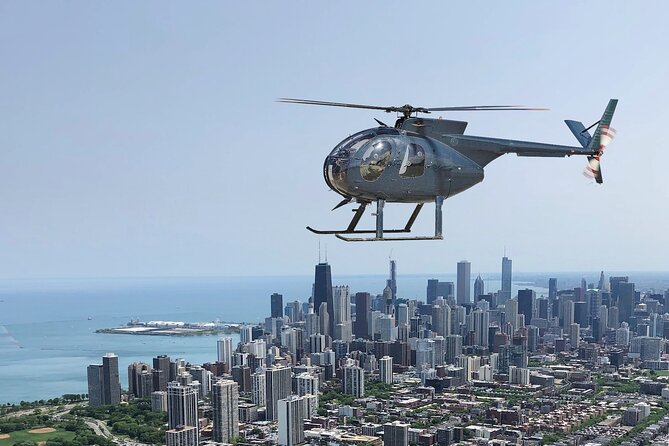
- Landmark route in one loop: From the Bulls and Cubs areas to Millennium Park and Cloud Gate.
- Headsets included: Built for talking and listening during the flight.
- Skyscraper and deck flyby: You’ll pass the John Hancock Center area and the 360 Chicago observation deck.
- Navy Pier views: The Centennial Wheel shows up from the air.
- Weight limit applies: Each passenger must be under 260 lbs.
Entering The World From Schaumburg Regional Airport
This tour starts at Schaumburg Regional Airport (905 W Irving Park Rd, Schaumburg, IL 60193). It’s a very practical choice if you’d rather not fight downtown traffic for a once-in-a-lifetime aerial look.
You’ll also like that the operation provides a mobile ticket, and that you get confirmation at booking time. That cuts down on the usual last-minute confusion. And because it returns back to the same meeting point, you don’t have to plan a complicated end-of-tour commute.
One thing to keep in mind: even though it’s a short flight, airports still have their own pace. I recommend you show up earlier than you think you need to, so the “where do I go” stress doesn’t steal your best photos.
You can also read our reviews of more private tours in Chicago


The 45-Minute Route: Bulls, Cubs, and Chicago’s Big Picture
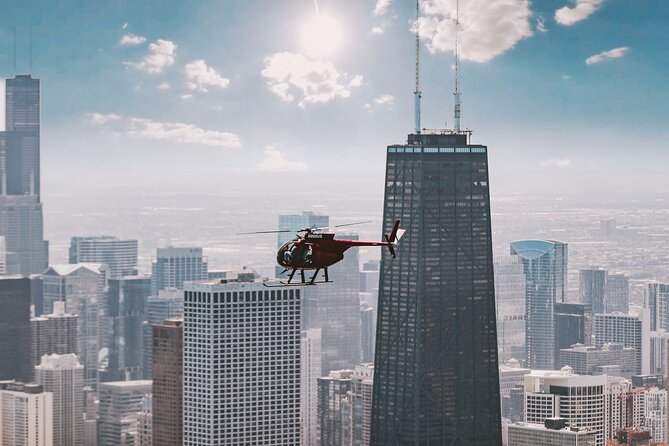
The best part of a skyline helicopter tour is how fast it compresses distance. In this case, the route is built around strong Chicago symbols you’d normally have to drive to one by one.
You’ll fly over the home of the Chicago Bulls, then you’ll see the Chicago Cubs area from the air. One clear payoff of doing both in one trip is perspective: you see how stadiums sit inside the city’s grid and neighborhoods, not as isolated destinations.
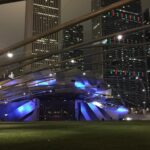
Next comes the section people remember the most: the big lakefront and cultural cluster. You’ll fly past a combination of Millennium Park, Buckingham Fountain, the Art Institute of Chicago, and the Museum Campus. From the air, you stop thinking of these as separate spots. They turn into one connected map of promenades, museum blocks, and public space.
Then you get the moment everyone talks about: Cloud Gate, better known as The Bean. From above, it looks like a sculpture placed right in the flow of the park, not just something you walk toward on the ground.
A possible drawback here is also the nature of the format: since the flight is only about 45 minutes, you’ll have plenty of “look now” moments, but fewer long hangs over any single landmark. If you’re the type who wants to slowly circle one view until you’ve perfected it, this may feel fast.
Millennium Park to The Bean: Why This Aerial View Feels Different
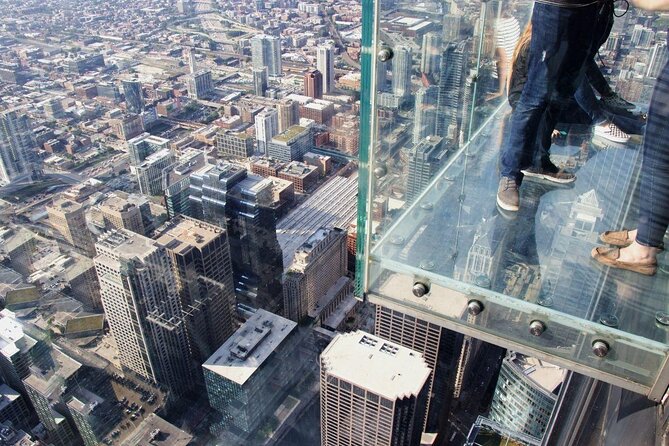
Millennium Park is one of those places where ground-level is great, but air-level is where it clicks. The geometry matters up there. You can see how the paths funnel people, where the open space sits, and how the park’s boundaries line up against surrounding streets.
When you’re flying over Buckingham Fountain and the Art Institute area, it helps to know what you’re actually seeing. The fountain reads like a bright focal point, while the museum campus looks like a set of organized blocks. That contrast makes aerial photos come out cleaner, because you have defined shapes and edges rather than only skyline blur.
The The Bean flyby is usually the emotional highlight. Even if you’ve seen it in pictures a hundred times, it’s different when it’s framed by the park’s layout and the surrounding streets. It turns from “a thing I visited” into “a landmark positioned in the city.”
And yes, you’ll still want to check whether you’re getting a window seat. The operator includes headsets, but you still rely on your own angle for the best shots.
Skyscrapers and 360 Chicago: Reading Downtown From Above
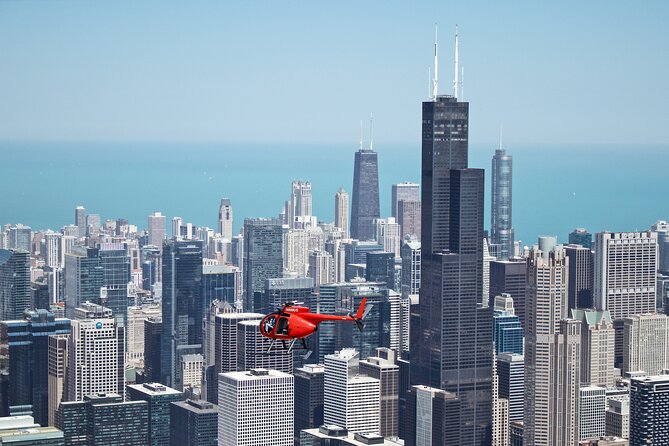
This tour includes passing a 100-story skyscraper and the home of the 360 Chicago observation deck. It also calls out flying past major downtown anchors like the John Hancock Center and the Willis Tower area.
Here’s the practical magic: skyscrapers look different when you can see their street-level context. From the air, you can tell how tall towers relate to the city’s “street canyon” pattern. You also see the river corridor and downtown blocks in a way that’s hard to recreate from ground viewpoints.
If you’re traveling with people who struggle with heights, this kind of route often helps. You’re not stuck staring down a single drop. You’re mostly watching architecture and landmarks slide by, with the pilot guiding you on what you’re passing.
The pilot commentary is a real part of the value here. In experiences shared with this provider, pilots like Tommy and Chuck were singled out for pointing things out and keeping the mood friendly. That matters because the more you understand what you’re seeing, the more satisfying the photos feel afterward.
The Aerial Look at Wrigley and the Cubs Home
Seeing the Cubs home from above is one of those Chicago things that hits even if you’re not a hardcore fan. The stadium becomes a shape in the neighborhood, and you can spot how it connects to surrounding streets.
One shared highlight was flying over Wrigley Field. That’s the kind of specific detail that turns a generic skyline tour into a real memory you’ll actually talk about later.
If you’re going as a family, this stop can be the “everyone in the group is happy” moment. Kids often fixate on what they recognize, and adults get the satisfaction of a perspective they can’t get any other way.
Just remember the trade-off: the flight is short. You’re likely to get a clear pass and photo chance, not a slow, lingering hover.
You can also read our reviews of more tours and experiences in Chicago


Navy Pier From Above: Catching The Centennial Wheel
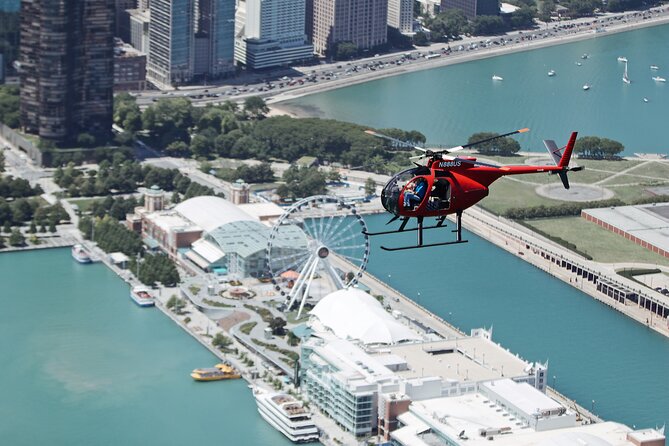
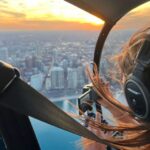
Another memorable flyby is the Centennial Wheel. From the air, Navy Pier becomes a readable layout instead of a crowded boardwalk scene.
Even if you don’t plan to visit Navy Pier after, the view is a good way to understand where it sits along the lakefront. It also gives your trip a variety of textures: stadiums, parks, museums, and then this bright amusement landmark all in one loop.
Timing can also change the feel. Some flights run in the evening, and night views can add extra sparkle, including moon and water reflections. If that’s your goal, pick a slot that matches your lighting preference and be ready for the weather check that comes with it.
What the Flight Feels Like: Headsets, Wind, and Smooth Landings
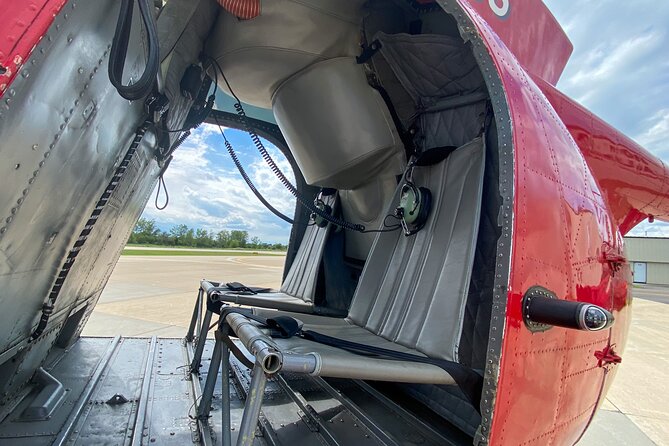
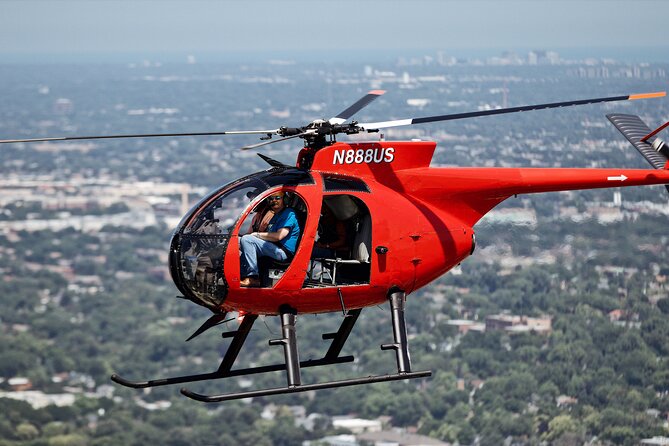
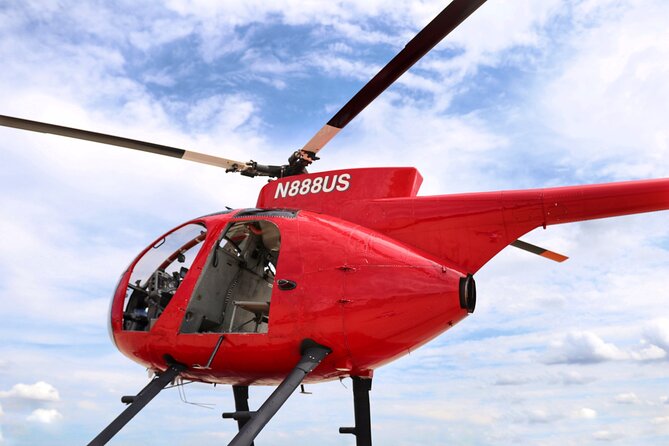
This is the part you can’t fully picture from photos. Helicopters are compact. The cockpit and cabin feel close. That can be a plus, because the pilot can talk you through what’s next.
You’ll have headsets in flight, which helps with both safety and your ability to hear landmark explanations. Parking is also included, which reduces one more logistical hassle.
Wind matters. One shared experience praised a pilot for handling a windy day confidently. That’s a sign of real operational skill. In practice, you may feel small changes in flight path as the pilot adjusts for conditions. The good crews keep it calm, smooth, and controlled.
Still, take that “headset reliability” note seriously. On one trip, noise cancellation and communication equipment weren’t working as expected, which made it harder to talk and hear. It’s not something you should assume will happen, but it’s worth keeping in mind if communication is a top priority for your group.
Photos That Actually Turn Out: Small Tips for a Big Payoff
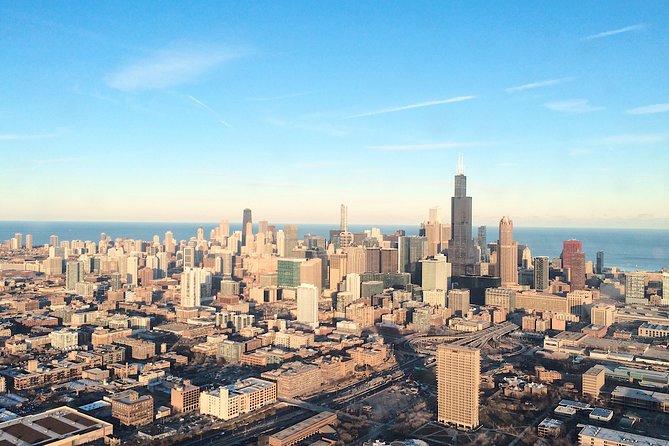
If you care about photos, you’re going to want to treat this like a guided photo walk, but in the air. That means you’ll do best if you come ready rather than hunting for settings mid-flight.
A few practical ideas:
- Bring your phone or camera charged and ready before you sit down. There’s no long “buffer time” once you’re airborne.
- Ask for the best angle when you’re approaching a landmark. The pilots I’ve seen credited (like Matt, Sara, and Steve) were described as making sure people got pictures they liked.
- Use short bursts. Helicopter motion and your own posture will make a single shot less consistent.
If you’re traveling as a couple or celebrating a birthday, this is also a moment for posed photos. Shared experiences often highlight that pilots helped coordinate photos for couples and families. That’s not just nice, it improves your chance of leaving with images that look like you planned them.
Value and What’s Included in Your Ticket
Even without a stated price, you can judge value by what’s bundled and what you’re buying in time.
You’re paying for:
- A private flight (only your group participates)
- A compact, guided loop over major Chicago icons
- Headsets plus parking
- A specific duration that keeps your day from evaporating
The “private” part matters more than people expect. When you’re not sharing the helicopter with strangers, you get calmer interactions, easier photo coordination, and fewer awkward group pacing issues.
It also helps that the tour is in English. That makes the landmark talk practical, not just atmospheric.
The one constraint you should not ignore is the 260 lbs per passenger limit. If you’re traveling as a group, check everyone’s weight in advance so there are no surprises at the airport.
Things That Could Go Sideways (And How to Plan Around Them)
Helicopters require good weather, and this experience explicitly requires it. If conditions aren’t right, you’ll either be offered a different date or a full refund.
Still, real life happens. Shared stories include a case where a flight was canceled close to departure and rescheduling didn’t fit a tight birthday schedule. Another case noted missing communication because the headset setup wasn’t working properly.
So here’s my practical advice: build this into your trip with some breathing room. If Chicago is your trip anchor and your calendar is packed down to the hour, consider scheduling this for a day with flexibility.
Also, if you’re prone to worry about heights, don’t let that stop you. One shared experience said even if you’re scared of heights, the experience can still be worth it. The flight is short and the pilot’s job is keeping you comfortable and safe.
Should You Book This Chicago Skyline Helicopter Tour?
Book it if you want a high-impact, time-efficient way to see Chicago from the sky, especially if your group includes people who love photos, landmarks, or special-occasion surprises. The route hits major names in a compact loop: the Bulls home, Cubs areas (including Wrigley Field), Millennium Park and major lakefront sights, Cloud Gate, the John Hancock Center/360 Chicago area, and the Centennial Wheel.
Skip it or reconsider if your plans are inflexible on a specific date. Weather and timing changes can happen with any helicopter operation, and at least one shared story shows how a late change can ruin a tightly timed day.
If you book, choose a time that matches your mood. Day gives you crisp architecture. Night can add extra glow over the water and downtown. Either way, come early, bring your camera ready, and let the pilot do what they do best: turn Chicago landmarks into something you can actually see in your head.
FAQ
How long is the Private 45-Minute Chicago Skyline Helicopter Tour?
It’s approximately 45 minutes in the air.
Is this tour private?
Yes. It’s a private tour/activity, and only your group participates.
Where does the tour start, and where does it end?
The meeting point is Schaumburg Regional Airport, 905 W Irving Park Rd, Schaumburg, IL 60193, USA. The activity ends back at the meeting point.
Are headsets provided during the flight?
Yes. Headsets are included for use in flight.
What can you see during the flight?
You’ll fly over the home of the Chicago Bulls, see where the Chicago Cubs play, pass Millennium Park area landmarks including Buckingham Fountain, the Art Institute, and the Museum Campus, fly past Cloud Gate, pass the 100-story skyscraper connected with 360 Chicago, see the Centennial Wheel, and fly past the Cubs home again.
Is the tour offered in English?
Yes. The tour is offered in English.
Is there a weight limit for passengers?
Yes. Each passenger must be less than 260 lbs.
What are the cancellation rules if weather is poor?
The experience requires good weather. If it’s canceled due to poor weather, you’ll be offered a different date or a full refund. You can also cancel for a full refund if you cancel at least 24 hours in advance.