Chicago can feel like a movie set with secrets. This walk connects Prohibition-era culture to the buildings and public spaces that shaped the Loop in the 1920s, then closes with skyline-time at the river and a front-row photo finish at Millennium Park. I like how guides—think Rich or Dave—mix quick architecture reads with street-level stories you’d normally miss.
You’ll also appreciate the small-group feel (kept to the mid-teens) and the practical pace for a 2.5-hour downtown circuit. The possible drawback: this is mostly an outdoor-and-sidewalk tour, so if you’re looking for a deep, museum-style breakdown of Prohibition details, you may want a little extra context before you go.
In This Review
- Key things to know before you go
- Prohibition culture through the architecture of the Loop
- Starting at the Chicago Theatre: a strong sense of place
- The Chicago Pedway: walking like a commuter
- Daley Plaza and the Chicago Picasso: art that changes the block
- Down to the Chicago River: skyline views and daily rhythm
- The Chicago Riverwalk: where architecture meets a real walking stage
- Wrigley Building, Tribune Tower, and the Magnificent Mile: seeing the big names in context
- Chicago Cultural Center: the one indoor moment that’s a payoff
- Millennium Park to Cloud Gate: your final photo and the easiest way to plan the rest of your day
- What the snacks add (and why popcorn fits the theme)
- Price and time: does $49.96 feel like value?
- Who this tour suits best
- Tips to make the 4.8 km walk feel easy
- Should you book this Prohibition and Architecture walk?
- FAQ
- How long is the tour?
- What does it cost?
- Where do I meet, and where does the tour end?
- How much walking is involved?
- Is this a small group?
- Is it family-friendly?
- What is included in the tour price?
- Do you go inside any buildings?
- Does the tour run in bad weather?
- Can I cancel and get a full refund?
Key things to know before you go
- Prohibition theme tied to the Loop: you’ll connect 1920s culture to the city’s civic and commercial drama
- Small-group format: capped at about 15 people for easier questions and tighter pacing
- River + skyline views: the Chicago Riverwalk stop is where the architecture really lands
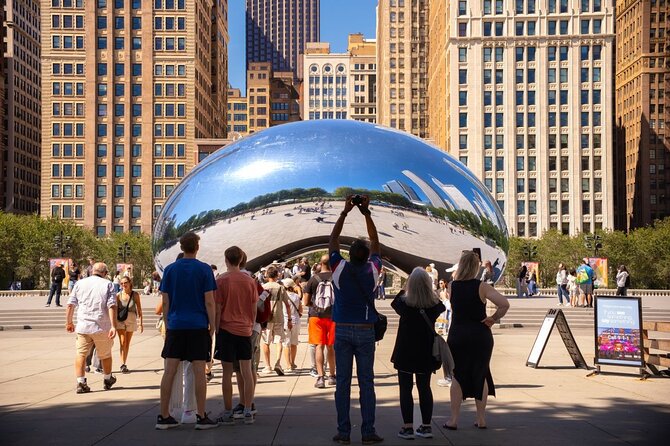
- A true photo target: you finish at The Bean (Cloud Gate) in Millennium Park
- One comfortable indoor stop: you step inside the Chicago Cultural Center
- A snack break that feels local: Chicago-style popcorn shows up during the walk
Prohibition culture through the architecture of the Loop
Chicago’s 1920s personality wasn’t just about speakeasies. It was about the way people spent, performed, and showed off—especially in the Loop. This tour uses that idea as a thread, pointing out how the city’s public spaces and major buildings carried the mood of the era: bigger-than-life streetscapes, dramatic civic architecture, and a downtown built for crowds.
What I like is that the tour doesn’t treat Prohibition like a single exhibit. Instead, you get a walking route where the stories are tied to what you can actually see. That matters because Chicago architecture can look “obvious” if you only glance at it. With a guide, you start spotting why certain buildings feel theatrical, why certain areas grew the way they did, and how public art and planning shaped daily life.
If you’re a fan of the social side of history—how people lived, worked, and gathered—this format fits well. You’re not standing in one place all day. You’re moving through the parts of downtown that still carry the old attitude.
You can also read our reviews of more walking tours in Chicago

Starting at the Chicago Theatre: a strong sense of place
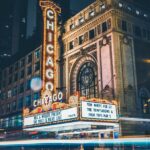
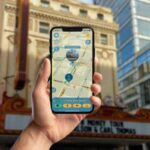
You begin at the Chicago Theatre on North State Street, right at the iconic theater marquee. Even before you move, it sets a tone: downtown Chicago likes showmanship. From there, you get oriented for the walk ahead, with the guide framing what you’re about to see in the Loop.
This first stop is quick, but it’s useful. Chicago’s downtown is dense. A good guide helps you understand where you are and why the route matters, so you aren’t just collecting landmarks—you’re building a mental map.
Practical tip: arrive a touch early so you can start the tour without feeling rushed in the crush around the theater and nearby blocks.
The Chicago Pedway: walking like a commuter
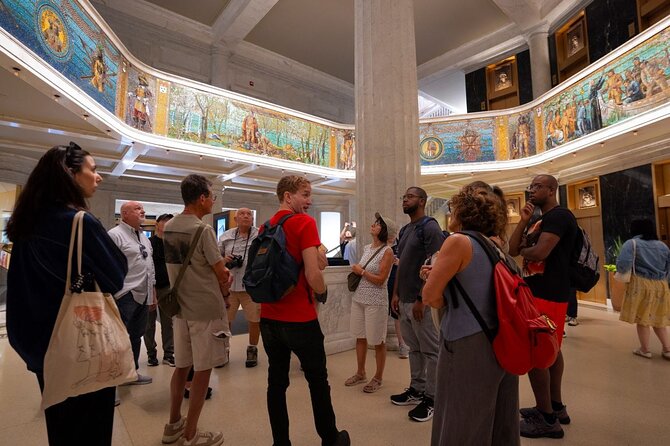
Next comes the Chicago Pedway, the underground network locals use to link key downtown destinations. If you’ve ever visited in winter or after a long travel day, you’ll understand why this matters. It’s a way to keep moving while the city does its seasonal weather mood swings.
From a photography standpoint, the Pedway isn’t the most dramatic place in Chicago. But it’s a smart stop because it explains how downtown functions day-to-day. You see how the city quietly solves problems: weather, traffic, and long walking distances between major buildings.
Weather note: the tour runs rain, shine, or snow, so stops like the Pedway can make the experience feel easier than an open-air-only walk.
Daley Plaza and the Chicago Picasso: art that changes the block
You then head toward Daley Plaza and the Chicago Picasso, a 1967 public art installation. Public art in a city this big isn’t just decoration. It’s a way to claim space, shape how people gather, and influence the feel of a square.
This stop works especially well if you like urban planning details. The guide’s job here is to connect the art to the wider idea of how the Loop was designed for civic visibility. Even if you don’t know anything about the sculpture, you’ll come away with better questions to ask when you see other public art in major cities.
Down to the Chicago River: skyline views and daily rhythm
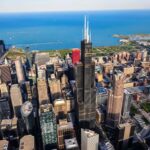
A big chunk of the tour centers on the Chicago River area, and that’s where the city’s architecture starts to feel real instead of postcard-flat. You’ll walk past iconic buildings and get chances to look outward toward the skyline and inward toward how the street level works.
This is a great segment for people who like “street theater.” Chicago isn’t just tall buildings. It’s movement. You can feel the daily rhythm in this area because it’s a working part of the city, not a theme park set.
The river corridor is also where you begin to understand the guide’s approach. Instead of listing facts, you’re learning how downtown composition creates views: what gets framed, what gets hidden, and what shows up at just the right angle.

The Chicago Riverwalk: where architecture meets a real walking stage
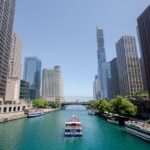
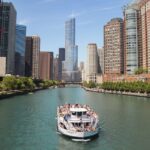
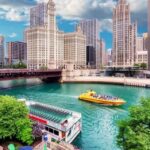
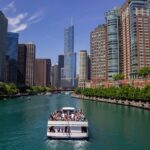
When you get to the Chicago Riverwalk, the tour shifts into pure sightseeing time. Weather permitting, you’ll stroll the award-winning Riverwalk, with skyline views and the classic downtown backdrop: buildings like the Wrigley Building and the Tribune Tower.
Here’s why this stop is worth the time. The Riverwalk isn’t just scenic. It’s functional space that turns a landmark zone into a walkable, social corridor. That’s why the views feel good: you’re not standing on a corner with traffic noise cutting through everything. You’re on a designed path with space to slow down.
Even if you’ve seen Chicago photos before, this is often the moment where the city clicks. The architecture stops looking like separate icons and starts reading like a system—planning, design, and commerce all braided together.
Wrigley Building, Tribune Tower, and the Magnificent Mile: seeing the big names in context
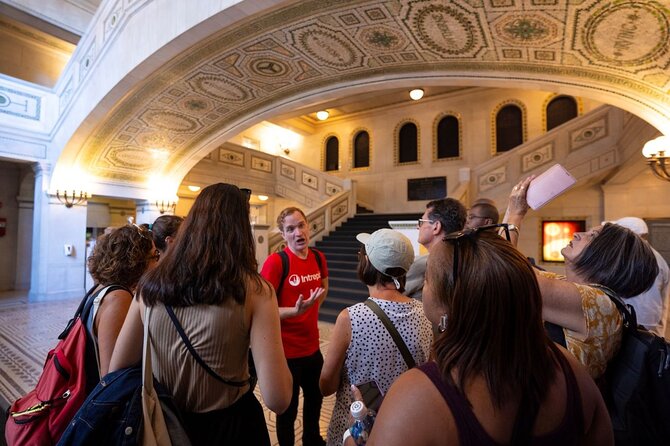
From the river area you’ll pass major downtown highlights:
- the Wrigley Building (a historic landmark on North Michigan Avenue)
- Tribune Tower, the neo-Gothic landmark at 435 North Michigan Avenue
- the Magnificent Mile along North Michigan Avenue, tied to the 1909 Burnham Plan
You’ll also notice other architectural faces as you move, including buildings such as the Jewelers Building and London House (the guide helps connect what you see to the bigger story).
What’s smart here is that you get a route that’s efficient. You don’t need a car to hit the top names, and you’re not just stuck with exterior photos. The guide points out details—why these styles landed here, how the Loop developed, and how planning influenced what you see today.
Downside to know: this portion includes a lot of passing views, not long museum-style stays. If you’re the type who wants to stare at one building for 30 minutes, you may want to book a separate architecture-focused add-on later. This walk is about seeing the lineup and understanding the connections quickly.
Chicago Cultural Center: the one indoor moment that’s a payoff
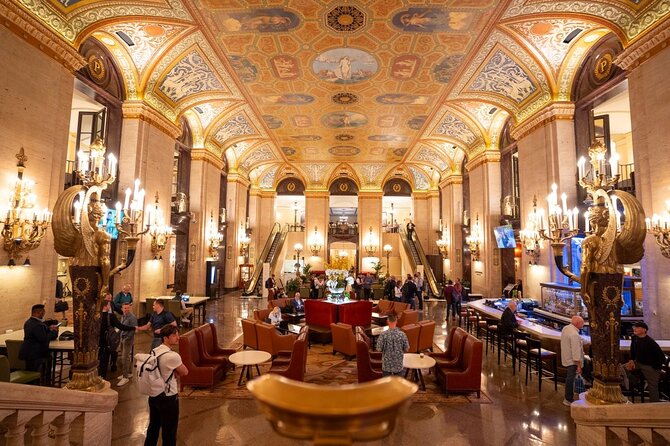
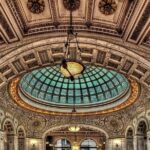
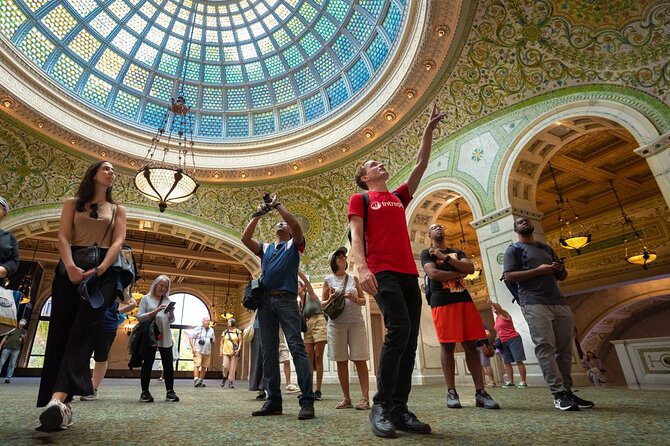
One of the best mid-tour breaks is the Chicago Cultural Center, where you step inside a Chicago Landmark. This is more than a quick stop. The Cultural Center has hosted major figures, including presidents, royalty, and dignitaries—so it carries civic weight in a way you feel immediately when you enter.
This is also where the tour’s theme gets grounded. Prohibition-era culture doesn’t live only in bars. It lived in the city’s public life: art, ceremony, institutions, and the grand spaces people used to feel important.
If you like interiors—ceilings, rooms, and the kind of craftsmanship you can’t fully appreciate from the sidewalk—this stop helps balance the outdoor walking.
Millennium Park to Cloud Gate: your final photo and the easiest way to plan the rest of your day
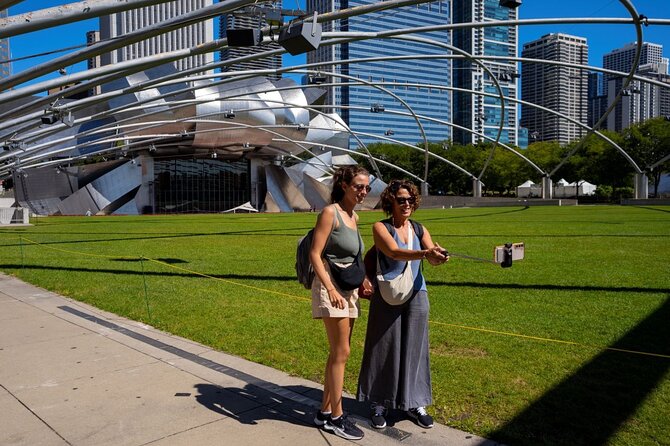
The walk ends at Millennium Park, with The Bean (Cloud Gate) as the centerpiece. You’ll get a proper moment for the iconic photo and a final sweep of views across the park and surrounding downtown.
Why ending here is a smart choice: Millennium Park is easy to connect to everything else. After the tour, you can head for lunch, get a drink, or simply wander the park’s edges with fresh context from the walk. The guide also provides practical tips so you don’t waste time hunting for the next good move.
If you’ve got limited time in Chicago, finishing near the Bean is a gift. You leave with a clear anchor point and a sense of what to do next.
What the snacks add (and why popcorn fits the theme)
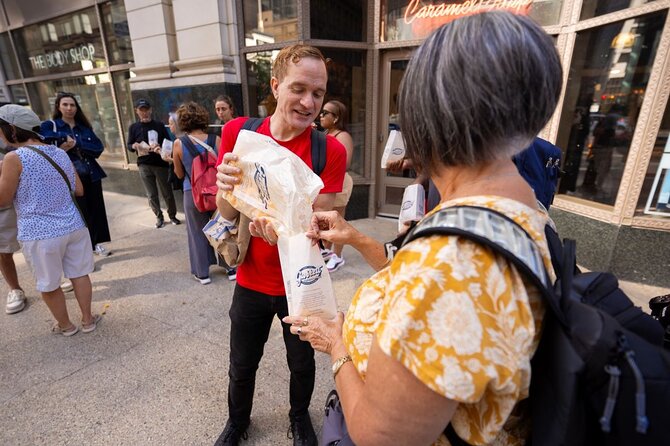
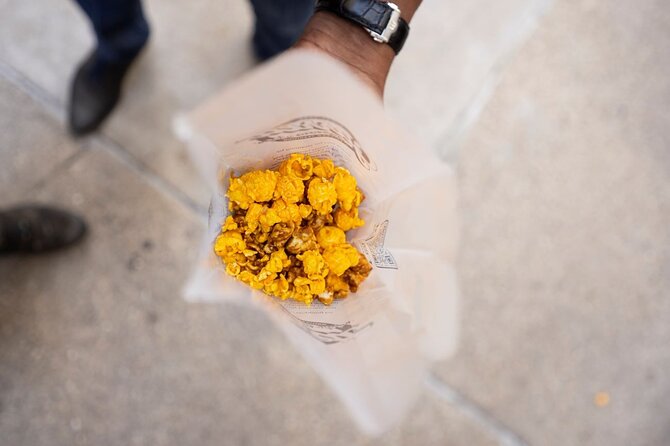
Included tastings are part of the experience: Chicago-style popcorn shows up along the way. That may sound like a small detail, but it changes the mood.
A snack break:
- gives your feet a reset
- keeps you in “local life” mode instead of tourist shuffle
- makes the walk feel warmer, more social, and less like a lecture on sidewalks
The tour also includes tips on more sights and places to eat. That’s especially valuable if you’re only in Chicago for a couple days and need a short list that matches your interests.
Price and time: does $49.96 feel like value?
At $49.96 per person for about 2 hours 30 minutes, this tour lands in the mid-range for a downtown walking experience. What makes it feel worth it is the combination:
- a compact route through major Loop landmarks
- multiple skyline-facing stops, including the Chicago Riverwalk
- an indoor payoff at the Chicago Cultural Center
- included local tasting (popcorn)
- a small-group format capped around 15
Where the value may wobble is if you’re expecting long stays at each site. This walk is built for coverage and context, not extended time at one single building. If you want slower museum-style pacing, plan to spend extra time on your own after the tour.
Also note: the tour is often booked about 20 days in advance. If your schedule is fixed, don’t wait until the last week to grab a spot.
Who this tour suits best
This one fits you if:
- you want Chicago architecture without a lot of confusing logistics
- you like history stories that connect to what you can see
- you want an efficient Loop route for a short stay
- you appreciate a guide who brings the scene to life through anecdotes and clear explanations (I’ve seen the kind of energy people associate with guides like Dash, Kevin, Rich, and Dave)
It may be less ideal if:
- you’re after a deep Prohibition research project with lots of specific named locations tied to the era
- you hate walking 3 miles worth of downtown streets and sidewalks
- you want long indoor time inside multiple buildings
Tips to make the 4.8 km walk feel easy
You’re looking at about 4.8 km (3 miles) total walking. Most fitness levels can handle it, but you’ll want to plan for downtown terrain.
Here’s how to set yourself up:
- Wear shoes you trust. Chicago sidewalks are not the place for fashion sneakers.
- Dress for the weather. The tour runs rain, shine, or snow, so bring layers.
- Use the mobile ticket on your phone so you don’t have to juggle paperwork downtown.
- Bring a water bottle. Food beyond the included popcorn isn’t part of the package.
- If you’re taking photos, save a little patience for the Bean area—Millennium Park can get busy.
A small strategy: do this early in your trip. Once you understand the Loop’s “logic,” the rest of your day feels easier.
Should you book this Prohibition and Architecture walk?
Book it if you want a smart, efficient way to experience Chicago’s Prohibition-era vibe through the Loop’s architecture, with real skyline moments at the river and a satisfying ending at The Bean. The small-group size and included popcorn make it feel personable, and the indoor Cultural Center stop gives the walk a nice balance.
Skip it (or pair it with something else) if you’re expecting a heavy, site-by-site Prohibition deep dive or if you prefer slow, extended viewing of a single building over a compact highlights route.
FAQ
How long is the tour?
It lasts about 2 hours 30 minutes.
What does it cost?
The price is $49.96 per person.
Where do I meet, and where does the tour end?
You start at the Chicago Theatre, 175 N State St, Chicago, IL 60601, and the tour ends at Millennium Park near Millennium Park and Michigan Ave.
How much walking is involved?
The tour covers about 4.8 km (3 miles).
Is this a small group?
Yes. The tour has a maximum of 15 travelers.
Is it family-friendly?
Yes. Children under 6 join for free. Children ages 6-11 can join at the adult rate. Tell the operator about any children in your group at booking.
What is included in the tour price?
You’ll see key landmarks like the Chicago Theatre, Wrigley Building, and Tribune Tower, stroll the Chicago Riverwalk, and enjoy Chicago-style popcorn. The tour also includes guidance from a local English-speaking guide and tips for more sights and places to eat.
Do you go inside any buildings?
You step inside the Chicago Cultural Center.
Does the tour run in bad weather?
Yes. Experiences happen rain, shine, or snow, so dress accordingly.
Can I cancel and get a full refund?
Yes. You can cancel up to 24 hours in advance for a full refund.