REVIEW · CHICAGO
Chicago Walking Tour: Must-See Chicago
Book on Viator →Operated by Chicago Architecture Center · Bookable on Viator
Chicago looks different when you can read it. This 90-minute small-group walking tour is a quick way to learn the city’s architecture, history, and culture while you get oriented for the rest of your trip. You’ll pass major downtown landmarks and walk at a pace that actually lets the details sink in.
What I like most is the included admission to the Chicago Architecture Center galleries, which gives you context beyond street-level views. I also like the tight route through famous faces of Chicago—Wrigley Building’s white terra cotta, Aqua Tower’s futuristic curve work, Tribune Tower’s grand facade, and a stop at Millennium Park for Cloud Gate.
One watch-out: it’s mostly an outdoor downtown walk with no coat check and no storage for luggage or strollers, so come ready for weather and travel light. And if Cloud Gate is shut for work (it has happened), your photo moment may be less than perfect.
In This Review
- Key things to know before you go
- Why this short Chicago architecture walk is so useful
- Price and what $35 really buys you
- Starting at the Chicago Architecture Center: where the story begins
- Stop 1: Wrigley Building and how to spot Spanish Colonial Revival style fast
- The Riverwalk view: a quick way to understand Chicago’s geography
- Stop 2: Aqua Tower and the modern skyline’s turn toward personality
- Stop 3: Tribune Tower and the power of a facade with a backstory
- Stop 4: Art Institute exterior views and why the Modern Wing matters
- Stop 5: John Hancock Center at 875 N Michigan Avenue
- Stop 6: Millennium Park and Cloud Gate, plus the reality of construction
- How the tour guide narration pays off after the walk
- Comfort and what to bring for a 1.5-hour downtown walk
- Timing: when to book and how to fit it into your day
- Should you book the Chicago Walking Tour: Must-See Chicago?
- FAQ
- How long is the Chicago Walking Tour: Must-See Chicago?
- What does the tour cost?
- Where does the tour start and end?
- What’s included with my ticket?
- Are extra tickets required at the stops?
- How big is the group?
- Can I cancel for a full refund?
- Are service animals allowed, and are pets allowed?
- Is there coat check or storage for luggage and strollers?
Key things to know before you go
- A 90-minute walking route that helps you map downtown fast
- Max 15 people keeps questions from getting lost
- Chicago Architecture Center galleries are included with your tour ticket
- You get landmark exteriors like Tribune Tower, the Art Institute’s Modern Wing, and John Hancock Center
- Millennium Park and Cloud Gate are free to see during your stop
- Certified guide narration turns buildings into clear stories instead of random sightseeing
Why this short Chicago architecture walk is so useful
If you only have a day (or a half-day) in Chicago, this tour is built for that reality. You’ll cover a concentrated chunk of downtown, so you don’t waste time figuring out where things are or which buildings matter most for your photos later.
I also like that the route is designed to help you return to the places you want more of. In other words, this isn’t just one-and-done. It’s more like a smart first sketch of the city—so you can spend the rest of your trip exploring on your own with less guesswork.
The other win is the guide narration. This tour is led by a professional, certified guide, and that matters when you want to understand why buildings look the way they do, not just that they look cool.
You can also read our reviews of more walking tours in Chicago



Price and what $35 really buys you
At $35 per person for about 1.5 hours, you’re paying for three things: a guide who can explain what you’re seeing, time saved (big time), and the included admission to the Chicago Architecture Center galleries.
Compared with paying for individual museum tickets on top of walking around aimlessly, this is a pretty efficient deal—especially because the tour stops are mostly exterior views. You’re not just roaming; you’re getting a curated route that makes the area coherent.
Also, small-group format helps here. When the group stays under 15 people, it’s easier to ask questions about style, materials, or Chicago’s famous love affair with skyline bragging.
Starting at the Chicago Architecture Center: where the story begins
The meeting point is at Chicago Architecture Center, 111 E Wacker Dr. That’s a great starting choice because the tour’s theme is architecture, and you start from a place that’s already focused on it.
Before or after the walking portion (your guide will steer you on timing), you’ll have admission included to the Galleries of the Chicago Architecture Center. Even if you’re not a serious architecture nerd, this stop helps you connect the dots. You see the skyline outside, and then you get the inside context that makes the exterior details easier to notice on your own.
If you like to plan your day tightly, this is also practical. Many people run a morning or early afternoon schedule in downtown Chicago, and starting at the CAC keeps you centered and close to public transit.
Stop 1: Wrigley Building and how to spot Spanish Colonial Revival style fast

You’ll start at the Wrigley Building, known for its Spanish Colonial Revival look and a distinctive white terra cotta facade. This is one of those buildings that looks striking even before the explanation, but the style name gives you a handle on what you’re looking at.
Here’s what I’d pay attention to during the brief stop: the facade texture and the way the exterior reads almost like ornamented masonry. Once you learn how that style gets recognized, it becomes easier to see similar cues in other Chicago buildings you might pass later.
A short note on the logistics of this first stop: the exterior viewing is quick, and admission is not included for this stop. The value is in the guided “why this looks like this” part.
The Riverwalk view: a quick way to understand Chicago’s geography
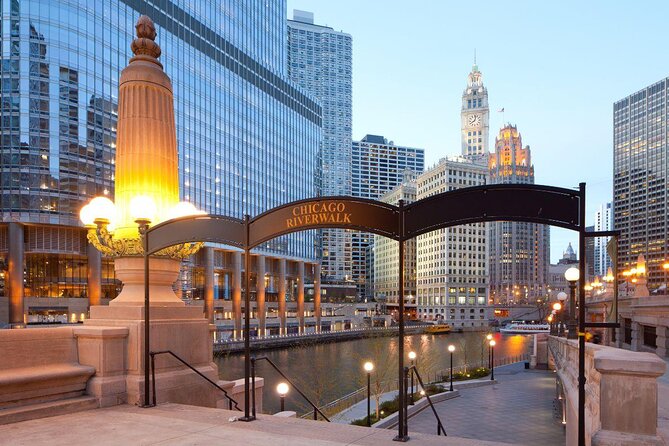
Between major landmarks, you’ll get a view of the Chicago Riverwalk. This matters because Chicago’s layout is tied to its river and its bridges, and that context helps you understand why so many iconic buildings cluster where they do.
This is also a good spot to check your orientation. If you’re the type who likes to map routes mentally, this helps you visualize how your later explorations will connect—especially around the downtown lakefront side versus the river side.




Stop 2: Aqua Tower and the modern skyline’s turn toward personality
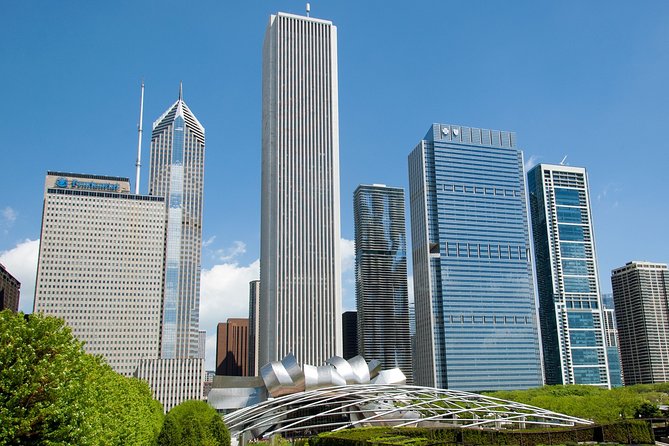
Next up is Aqua Tower. The guide’s story here is pretty specific: it’s the project completed in 2009 and it helped put Lakeshore East on many people’s tongues. You’ll also hear about architect Jeanne Gang, and how Aqua brought her to Chicagoans’ architectural radar.
Even if you’ve never heard of Jeanne Gang, Aqua Tower gives you an immediate lesson in modern design language. During your short visit, try to notice how the building’s form feels more sculptural than flat. That’s the point: Chicago’s newer skyscrapers often feel like they have motion even when they’re standing still.
As with the early stops, you’re viewing from the outside here, and admission tickets are not included at this point. The goal is architectural recognition, not an interior visit.
Stop 3: Tribune Tower and the power of a facade with a backstory
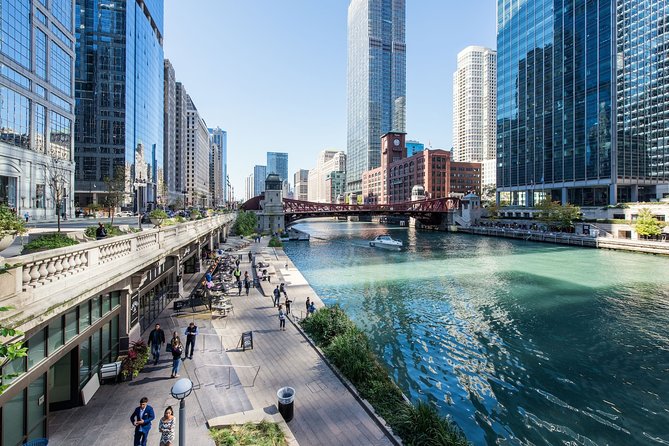
Then comes the Tribune Tower, designed by Howells & Hood. You’ll hear the building was the winner of an international design competition meant to create the most beautiful building in the world.
That competition angle is more than trivia. It explains why the tower feels so deliberate and ceremonial. When you know the design was chosen with that kind of pressure, it makes sense that the exterior looks like it was meant to impress people up close—not just from far away.
It’s also a reminder that Chicago’s architecture wasn’t always about glass-and-steel minimalism. Some buildings were designed to be showpieces, and Tribune Tower is still doing that job.
Again, this is an exterior stop, with admission not included.
Stop 4: Art Institute exterior views and why the Modern Wing matters
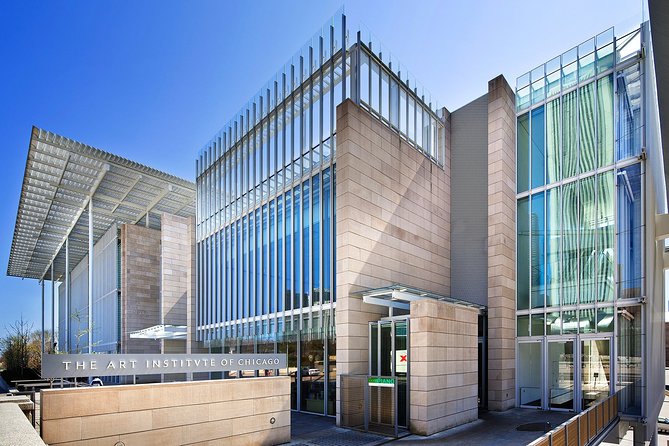
You’ll see the Art Institute of Chicago’s Modern Wing from the outside. This stop works well because it adds a bridge between architecture and culture. The Art Institute isn’t only about artwork—its buildings have architectural statements too.
The Modern Wing exterior can be a useful contrast to the older downtown styles you saw earlier. You start noticing changes in materials, geometry, and how each era wants the building to feel.
This stop is also quick—plan on short exterior viewing, and admission tickets are not included here.
Stop 5: John Hancock Center at 875 N Michigan Avenue
The route includes a viewpoint for the John Hancock Center, now at 875 N Michigan Avenue. You’ll get a skyline moment without needing to climb anything or buy a separate attraction ticket.
This stop is great for your photo set because it gives you a recognizable silhouette and a sense of scale. If you’ve only ever seen Chicago in pictures, this is where the buildings start to feel real in your hands-on understanding of downtown space.
The tour keeps this as an exterior viewing stop, so you’re not paying for an indoor experience at this moment. Admission tickets are not included for the stop.
Stop 6: Millennium Park and Cloud Gate, plus the reality of construction
Millennium Park is the final anchor, and it’s a smart way to close. You’ll visit the area around Cloud Gate, often called The Bean. Here’s the useful part for your planning: this stop is free.
That said, one practical thing to know from real-world timing: Cloud Gate can be under construction, which has happened. If that’s the case when you go, your exact photo moment may be limited, but you’ll still be in the right place to understand how Millennium Park fits into downtown life.
If you want the best chance at good photos, aim for the same time of day your tour schedules you, and bring patience. Chicago light can be dramatic, and even a partially closed view can still be worth it when you’re there in person.
How the tour guide narration pays off after the walk
A good guide doesn’t just explain buildings. They give you a way to notice them.
On this tour, the narration style matters because the stops are close together. If you’re paying attention, you’ll start to sort architectural traits: older ornate facade vs. modern sculptural form, monumental institutional design vs. newer skyline expression.
You’ll also learn stories that help you pick what to revisit later. After the walk, you might decide you want more time at Millennium Park, or you might choose to linger longer near one of the towers you saw up close.
And if you’re hoping for a memorable guide experience, the names mentioned with this tour include Claudia Winkler, Rich, and Maurice. The common thread in the guide performance is clear storytelling and smart pacing in the 90-minute format.
Comfort and what to bring for a 1.5-hour downtown walk
Even though this is only 90 minutes, it’s still real walking time. Plan on comfortable shoes, especially since you’re moving through downtown areas where sidewalks can get busy.
Pack light. There’s no coat check and no storage for luggage or strollers listed for this experience. If you’re traveling with a big bag or stroller, plan your day so you’re not stuck carrying it around during the tour.
Weather matters here too. Since it’s mostly outdoors, a quick layer helps even on days that feel mild at first. Bring a water bottle, but also remember food and drink aren’t included, so don’t assume there’s a stop to grab snacks.
Service animals are allowed, which is good to know for planning. Pets are not allowed.
Timing: when to book and how to fit it into your day
This tour is typically booked about 16 days in advance on average, which is a clue that it can fill during peak times. If your schedule is tight, I’d book early enough to avoid getting stuck with less ideal times.
Because the tour is a small-group format and lasts about 1 hour 30 minutes, it fits well as a morning starter or an early afternoon grounding activity. I like placing it earlier in the day so you can use what you learn right away—then return to your favorite stops later at your own pace.
The route ends back at the meeting point, so it’s easy to continue your day in the same area rather than scrambling across town.
Should you book the Chicago Walking Tour: Must-See Chicago?
I think this tour is a smart buy if you want the headline architecture hits in a short time and you’d rather learn the city from a guide than guess while wandering.
Book it if:
- You’re short on time and want a 90-minute architecture orientation
- You like seeing iconic exteriors and getting the story behind them
- You want included admission to the Chicago Architecture Center galleries
Skip it (or pair it differently) if:
- You need long indoor museum time, since this is mostly an exterior walking format
- You’re coming with bulky luggage, because there’s no storage
- You have no flexibility for weather or for construction-related changes at Millennium Park
If you want a practical first step into Chicago, this is one of the easiest ways to get your bearings fast and spend the rest of your trip making smarter choices.
FAQ
How long is the Chicago Walking Tour: Must-See Chicago?
It lasts about 1 hour 30 minutes.
What does the tour cost?
The price is $35.00 per person.
Where does the tour start and end?
The tour starts at Chicago Architecture Center, 111 E Wacker Dr, Chicago, IL 60601, USA, and it ends back at the same meeting point.
What’s included with my ticket?
Your ticket includes narration by a professional and certified guide, a walking tour featuring famous buildings, and admission to the Galleries of the Chicago Architecture Center.
Are extra tickets required at the stops?
Admission tickets are not included for several stops along the way. Millennium Park is listed as free, and admission to the Chicago Architecture Center galleries is included.
How big is the group?
The tour has a maximum of 15 travelers.
Can I cancel for a full refund?
Yes. You can cancel for a full refund up to 24 hours before the experience starts.
Are service animals allowed, and are pets allowed?
Service animals are allowed. Pets are not allowed.
Is there coat check or storage for luggage and strollers?
No—coat check is not included, and there is no storage for luggage or strollers.