REVIEW · CHICAGO
Chicago: Architecture and Engineering Marvels Walking Tour
Book on GetYourGuide →Operated by Inside Chicago Walking Tours · Bookable on GetYourGuide
Wind and weight tell Chicago’s story. On this 2-hour walk, I loved how the guide turns architecture into cause-and-effect, then gets you into select interiors so you can see how the ideas feel in real life.
Two things I especially liked: the guide is a trained engineer who explains complex building behavior in plain language, and Henry brought a folder full of illustrations that made the details click fast. I also liked that you skip the usual slow elevator hassle with express access when interiors are involved.
One thing to consider: this is still a walking tour. If you have low mobility or low fitness, the mix of streets, stops, and time on your feet may be tough.
In This Review
- Key takeaways before you go
- Roosevelt University kickoff: Auditorium Building, 430 S Michigan Ave
- How Chicago buildings handle gravity and wind (in human terms)
- The skyscraper story: a builder described as the father of the skyscraper
- “Haunted” by settlement: why the floating foundation matters
- Interior access: what you gain when you step inside famous buildings
- The engineering feat that still affects Chicago today
- Value and price: $30 for engineering insight plus interiors
- Timing, walking pace, and what to bring
- Who this tour fits best (and who should skip it)
- Should you book Chicago: Architecture and Engineering Marvels Walking Tour?
- FAQ
- How long is the Chicago Architecture and Engineering Marvels Walking Tour?
- How much does the tour cost?
- Where is the meeting point?
- What’s included, and what isn’t?
- What should I bring?
- Is smoking allowed?
- Can I cancel for free, and can I reserve now and pay later?
Key takeaways before you go
- Engineer-led explanations you can actually picture (wind, gravity, and building systems made understandable)
- Interior access on a walking route so you see more than facades
- Skip-the-wait elevator experience helps you use your time well
- Stories about foundations and why buildings get legends
- A guide who can do engineering and comedy—useful, not forced
- Tight timing for a 2-hour visit with an afternoon-friendly schedule
Roosevelt University kickoff: Auditorium Building, 430 S Michigan Ave
The tour starts right where Chicago education and big architecture intersect: the main building of Roosevelt University, also known as the Auditorium Building, at 430 South Michigan Avenue. The address note matters. It’s S Michigan, not North Michigan, and showing up on the wrong side can waste your first 10 minutes.
This first stop sets the tone. You’re not just looking at pretty surfaces. You’re being shown how buildings begin as plans for forces—weight from the inside, wind hitting from the outside, and the practical limits of the site. Starting at a major landmark also helps you get your bearings quickly before you move along the route.
And yes, the “engineer + improv comedian” style is part of the delivery. It keeps the information moving without turning it into a lecture where you lose the thread.
You can also read our reviews of more walking tours in Chicago



How Chicago buildings handle gravity and wind (in human terms)
The core of this tour is engineering perspective. You’ll spend time learning the engineering logic behind Chicago’s iconic buildings—how they are planned and executed so they can handle gravity loads and wind forces, repeatedly, year after year.
Here’s what I think matters for you: most architecture tours stop at style—Gothic this, Art Deco that. This one pushes beyond the look. You’ll hear how design decisions are tied to real structural needs, and why Chicago became a testing ground for smarter ways to build tall.
Chicago also gives the guide great material, because the city’s setting created tough constraints. The tour frames the story as evolution over more than 150 years of engineering marvels, which helps you connect early innovations to what came later. If you’re the type who likes understanding why something works, not just that it exists, you’ll feel satisfied.
The skyscraper story: a builder described as the father of the skyscraper
One of the tour’s standout segments links Chicago’s skyscraper era to an engineering figure often described as the father of the skyscraper. The tour explains that he was an engineer and also a classmate of Gustav Eiffel.
Even without turning it into a trivia contest, this is a smart teaching move. It ties Chicago’s breakthroughs to the broader world of 19th-century engineering ideas. You start seeing Chicago not as a lone miracle, but as part of a wider network of engineers and techniques developing at the same time.
I also liked the way the guide uses this story to bring you back to fundamentals: if someone is called the father of the skyscraper, that label isn’t just marketing. It signals a real shift in how structures were thought out and built.
“Haunted” by settlement: why the floating foundation matters
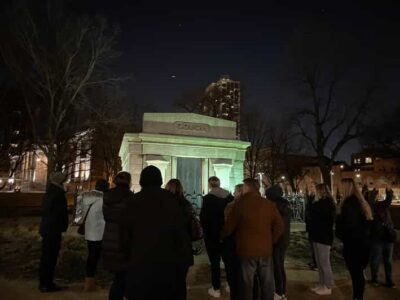
You’ll also hear a fascinating explanation for how a building might earn a haunted reputation, not because of anything supernatural, but because it settled unevenly on its “floating” foundation.
That’s the kind of story that makes the tour worth it even if you’re not obsessed with structural diagrams. It shows how engineering outcomes can become cultural outcomes. A building shifts, people notice, and legends grow. When you understand the mechanics, the story changes from spooky to fascinating.
And the tour doesn’t treat this like a one-off ghost tale. It uses it as a gateway to discuss planning and execution—how buildings interact with their ground conditions, and what engineers must solve when the soil and site conditions are unpredictable.
Interior access: what you gain when you step inside famous buildings
The tour includes exclusive access to select building interiors, and that’s where the experience gets more memorable than a typical exterior-only architecture walk.
Outdoors, you can admire height, rhythm, and façade details. Indoors, you start noticing the structural story in a different way—how spaces feel, where key elements are, and what engineering decisions mean for everyday movement. The tour is designed so you don’t just stand there for a photo. You go in with a framework for what to look for.
There’s also a practical time benefit: the tour includes skipping the line through express elevators. For a 2-hour experience, that matters. It reduces waiting and keeps you moving to the next explanation before the session runs out.
If you like architecture tours where you actually learn something and still get inside, this format hits a sweet spot.





The engineering feat that still affects Chicago today
You’ll hear the story of one of the greatest engineering feats in the United States—and importantly, the tour connects it to how it affects Chicago even to this day.
This kind of connection is usually missing from pure architecture sightseeing. Knowing that a major engineering decision has long-term impact helps you see the city as an ongoing system, not a static collection of buildings. It also makes the tour feel like more than a sightseeing product. It becomes a story about infrastructure and consequence.
I found this portion especially useful if you’re visiting Chicago for a short time and want one strong “why this city is like this” takeaway.
Value and price: $30 for engineering insight plus interiors
At $30 per person for a 2-hour walking tour with engineer-led guidance and interior access, I think the value is fairly strong—especially because interior entry and express elevator access can be the part that usually costs extra on other sightseeing activities.
What you’re paying for isn’t just a route. You’re paying for:
- an engineer-trained guide who can translate forces and systems into plain language
- access to interior spaces, not only exterior viewpoints
- time saved by express elevators
If you’re someone who normally skips paid guided tours because you feel like you’ll read the plaques yourself, this is the kind where the guide’s “how it works” explanations do real work. You’ll likely leave with new ways to look at buildings you pass later.
Timing, walking pace, and what to bring
This tour lasts 2 hours and is usually available in the afternoon, which is helpful if you’re planning a day with other Chicago stops. Still, it’s a walking experience.
Do plan for comfortable shoes. You’ll also want a water bottle to stay hydrated, and a camera because photo opportunities come naturally when you’re stopping for architecture and engineering points.
Also note the rules: smoking isn’t allowed.
If weather is turning fast, check the forecast and dress appropriately. Chicago can go from comfortable to windy-cold quickly, and the tour keeps moving on foot.
Who this tour fits best (and who should skip it)
This one fits best if you’re curious about how buildings work and you want a guide who can explain it without talking like a textbook. If you enjoy stories—like the foundation settlement legend that turns into a haunted reputation—or if you like seeing how engineering choices shape the city, you’ll get a lot out of it.
It’s not suitable for people with mobility impairments, and it’s also not suitable for people with low level of fitness. That’s not a “maybe.” It’s a “plan something else” situation.
Should you book Chicago: Architecture and Engineering Marvels Walking Tour?
I’d recommend booking it if you want more than skyline photos. The mix of engineer-trained guidance, interior access, and explanations about forces like gravity and wind makes it a strong educational outing that still feels fun and human.
Skip it if walking for 2 hours is a problem for you, or if you only want exterior views with minimal interpretation. For everyone else, this is a practical way to see Chicago architecture from the inside out, with enough humor to keep the engineering stories from feeling heavy.
FAQ
How long is the Chicago Architecture and Engineering Marvels Walking Tour?
The tour lasts 2 hours.
How much does the tour cost?
It costs $30 per person.
Where is the meeting point?
Meet in front of the main building of Roosevelt University, also known as the Auditorium Building, at 430 South Michigan Avenue.
What’s included, and what isn’t?
Included: an expert guide trained as an engineer, exclusive access to select building interiors, and engineering insights. Not included: hotel pickup and drop-off, and food and drinks.
What should I bring?
Wear comfortable shoes. Bring a water bottle for hydration, and bring your camera for photo opportunities.
Is smoking allowed?
No, smoking is not allowed.
Can I cancel for free, and can I reserve now and pay later?
Yes. You can cancel up to 24 hours in advance for a full refund, and you can reserve now and pay later.