REVIEW · CHICAGO
Chicago Walking Tour: Modern Architecture
Book on Viator →Operated by Chicago Architecture Center · Bookable on Viator
Chicago’s modern skyline has better stories on foot. This small-group walk with an expert guide ties together newer Chicago landmarks, from Mies van der Rohe to Bertrand Goldberg, and it starts at the 4000-building scale model at the Chicago Architecture Center. I love how the narration points out details most people miss, and I love the quick, logical stop-by-stop flow through the Loop. One possible drawback: you’re outside on sidewalks for the whole route, so wear good shoes and plan for whatever wind and cold Chicago decides to throw at you.
What makes this review worth your time is the people running it. Guides like Marcia, Kathleen, Donna, and Ollie have been praised for being friendly and for answering questions, and the pace can be brisk (fast walkers are part of the deal). If you’re hoping for lots of sitting and long pauses, you may want a different style of tour.
In This Review
- Key highlights to look for
- Why Chicago’s modern architecture works best on foot
- Starting at the Chicago Architecture Center: more than a ticket stop
- The Loop towers: Prudential, Aon Center, and Inland Steel
- Daley Center and Cor-Ten steel: where materials tell the story
- AMA Plaza and the Mies connection: architecture with a paper trail
- Marina City: Bertrand Goldberg’s urban experiment in concrete form
- Price, group size, and pace: is it good value?
- Who should book this modern architecture walk
- Practical planning: meeting point, transit, and comfort
- Should you book the Chicago Walking Tour: Modern Architecture?
- FAQ
- How long is the Chicago Modern Architecture walking tour?
- What is the price per person?
- Where does the tour meet?
- What’s included in the tour price?
- What is the group size limit?
- Are pets allowed?
- Are service animals allowed?
- Can I cancel for a full refund?
Key highlights to look for
- 4000-building scale model at the Chicago Architecture Center before you hit the streets
- Modern and postmodern towers explained with real-world context, not just names
- Cor-Ten steel on the Richard J. Daley Center plus Chicago Picasso in the plaza
- Mies van der Rohe connections around the AMA Plaza area
- Bertrand Goldberg’s Marina City and the idea of bringing middle-class residents back downtown
- A tight group size (max 15) for a more conversational walk
Why Chicago’s modern architecture works best on foot
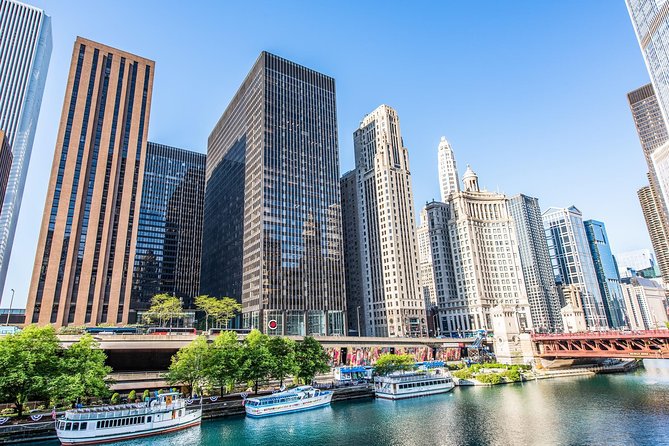
Chicago’s newer buildings can feel like a postcard until you learn what they’re reacting to. This walking tour helps you read the city like a timeline—what changed in design, what changed in materials, and what changed in the way people actually lived and worked.
You’ll also get a practical benefit: while you’re moving between stops, you can compare shapes, heights, and construction styles right next to each other. That’s hard to do from a bus window. The guide’s job is to keep it clear and not just turn it into a lecture, and the feedback on multiple guides points to the same theme: explanation plus a willingness to answer questions.
Best of all, the focus stays on modern and postmodern design and the stories behind it—stuff that casual skyline photos usually skip.
You can also read our reviews of more walking tours in Chicago



Starting at the Chicago Architecture Center: more than a ticket stop

The tour begins at the Chicago Architecture Center (CAC) at 111 E Wacker Dr. Even before you step outside, you get a real “zoom out” moment. The CAC houses a 4,000-building scale model of Chicago, and it’s free as part of your included admission to the galleries.
If you’re into architecture, this model is the fastest way to understand why the Loop looks the way it does. You can start matching what you’ll see on the street—tall towers, strong grid streets, clusters of big institutions—to their real positions in the city. If you’re not an architecture nerd, it still helps. You’ll have a mental map in your head instead of just impressions.
There’s also an on-site store. The CAC’s store is described as award-winning in the tour info, so if you like bringing home a book or a small architectural print, it’s a convenient moment to browse before the walk.
One small caution: your time here is short (about 10 minutes). If you plan to read every label in the galleries, you might feel rushed. Think of it as getting your bearings fast, not a museum day.
The Loop towers: Prudential, Aon Center, and Inland Steel
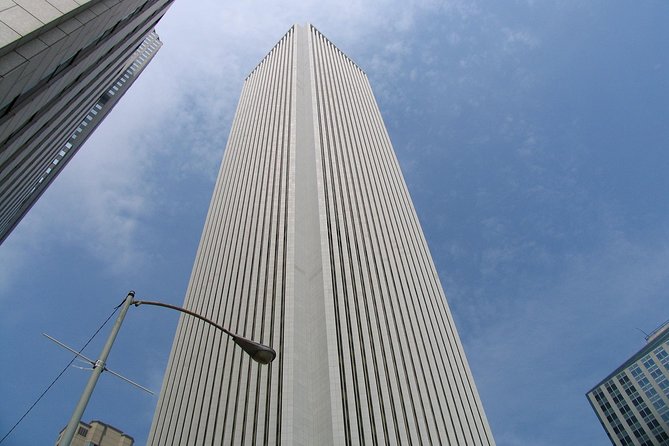
After you start, the tour shifts into the street-level version of the model. You’ll look at several major modern-era buildings, including the Prudential Building, the Aon Center, and the Inland Steel Building.
This is where the walking approach really pays off. From sidewalk distance, you notice the parts that photos often trim away—how the building meets the ground, the rhythm of windows, and the way the massing changes from lower floors to the crown. You also get the context your brain wants: why these forms happened, what they signaled for Chicago at the time, and how they shaped the skyline that millions now recognize.
A personal tip for getting more out of these stops: stand where the guide can see the whole façade, then take your photos. It’s tempting to only shoot from one angle, but these buildings are designed to be read from multiple perspectives as you move. The guide’s narration helps you choose which features to focus on.
Daley Center and Cor-Ten steel: where materials tell the story
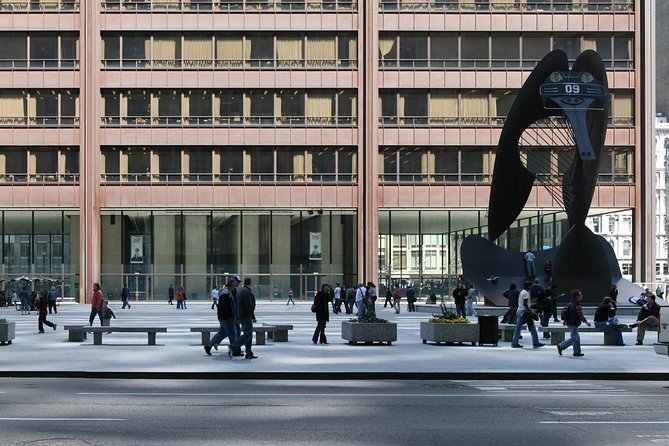
Next up is the Richard J. Daley Center, where the tour zeroes in on a very specific detail: its unpainted steel known as Cor-Ten. That’s not the kind of thing you’d guess from a quick glance at a skyline image, but it’s the sort of material choice that changes how a building looks over time.
Cor-Ten is also one of those clues that helps you understand the design thinking of the era. Instead of hiding the steel, the building uses it as part of its identity. When the guide explains it, suddenly the façade isn’t just a wall—it’s a decision.
The stop also includes the plaza art, including the famous Chicago Picasso. Even if you’ve seen the name before, you’ll get a better sense of how art sits in the built environment here—what the plaza space is doing, and why public art and civic architecture often share the same stage.
One timing note: this section is about 15 minutes. You’ll have enough time to look, ask a question, and take pictures, but you shouldn’t expect a long hangout.
AMA Plaza and the Mies connection: architecture with a paper trail
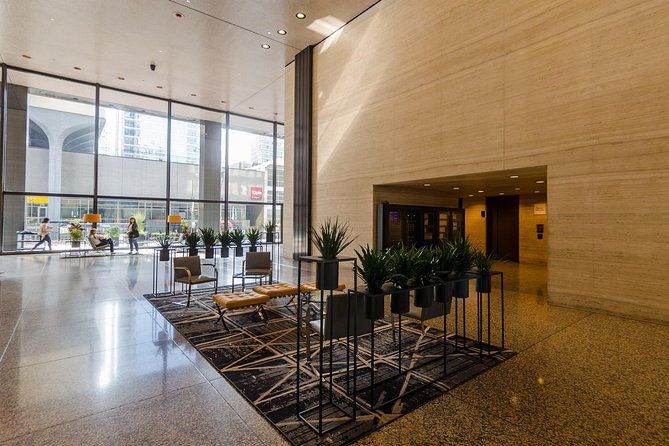
From Daley Center, the tour heads into another small but meaningful thread: the AMA Plaza, which the itinerary notes was formerly home to the office of Mies van der Rohe.
Even if you don’t know Mies by name, you’ll benefit from the guide’s framing here. The point isn’t to memorize the architect. It’s to understand what “modern” meant at different moments—and how a single site can connect Chicago’s present to a design philosophy that traveled far beyond the city.
This part of the walk is also a good reminder that architecture isn’t only about how buildings look. It’s about what they used to be, who worked there, and how the city keeps repurposing spaces. When you see it through that lens, you start noticing details on your own after the tour ends.





Marina City: Bertrand Goldberg’s urban experiment in concrete form
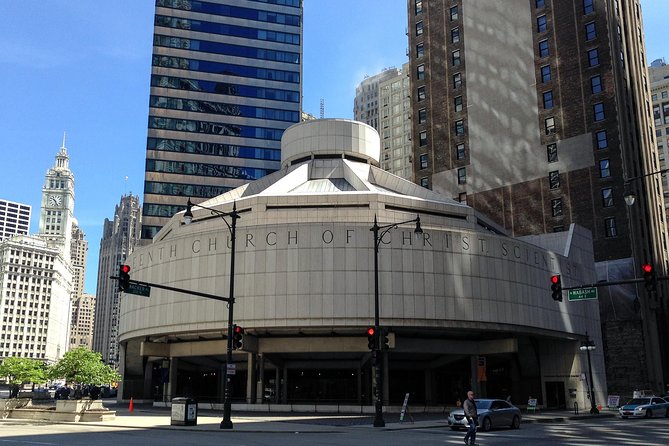
Marina City is one of the tour’s most interesting stops because it’s not just a building—it’s described as an urban experiment. Designed by Bertrand Goldberg, it’s presented as a mixed-use residential-commercial project with an idea behind it: drawing middle-class Chicagoans back to the city after years of suburban migration.
That context matters. Without it, Marina City can read like a distinctive silhouette and a set of curves. With the story, it becomes a case study. You start asking the right questions: Who was this built for? What problem was it trying to solve? How did downtown living fit into the social and economic shifts of the time?
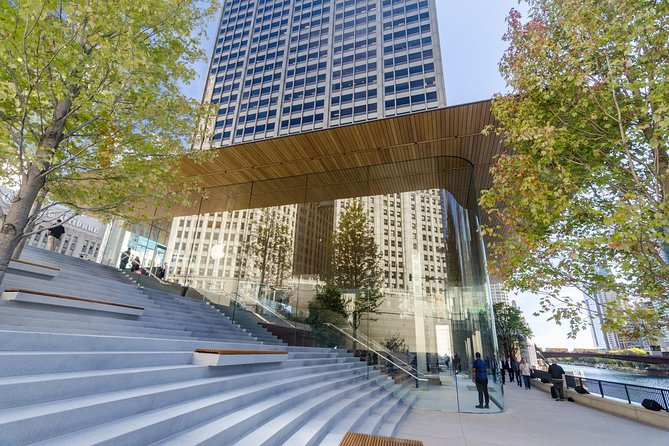
The tour also includes a look at an Apple Store on Michigan Avenue. It’s a quick modern contrast point, which works well after Marina City. You get to compare the older design intentions with the newer commercial reality right on Michigan Avenue.
One practical thought: Marina City and Michigan Avenue photos can be best when you pause briefly in the spot the guide suggests. Don’t rush your camera. You’ll get better angles, and the guide’s narration will help you know what you’re looking at.
Price, group size, and pace: is it good value?
At $35 per person for about 1 hour 30 minutes, this is priced like a focused city walk—not a half-day production. The value comes from three things you actually get: a professional and certified guide, a small-group setup (max 15), and included admission to the CAC galleries.
That CAC inclusion is bigger than it sounds. You’re not paying extra for a museum-style add-on. Instead, you’re tying the exhibit (the 4,000-building model) to what you’ll see outside. That “connect the dots” design is part of why the tour works.
The pace is worth mentioning. Several guide experiences note fast walking and brisk momentum, so if you need very slow steps or frequent breaks, plan accordingly. On the flip side, the small group size tends to help the guide keep things moving without turning into a rushed blur.
Also, there’s no listed coat check, and there’s no storage for luggage or strollers. If you’re traveling with a big bag, plan to travel light.
Who should book this modern architecture walk
Book this if you want Chicago architecture with an agenda: modern design, postmodern design, and the stories that explain why they arrived when they did. It’s also a solid pick if you like Q&A and appreciate a guide who can answer questions on the spot.
It’s a great match for:
- architecture buffs who want a street-to-buildings translation
- history lovers who enjoy city change and civic design
- first-timers who want to focus on modern Chicago rather than only the classics
It might be less ideal if:
- you want slow sightseeing with lots of sit-down time
- you dislike standing in cold wind for photo moments
- you’re traveling with pets (pets are not allowed on this tour)
Practical planning: meeting point, transit, and comfort
Meet at the Chicago Architecture Center at 111 E Wacker Dr, Chicago, IL 60601. The tour info notes it’s near public transportation, which helps if you don’t want to fight parking in the Loop.
Confirmation is received at booking. The tour is subject to change, so keep a little flexibility in your schedule. Service animals are allowed, and most travelers can participate. Pets are not allowed.
Comfort tips that actually matter for this specific kind of tour:
- Wear shoes you trust for city sidewalks and standing time.
- Dress for wind and cold; the tour is outdoors for the whole route.
- Bring a phone-ready camera, but don’t treat every stop like a speed photo contest—listen first, then shoot.
Should you book the Chicago Walking Tour: Modern Architecture?
Yes—if you want to understand the Loop’s modern skyline with real context. The CAC start gives you a strong mental map, the stops cover recognizable buildings plus the ones people often ignore, and the guided narration is a clear strength based on strong ratings across multiple guides.
If you’re the type who just wants pretty views without explanation, you may find parts of it feel repetitive. But if you like connecting architecture to how the city moved and who it was built for, this tour is a smart use of time.
My call: book it early in your Chicago trip if you want the biggest payoff from recognizing buildings afterward. Then walk the Loop again on your own with a sharper eye.
FAQ
How long is the Chicago Modern Architecture walking tour?
It runs for about 1 hour 30 minutes.
What is the price per person?
The price is $35.00 per person.
Where does the tour meet?
The meeting point is the Chicago Architecture Center, 111 E Wacker Dr, Chicago, IL 60601.
What’s included in the tour price?
You get a walking tour of Chicago’s modern and postmodern architecture with narration by a professional and certified guide, plus admission to the Galleries of the Chicago Architecture Center.
What is the group size limit?
The tour has a maximum of 15 travelers.
Are pets allowed?
No, pets are not allowed.
Are service animals allowed?
Yes, service animals are allowed.
Can I cancel for a full refund?
Yes. You can cancel up to 24 hours in advance for a full refund. If you cancel less than 24 hours before the start time, the amount paid will not be refunded.