
REVIEW · CHICAGO
Chicago Architecture Walking Tour: What’s New
Book on Viator →Operated by Chicago Architecture Center · Bookable on Viator
Chicago’s new buildings make sense fast. This Chicago Architecture Walking Tour concentrates around the Chicago Architecture Center on the Chicago River, so you get oriented without trying to cover the whole city at once. You’ll pair street-level views with CAC galleries to decode what you’re seeing.
I especially like the tour’s small-group setup and the way the guide builds stories you can repeat later. If you get a host like Paul S. or Paula, the explanations tend to connect design choices, history, and community space in a way that feels clear, not like a lecture. It’s also a good fit for Chicago first-timers and repeat visitors—because you’re learning what’s new, not just admiring what’s old.
One possible drawback: access and exact sights can shift. Some featured interior access can change without notice due to weekend/holiday schedules or closures, and the itinerary itself is subject to change.
In This Review
- Key points before you go
- Getting oriented on Chicago’s Loop in just 90 minutes
- Chicago Architecture Center stop: galleries included and how they help
- Pioneer Court to Tribune Tower: new additions and what they signal
- 465 N Park Drive, St. Regis views, and the Michigan Avenue tech cut
- Price and pace: is $35 worth it?
- Who should book this architecture walking tour
- Should you book Chicago Architecture Walking Tour: What’s New?
- FAQ
- Where does the Chicago Architecture Walking Tour: What’s New begin?
- How long is the tour?
- How much does it cost?
- What’s included in the price?
- What size is the group?
- Are pets allowed?
- Are service animals allowed?
- Is access to building interiors guaranteed?
- Is hotel pickup or drop-off included?
Key points before you go

- Start at the Chicago Architecture Center at 111 E Wacker Dr and use the CAC galleries as your “decoder ring.”
- Small group, max 15 travelers for questions and personalized attention.
- Design stories on the Loop edges around Pioneer Court, the Tribune Tower area, and Michigan Avenue.
- Modern hot spots on foot: views connected to 465 N Park Drive, St. Regis Chicago, and the Apple Store.
- CAC admission included at the start and again during the closing portion of the tour.
- Plan for change: interior access and the exact path can shift due to real-world scheduling.
Getting oriented on Chicago’s Loop in just 90 minutes

This tour works because it doesn’t ask you to “figure out Chicago” by yourself. In a city like this, it’s easy to get lost in glass, steel, and names—then wonder what matters and why. Instead, you focus on a tight zone near the Chicago River where the story of modern Chicago design keeps showing up.
The pace is built for walking, not lingering for hours. With about 1 hour 30 minutes, you get enough time to learn the patterns behind new buildings while still leaving you energy to explore afterward. And because the group is capped at 15, it feels more like a guided walk with a point of view than a noisy shuffle.
If you’re visiting in less-than-perfect weather, the tour’s approach still makes sense. One guide’s style (Paul S. in a rainy departure) was highlighted for keeping momentum and answering questions. So even if the day is grey, the explanations help you keep your bearings.
You can also read our reviews of more walking tours in Chicago



Chicago Architecture Center stop: galleries included and how they help
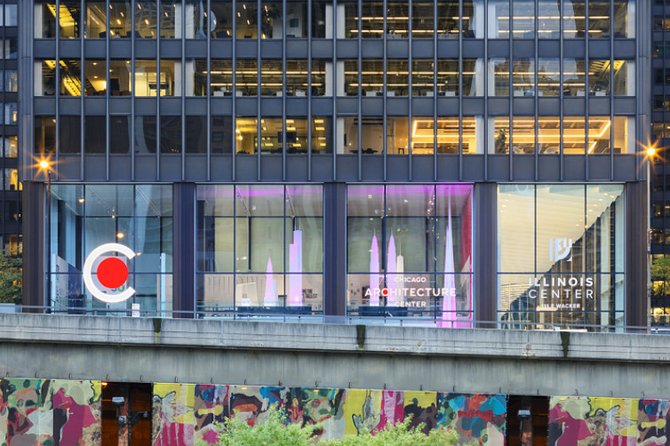
Your meeting point is the Chicago Architecture Center, 111 E Wacker Dr, Chicago, IL 60601. You’ll start with introductory remarks and then head into the CAC galleries, where the “what you’re about to see” becomes easier to understand.
Here’s the value of that included gallery time: you’re not just staring at buildings. You’re learning vocabulary—how to read form, function, and design intent—so the street views hit harder. It’s the difference between looking at façades and actually understanding the logic behind them.
You’ll also circle back for closing remarks, with CAC gallery admission included again during that final stop. That gives you a natural rhythm: orient first, walk and watch second, then finish by tying it together. If you tend to remember information better with context, this structure is a smart use of your time.
One practical note: interiors connected to featured buildings may not always be accessible. That can happen even when the guide has the plan—weekend/holiday schedules and closures can change what you can enter. If your goal is primarily exterior viewing and architectural storytelling, you’ll still get a lot.
Pioneer Court to Tribune Tower: new additions and what they signal
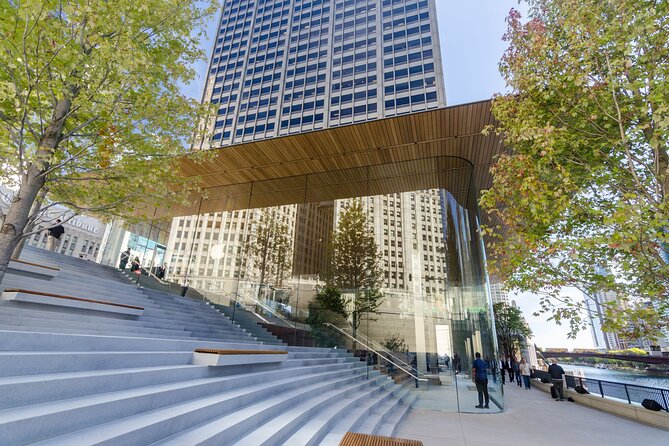
The walk picks up around Pioneer Court, where you start learning how Chicago’s “new” often sits right beside “old power.” At this point, the guide shifts from introductions into a set of story-driven stops. You’ll look at surrounding buildings and talk through why certain additions and renovations matter.
Then you’ll hear about updates tied to the Historic Tribune Tower. This is a good stop for anyone who likes the tension between preservation and progress—how cities keep identity while still changing. Even if you only catch exterior cues from the sidewalk, you’ll have a framework for spotting what changed and why.
From there, the tour turns toward a very modern Chicago theme: small urban rental apartments and the design trends shaping them. This part is more than architecture trivia. It’s about lifestyle, density, and how developers respond to real needs—space constraints, affordability pressures, and how residents actually live.
Next comes a cluster of city-building themes connected to specific addresses and landmarks. You’ll discuss 465 N Park Drive, then get a view of the St. Regis Chicago building. The guide uses these as anchors—pointing out how design decisions show up in materials, massing, and the way buildings “behave” at street level.
This is the kind of section where a strong guide really matters. In past departures, hosts like Mary Jo and Mary Ann were praised for clear explanations and for making complex ideas feel easy to follow. That matters because the Loop can overwhelm you fast if you don’t know what to pay attention to.
465 N Park Drive, St. Regis views, and the Michigan Avenue tech cut
After you get your head around Pioneer Court and the Tribune area, the tour keeps narrowing its focus toward recognizable modern icons. The goal isn’t just to name-drop—it’s to help you connect design to the city’s current direction.
465 N Park Drive is useful because it sits in the kind of “Chicago context” where you can compare the old grid logic with contemporary building goals. You’ll talk through what the building represents and how it fits into the broader story of the neighborhood. The guide’s explanations tend to work best if you’re willing to look at proportions and details, not just silhouettes.
Then you’ll view St. Regis Chicago. A view stop might sound simple, but it’s actually a smart move in a walking tour—especially when the point is architectural observation. From the sidewalk, you’ll learn what to notice about style and presence without needing interior access.
The last named exterior stop is on Michigan Avenue: you’ll view the Apple Store. This is a surprisingly good moment to understand modern retail architecture as urban design. It’s not only about the storefront—it’s about how a flagship business occupies prime real estate and communicates brand through architecture.
Apple on Michigan Avenue also gives you a clean comparison point. You can see how corporate modern design choices sit in the same urban fabric as older and landmark structures. If you’ve ever wondered why Chicago feels both classic and future-facing at the same time, this is where the “why” clicks.
Price and pace: is $35 worth it?
At $35 per person for about 1 hour 30 minutes, this is one of those tours that can feel like a bargain if you care about design. It’s not just a walking pass. CAC gallery admission is included, which adds real value because you’re getting interpretation, context, and a place to ground what you see.
The small group cap at 15 travelers also matters for value. If you’ve been on bigger architecture tours, you know how quickly attention turns into background noise. Here, you’re more likely to get direct answers when you ask why a building looks the way it does.
The other value factor is focus. The route is concentrated around the Chicago Architecture Center area, near the river. That keeps you from spending your short visit time bouncing across too many neighborhoods. For many people, this is exactly the right compromise: enough variety to learn something new, but not so much walking that you feel fried.
A few things to plan for:
- You won’t have hotel pickup or drop-off, so show up at the CAC address.
- No coat check and no storage for luggage or strollers, so travel light if you can.
- Service animals are allowed, but pets are not allowed.





Who should book this architecture walking tour
This tour is ideal if you want a structured introduction to Chicago’s current architecture without doing homework first. If you’re an architecture fan, designer, student, or just the person in your group who always asks what a building is, you’ll enjoy the back-and-forth explanations.
It’s also a strong option for locals who want a different lens. The “what’s new” framing gives you a reason to return to familiar streets and notice changes—especially around big redevelopment zones and high-visibility addresses.
If you dislike tours where you’re forced to listen to facts without a visual anchor, this one tends to work. You’re constantly watching buildings in context while the guide ties it back to design intent, trends, and community space. And if you prefer Q&A, the small group helps.
Should you book Chicago Architecture Walking Tour: What’s New?
Yes, if you want the Loop’s newest architecture explained in a way that feels practical and readable. The mix of CAC gallery time plus focused street stops is a smart use of a short trip, and the $35 price makes it approachable.
Skip it only if you’re hoping for guaranteed interior entry into every featured building. Interior access can change, and this tour is primarily built around strong exterior viewing paired with interpretation. If your goal is street-level understanding with CAC context, this is a solid pick.
FAQ

Where does the Chicago Architecture Walking Tour: What’s New begin?
It meets at the Chicago Architecture Center at 111 E Wacker Dr, Chicago, IL 60601.
How long is the tour?
The duration is about 1 hour 30 minutes.
How much does it cost?
It costs $35.00 per person.
What’s included in the price?
The tour includes narration by a professional certified guide and admission to the Galleries of the Chicago Architecture Center.
What size is the group?
The tour has a maximum of 15 travelers.
Are pets allowed?
No, pets are not allowed.
Are service animals allowed?
Yes, service animals are allowed.
Is access to building interiors guaranteed?
Not always. Access to building interiors featured on the tour may be subject to change without notice due to schedules, weekends/holidays, or unforeseen closures.
Is hotel pickup or drop-off included?
No. Hotel pickup and drop-off are not included.