REVIEW · CHICAGO
Explore Chicago’s Indoor Mushroom Farm Experience
Book on Viator →Operated by Four Star Mushrooms · Bookable on Viator
Chicago grows mushrooms indoors.
What makes this tour interesting is the behind-the-scenes look at a high-tech, urban indoor farm built for controlled-environment production, right in Chicago. You walk through the process end to end, from preparing the growing material to seeing where mushrooms fruit and how the product is prepared for customers.
I love the step-by-step production walkthrough—how the raw substrate is bagged, sterilized, inoculated, and then staged for incubation. I also like the connection to Chicago’s food scene, with the facility showing how mushrooms move from grow rooms to packaging for retail and wholesale buyers across Chicagoland.
One consideration: this is a practical, grownup-focused tour. If you’re bringing very young kids, expect curiosity around industrial equipment (a forklift is hard to ignore), and you’ll want to plan for that kind of attention.
In This Review
- Key Highlights You’ll Want to Know Up Front
- Chicago’s Indoor Mushroom Farm: What You’ll See in About 90 Minutes
- Substrate to Incubation: The Production Steps You’ll Actually Understand
- Grow Rooms and Fruiting: Where the Tour Really Feels Like a Behind-the-Scenes Look
- Packaging for Retail and Wholesale: How Mushrooms Reach Chicagoland
- Regenerative Agriculture: The Sustainability Angle, Without the Buzzwords
- Four Star Mushrooms Logistics: Price, Group Size, and Timing
- Who This Tour Fits Best (And Who Might Find It Less Fun)
- Practical Tips Before You Go
- Should You Book This Chicago Indoor Mushroom Farm Tour?
- FAQ
- How long is the indoor mushroom farm experience?
- What is the price per person?
- Where do I meet for the tour?
- What time does the tour start?
- Is the tour offered in English?
- Will I receive a mobile ticket?
- What is the maximum group size?
- How far in advance should I book?
- What is the cancellation policy?
Key Highlights You’ll Want to Know Up Front
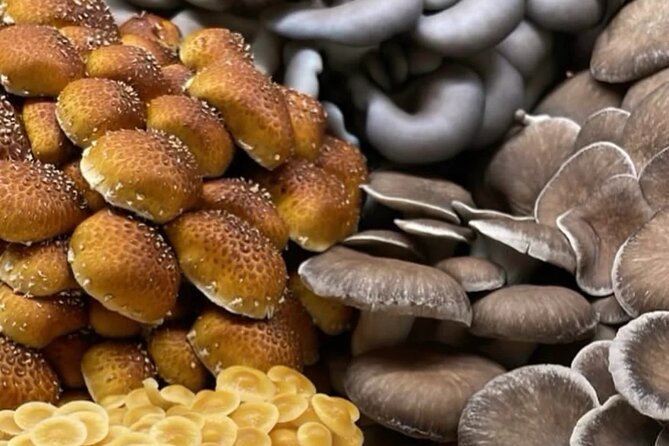
- Controlled-environment agriculture: you’ll see how the farm manages the conditions mushrooms need.
- Start-to-finish process: substrate to sterilization, inoculation, incubation, fruiting, then packaging.
- Grow rooms and fruiting stages: the tour explains where mushrooms actually happen.
- Retail and wholesale packaging: you learn how product is prepared for different markets.
- Regenerative agriculture theme: mushrooms are positioned as part of a bigger sustainability approach.
Chicago’s Indoor Mushroom Farm: What You’ll See in About 90 Minutes
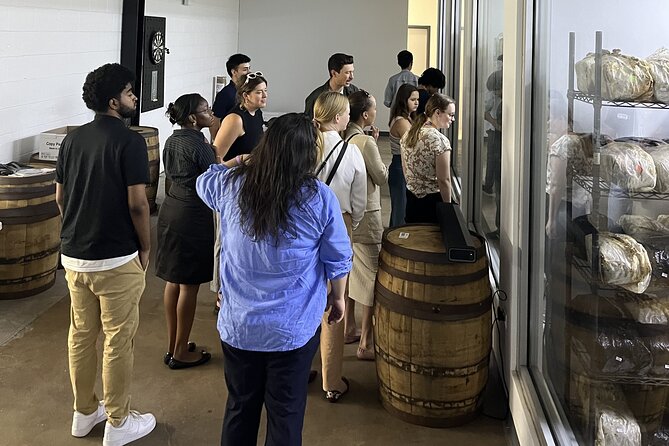
This is an indoor tour built around one clear idea: you can grow gourmet mushrooms anywhere you control the environment. In Chicago, that means a facility designed to manage temperature, timing, and growing stages with an urban footprint. The result is a calm, technical tour where you’re not just looking at mushrooms—you’re watching the production system that makes consistent harvests possible.
Expect a tour that’s about 60 minutes inside the facility, with a total experience time listed around 1 hour 30 minutes. The pace feels designed for small groups, and the size matters here: the operation can focus on showing the process rather than rushing people through.
If you like food that has a real supply-chain story, you’re going to enjoy this. Mushrooms sound simple until you see how much careful work goes into getting the timing and the quality right.
You can also read our reviews of more tours and experiences in Chicago.



Substrate to Incubation: The Production Steps You’ll Actually Understand
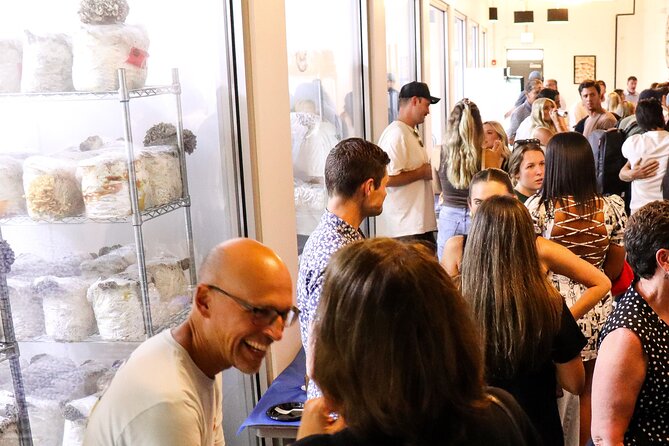
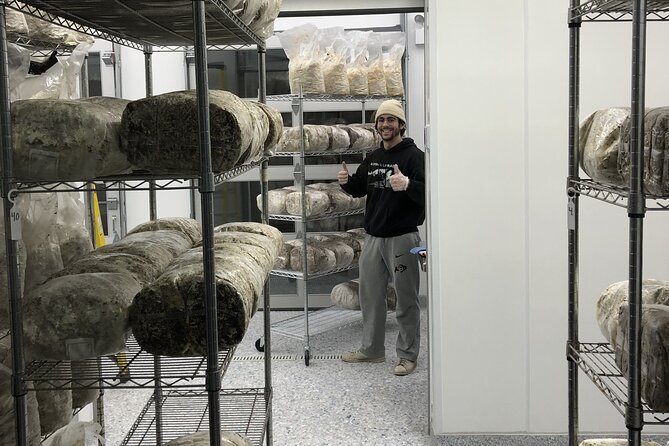
The tour starts at the beginning of the growing cycle: the growing material, called substrate. You’ll see the raw substrate handled and moved through stages that are essential for clean, reliable production. That includes watching how substrate is bagged and sterilized, and then how it’s inoculated so the mushroom culture can begin working.
This is the part of the tour where it clicks for many people. Mushrooms aren’t grown like plants in soil. They rely on a prepared medium, and the farm treats this like a controlled process with clear steps. The explanation about sterilization and inoculation helps you understand why clean handling is so important in indoor agriculture.
Then you move into staging for incubation—a phase where the system focuses on letting the process build before fruiting begins. Even if you don’t leave with chemistry terms memorized, you’ll come away with a practical sense of cause and effect: do it right up front, and you’re set up for consistent results later.
Grow Rooms and Fruiting: Where the Tour Really Feels Like a Behind-the-Scenes Look
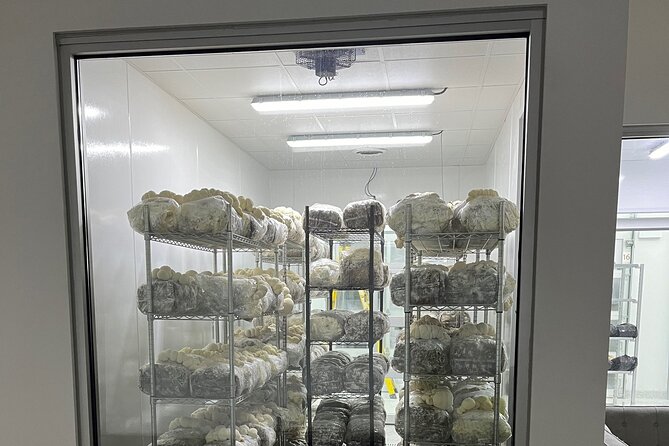
After incubation, the tour shifts to the parts most people never see. You’ll visit the grow rooms where fruiting happens, which is where mushrooms develop for harvest. This is the moment when the tour stops being abstract and becomes visual.
Indoor fruiting is all about controlled timing. The tour experience highlights that mushrooms are not grown in one big open area with random schedules. Instead, they’re staged so different batches can be at the right point in the cycle when it’s time.
You’ll also get a sense of how the facility manages workflow between spaces. The tour is designed so you move from preparation to staging to grow rooms, which makes the whole operation feel connected. You start to see how the building itself is part of the production process.
Packaging for Retail and Wholesale: How Mushrooms Reach Chicagoland
A strong part of this experience is that it doesn’t end at harvest. You’ll learn how product is packaged for retail and wholesale customers throughout Chicagoland. That’s a big deal because it turns the tour into more than a science lesson. It becomes a look at how food systems actually deliver what people buy.
One of the best takeaways here is understanding the farm’s relationship to the restaurant scene. The tour frames mushroom cultivation as part of a wider Chicago ecosystem, where specialty mushrooms have to arrive in usable form for kitchens and retail partners.
If you’ve ever wondered why some mushrooms look fresher or more consistent than others, this helps answer it. Packaging and distribution aren’t afterthoughts in a controlled farm—they’re part of the final quality chain.
Regenerative Agriculture: The Sustainability Angle, Without the Buzzwords
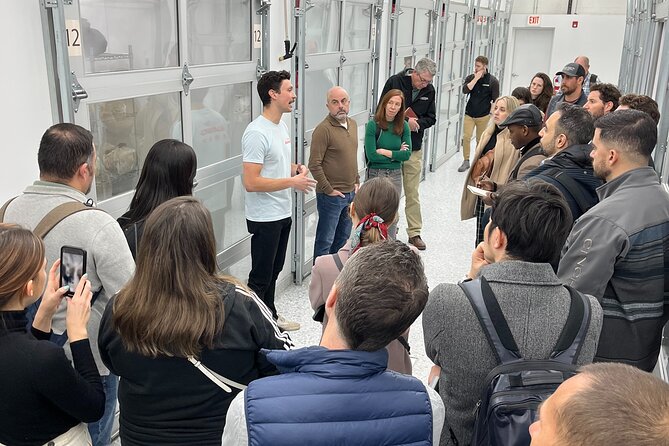
The tour includes an explanation of regenerative agriculture and how mushroom cultivation can play a role in that broader approach. The key value for you is that this sustainability message is tied to what the farm actually does, not just vague talk.
Mushrooms are often discussed in sustainability circles because they can be part of systems that make use of prepared growing inputs rather than relying on traditional field agriculture for every crop. In this tour, you’ll hear how mushroom production is framed as critical to those goals, connecting the facility’s controlled environment with wider environmental thinking.
You don’t need to be an expert to get something from it. The way the tour presents it helps you connect the dots between “how it’s grown” and “why it matters.”





Four Star Mushrooms Logistics: Price, Group Size, and Timing
Let’s talk value, because $20 isn’t free, and this experience is more technical than sightseeing. The ticket price is $20.00 per person, and you’re getting about 60 minutes of facility viewing plus an overall experience time listed around 1 hour 30 minutes.
For me, the best value signal here is the controlled format. A small group tour gives you time to see multiple stages of production in one outing, which can be harder to piece together on your own. And since the facility is inside a working operation, you get access to areas and processes most people never see.
A few practical notes you’ll care about:
- The meeting point is 320 N Oakley Blvd, Chicago, IL 60612.
- The start time is listed as 12:00 pm.
- You’ll receive a mobile ticket, and the tour is offered in English.
- Maximum group size is 25 travelers, which usually means less waiting and more attention to the process.
Also, timing is worth planning. This activity is listed as being booked on average 23 days in advance, so if you’re traveling on a tight schedule, book earlier rather than later.
Who This Tour Fits Best (And Who Might Find It Less Fun)
This is a tour I’d put in the category of “grownup curiosity” rather than “hands-on kids play center.” The focus is on how mushrooms are produced, explained in a controlled-environment setting. You’ll likely enjoy it most if you like food, agriculture, or how modern indoor systems work.
That said, it’s not a hard no for families. One comment from a visitor notes their kids (age 5 and 3) were present and curious, including wanting to touch a forklift, and the experience was handled with tolerance. The takeaway for you is simple: bring kids only if you’re okay with them being engaged in an industrial setting and redirecting attention as needed.
If you’re coming with teens or adults who enjoy learning, you’ll probably get a lot out of the sequence from substrate to fruiting to packaging. You’ll leave with a story you can tell at dinner, because you’ll understand what makes indoor mushrooms different from the idea of mushrooms growing in the wild.
Practical Tips Before You Go
You don’t need special prep, but you should go in with the right mindset. This is not a casual stroll through a gift shop. You’re walking through production stages in a working facility, where the point is to learn what the farm does and why.
A couple of practical ways to make it go smoothly:
- Arrive a few minutes early so you can get oriented at the meeting point on time.
- Wear clothes that work for a facility walk-through. The tour moves between areas, and you may spend time looking at equipment and process steps.
- If you’re bringing children, plan to keep them close and help manage curiosity around equipment.
The small-group nature helps. With a maximum of 25 people, you’re more likely to get a tour feel that stays focused on the process, not just the fastest possible line.
Should You Book This Chicago Indoor Mushroom Farm Tour?
I’d book it if you want something different from the usual Chicago checklist. For $20, you get a real look at controlled agriculture in action, with an end-to-end production story you can actually follow: substrate preparation, sterilization, inoculation, incubation, fruiting rooms, then packaging for retail and wholesale.
It’s also a good choice if you like food and want to understand how it reaches restaurants and stores across Chicagoland. The tour’s connection to the restaurant scene makes it more than a science demo.
Skip it if you’re hoping for a purely visual, low-structure experience with lots of wandering. This is more about process than scenery. And if your main goal is keeping very young kids entertained, you may find it more technical than playful.
If you want a smart, practical, and quietly fascinating tour in Chicago, this indoor mushroom farm is a strong bet.
FAQ
How long is the indoor mushroom farm experience?
The tour is listed at about 1 hour 30 minutes total, and the on-site tour portion is about 60 minutes.
What is the price per person?
It costs $20.00 per person.
Where do I meet for the tour?
The meeting point is 320 N Oakley Blvd, Chicago, IL 60612, USA.
What time does the tour start?
The start time is listed as 12:00 pm.
Is the tour offered in English?
Yes, it is offered in English.
Will I receive a mobile ticket?
Yes, it includes a mobile ticket.
What is the maximum group size?
The tour has a maximum of 25 travelers.
How far in advance should I book?
It’s typically booked about 23 days in advance on average.
What is the cancellation policy?
You can cancel for a full refund with free cancellation if you cancel at least 24 hours before the experience start time. If you cancel less than 24 hours before, the amount paid will not be refunded.