REVIEW · CHICAGO
Exclusive Sushi-Making Class in Chicago (Includes 3-Course Meal)
Book on Viator →Operated by Cozymeal Cooking Classes · Bookable on Viator
Sushi starts with your hands. In a small-group Chicago class (max 8), you learn sushi-making with hands-on help from a local chef, including knife skills and rolling technique. I like the way the coaching feels tailored to your skill level, and I also like that you leave with real confidence, not just a plate of food.
One thing to weigh: you’ll work through a fixed three-course menu, so this isn’t the choice-heavy option if you want lots of variety or major swaps on the spot. The upside is the class is designed to be fun and interactive, and it’s BYOB if you want to make it a low-key date night.
In This Review
- Highlights at a glance
- A Small-Group Sushi Class in Chicago’s Leavitt St Kitchen
- Your Set Menu: Spicy Ahi-Tuna Roll, Shrimp Tempura Roll, Togarashi Fruit
- Knife Skills You Can Actually Use at Home
- Rolling Methods That Make Sushi Look Right
- Dessert With Tōgarashi and Honey: Sweet Heat Without the Guesswork
- BYOB-Friendly Timing: What the 6:30pm Flow Feels Like
- Price and Value: Is $125 Worth It for Two Rolls Plus Dessert?
- Who This Sushi Class Fits Best (And Who Should Skip)
- What to Bring (So Your Evening Runs Smoothly)
- Should You Book This Sushi-Making Class?
- FAQ
- Where does the sushi-making class meet in Chicago?
- What time does the class start?
- How long is the class?
- How big is the group?
- Is the class offered in English?
- What’s included in the 3-course meal?
- Is BYOB allowed?
- Can the class accommodate dietary needs?
Highlights at a glance
- Max 8 guests for close, personal instruction
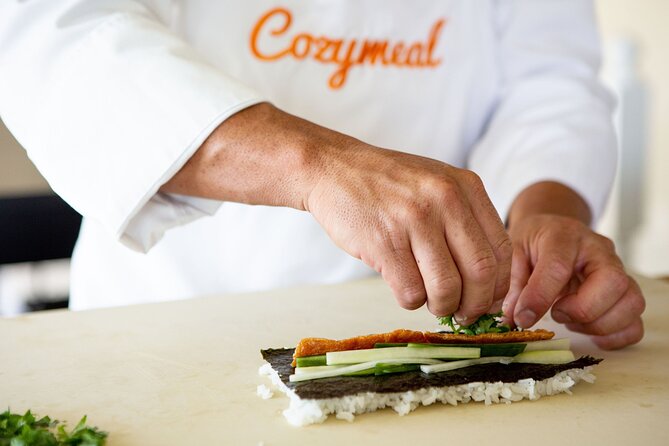
- Chef-led knife skills plus practical rolling methods
- Spicy ahi-tuna roll with ahi tuna, spicy aioli, oyster sauce, cucumber, scallions, and avocado
- Shrimp tempura roll with crispy shrimp, jalapeño, cucumber, and miso aioli
- Dessert heat: tropical fruit with tōgarashi and honey
A Small-Group Sushi Class in Chicago’s Leavitt St Kitchen
The experience meets at 2316 S Leavitt St apt 3, Chicago, IL 60608, and it runs about 2 hours. With a maximum of 8 travelers, you’re not stuck watching from the sidelines. You’ll be working, rolling, and cutting at a pace that keeps the class from feeling rushed.
This is offered in English, and you’ll get a mobile ticket. Service animals are allowed, and the format is friendly for a group that includes beginners. One practical note: because it’s an apartment-style venue, you’ll want to show up on time, get oriented fast, and stay aware of your space while you handle tools and ingredients.
You’ll also notice the class design is built for comfort. In past sessions, the vibe has been welcoming and easy to follow, and chefs have helped people feel at ease even if sushi-making isn’t their thing yet.
You can also read our reviews of more tours and experiences in Chicago



Your Set Menu: Spicy Ahi-Tuna Roll, Shrimp Tempura Roll, Togarashi Fruit
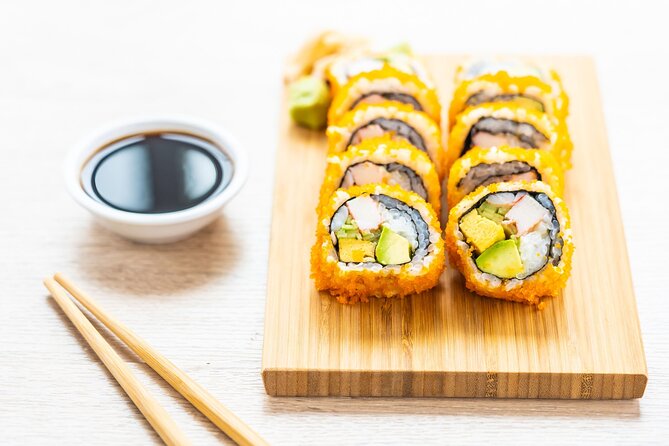
This class is built around making two sushi rolls plus a dessert. First up is a spicy ahi-tuna roll: fresh ahi tuna paired with spicy aioli, oyster sauce, cucumber, scallions, and creamy avocado. It’s a mix of flavors that hits both savory and fresh, and the roll structure matters because you’re learning how ingredients translate into clean slices.
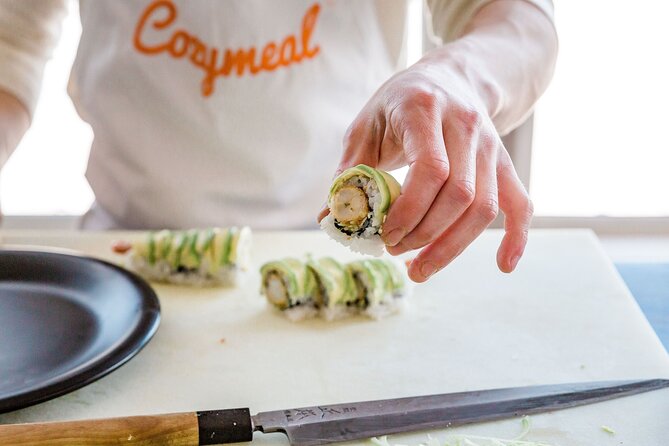
Second, you’ll make a shrimp tempura roll with crispy shrimp, jalapeño, cucumber, and a drizzle of miso aioli. That combination gives you a satisfying contrast: crunch from the tempura, heat from jalapeño, and a savory creaminess from the miso aioli.
Then comes the sweet-and-spicy finish: tropical fruit infused with tōgarashi and honey. Even if you usually steer clear of spicy flavors in dessert, this one is designed to be a balanced ending, not a chili overload.
The fixed menu is intentional. It keeps the class teachable in a short time window, and it means you’re not bouncing between five different recipes that never fully “click.” If you want to learn technique fast, a focused menu is usually the better deal.
Knife Skills You Can Actually Use at Home
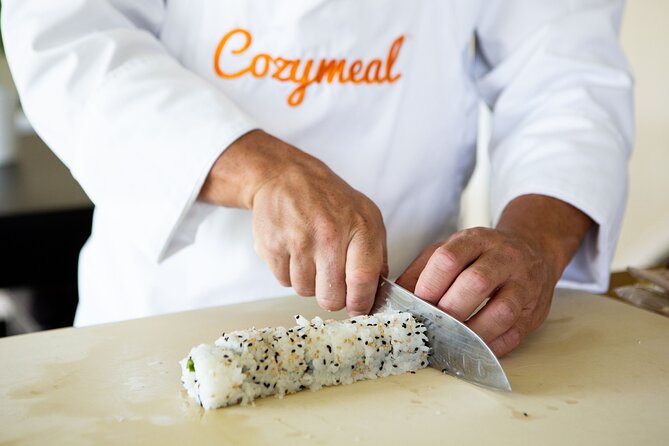
One of the biggest strengths here is the attention to knife skills. Sushi-making sounds fancy, but the useful part is practical: how to handle a knife safely, how to aim for even pieces, and how ingredient cuts affect the finished roll.
In classes with Chef Kumi, the style has been especially clear—making the process feel doable and helping you match instruction to your skill level. That matters because sushi technique isn’t one-size-fits-all. If you’re a total beginner, you need steps explained without assuming you already know the basics. If you’re more confident, you still benefit from feedback that tightens up your results.
I also like that the teaching doesn’t stop at the plate. You’re picking up skills you can reuse when you cook outside class—so the “why” behind the technique is part of the value. If you’ve ever eaten sushi and wondered how people get everything to look so neat, this is where that curiosity turns into competence.
Rolling Methods That Make Sushi Look Right
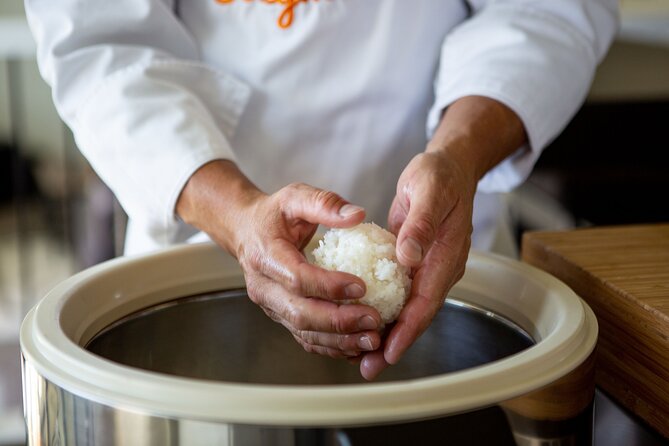
Making sushi doesn’t just require ingredients. It requires getting the roll structure right—tight enough to hold, gentle enough not to wreck your filling. The class focuses on rolling methods so your sushi looks as good as it tastes.
You’ll put those methods to work across the two rolls. For the spicy ahi-tuna roll, the goal is managing a filling that’s flavorful and creamy without making it sloppy. For the shrimp tempura roll, the goal shifts slightly toward keeping the texture intact while you roll and slice.
This is where small-group size pays off. With max 8 people, you’re more likely to get hands-on correction instead of a general lecture. If your roll is a little loose, you can adjust before you fall into a pattern that’s hard to fix later.
And yes, you’ll likely feel more proud of what you make by the end. The class is structured to build confidence step by step, so you’re not just consuming an experience—you’re producing something you can take home as a skill.
Dessert With Tōgarashi and Honey: Sweet Heat Without the Guesswork
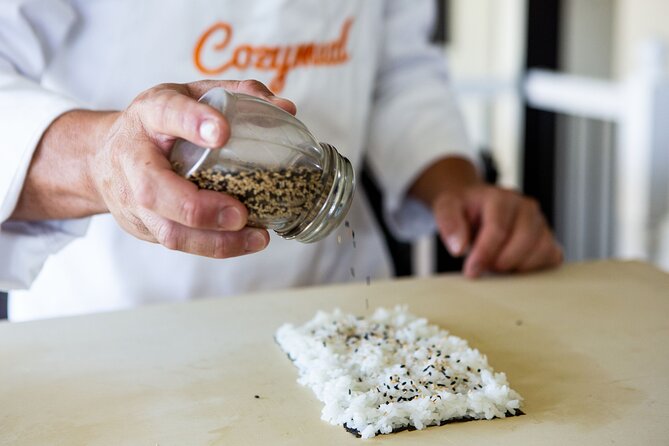
The dessert course keeps the same theme as the savory menu: it’s not just sweet, it’s sweet with spice character. You’ll work with tropical fruit infused with tōgarashi and finished with honey.
This part of the class is a nice reset because you’re not fighting with a rolling mat. Instead, it’s a chance to see how flavor pairing works in Japanese-inspired seasoning—especially how that spicy seasoning note can make fruit feel more interesting, not less.
Even if you’re not sure about tōgarashi flavors, this dessert is presented as a controlled finish: it’s meant to be a sweet-and-spicy landing pad after two rolls. It also helps you avoid the classic “we learned techniques but didn’t get a full meal” problem. You leave with a complete, coherent taste experience.






BYOB-Friendly Timing: What the 6:30pm Flow Feels Like
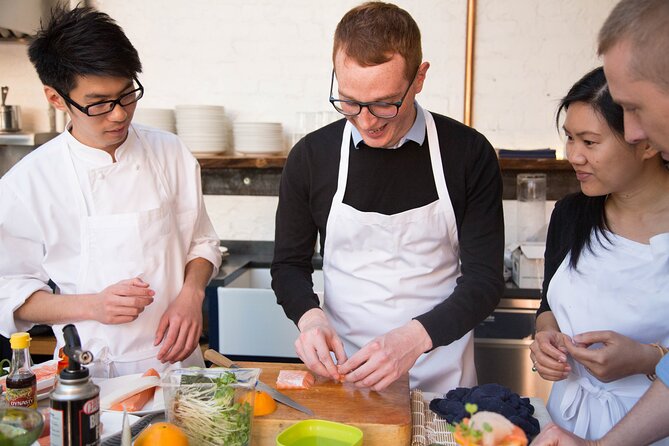
The class starts at 6:30pm and runs about 2 hours, then ends back at the meeting point. That timing is ideal if you want something after a day of sightseeing or if you’re building a simple evening around dinner.
One of the practical perks is the BYOB setup. You’re welcome to bring wine and beer, which can make the class feel less like a formal lesson and more like an evening you’re hosting yourself. Just keep it sensible: you’ll be using knives and making rolls, so the best version of BYOB is one where you can still think clearly and work carefully.
The group format also keeps the pace social. It’s interactive by design, and chefs use the time to keep you engaged rather than watching alone. If you like learning with conversation—asking questions while you cook—this setup tends to work really well.
Price and Value: Is $125 Worth It for Two Rolls Plus Dessert?
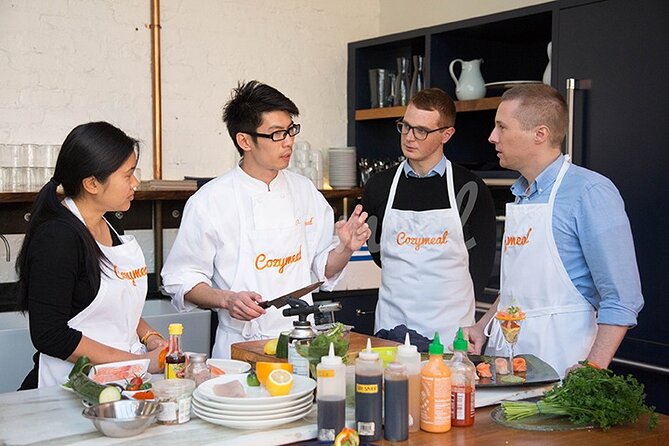
At $125 per person, you’re paying for instruction and for ingredients that turn into a full 3-course meal. In a class like this, that price makes sense if you’re actually there to learn technique, not just to eat.
Here’s why the value can be strong:
- You get a complete menu you help prepare (two rolls and dessert), not a snack-size tasting.
- The small max-8 group supports real coaching, which is what you can’t replicate at home without practice time.
- You’re learning knife skills and rolling methods, and those are transferable. Even partial improvement matters.
If your goal is simply to eat sushi with zero interest in technique, you’ll probably find better food-only options elsewhere. But if you want to go from watching sushi chefs to making your own rolls with better control, this class is priced like a lesson you can use.
Also, the experience tends to book ahead—on average about 28 days. If the date matters to you, it’s worth reserving sooner rather than waiting for last-minute plans.
Who This Sushi Class Fits Best (And Who Should Skip)
This class is a good match if you:
- Want hands-on learning in a small group instead of a large demonstration
- Plan a date night and like the idea of cooking together
- Want to walk away feeling confident making sushi at home, even if you start as a beginner
- Appreciate clear, step-by-step guidance that fits your skill level
It may not be your best fit if you:
- Are looking for a huge menu of options or lots of customization during the class
- Only care about eating and don’t want to spend time on technique
- Prefer an experience that’s more passive (this one is built for doing)
And if you have dietary needs, there’s an opportunity to tailor the experience. The class is designed to accommodate a variety of dietary needs—just let them know in advance so they can do their best to adjust.
What to Bring (So Your Evening Runs Smoothly)
Plan for a focused, tool-involved cooking session. That means: bring your appetite, arrive on time, and be ready to work.
For flexibility, remember:
- It’s BYOB (wine and beer are welcome)
- It runs about 2 hours starting at 6:30pm
- It’s in a small venue at 2316 S Leavitt St apt 3, so expect a compact setup
If you’re bringing dietary restrictions, send them early. You’ll get the best results when adjustments are planned before you arrive. And if you’re attending as a duo—partner, friends, or even a small group—this format can feel great because you can compare technique as you go.
Should You Book This Sushi-Making Class?
I’d book it if you want a short, guided path from sushi curiosity to sushi competence. The combination of max-8 instruction, a fixed-but-complete menu, and strong emphasis on knife skills and rolling methods makes it a genuinely practical experience, not just a fun evening out.
Skip it if you’re hoping for a wide-ranging menu choice buffet or a hands-off show-and-taste event. But if you want to leave proud of what you made—and confident you can reproduce parts of it later—this is exactly the kind of class that pays you back with real skills.
FAQ
Where does the sushi-making class meet in Chicago?
The meeting point is 2316 S Leavitt St apt 3, Chicago, IL 60608, USA.
What time does the class start?
The start time is 6:30pm.
How long is the class?
The duration is approximately 2 hours.
How big is the group?
The class is limited to a maximum of 8 travelers.
Is the class offered in English?
Yes, the class is offered in English.
What’s included in the 3-course meal?
You’ll prepare a first course spicy ahi-tuna roll, a second course shrimp tempura roll, and a dessert of tropical fruit with tōgarashi and honey.
Is BYOB allowed?
Yes. It’s a BYOB event, and guests may bring wine and beer.
Can the class accommodate dietary needs?
The class is designed to accommodate a variety of dietary needs, and you should let them know in advance so they can tailor the experience as best they can. Service animals are also allowed.