REVIEW · CHICAGO
Chicago Gangsters and Ghosts Luxury Minibus Tour
Book on Viator →Operated by Chicago Tours · Bookable on Viator
Bullets and ghost stories share the same blocks. This Chicago Loop tour uses a minibus to zip past heavy street traffic while your guide connects landmarks to Prohibition-era crime and the supernatural tales that followed. You’re not just riding around for views, you’re hearing why these places still feel tense.
I especially like the stop-and-story format: you get quick, well-timed breaks at places like Harry Caray’s Italian Steakhouse and Death Alley, then back to the comfort of a smooth ride. I also love how guides bring energy to the ride, with names like Karina, Ty, Alan, Matthew, Kris, and Avery showing up in the feedback for jokes, pacing, and ghost-story chills, plus even photo help during stops.
One thing to consider: the title says luxury mini bus, but at least one guest reported ending up on a standard large bus instead. If a tiny, private feel matters a lot to you, that’s worth keeping in mind when you book.
In This Review
- Key Points You’ll Notice Right Away
- Why This Gangsters-and-Ghosts Route Fits Chicago Better Than Walking
- Palmer House Pickup: Start in a Central, Easy-to-Find Spot
- Holy Name Cathedral and the Italian Gang Hit That Echoes in Stone
- Harry Caray’s Italian Steakhouse: Frank Nitti’s Vault Moment
- The Chicago River Skyline Drive: Views With Context
- Chicago Theater Marquee Photo Stop: Classic Chicago in One Stop
- Death Alley: Where Tragedy Lives on in a Name
- Art Institute of Chicago and the 1893 World’s Fair Connection
- Congress Hotel: The Most Haunted Hotel in Chicago Claim
- Jeweler’s Building and One of Al Capone’s Speakeasies
- What Makes the Guides Matter (and Why the Bus Isn’t Just Transport)
- Is It Worth $49 for a 2-Hour Chicago Loop Experience?
- Who This Tour Suits Best
- Should You Book Chicago Gangsters and Ghosts?
- FAQ
- How long is the Chicago Gangsters and Ghosts Luxury Minibus Tour?
- How much does the tour cost?
- Where do I meet the tour?
- What’s included with the ticket?
- Is the Harry Caray’s stop an actual ticketed admission?
- What if the weather is bad?
- Are service animals allowed, and is it near public transportation?
Key Points You’ll Notice Right Away
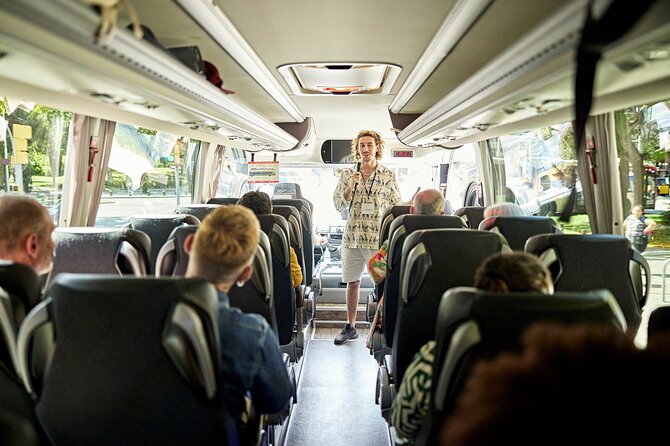
- Prohibition-era settings across the Chicago Loop, explained by your onboard guide
- Ghost stories tied to real buildings, including Chicago’s most haunted-hotel legend
- Easy logistics: a minibus route that reduces stressful walking and street navigation
- Good photo moments at skyline views and the Chicago Theater marquee
- A specific gangster landmark stop tied to Frank Nitti’s vault and Al Capone’s speakeasies
- Comfort factor: feedback highlights clean, quiet vehicles and smooth timing
Why This Gangsters-and-Ghosts Route Fits Chicago Better Than Walking
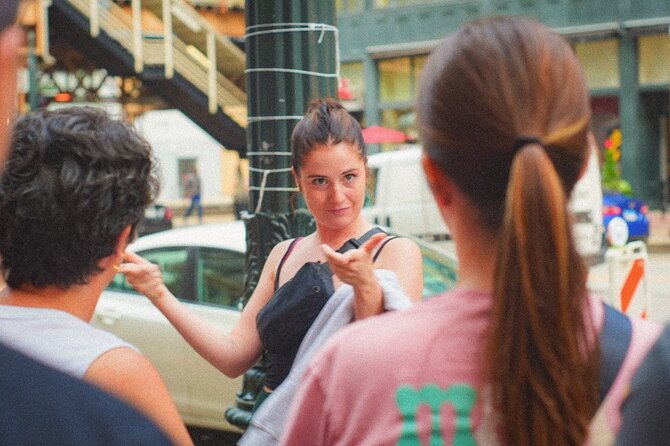
Chicago’s Loop can feel like you’re constantly dodging foot traffic, construction, and bus crowds. This tour’s big win is simple: you sit, you ride, and you get context while you pass key sites. It’s a practical way to learn a lot in about 2 hours without turning your day into a long slog.
Another smart choice is the mix of story density and visual payoff. You’ll hear crime-and-ghost tales while also getting chances to stop and look around. That matters because the Loop can be hard to read at street level, even if you’ve been to Chicago before. The stories give you a framework, and the photo stops help you remember what you saw.
And yes, the price is low enough that you can do it even if you’re already planning museums and walking days. At $49, you’re paying mainly for the guide, the route, and the way it organizes your time. The best value comes when you want to get oriented fast, then spend the rest of your trip roaming on your own.
You can also read our reviews of more tours and experiences in Chicago


Palmer House Pickup: Start in a Central, Easy-to-Find Spot
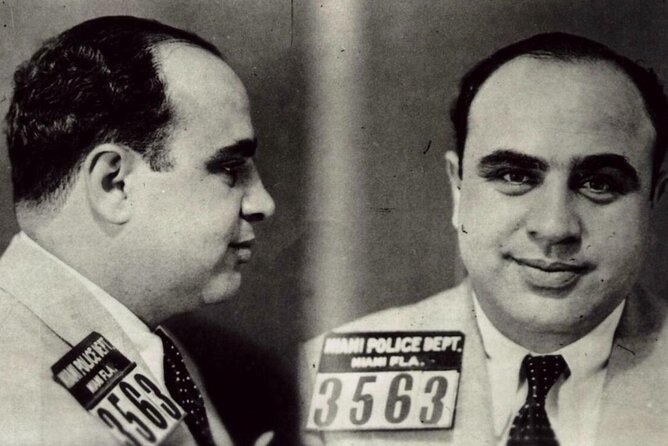
The tour meets at the Palmer House a Hilton Hotel (17 E Monroe St) and returns there at the end. That’s a useful detail because you’re not trying to figure out some obscure corner of the Loop on a tight schedule. It’s also the kind of meeting point that tends to be easy to reach via public transit.
This is especially helpful if you’ve just done a heavy walking day or you’re juggling multiple things. You get a clear start point, a timed ride, and a clean reset back where you began.
Holy Name Cathedral and the Italian Gang Hit That Echoes in Stone
The tour’s first real stop is Holy Name Cathedral (735 N State Street). This is where the story turns from general Chicago crime into something more specific and, frankly, unsettling. The setting is tied to a dramatic Italian gang hit on the Irish gang, with bullets ricocheting off the church walls.
Why it works: cathedrals and churches can look peaceful from the outside, so the idea that violence left physical marks gives you a different lens for the neighborhood. This isn’t just a ghost-tour gimmick. It’s a chance to see how the city absorbed conflict, then kept functioning.
What to expect in practice: plan for a quick orientation and photo opportunities around the exterior. The stop is listed as a visit without a stated duration, so don’t assume you’ll have a long sit-down tour inside.
Harry Caray’s Italian Steakhouse: Frank Nitti’s Vault Moment
Next up is Harry Caray’s Italian Steakhouse, with a 15-minute visit and an admission ticket included for that stop. The point here is gangster lore with a tangible-feeling hook: the stop connects to the mysterious past of Frank Nitti and his secret vault.
Even if you’re not a hardcore mob-history fan, I like this stop because it’s grounded in something you’ll recognize. A famous restaurant can turn history from abstract to memorable. It also breaks up the tour rhythm: you’re not only hearing stories through the bus window.
A small practical note: because the stop is short, you’ll get the best experience if you’re ready to look, listen, and snap a couple photos without needing a slow wander.
The Chicago River Skyline Drive: Views With Context

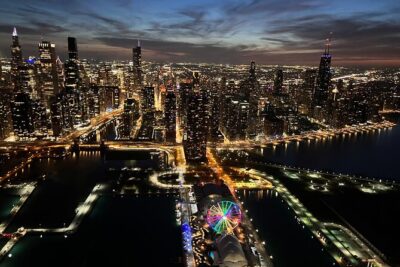
Between the major stops, you’ll ride along the Chicago River for skyline views. The tour leans into the idea that Chicago can be beautiful and dark at the same time. You’ll get those postcard angles while your guide ties the surroundings back to the past.
This is where the minibus really earns its keep. The Loop and riverfront area can be busy, and trying to time your own stops for views can turn into stress. The tour handles that pacing for you, including the photo timing that makes skyline shots actually work.
If you’re planning to revisit the river later, this segment helps you pick where you want to linger. It’s a fast orientation, not just scenery.





Chicago Theater Marquee Photo Stop: Classic Chicago in One Stop

You’ll also stop at the Chicago Theater, famous for its marquee and its place in Chicago’s entertainment story. If you like taking one clear signature photo during a trip, this is that moment.
What I like about this stop is that it keeps the tour from going strictly grim. After Death Alley and haunted-hotel legends, this feels like a reset: you get something iconic, easy to recognize, and straightforward to enjoy.
Death Alley: Where Tragedy Lives on in a Name
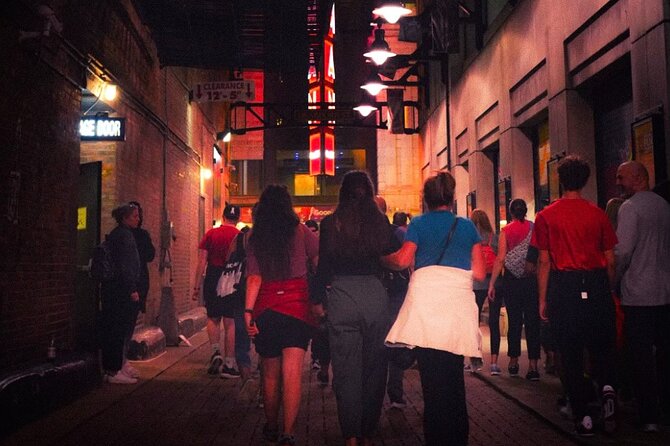
The tour then heads to Death Alley, tied to the deadliest single building fire in U.S. history. The stop is somber by design. You’re there to understand how a catastrophic event shaped the area and left a name that still carries weight.
This is one of the more intense parts of the route because it’s not framed like spooky fun. It’s about consequence, safety, and how cities remember disasters. If you’re traveling with kids or anyone who prefers lighter content, you might want to mentally pace yourself for this stop.
Practical expectation: treat this as a moment to slow down, read what you can, and absorb the tone. Don’t rush it just to get back on the bus.
Art Institute of Chicago and the 1893 World’s Fair Connection
Another major stop is the Art Institute of Chicago. The tour connects it to the 1893 World’s Fair, noting it as one of the two remaining permanent structures from that event.
This is a clever shift in the tour’s balance. You start with crime and ghosts, then you move toward art and civic identity. Even if you don’t plan to go deep into galleries, being placed at an institution with that long a timeline gives the rest of the city stories more perspective.
Value for your money: the tour doesn’t ask you to spend your whole day inside. You get a guided introduction and a meaningful reason to care about what you’re looking at.
Congress Hotel: The Most Haunted Hotel in Chicago Claim
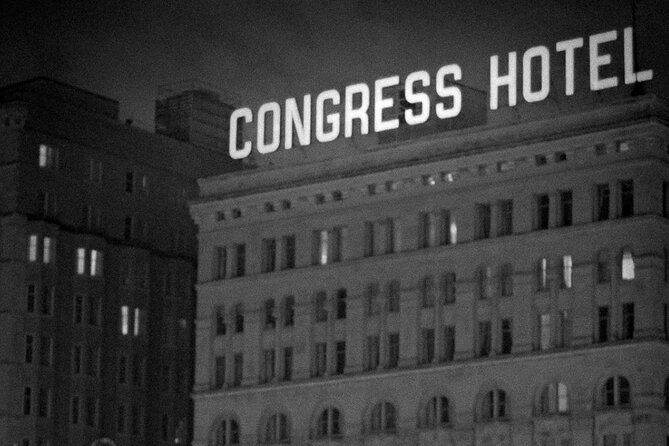
The tour also includes the Congress Hotel, promoted here as the most haunted hotel in Chicago. You’ll hear ghost legends tied to its past, and the vibe stays aligned with the tour theme: crime, mystery, and what lingers after.
This is the stop where a lot of people seem to remember the stories most. In feedback, guides like Matthew and Avery are singled out for making the ghost portions feel tense and fun, with some guests describing goosebumps. That’s not about jump scares. It’s about storytelling that makes the setting feel alive.
If you’re into paranormal lore, this is the moment to lean in. If you’re not, the hotel still helps you understand how Chicago mythology forms around prominent buildings.
Jeweler’s Building and One of Al Capone’s Speakeasies
The final highlighted landmark stop is the Jeweler’s Building, connected to one of Al Capone’s 100 speakeasies in the Loop. This keeps the Prohibition thread strong and adds a direct connection to the name most people associate with Chicago gangsters.
I like ending (or near-ending) here because it turns the story from “what happened” into “what the city was like.” Speakeasies weren’t just illegal bars. They were social spaces shaped by fear, secrecy, and demand. Seeing this tied to Capone’s network makes the whole Prohibition era feel more human.
Practical note: this kind of stop is often about exteriors and nearby views more than long interiors, so be ready for a fast, guided look.
What Makes the Guides Matter (and Why the Bus Isn’t Just Transport)
This tour succeeds or fails on the guide’s ability to connect dots quickly. In the feedback, you’ll see repeated praise for guides bringing humor, smooth pacing, and strong storytelling. Names that come up include Karina, Ty, Alan, Matthew, Kris, and Avery.
That matters because the route covers a lot of ground and themes in a short time. Without a good narrator, it could feel like random buildings with random spooky facts. With a strong guide, it becomes a single story arc: violence, corruption, the city’s response, and the legends that stayed.
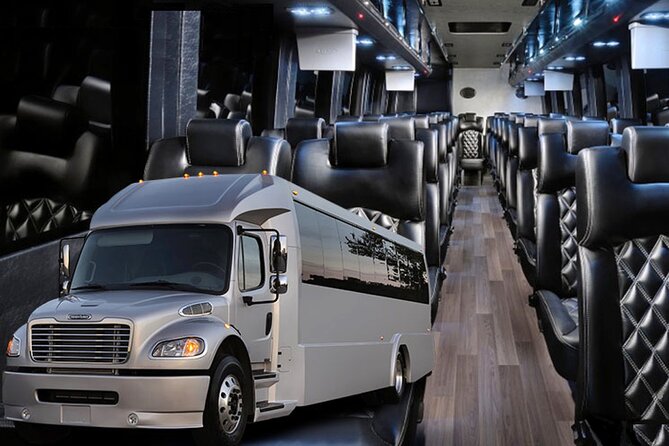
Also, comfort isn’t an afterthought. Multiple comments mention a bus that feels clean and quiet, plus photo help during stops. That combination is exactly what you want if you’ve been walking all day and still want to learn something.
Is It Worth $49 for a 2-Hour Chicago Loop Experience?
At $49 for about 2 hours, you’re paying for three things: a guided narrative, a route that reduces street hassle, and stops at landmarks that are hard to string together efficiently on your own.
Here’s how I judge value for this kind of tour:
- If you want a guided overview that helps you understand Chicago fast, the price feels fair.
- If you also care about stopping for key photo moments, that’s more value than a pure driving tour.
- If you’re hoping for a very small-vehicle, ultra-private feel, read the ride-size expectations carefully. One report mentioned a standard large bus even though the title suggests luxury mini bus. That’s the main value risk.
Given the high satisfaction rating (4.8) and the strong focus on guides and timing, it usually lands well for people who want to squeeze in learning without sacrificing comfort.
Who This Tour Suits Best
This is a great match if you:
- Like mob history and want it connected to real places
- Want ghost stories without spending all day doing research
- Prefer a guided route when the Loop feels overwhelming
- Want a break from walking but still want meaningful sightseeing
It may be less ideal if you’re extremely sensitive to darker subject matter, especially around Death Alley. And if you’re expecting a tiny group experience no matter what, the bus-size inconsistency is worth factoring in.
Should You Book Chicago Gangsters and Ghosts?
I’d book this if you want a fast, guided way to understand the Loop’s darker side while still getting classic Chicago visuals. The lineup of stops is specific: Holy Name Cathedral, Frank Nitti’s vault connection at Harry Caray’s, river skyline views, the Chicago Theater marquee, Death Alley, the Art Institute’s World’s Fair tie-in, the haunted-hotel legend at the Congress Hotel, and the Jeweler’s Building connection to Capone’s speakeasies.
The main reason not to book is simple: if your top priority is a consistently small luxury minibus feel, there’s a chance you won’t get what you pictured. If you can accept that the vehicle might be larger than expected, you’re likely to enjoy the storytelling, the comfort during transit, and the practical way it organizes a lot of Chicago into a short window.
FAQ
How long is the Chicago Gangsters and Ghosts Luxury Minibus Tour?
The tour lasts about 2 hours.
How much does the tour cost?
The price is $49.
Where do I meet the tour?
You’ll meet at Palmer House a Hilton Hotel, 17 E Monroe St, Chicago, IL 60603.
What’s included with the ticket?
The tour includes an expert guide and a licensed driver, plus the minibus tour. An admission ticket is included for the Harry Caray’s Italian Steakhouse stop.
Is the Harry Caray’s stop an actual ticketed admission?
Yes. The itinerary lists 15 minutes at Harry Caray’s with an admission ticket included.
What if the weather is bad?
This experience requires good weather. If it’s canceled due to poor weather, you’ll be offered a different date or a full refund.
Are service animals allowed, and is it near public transportation?
Yes. Service animals are allowed, and the meeting point is near public transportation.