REVIEW · CHICAGO
Marvels & Feats: An Engineer’s Tour of Chicago Architecture
Book on Viator →Operated by Inside Chicago Walking Tours · Bookable on Viator
Chicago’s buildings have a secret job.
This engineering-themed architecture tour turns skyline sights into understandable stories, walking you through 150+ years of structural design. You’ll follow clues about gravity, wind, and foundations, plus you’ll step inside a few buildings so you can really see what people built and how they solved problems in real time.
Two things I especially like: the guide is a real engineer who explains the how behind the wow, and the route mixes outdoor views with interiors so the story doesn’t stay theoretical. One possible drawback: this is a walking tour with moderate fitness expectations, so comfortable shoes and a steady pace matter.
In This Review
- Quick hits: what makes this engineering tour worth your time
- Chicago’s skyline is a problem-solving museum
- Price and logistics: what $35 buys you in real life
- Meeting at 430 S Michigan Ave: pace, group size, and how to prepare
- Stop 1 in The Loop: structural design you can see up close
- The haunted-building story: settling, not spirits
- Interiors matter: how seeing inside changes the skyline
- Stop 2 along the Chicago Riverwalk: newer feats and big views
- What the engineering guide approach gets right for non-experts
- Value check: does $35 make sense for this kind of architecture tour?
- Who should book this tour (and who might skip it)
- Should you book Marvels & Feats: An Engineer’s Tour of Chicago Architecture?
- FAQ
- How much does the Chicago engineering architecture tour cost?
- How long is the tour, and what time does it start?
- Where do I meet, and where does the tour end?
- What’s included in the tour?
- Is it a small group?
- Does it run in bad weather, and are service animals allowed?
Quick hits: what makes this engineering tour worth your time
- Engineer-led explanations you can actually picture, without the math overload
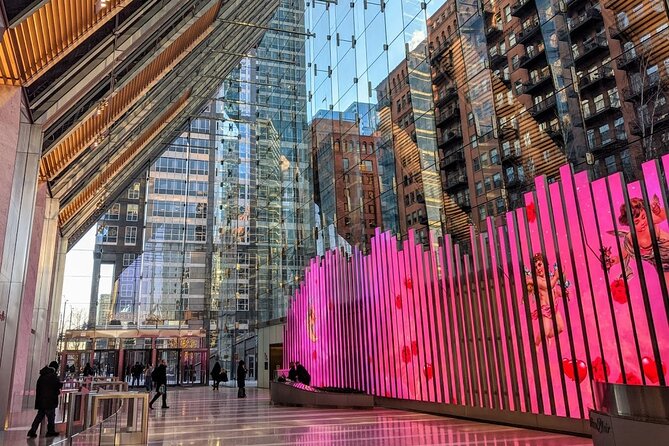
- The Loop start with interior stops in buildings known for structural design
- Foundation and settling stories, including a building with a “haunted” reputation explained by engineering
- Chicago Riverwalk finish with scenic views and newer construction ideas
- Small group size (max 20) that keeps questions in the conversation
Chicago’s skyline is a problem-solving museum
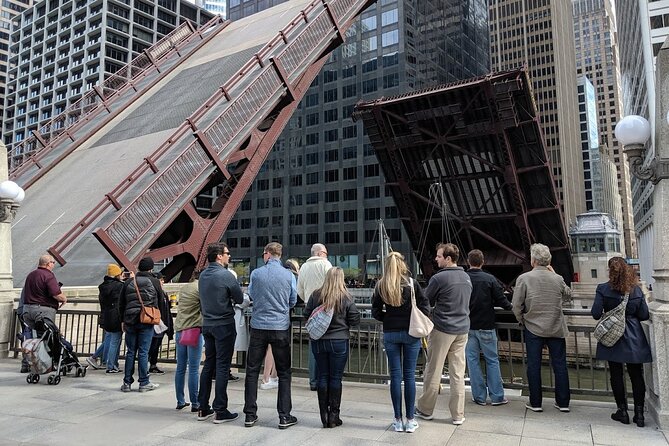
Chicago earns its reputation because it had to. Buildings weren’t just designed to look tall. They had to survive wind, shifting soils, and the daily grind of urban life. This tour leans into that reality. You’re not just spotting styles. You’re learning what engineers tried to do when nature and physics refused to cooperate.
The pitch is simple and smart: 150 years of engineering evolution, told in plain language. You’ll get the sense that the skyline isn’t magic. It’s choices—materials, shapes, and structural systems—changing over time as problems got better understood.
And because the guide is an engineer, the focus stays on mechanisms: how forces travel through a building, what foundations do when the ground behaves unevenly, and why some structures gained fame for reasons that have nothing to do with ghosts.
You can also read our reviews of more tours and experiences in Chicago.



Price and logistics: what $35 buys you in real life
At $35 per person, you’re paying for an expert-led walk plus access to a few building interiors. The total time is about 2 hours, with most of it in The Loop and a shorter stretch along the Chicago Riverwalk.
A couple practical notes matter more than people think:
- You’ll need to handle your own way to the meeting point. There’s no hotel pickup or drop-off.
- You’ll want to show up ready to walk. The tour expects a moderate physical fitness level, and it runs in all weather conditions.
The upside? This is the kind of experience where you’ll remember the explanations later. You’ll look at the skyline and start recognizing patterns—long before you know any official building facts.
Meeting at 430 S Michigan Ave: pace, group size, and how to prepare
The tour meets at 430 S Michigan Ave, Chicago, IL 60605 and starts at 2:30 pm. It ends at Riverpoint Park (150 N Riverside Plaza, Chicago, IL 60606), where you get a sweeping view of the Chicago River.
Timing and group size are a big part of why this kind of tour works. With a maximum of 20 travelers, you’re less likely to get lost in the back of the pack when you ask a question about foundations, wind loads, or why certain shapes matter. The guide can actually respond like you’re in a small class.
Also, you’ll need to plan for weather. It operates in all weather conditions, so dress for temperature and wind. Bring a layer you can tolerate for a couple hours. And yes—comfortable shoes matter, since you’re walking through downtown and the Riverwalk.
Finally, you’ll use a mobile ticket. That’s one less thing to misplace on a big-city outing.
Stop 1 in The Loop: structural design you can see up close
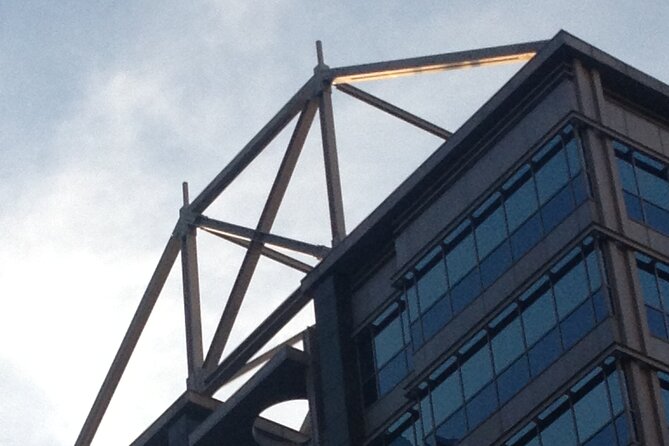
Most of the tour happens in Chicago’s downtown district, The Loop, where you’ll stop at notable buildings for their structural design. Expect around 1 hour 15 minutes here, with admission ticket free for the interior visits.
This is where the tour does something many architecture walks skip. The skyline is one thing. But stepping inside lets you notice how engineers made the building work. You can catch details you’d normally miss from the sidewalk: how spaces feel supported, where the structure becomes visible, and how engineers shaped the interior experience around load and stability.
You’ll also learn about a building tied to the father of the skyscraper—an engineer who was a classmate of Gustav Eiffel. Even if you don’t memorize names, this context is useful. It connects Chicago’s rise to the wider engineering world of the 1800s, when cities everywhere were starting to test what tall structures could do.
And since The Loop is dense, you’ll get a quick mental map: where engineering ideas show up, which buildings express which solutions, and how older approaches differ from newer ones.
The haunted-building story: settling, not spirits
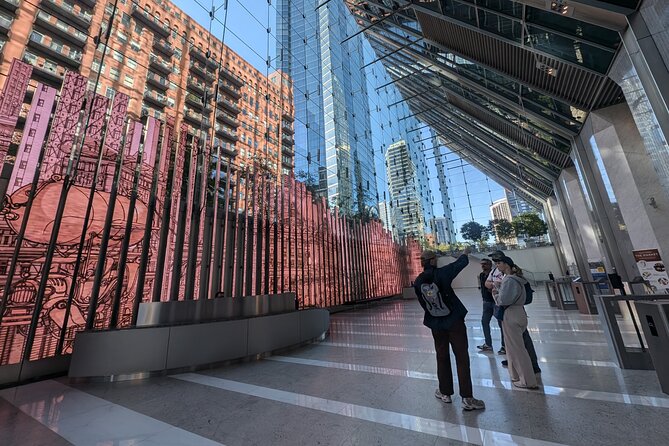
One of the most fun parts of the route is the way it tackles a “haunted” building idea using engineering logic. You’ll hear how the building’s reputation comes from uneven settling on a “floating” foundation—basically, the ground isn’t behaving uniformly, and the building responds to that reality.
This is the kind of explanation that sticks. Once you understand the cause, you stop thinking the building is cursed. You start thinking about it like a system.
Why this matters for you: it changes how you look at aging buildings. A tilt, a mismatch, a strange interior feel—these might not be mystery theatrics. They can be the visible outcome of forces over time. Chicago, built and rebuilt on challenging ground, becomes a great place to learn that lesson because the evidence is right there in plain sight.





Interiors matter: how seeing inside changes the skyline
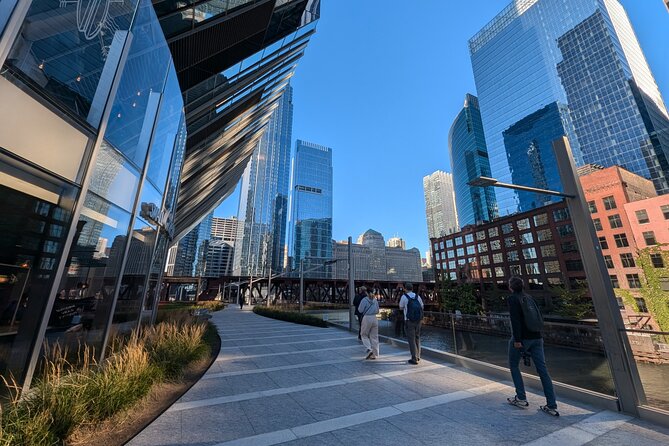
It’s easy to treat architecture like a postcard exercise. This tour pushes against that. By spending time in a couple buildings (with admission ticket free), you get a different angle on the same story.
Inside, you can connect the engineering talk to real space:
- You can feel how vertical loads and structural elements shape a room.
- You can notice how materials and systems influence ceilings, edges, and the rhythm of the building.
- You can understand why the outside look exists for a reason, not just style.
This is also where that engineer-guide style becomes a big deal. The goal is that you leave with concepts you can explain to a friend—not just a list of building facts. The guide makes the ideas accessible and graspable without turning it into a lecture you need a textbook for.
If you love architecture but sometimes get bored by technical jargon, this is one of those tours that meets you in the middle.
Stop 2 along the Chicago Riverwalk: newer feats and big views
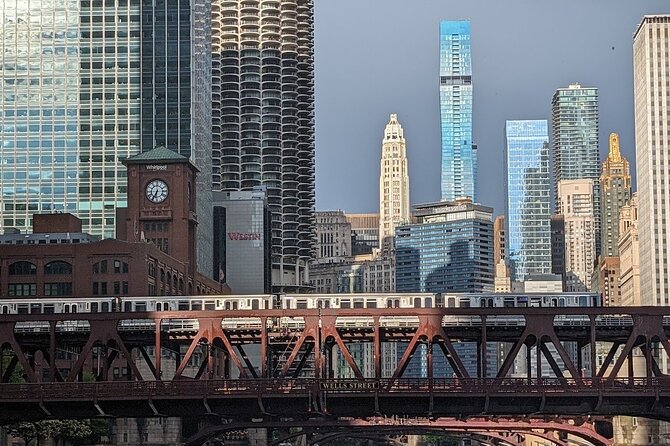
After The Loop, the tour shifts to the Chicago Riverwalk for about 45 minutes. Here, the engineering focus moves toward more recent work—still about how buildings handle reality, but with a different set of challenges and design approaches.
The Riverwalk is a smart choice for this part of the tour because the views add context. You can compare how buildings relate to the river edge, how the city’s geometry frames sightlines, and how wind and open air can affect how a skyline feels in person.
And then you finish with that final reward: a sweeping view of the Chicago River. It’s a good closing beat because it lets your brain stitch the day together. You move from building details to city-scale forces and back again.
What the engineering guide approach gets right for non-experts
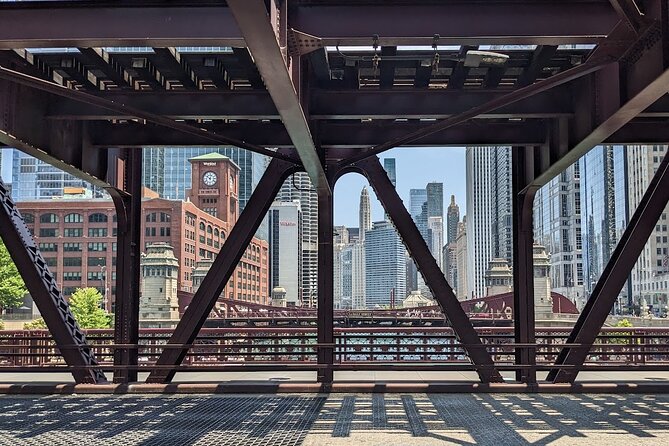
The standout theme in how this tour is described is that the guide is an engineer who can make big structural ideas understandable. That sounds obvious, but it’s rare.
The best part is that you’re not stuck with one type of explanation. You’ll get story-based learning tied to real design problems: gravity, wind, and foundation behavior. And you’ll get that sense of 150 years of progress not as dates, but as problem-solving steps.
One name comes up in the positive feedback: Hillary. She’s described as opening people’s eyes to early Chicago architecture and pointing out less obvious spots along the way. If you’re worried the tour will only focus on the tallest famous silhouettes, that’s a comfort. You’ll likely get the feeling that you’re seeing Chicago with fresh attention.
You should also like that the route includes a mix of famous concepts and practical “why” answers. This isn’t about memorizing trivia. It’s about learning how to interpret what you’re seeing.
Value check: does $35 make sense for this kind of architecture tour?
For $35, you’re getting a guided, structured experience with:
- a local guide
- a ~2-hour outing
- interior stops where admission is ticket free
- a route that covers more than 150 years of engineering development
Is it cheaper than doing it on your own? Sometimes, yes—especially if you’d otherwise pay for guided access or miss interior chances. Is it better? Often, yes, because a good guide gives you a framework. Without that, you can walk by impressive buildings all day and still struggle to answer what actually makes them impressive.
Here’s the practical way to think about it: if you enjoy architecture and you want more than surface-level looking, $35 is a reasonable price to buy understanding for two hours.
Who should book this tour (and who might skip it)
This tour is a great fit if you:
- like architecture but want the engineering behind the scenes
- enjoy explanations that connect buildings to physics and real constraints
- want a small-group guided walk (max 20) instead of a big bus-style overview
- prefer learning through a route with multiple stops and some interior access
You might skip it if:
- you’re looking for a pure art-and-style walking tour with lots of emphasis on aesthetics alone
- you dislike walking for around two hours with a moderate fitness requirement
- you want long time at just one building rather than multiple quick engineering story points
Should you book Marvels & Feats: An Engineer’s Tour of Chicago Architecture?
If you like turning sights into understanding, this one’s worth booking. The theme is clear, the pacing makes sense (most time in The Loop, then a finishing scenic stretch), and the engineer-led approach is built for people who want clarity, not jargon.
For the best experience, go in with curiosity. Ask yourself what forces are doing in the places you can’t directly see. You’ll leave with a smarter way to read the skyline—so Chicago stops being a view and becomes a solved puzzle.
FAQ
How much does the Chicago engineering architecture tour cost?
It costs $35.00 per person.
How long is the tour, and what time does it start?
The tour lasts about 2 hours and starts at 2:30 pm.
Where do I meet, and where does the tour end?
Meet at 430 S Michigan Ave, Chicago, IL 60605. The tour ends at Riverpoint Park, 150 N Riverside Plaza, Chicago, IL 60606.
What’s included in the tour?
The tour includes a local guide. Interior building admissions are listed as ticket free.
Is it a small group?
Yes. The tour has a maximum of 20 travelers and a moderate physical fitness level is recommended.
Does it run in bad weather, and are service animals allowed?
It operates in all weather conditions, and service animals are allowed.