
REVIEW · CHICAGO ARCHITECTURE CENTER
Chicago: Architecture Center Exhibit Admission
Book on GetYourGuide →Operated by Chicago Architecture Center · Bookable on GetYourGuide
Chicago’s skyline story is told in scale. This stop turns famous towers into something you can study up close, from the Building Tall gallery to the cinematic Chicago Model experience. I especially like the giant glass-wall views that frame real buildings before you even hit the exhibits, and I like how the expanded model packs thousands of structures into one room so you can grasp how the city grew. The only real drawback: this is a compact, focused experience—if you’re hunting for a long, all-day museum, plan for a shorter visit and pair it with a neighborhood walk.
Inside, you’ll get the big-picture idea that makes Chicago different: architecture here isn’t just style, it’s problem-solving. You’ll see how the city’s early growth, post–Great Chicago Fire rebuilding, and steel-and-glass breakthroughs helped spawn the race for height. Come ready to look closely, read signs, and tap through the interactive screens at your own pace.
In This Review
- Key things to notice before you go
- Entering the Chicago Architecture Center at 111 E. Wacker
- Building Tall: the supersized models that explain the race for height
- The Chicago Model experience: 4,000+ buildings in one cinematic room
- Touch screens, walking routes, and 3D printing you can actually understand
- Location advantages: right by Michigan Avenue and the river cruise dock
- Price and what you’re actually buying for $15 admission
- Rules and comfort tips that affect your visit
- Who this is best for (and who might want a different plan)
- Should you book Chicago Architecture Center Exhibit Admission?
- FAQ
- Where is the Chicago Architecture Center?
- How much does admission cost?
- What’s included with the ticket?
- Is a guided tour included?
- How long is the ticket valid?
- Can I bring food or drinks?
- Are pets allowed?
- Is flash photography allowed?
Key things to notice before you go
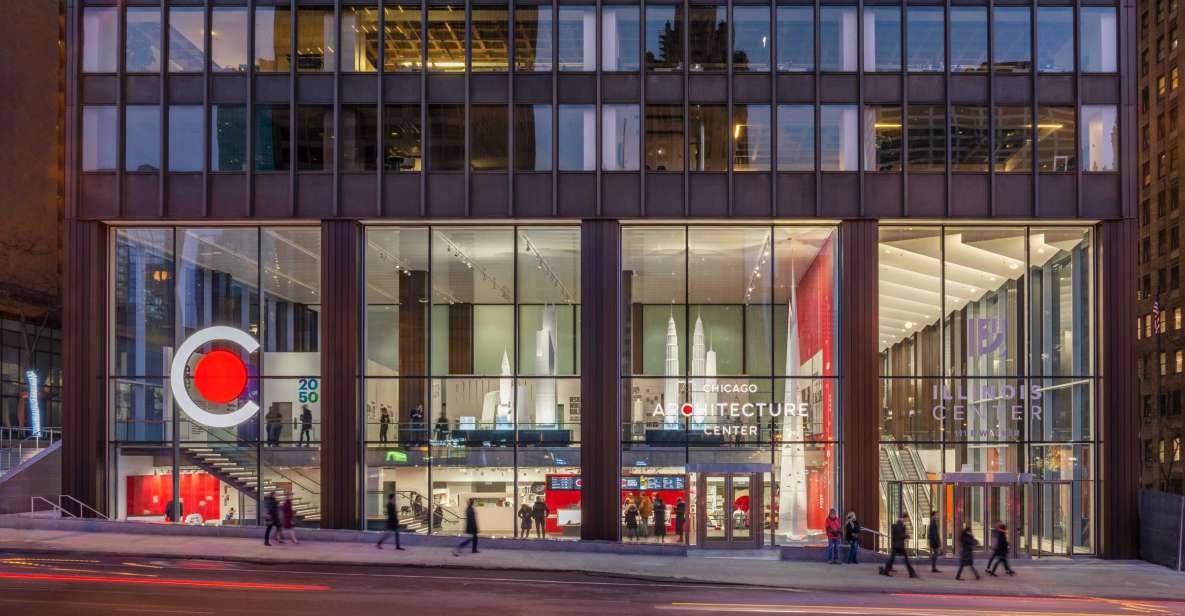
- 40-foot glass wall views set the tone with iconic buildings like Tribune Tower and the Wrigley Building in sight
- Drake Family Skyscraper Gallery explains how architects push boundaries, including super-tall models like Jeddah Tower
- Chicago Model room with 4,000+ buildings makes urban growth feel immediate and readable
- Touch screens and walking routes help you connect indoor learning to real streets outside
- 3D printing used for the model shows the behind-the-scenes accuracy behind what you’re seeing
- Your ticket supports local architecture education through programs like Girls Build! and Teen Fellows
Entering the Chicago Architecture Center at 111 E. Wacker

The Chicago Architecture Center (CAC) is purpose-built to make you look up and take notes. The building itself is part of the experience: the center sits in a structure associated with Mies van der Rohe, with exhibit-space design by Adrian Smith + Gordon Gill Architecture. Even if you’re not an architecture nerd, the space gives you a strong first impression—light, clean lines, and views that feel like a preview of what you’ll learn.
Before you head deeper, you’ll pass the standout feature: a 40-foot wall of glass looking out at major landmarks. Seeing the Tribune Tower, the Wrigley Building, and the Apple Store flagship through that glass wall does something important—it stops architecture from feeling abstract. It also helps you orient yourself fast, because you’re already linking what’s in your hands (models, screens, history) to what’s in front of you (real skyline icons).
Practical tip: since there’s no secure storage for coats, luggage, or strollers, travel light. If you’re rolling bags or carrying a bulky backpack, you may want to leave those at your hotel and just bring what you’ll need for a short visit.
Building Tall: the supersized models that explain the race for height
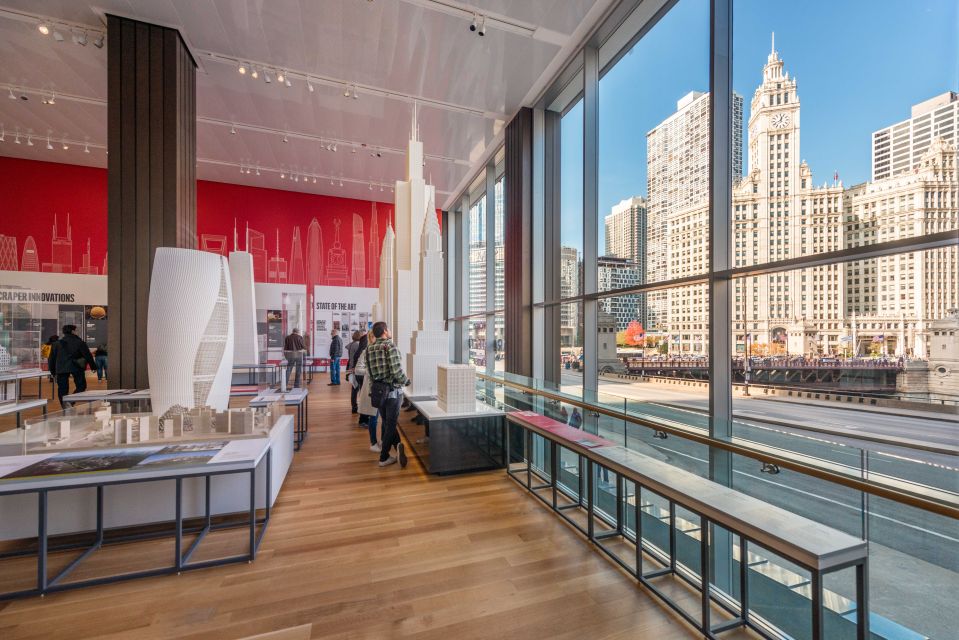
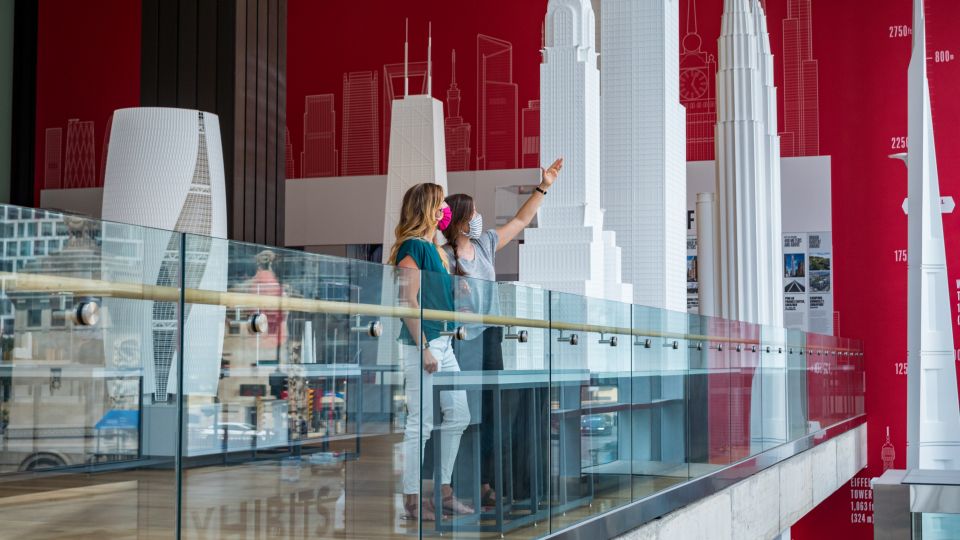
One of the CAC’s main exhibit anchors is the Drake Family Skyscraper Gallery. It’s built around a simple question: how do architects design buildings that keep getting taller—and why does that matter? The exhibit theme, Building Tall, frames height as more than bragging rights. It’s about engineering limits, design breakthroughs, and the ways ambition turns into structure.
What I love here is the scale. You get supersized models of famous skyscrapers that let you see the “why” behind forms you might otherwise just glance at from street level. The exhibit includes the Home Insurance Building in Chicago, often cited as an early skyscraper milestone, and it connects that to the Willis or Sears Tower, which was the tallest building for nearly 25 years.
Then the gallery stretches the story outward. One of the most striking examples is Jeddah Tower in Saudi Arabia—described here as the next tallest building in the world. What that does for you is widen the lens: Chicago isn’t presented as a closed chapter. Instead, you’re shown how design ideas travel, and how the skyline’s competition plays out across countries and decades.
Possible drawback to plan for: because the models are a lot to look at, it helps to slow down. If you rush, you might miss the engineering-and-design details the exhibit is trying to teach. You’ll get more out of it if you let yourself zoom in—shape, structure, materials—then zoom out to history.
The Chicago Model experience: 4,000+ buildings in one cinematic room
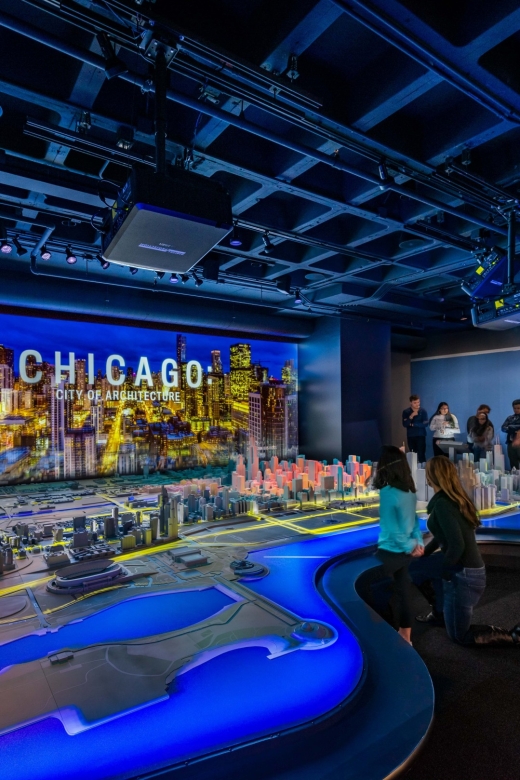
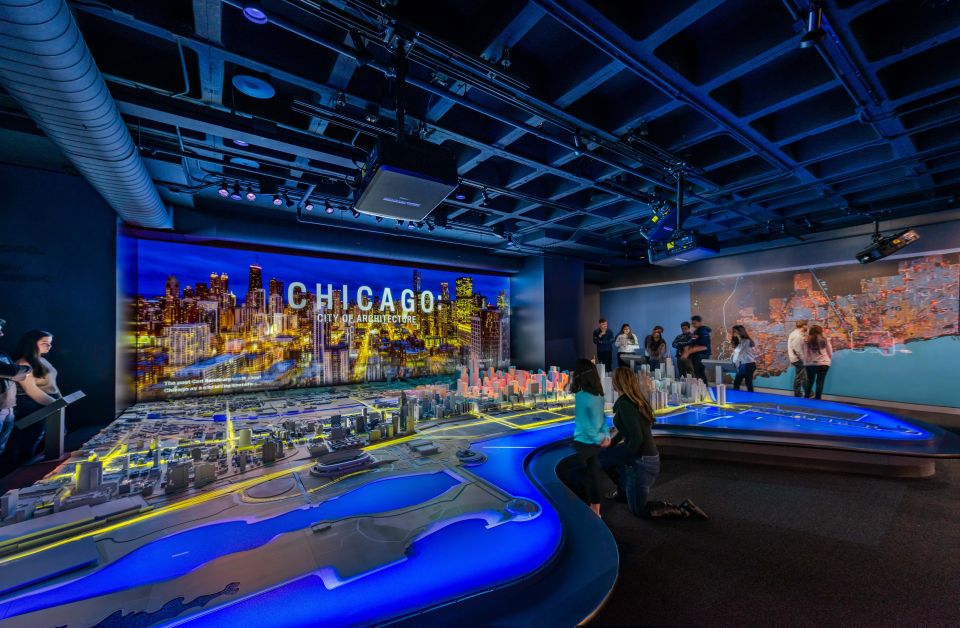
If you want one exhibit that ties everything together, it’s the Chicago Model experience. In the Chicago Gallery, the popular Chicago Model has been expanded from 1,300 to over 4,000 buildings. The highlight description also notes you can view more than 4,200 buildings in one spectacular room, which is the key point: this is a room-scale view of city growth, not a small diorama you half-notice.
A film and light show illuminate the model with the story of Chicago’s early growth, rebirth after the Great Chicago Fire, early skyscrapers, and modernist steel-and-glass masterpieces. This matters because it gives you an emotional timeline, not just a list of dates. You start seeing the city as layers: expansions, setbacks, and rebuilding that reshape what rises next.
As you watch and explore, the model is also designed to support questions you might already be carrying in your head, like: Where did the city expand first? How did neighborhoods shift? When did certain design ideas take hold? And how do older districts connect to newer projects?
The best part is that it’s interactive. Using touch screens, you can orient yourself to Chicago and search for buildings by architect or building style. You can also find walking tour routes. So instead of only learning indoors, you can translate what you see into something tangible outside—your own routes and your own pace.
Touch screens, walking routes, and 3D printing you can actually understand
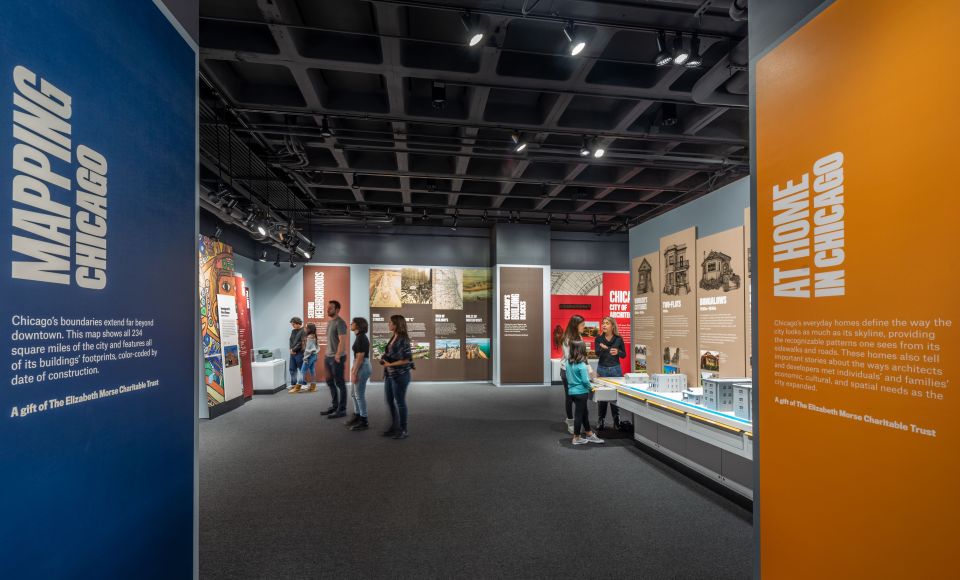
The CAC doesn’t just show architecture; it helps you navigate it. The touch screens let you search for buildings by architect or building style, which is ideal if you’ve got even a light interest in names or design themes. It also gives you a way to build a walking plan without needing to guess.
For example, you might use the screens to identify what you’ve seen from the 40-foot glass wall, then switch to walking tour routes that connect those landmarks back to neighborhoods and architectural styles. Even if you don’t follow every suggested route, it helps you decide where to spend your next hour outside.
Another smart feature is the way the model connects to modern production methods. The experience notes state-of-the-art 3D printing used to create accurately scaled buildings. You’re not just looking at a static display; you’re seeing how technology supports precision in architectural storytelling. That detail is useful if you tend to question model accuracy—because the exhibit explicitly addresses that accuracy through the production approach.
One more practical note: the CAC says flash photography isn’t allowed. So plan on using your phone’s regular photo mode with no flash if you want images. You may also want to keep your camera handy for the glass-wall skyline views, because those are some of the easiest “grab a picture, then learn the context” moments.
Location advantages: right by Michigan Avenue and the river cruise dock
The CAC is at 111 East Wacker, just steps from Michigan Avenue, and it’s above the dock for Chicago Architecture Foundation River Cruise aboard Chicago’s First Lady Cruises. That’s a big deal for value, because it gives you natural add-on options without complicated transit.
If you’re building a day around skyline views, you can pair the indoor exhibits with time outdoors nearby. The CAC’s location also means you can easily slot it between shopping, river-walk wandering, and neighborhood exploring. In a city where getting from point A to point B can eat time, the CAC’s central setup helps you keep your day efficient.
If you plan to do a river cruise later, you’ll get extra mileage from the CAC first. The models and screens give you names, styles, and context, which tends to make the real river views more meaningful once you’re back outside.
Price and what you’re actually buying for $15 admission
The admission price is listed as $15 per group up to 1, with access to all Chicago Architecture Center exhibits. At this price, what you’re buying is focused learning plus high-production storytelling, not a sprawling museum day.
Here’s the honest way I think about the value:
- You’re paying for exhibit design choices that help you understand architecture quickly—scale models, cinematic programming, and search tools.
- You’re paying for real-to-model linkage, especially with the 40-foot glass wall that frames actual landmarks.
- You’re paying for something you can use next, because the touch screens can generate walking tour routes, helping you turn facts into your own itinerary.
Also, CAC is a certified nonprofit, and ticket purchases support local education initiatives like Girls Build!, Teen Fellows, and the Newhouse Architecture + Design Competition. The description adds that CAC ticket purchases directly support local education and community engagement projects, and they help keep Open House Chicago free for participants for years to come. In plain terms: your ticket supports future students learning the same kind of architectural thinking you’re seeing today.
One consideration: guided tours of the exhibits aren’t included. So if you love a live guide to explain every nuance and keep the pace tight, you’ll want to add a guided component separately or go in ready to read and explore at your own speed.
Rules and comfort tips that affect your visit
This experience is straightforward, but the small rules matter.
Bring a face mask or protective covering as the CAC requests. Pets aren’t allowed (service animals are welcome). You also can’t bring food or drinks, and flash photography isn’t allowed.
The biggest comfort issue is storage. The CAC is unable to provide secure storage for coats, luggage, or strollers. If you’re traveling with extra gear, plan ahead so you’re not juggling items while you try to look closely at exhibits.
Finally, the ticket is valid for 1 day, with availability tied to starting times. That means you can’t treat it as a vague “any time today” plan without checking what’s offered—so decide when you want to arrive and give yourself time to move through the galleries calmly.
Who this is best for (and who might want a different plan)
This is a great fit if you want a clear, high-impact introduction to Chicago architecture that doesn’t require a background in building history. It’s also ideal if you like interactive learning: the touch screens and search-by-architect/style approach are practical, and the Chicago Model room gives you that big-picture view people usually crave but rarely get.
You’ll also appreciate it if you like skyline views and want to connect what you’re seeing outdoors to what you’re learning indoors. The 40-foot glass wall does that immediately, and the building tall and city model exhibits reinforce it.
On the other hand, this might feel like a short stop rather than a long museum day. The center’s size and focus mean you may finish faster than you expect, so pair it with outdoor time or a nearby architectural activity. If you want a huge collection of unrelated galleries, you might prefer a bigger museum format.
Accessibility is noted as wheelchair accessible, which is a positive for planning. Still, because storage for strollers and coats isn’t provided, you’ll want to travel with mobility needs in mind.
Should you book Chicago Architecture Center Exhibit Admission?
Yes, book it if you want a smart, city-focused architecture experience that pairs indoor learning with real skyline views. The 4,000+ building Chicago Model and the Building Tall gallery are built to help you understand Chicago’s architectural story fast, while the touch screens let you customize what you learn into walking routes you can use immediately.
Skip it or rethink if you’re looking for a long, slow museum marathon, or if you need secure storage for luggage and big bags. With those constraints, it works best when you travel light and you’re ready for a focused, story-driven visit.
If you’re even moderately curious about why Chicago looks the way it does—this is one of the most direct ways to find out.
FAQ
Where is the Chicago Architecture Center?
The meeting point is Chicago Architecture Center, 111 E Upper Wacker Drive.
How much does admission cost?
Admission is listed as $15 per group up to 1.
What’s included with the ticket?
The ticket includes admission to all Chicago Architecture Center exhibits.
Is a guided tour included?
No. A guided tour of the exhibits is not included.
How long is the ticket valid?
The ticket is valid for 1 day.
Can I bring food or drinks?
No. Food and drink are not allowed.
Are pets allowed?
Pets are not allowed, but service animals are welcome.
Is flash photography allowed?
Flash photography is not allowed.