REVIEW · ROSEMONT ILLINOIS
iFLY Chicago-Rosemont First Time Flyer Experience
Book on GetYourGuide →Operated by iFLY Indoor Skydiving · Bookable on GetYourGuide
A wind tunnel that makes you feel brave fast. At iFLY Chicago-Rosemont, you get the thrill of a skydive-style freefall without the plane ride. I especially like how easy the setup feels, and how the staff keep things calm and clear from the start.
Two things I really liked: first, you get one-on-one instruction to learn how to move your body in the air. Second, the flight time is genuinely meaningful: the actual freefall experience lasts 2 minutes, which is long enough to feel like more than a quick demo. A key consideration: the experience is non-refundable, and there are real safety limits (weight and health) that can affect whether you fly.
If you’re within the rules, this is a fun way to test your “I always wanted to fly” itch in a controlled, practical setting—so you leave grinning, not wrecked.
In This Review
- Key highlights you’ll feel fast
- First, show up early and check in smoothly
- Gear, helmet, goggles, earplugs: comfort comes standard
- The 90-minute session: how your time is typically used
- Training inside the wind tunnel: learning to control your body
- Your 2-minute freefall: what the 185 mph wind really feels like
- Price and value: $131 for flight time you’ll remember
- Who this is great for (and who should skip)
- What to bring (and what to expect about timing)
- Should you book iFLY Chicago-Rosemont?
- FAQ
- How long is the iFLY Chicago-Rosemont experience?
- What’s included in the ticket price?
- Do I need to bring my own ID?
- What’s the weight limit to fly?
- Are there age restrictions?
- Is it safe if I have a medical issue or injury?
- Are photos included?
- Where do I go for the experience?
Key highlights you’ll feel fast
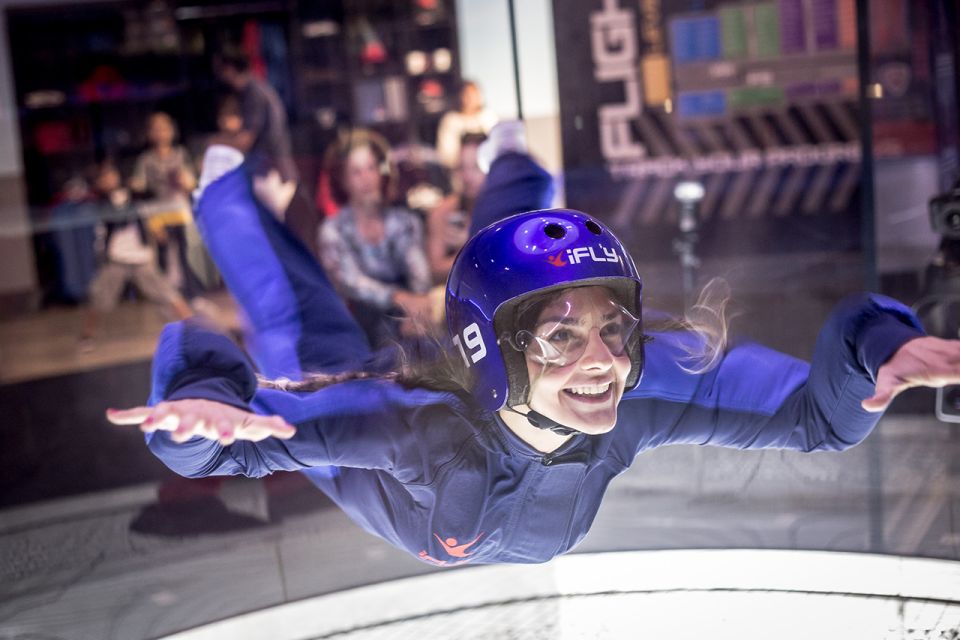
- 2 minutes of flight time gives you a real go at controlled freefall, not just a taste
- 1-on-1 coaching helps you learn body positions step-by-step
- Wind up to 185 mph (300 kph) makes it feel like actual flight physics
- Locker + full gear package included (suit, helmet, goggles, earplugs, shoes)
- Pressurized staging area fits up to 12 flyers so you’re not stuck waiting alone
- Weight and health checks are strict and can limit who can fly
First, show up early and check in smoothly
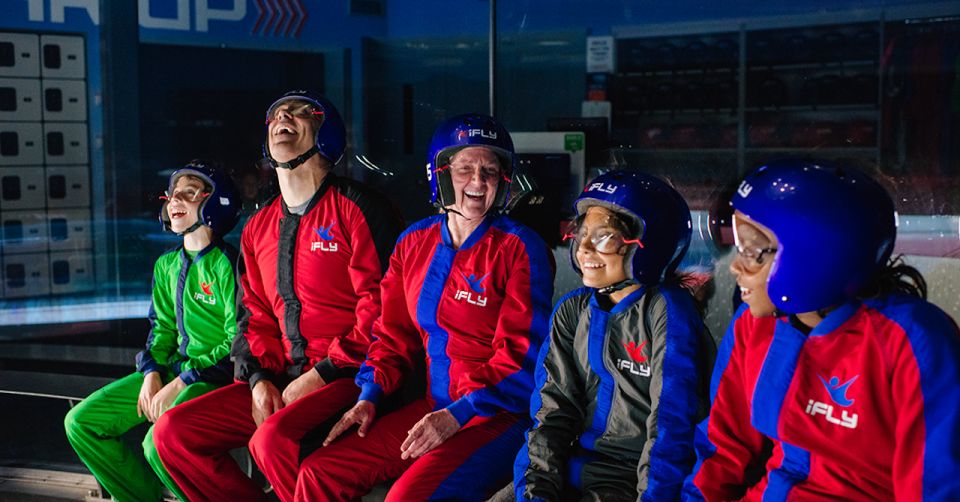
iFLY Chicago-Rosemont is at 5520 Park Pl, Rosemont, IL 60018. Your session starts promptly, so plan to arrive 10–15 minutes early. That buffer matters because check-in is where you confirm your details, get suited up, and get cleared to fly.
You don’t want to be rushing when you’ll also be asked to follow safety steps. If you’re bringing an ID, have it ready: the experience accepts a passport or ID card, and a copy is accepted. Also note the session runs about 90 minutes total, so show up ready to move through the full flow.
Gear, helmet, goggles, earplugs: comfort comes standard
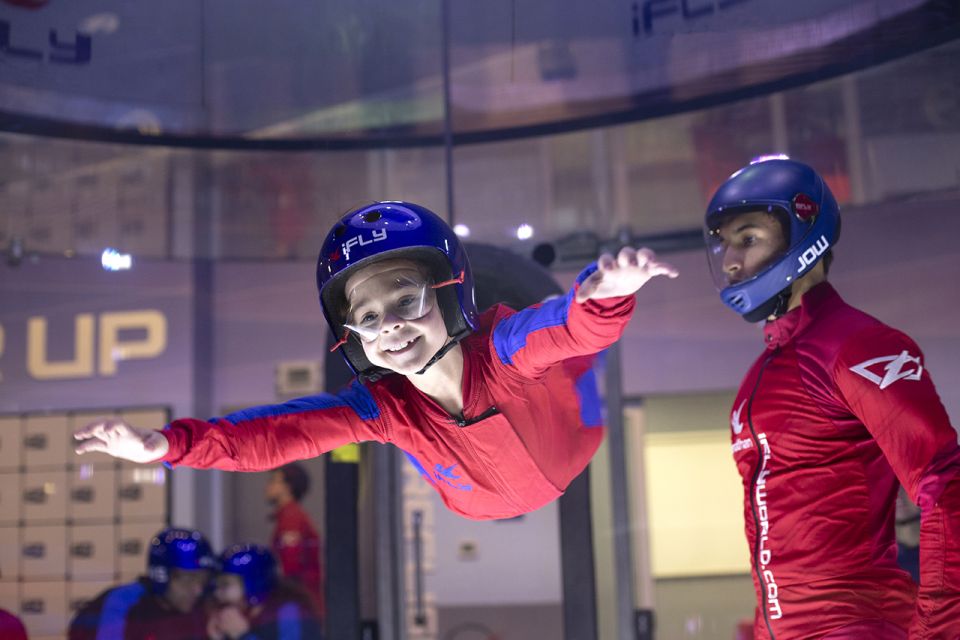
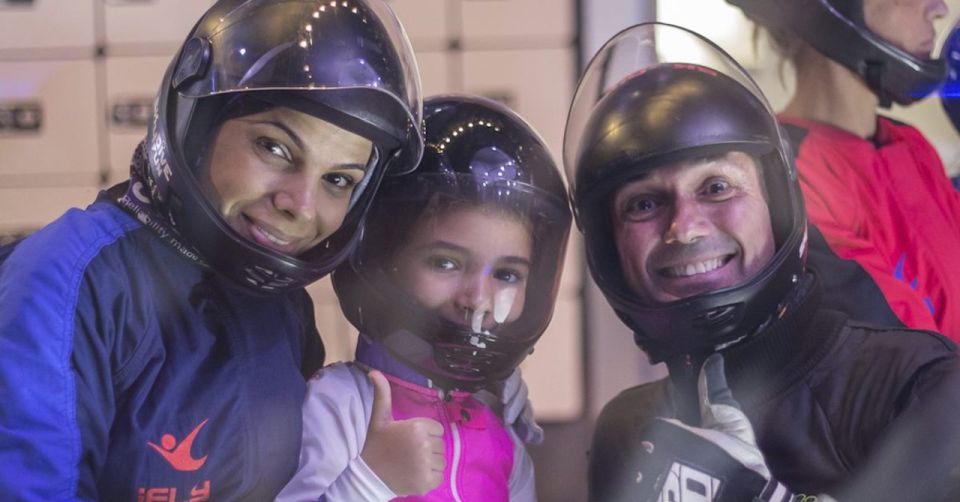
One of the smartest parts of iFLY is what it includes. You’ll get your flight suit, goggles, earplugs, shoes, and a helmet. You also get locker rental, which is practical because you’ll need a place for everyday items while you’re in gear.
This matters for value. You’re not paying extra just to get basic safety equipment and a setup that works. You’ll still want to wear clothes that you can comfortably move in under the suit, but you don’t have to show up with gear bags and guess what’s required.
If you’re sensitive to loud noise, the earplugs help a lot. And if you’ve ever worried about wind or particles, the goggles and helmet setup gives you a clear, protected view while you learn control.
The 90-minute session: how your time is typically used
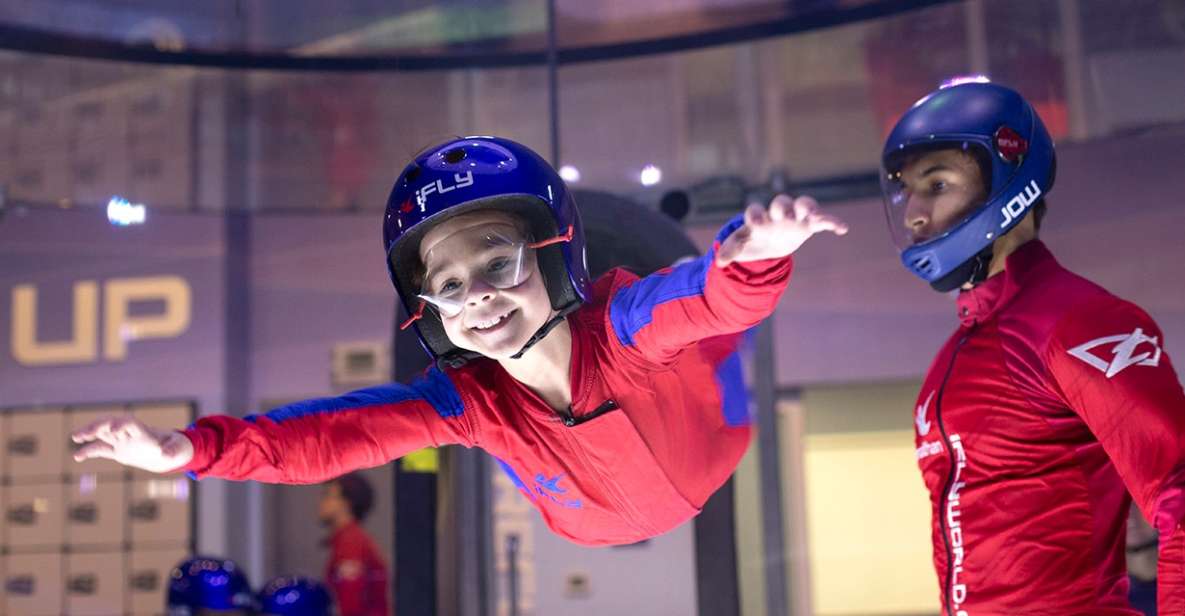
The full experience is 90 minutes, even though the actual flight is 2 minutes. In practice, that gap is where the real value is hiding: training, coaching, and getting you physically ready for how the wind feels.
You can expect the session to run like this:
- Training session before you enter the flight area
- A gear-and-setup moment (suit, helmet, goggles, earplugs, shoes)
- One-on-one instructor assistance as you practice positions
- The actual 2-minute flight in the wind tunnel
That order is important. If you’re new, you’ll likely feel the wind and pressure right away once you’re in position. The instructor helps you translate what you’re doing with your body into what you feel in the tunnel.
Training inside the wind tunnel: learning to control your body
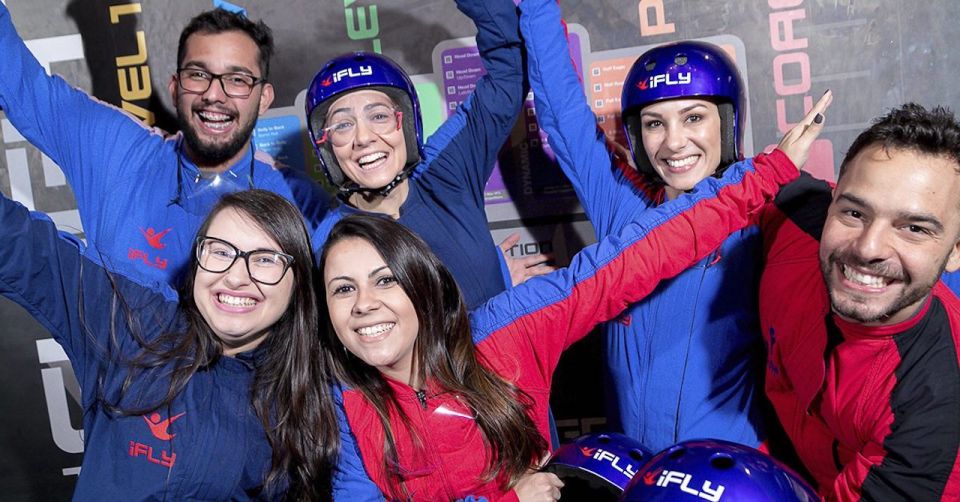
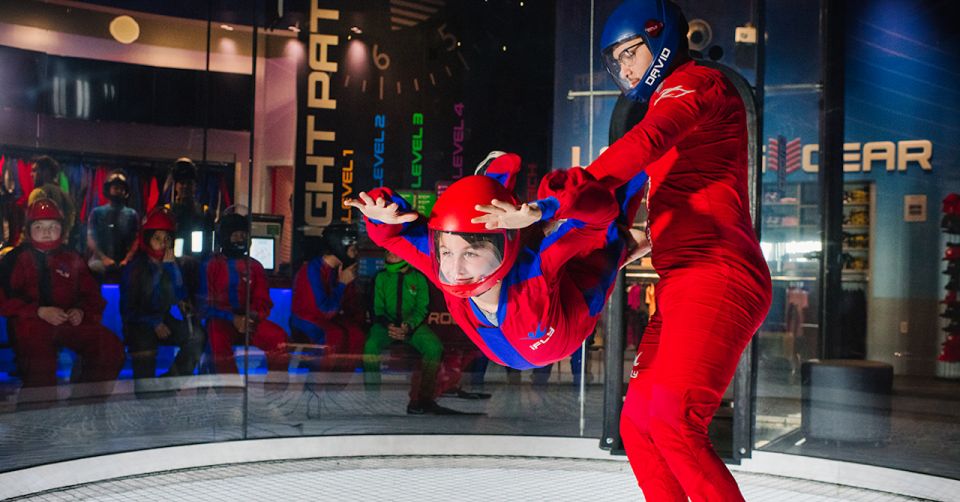
This isn’t just you stepping into a giant fan and hoping for the best. The key feature is the professional flight instructor working with you one-on-one. Your training focuses on how to make different body positions to control how you fly inside the tunnel.
That coaching is more than safety talk. It’s how you avoid the most common new-fly problem: flailing. In a wind tunnel, small changes in body angle and posture can change stability fast. With instruction, you learn what to do instead of just reacting.
You’ll practice the body cues before your actual flight. Then, when you’re in the airflow, you can match your actions to the instructor’s guidance. It’s also why the experience can work for different people: kids, teens, adults, and even folks with prior skydiving interest—each gets coaching at the level they need.
Your 2-minute freefall: what the 185 mph wind really feels like
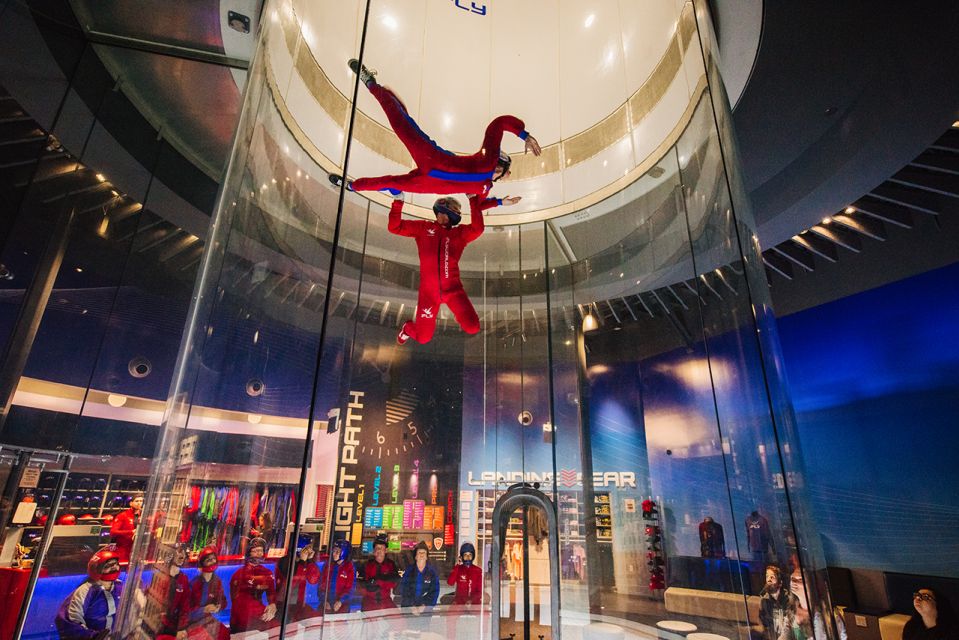
Here’s the headline: the wind tunnel uses multiple large fans, with wind speeds up to 185 mph (300 kph). That’s fast enough to create true freefall-style conditions, which is why it feels like skydiving without the sky.
The physical setup is also worth noting. The venue has a pressurized staging area that can fit up to 12 flyers at one time. That affects your experience in a good way: you’re not stuck in a bottleneck waiting in isolation. You’ll likely see other participants getting briefed and moving through their own steps.
Then comes your flight. The gravity-defying part—your actual 2 minutes in the tunnel—makes the experience feel complete. For first-timers, that length is a big deal. It gives you time to settle in, remember the cues, and try a couple of controlled adjustments instead of rushing through the moment.
Is it “real sky” freefall? No. But it’s close enough to scratch the itch, and it’s more controlled than the real thing. If you’re a nervous first-timer, that control is a comfort. If you’re an experienced skydiver, it’s realistic enough that the technique still matters.
Price and value: $131 for flight time you’ll remember
The price is $131 per person, for an overall 90-minute session. On paper, that may sound like a lot—until you compare what’s included.
You get:
- Training session
- Flight gear (suit, goggles, earplugs, shoes, helmet)
- One-on-one personal assistance from an instructor
- Locker rental
- 2 minutes flight time
That means you’re paying for coaching and safe equipment, not just access to a machine. And the venue positions it as a fraction of the cost of a tandem jump, with much longer freefall time. Even if you don’t compare dollar-for-dollar, the takeaway is clear: the tunnel time is the main product, and you get enough of it to feel it.
What’s not included are typical photo add-ons. Flight extras, photo prints, and USB options with photos and video cost extra. If you know you’ll want souvenirs, plan for that budget. If you don’t care about photos, you can keep spending under control.
Who this is great for (and who should skip)
iFLY bills this as safe for kids and exciting for teens, adults, and even people with skydiving experience. In a practical sense, it works best for anyone who wants:
- A first taste of controlled freefall
- Coaching that helps you learn quickly
- The thrill without needing to jump from an aircraft
But you need to take the safety limits seriously. These are the clear “not suitable” categories:
- Children under 3 years
- Pregnant women
- People with back problems
- People with heart problems
- People over 300 lbs (136 kg)
There are also limitations on gear and injuries:
- Hard casts or hard prosthetics that can’t be removed mean you can’t fly
- If you have a current or prior head, neck, back, or shoulder injury, or a heart condition, you should not fly
- Any condition that could interfere with physical activity or raise injury risk is a no-go
Weight is worth special attention. Flyers who weigh 260–300 lbs may not be able to fly. There’s an additional evaluation by staff at check-in to determine if you can be accommodated and what restrictions apply.
This is the main reason you should think before booking. If you’re near the weight range or dealing with any injury history, contact the venue or be ready for the check-in evaluation to decide your options.
What to bring (and what to expect about timing)
Bring passport or ID card (a copy is accepted). That’s the only requirement specifically listed for identity. Also bring yourself in clothes you can move in—since you’ll be changing into the flying suit and wearing helmet/goggles during training.
Timing is straightforward but strict: your experience begins promptly on arrival. Arrive 10–15 minutes early for check-in. The staff need that time to get you through the process and get you into your training flow without delays.
The experience is also listed as non-refundable, so treat the booking like a commitment once you’ve confirmed you meet the requirements.
Should you book iFLY Chicago-Rosemont?
If you want the thrill of freefall with real instruction, I think this is an easy yes. The value comes from the combination: gear included, one-on-one coaching, and 2 minutes of wind-tunnel flight powered by fans up to 185 mph. It’s built for first-timers, and it still gives serious skydiver-style technique focus.
I’d skip it (or at least pause until you’re cleared) if you fall into the clear health or weight restrictions listed above, or if you have an injury history that’s not a match for the safety guidelines. And if you care about photos, remember the included experience doesn’t automatically include photo USB or print extras.
For most people who can fly, booking is a smart use of time: you’ll get a controlled thrill you can’t fake, and you’ll leave with a story that starts with I tried the wind tunnel.
FAQ
How long is the iFLY Chicago-Rosemont experience?
The total experience duration is about 90 minutes, with 2 minutes of flight time inside the wind tunnel.
What’s included in the ticket price?
The experience includes the training session, flight gear (flying suit, goggles, earplugs, shoes, and helmet), one-on-one instructor assistance, locker rental, and 2 minutes of flight time.
Do I need to bring my own ID?
You need a passport or ID card. A copy is accepted.
What’s the weight limit to fly?
People over 300 lbs (136 kg) are not suitable to fly. Flyers between 260–300 lbs may not be able to fly and will need additional evaluation at check-in.
Are there age restrictions?
Yes. It’s not suitable for children under 3 years.
Is it safe if I have a medical issue or injury?
People with a current or prior head, neck, back, or shoulder injury, or a heart condition, should not fly. Pregnant women and people with back or heart problems are also not suitable.
Are photos included?
Photo print and USB options with photos and video are not included. Flight extras may be available for an additional cost.
Where do I go for the experience?
Go to iFLY Chicago Rosemont at 5520 Park Pl, Rosemont, IL 60018. Arrive 10–15 minutes early since the experience begins promptly.